

For a lot of people, coffee is a non-negotiable part of the morning — so finding out you’re pregnant can come with an immediate “wait, do I have to give this up?” The good news is, in most cases, no. Coffee is generally considered safe during pregnancy in moderation. Here’s what the current guidelines actually say, how much caffeine is considered safe, and how to keep track of it across your day.
The Quick Answer
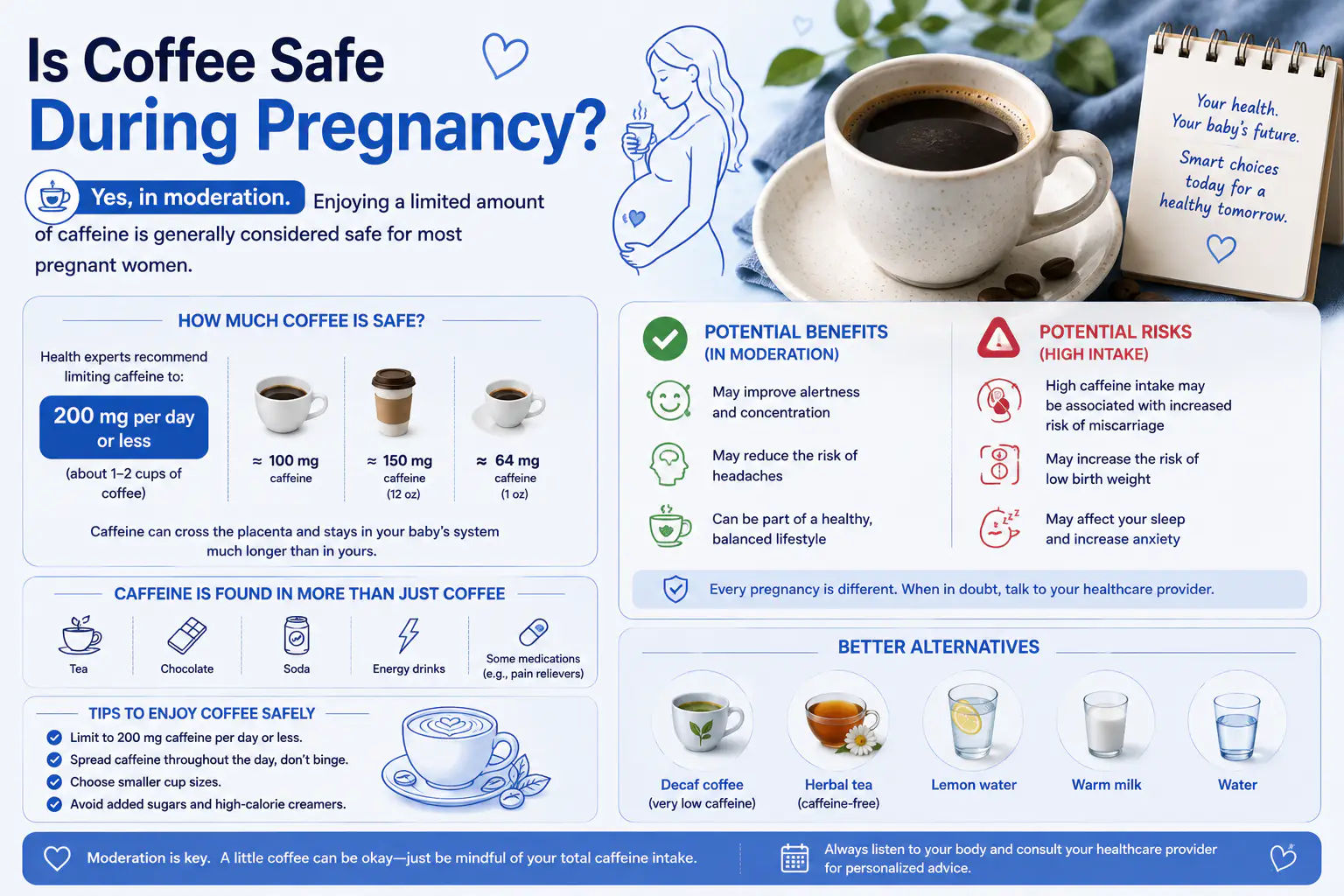
According to the American College of Obstetricians and Gynecologists (ACOG), consuming less than 200 milligrams of caffeine per day is considered safe during pregnancy. That’s roughly the amount in one 12-ounce cup of coffee. So yes — you can typically keep your daily coffee habit, as long as you’re mindful of portion size and total caffeine intake from all sources, not just your mug.
Why Caffeine Is Treated Differently in Pregnancy
Caffeine crosses the placenta, and your baby’s developing body can’t metabolize it the way yours can — their liver and metabolism are still maturing. That means caffeine lingers longer in a baby’s system than in yours, which is the main reason pregnancy guidelines are more conservative than general caffeine advice.
High caffeine intake during pregnancy has been linked in some studies to an increased risk of miscarriage, low birth weight, and preterm birth. It’s worth noting that the research isn’t entirely consistent — much of it relies on people recalling their own intake, which isn’t always precise, and a few more recent studies have suggested even moderate amounts could carry some risk. But the dominant, evidence-based guidance from ACOG, the CDC, and the March of Dimes remains the same: staying under 200 mg per day is considered safe for most pregnancies.
How Much Caffeine Is in Your Coffee?
Caffeine content varies more than most people realize, depending on the brew method, bean type, and cup size. Here’s a general breakdown:
Brewed coffee (8 oz): 95–165 mg
Espresso (1 oz shot): 47–64 mg
Latte or cappuccino (8 oz): 63–126 mg
Instant coffee (8 oz): roughly 30–90 mg
Decaf coffee (8 oz): 2–5 mg
Because of this range, “one cup of coffee” can mean very different caffeine amounts depending on where it’s from — a large coffee shop drink can easily exceed the daily 200 mg limit on its own, so checking serving sizes matters more than counting cups.
Caffeine Isn’t Just in Coffee
If you’re tracking your intake, remember that caffeine shows up in plenty of other places too:
Black and green tea (roughly 30–50 mg per cup)
Soda, including cola (about 30–40 mg per can)
Energy drinks (varies widely, often 70–150+ mg)
Chocolate, especially dark chocolate
Some over-the-counter medications, including certain migraine and cold remedies
If you’re having coffee and also drinking tea or eating chocolate later in the day, those add up toward your 200 mg total.
Tips for Managing Caffeine During Pregnancy
Watch your cup size. A “cup” of coffee at a coffee shop is often much larger than 8 ounces, which changes the math significantly.
Mix regular with decaf. Cutting your regular coffee with decaf is an easy way to reduce intake gradually without giving it up cold turkey.
Read labels. Check caffeine content on soda, tea, and energy drinks, since amounts vary widely by brand.
Stay hydrated. Caffeine has a mild diuretic effect, so pair it with extra water throughout the day.
Consider timing. Caffeine later in the day can affect sleep, which is already harder to come by in pregnancy — an afternoon cutoff can help.
What If You Go Over 200 mg Occasionally?
One day of slightly higher caffeine intake isn’t typically a cause for panic. The 200 mg guideline is meant as a general daily ceiling, not a rule where a single slip has immediate consequences. That said, consistently exceeding it — several cups of strong coffee plus soda or energy drinks every day — is where the research shows more concern, so it’s worth aiming for moderation as a habit rather than perfection on any one day.
The Bottom Line
You don’t need to quit coffee the moment you find out you’re pregnant. Staying under 200 mg of caffeine a day — factoring in coffee, tea, chocolate, and soda — is considered safe by major health organizations and lines up with what most OB-GYNs recommend. If you’re someone who relies on multiple cups a day, gradually cutting back with decaf blends is an easier transition than stopping all at once. When in doubt, bring your specific caffeine habits to your prenatal appointment so your provider can weigh in on your individual situation.
FAQ
How many cups of coffee can I have while pregnant?
Most guidelines suggest one 12-ounce cup of regular coffee a day keeps you under the recommended 200 mg caffeine limit. Larger cups or stronger brews may put you over that limit with just one serving, so it’s worth checking size and strength.
Does caffeine cause miscarriage?
The research is mixed. Some studies link higher caffeine intake (300 mg or more per day) to increased miscarriage risk, while others find no clear connection. Most experts agree that staying under 200 mg per day is not expected to be a concern.
Is decaf coffee completely caffeine-free?
No. Decaf coffee still contains a small amount of caffeine, typically 2–5 mg per 8-ounce cup, but it’s low enough that it isn’t a concern even with multiple cups.
Can I drink tea instead of coffee during pregnancy?
Yes, tea generally has less caffeine than coffee, but it still counts toward your daily 200 mg limit. Herbal teas like peppermint and ginger are commonly considered safe, though not all herbal teas are recommended during pregnancy, so it’s worth checking individual ingredients.
What happens if I drink too much caffeine while pregnant?
Consistently high caffeine intake has been associated in some studies with increased risks of low birth weight, preterm birth, and miscarriage. A single day over the limit isn’t typically a major concern, but regularly exceeding 200 mg per day is worth avoiding.