

Blood tests are slightly more accurate and sensitive than urine tests for detecting pregnancy, especially very early on—but for most people who wait until after a missed period, a properly used urine test is nearly as reliable and far more convenient.
Both types of pregnancy tests look for the same hormone: human chorionic gonadotropin (hCG). This hormone is produced after a fertilized egg implants in the uterus, usually about 6–10 days after conception. Levels then rise quickly, roughly doubling every couple of days in early pregnancy. The key differences come down to sensitivity, timing, convenience, cost, and the type of information each test provides.
How Urine and Blood Pregnancy Tests Work
Urine tests—whether at-home kits from the drugstore or those done at a clinic—detect hCG in your pee. Most modern home tests claim 99% accuracy when used correctly on or after the day of a missed period. They are qualitative: they simply show positive or negative (or sometimes a faint line). Results appear in minutes.
Blood tests are performed in a doctor’s office or lab. A small sample is drawn from a vein. There are two main kinds:
Qualitative blood tests give a yes/no answer, similar to urine tests.
Quantitative (or beta-hCG) blood tests measure the exact amount of hCG in the blood.
Blood tests can detect lower concentrations of hCG than most urine tests. That higher sensitivity is why they can confirm pregnancy earlier.
Accuracy Comparison: Blood Test vs. Urine Test
Authoritative sources consistently note that blood tests are slightly more sensitive. Cleveland Clinic states that blood tests can provide a more accurate answer very early—within 7 to 10 days after conception—because they detect very small levels of hCG. MedlinePlus explains that blood tests can find tiny amounts of the hormone and show pregnancy before a missed period, while urine tests are 97–99% accurate when done a week or two after a missed period.
Once hCG levels are high enough (typically after a missed period), a correctly performed urine test matches blood-test reliability for simply confirming pregnancy. Planned Parenthood notes that drugstore tests work 99 out of 100 times and are just as accurate as urine tests done in a doctor’s office. False negatives are more common with urine tests taken too early, when hCG is still low or diluted. False positives are rare with both but can occur with certain fertility medications containing hCG or, less often, with other medical conditions.
Quantitative blood tests add value beyond a simple yes/no. Doctors use the exact hCG number (and serial measurements 48 hours apart) to assess early pregnancy viability, help date the pregnancy, or check for potential issues such as ectopic pregnancy or miscarriage risk. Extremely high levels may also raise the possibility of multiples.
In short: blood tests edge out urine tests for earliest detection and for detailed clinical information. For everyday confirmation after a missed period, urine tests perform extremely well.
How Soon Each Test Can Detect Pregnancy
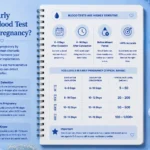
Many people search for “how soon can a blood test detect pregnancy” or “blood test vs urine test how early.” Blood tests can often detect hCG as early as 6–8 days after ovulation (roughly 7–10 days after conception). Some sources note detection possible around the time of implantation.
Urine tests are most reliable from the first day of a missed period onward. Some highly sensitive home tests advertise detection up to 6 days before a missed period, but accuracy drops the earlier you test. First-morning urine is recommended for home tests because hCG is more concentrated then. Drinking excessive fluids beforehand can dilute the sample and increase the chance of a false negative.
Pros, Cons, and Practical Considerations
Urine tests win on convenience, speed, privacy, and cost. You can buy them over the counter, get results in minutes, and repeat them easily. Clinic urine tests are essentially the same. Limitations include lower early sensitivity and the risk of user error (expired tests, incorrect timing, or misreading results).
Blood tests offer earlier detection and quantitative data that can guide medical decisions. They are considered the gold standard in clinical settings when more information is needed. Drawbacks include higher cost, the need for an appointment, a blood draw, and results that may take hours to a couple of days.
Doctors rarely order blood tests solely to confirm a straightforward pregnancy because urine tests are sufficient and more practical. Blood testing is more common with fertility treatment, unclear home-test results, symptoms of possible complications, or when tracking hCG levels over time.
Which Should You Choose?
If you simply want to know whether you are pregnant and your period is late, start with a high-quality home urine test (or a clinic urine test). Follow the instructions carefully, use first-morning urine if possible, and retest in a few days if the result is negative but your period still hasn’t arrived. A positive result is highly reliable; follow up with a healthcare provider for confirmation and prenatal care.
Choose a blood test if you need answers earlier than a urine test can reliably provide, if home tests have been inconclusive, if you are undergoing fertility treatment, or if your doctor wants quantitative hCG data. Discuss any medications or medical history that could affect results.
FAQ
Are blood pregnancy tests more accurate than urine tests?
Yes, slightly—especially very early in pregnancy—because they detect lower levels of hCG. After a missed period, a correctly used urine test is 97–99% accurate and usually sufficient for confirmation.
How soon can a blood test detect pregnancy compared with a urine test?
Blood tests can often detect pregnancy 7–10 days after conception (or about 6–8 days after ovulation). Most urine tests are most accurate from the day of a missed period; some sensitive home tests may work a few days earlier but with lower reliability.
Can a urine test be wrong while a blood test is right?
Yes. Taking a urine test too early is the most common reason for a false negative. Blood tests can pick up lower hCG levels that urine tests miss at that stage. Rare false positives on urine tests can also be clarified with blood testing.
Do I need a blood test to confirm a positive home pregnancy test?
Not always. Many providers accept a clear positive home test and move straight to prenatal care or an ultrasound. A blood test or clinic urine test may be ordered for confirmation, especially if there are concerns or if quantitative levels are useful.
What affects the accuracy of either test?
Timing is the biggest factor. Testing too early, diluted urine, expired kits, or not following instructions can lower urine-test accuracy. Fertility drugs containing hCG can cause false positives on both. Certain medical conditions rarely affect results. Always check expiration dates and follow package or lab instructions.