
Skip to content
DidYouSearch DidYouSearch
  • did you search?
  • Baby Plus+
    • Baby Activities
      • Arts & Crafts
      • Indoor Activities
      • Montessori
      • Music
      • Outdoor Activities
      • Reading
      • Sensory Play
      • Tummy Time
    • Baby Development
      • Brain Development
      • Cognitive Development
      • Emotional Development
      • Fine Motor Skills
      • Growth Milestones
      • Monthly Milestones
      • Motor Skills
      • Physical Development
      • Social Development
      • Speech Development
    • Baby Feeding
      • Allergies
      • Baby Led Weaning
      • Bottle Feeding
      • Breast feeding
        • Breastfeeding Diet
        • Breastfeeding Positions
        • Latch Problems
        • Low Milk Supply
        • Mastitis
        • Pumping Schedule
        • Weaning
      • Burping
      • Cluster Feeding
      • Feeding Schedule
      • Formula Feeding
        • Formula Amount
        • Formula Brands
        • Formula Comparison
        • Formula Preparation
        • Formula Storage
      • Hydration
      • Pumping
      • Solid Foods
    • Baby Gear Reviews
      • Best Baby Carrier
      • Best Baby Monitor
      • Best Baby Strollers
      • Best Bottles
      • Best Breast Pump
      • Best Car Seat
      • Best Cribs
      • Best Diapers
      • Best Formula
      • Best Toys
    • Baby Growth
      • Growth Spurts
      • Height Charts
      • Monthly Growth
      • Percentiles
      • Weight Charts
    • Baby Health
      • Allergies
      • Cold
      • Constipation
      • Cough
      • Diarrhea
      • Ear Infection
      • Fever
      • Flu
      • Pediatric Visits
      • Rashes
      • Teething
      • Vaccines
      • Vomiting
    • Baby Nutrition
      • Dairy
      • Drinks
      • Eggs
      • Fish
      • Fruits
      • Healthy Recipes
      • Meat
      • Snacks
      • Vegetables
      • Vitamins
    • Baby Products
      • Baby Carriers
      • Bassinets
      • Bottles
      • Breast Pumps
      • Car Seats
      • Cribs
      • Diaper Bags
      • High Chairs
      • Monitors
      • Strollers
      • Swings
      • Toys
      • Walkers
    • Baby Recipes
      • BLW Recipes
      • Breakfast
      • Dinner
      • Finger Foods
      • Lunch
      • Purees
      • Snacks
    • Baby Safety
      • Baby Proofing
      • Car Seats
      • Choking Hazards
      • CPR
      • Home Safety
      • Poison Prevention
      • Safe Sleep
      • Sun Protection
      • Water Safety
  • Baby Names
    • Boy Names
    • Girl Names
    • American baby boy names
    • American baby girl names
    • Biblical Names
    • Middle Names
    • Modern Names
    • Short Names
    • Unique Names
    • Unisex Names
  • Recommended
    • Baby Shopping
      • Baby Registry
      • Budget Baby Shopping
      • Hospital Bag
      • Must Have Products
      • Newborn Checklist
      • Nursery Ideas
    • Baby Sleep
      • Bedtime Routine
      • Co Sleeping
      • Crib Safety
      • Nap Schedules
      • Night Wakings
      • Sleep Environment
      • Sleep Products
      • Sleep Regression
      • Sleep Training
      • Wake Windows
      • White Noise
    • Childcare
      • Daycare
      • Babysitters
      • Kindergarten
      • Nannies
      • Preschool
    • Newborn Care
      • Nail Care
      • Baby Hygiene
      • Bathing
      • Crying
      • Diapering
      • Ear Care
      • Eye Care
      • Skin Care
      • Soothing Techniques
      • Temperature
      • Umbilical Cord
    • Special Needs
      • Premature Babies
      • Autism Signs
      • Developmental Delays
      • Down Syndrome
      • NICU
      • Twins
    • Seasonal Baby Care
      • Spring
      • Summer
      • Travel
      • Fall
      • Holidays
      • Winter
  • Parenting
    • Bonding
    • Discipline
    • Emotional Intelligence
    • First Time Parents
    • Gentle Parenting
    • Positive Parenting
    • Routines
    • Single Parents
    • Working Parents
  • Pregnancy
    • Pregnancy Complications
    • Labor & Delivery
    • Postpartum Recovery
    • Pregnancy Exercises
    • Pregnancy Medications
    • Pregnancy Nutrition
    • Pregnancy Sleep
    • Pregnancy Symptoms
    • Pregnancy Tests
    • Pregnancy Vitamins
    • Pregnancy Weeks
  • Toddler
    • Preschool
    • Speech
    • Tantrums
    • Toddler Food
    • Toddler Sleep
    • Behavior
    • Independence
    • Learning
    • Potty Training
  • Traveling with Baby
    • Road Trips
    • Beach
    • Camping
    • Flying
    • Hotels
    • Packing Lists
  • did you search?
  • Baby Plus+
    • Baby Activities
      • Arts & Crafts
      • Indoor Activities
      • Montessori
      • Music
      • Outdoor Activities
      • Reading
      • Sensory Play
      • Tummy Time
    • Baby Development
      • Brain Development
      • Cognitive Development
      • Emotional Development
      • Fine Motor Skills
      • Growth Milestones
      • Monthly Milestones
      • Motor Skills
      • Physical Development
      • Social Development
      • Speech Development
    • Baby Feeding
      • Allergies
      • Baby Led Weaning
      • Bottle Feeding
      • Breast feeding
        • Breastfeeding Diet
        • Breastfeeding Positions
        • Latch Problems
        • Low Milk Supply
        • Mastitis
        • Pumping Schedule
        • Weaning
      • Burping
      • Cluster Feeding
      • Feeding Schedule
      • Formula Feeding
        • Formula Amount
        • Formula Brands
        • Formula Comparison
        • Formula Preparation
        • Formula Storage
      • Hydration
      • Pumping
      • Solid Foods
    • Baby Gear Reviews
      • Best Baby Carrier
      • Best Baby Monitor
      • Best Baby Strollers
      • Best Bottles
      • Best Breast Pump
      • Best Car Seat
      • Best Cribs
      • Best Diapers
      • Best Formula
      • Best Toys
    • Baby Growth
      • Growth Spurts
      • Height Charts
      • Monthly Growth
      • Percentiles
      • Weight Charts
    • Baby Health
      • Allergies
      • Cold
      • Constipation
      • Cough
      • Diarrhea
      • Ear Infection
      • Fever
      • Flu
      • Pediatric Visits
      • Rashes
      • Teething
      • Vaccines
      • Vomiting
    • Baby Nutrition
      • Dairy
      • Drinks
      • Eggs
      • Fish
      • Fruits
      • Healthy Recipes
      • Meat
      • Snacks
      • Vegetables
      • Vitamins
    • Baby Products
      • Baby Carriers
      • Bassinets
      • Bottles
      • Breast Pumps
      • Car Seats
      • Cribs
      • Diaper Bags
      • High Chairs
      • Monitors
      • Strollers
      • Swings
      • Toys
      • Walkers
    • Baby Recipes
      • BLW Recipes
      • Breakfast
      • Dinner
      • Finger Foods
      • Lunch
      • Purees
      • Snacks
    • Baby Safety
      • Baby Proofing
      • Car Seats
      • Choking Hazards
      • CPR
      • Home Safety
      • Poison Prevention
      • Safe Sleep
      • Sun Protection
      • Water Safety
  • Baby Names
    • Boy Names
    • Girl Names
    • American baby boy names
    • American baby girl names
    • Biblical Names
    • Middle Names
    • Modern Names
    • Short Names
    • Unique Names
    • Unisex Names
  • Recommended
    • Baby Shopping
      • Baby Registry
      • Budget Baby Shopping
      • Hospital Bag
      • Must Have Products
      • Newborn Checklist
      • Nursery Ideas
    • Baby Sleep
      • Bedtime Routine
      • Co Sleeping
      • Crib Safety
      • Nap Schedules
      • Night Wakings
      • Sleep Environment
      • Sleep Products
      • Sleep Regression
      • Sleep Training
      • Wake Windows
      • White Noise
    • Childcare
      • Daycare
      • Babysitters
      • Kindergarten
      • Nannies
      • Preschool
    • Newborn Care
      • Nail Care
      • Baby Hygiene
      • Bathing
      • Crying
      • Diapering
      • Ear Care
      • Eye Care
      • Skin Care
      • Soothing Techniques
      • Temperature
      • Umbilical Cord
    • Special Needs
      • Premature Babies
      • Autism Signs
      • Developmental Delays
      • Down Syndrome
      • NICU
      • Twins
    • Seasonal Baby Care
      • Spring
      • Summer
      • Travel
      • Fall
      • Holidays
      • Winter
  • Parenting
    • Bonding
    • Discipline
    • Emotional Intelligence
    • First Time Parents
    • Gentle Parenting
    • Positive Parenting
    • Routines
    • Single Parents
    • Working Parents
  • Pregnancy
    • Pregnancy Complications
    • Labor & Delivery
    • Postpartum Recovery
    • Pregnancy Exercises
    • Pregnancy Medications
    • Pregnancy Nutrition
    • Pregnancy Sleep
    • Pregnancy Symptoms
    • Pregnancy Tests
    • Pregnancy Vitamins
    • Pregnancy Weeks
  • Toddler
    • Preschool
    • Speech
    • Tantrums
    • Toddler Food
    • Toddler Sleep
    • Behavior
    • Independence
    • Learning
    • Potty Training
  • Traveling with Baby
    • Road Trips
    • Beach
    • Camping
    • Flying
    • Hotels
    • Packing Lists
Close

Search

Home/Pregnancy/Pregnancy Weeks/What happens at 36 weeks pregnant?
Pregnancy Weeks

What happens at 36 weeks pregnant?

By DrAdam
August 8, 2026 4 Min Read
0

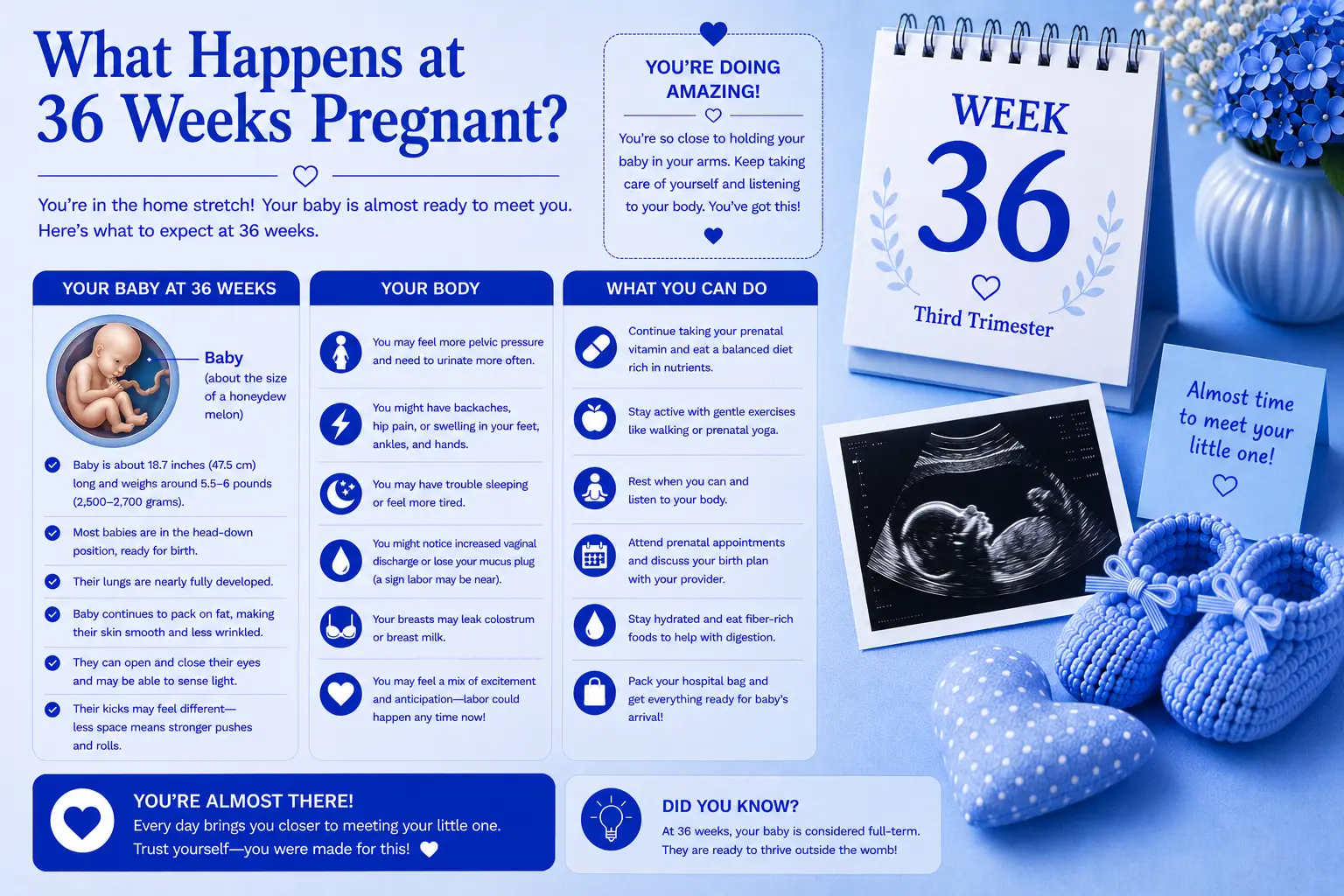
At 36 weeks, you’re entering the final month of pregnancy — weekly prenatal visits begin, the Group B strep test typically happens, and your baby may start to “drop” lower into your pelvis. Here’s what to expect this week.

Your Baby at 36 Weeks

Contents hide
1 Your Baby at 36 Weeks
2 Baby “Dropping” (Lightening)
3 The Group B Strep (GBS) Test
4 Common Symptoms at 36 Weeks Pregnant
5 Prenatal Appointments at 36 Weeks
6 Watching for Preeclampsia
7 When to Call Your Doctor
8 Tips for Week 36
9 FAQ
9.1 How big is a baby at 36 weeks pregnant?
9.2 What is the Group B strep test and why is it done at 36 weeks?
9.3 What does it mean when the baby “drops” at 36 weeks?
9.4 Is it normal to have Braxton Hicks contractions at 36 weeks?
9.5 How often will I see my doctor at 36 weeks?

Your baby is about the size of a honeydew melon, measuring roughly 18.7 inches from head to heel and weighing around 5.8 pounds. From here on, expect steady weight gain of about half a pound per week as fat continues building. Other developments include:

Bones are hardening, though the skull stays soft and flexible to make delivery easier

Lanugo, the fine body hair that’s covered your baby for months, is largely disappearing as fat reserves take over the job of regulating body temperature

Less room to move — your baby is now large enough that movements may feel different, more like rolls, stretches, or presses rather than sharp kicks

Most major systems are essentially ready; the final weeks are mainly about continued weight gain and lung maturation

Baby “Dropping” (Lightening)

Around 36 weeks, many people notice their baby descending lower into the pelvis, a process called lightening. It can bring some relief to breathing, since there’s less pressure on the diaphragm, but it also tends to increase pelvic pressure and the urge to urinate frequently. Lightening can happen anywhere from a few weeks before labor to not at all until labor actually begins — so don’t worry if you don’t notice it right away.

The Group B Strep (GBS) Test

One of the defining events of week 36 is the Group B strep screening, typically performed between 36 and 37 weeks (sometimes up to 38, depending on your provider). Group B strep is a common bacterium that lives in the vagina and rectum of roughly 1 in 4 women — it’s harmless to adults and usually causes no symptoms, but it can be passed to a baby during vaginal delivery and cause serious infections like pneumonia, sepsis, or meningitis.

The test itself is quick and painless: a swab of the vagina and rectum, sent to a lab, with results typically back within a day or two. If you test positive, there’s no need to panic — you’ll simply receive IV antibiotics during labor, which is highly effective at preventing transmission to your baby.

Common Symptoms at 36 Weeks Pregnant

Increased pelvic pressure and frequent urination, especially after lightening

Braxton Hicks contractions, which may feel stronger or more frequent

Trouble sleeping, from physical discomfort and frequent bathroom trips

Swelling in the hands, feet, or ankles

Back pain

Tingling in the hands or feet

Easier breathing for some, thanks to reduced pressure on the diaphragm after the baby drops

Prenatal Appointments at 36 Weeks

Expect to start seeing your provider weekly from this point forward. Visits typically include checking your weight, blood pressure, cervical changes, and your baby’s position. If you have a high-risk pregnancy, are carrying multiples, or have a condition like high blood pressure, you may also have a biophysical profile — a combination of ultrasound and monitoring that checks your baby’s wellbeing.

Watching for Preeclampsia

Your provider will check your blood pressure at every visit, but it’s worth knowing the warning signs of preeclampsia yourself: a persistent headache, swelling in the face and hands, pain in the upper stomach or shoulder, nausea or vomiting in the second half of pregnancy, or difficulty breathing. Contact your provider right away if you notice any of these.

When to Call Your Doctor

Beyond preeclampsia symptoms, reach out if you notice a significant decrease in fetal movement, regular or intensifying contractions, your water breaking, or vaginal bleeding.

Tips for Week 36

Finalize your birth plan and pack your hospital bag

Install your baby’s car seat

Keep doing daily kick counts

Rest with your feet up to help manage swelling

Wrap up any final logistics — work handoffs, childcare or pet care plans, and your route to the hospital

FAQ

How big is a baby at 36 weeks pregnant?

About the size of a honeydew melon — roughly 18.7 inches long and 5.8 pounds.

What is the Group B strep test and why is it done at 36 weeks?

It’s a screening for a common bacterium that’s harmless to adults but can seriously harm a newborn if passed during delivery. It’s done around 36–37 weeks so that antibiotics can be given during labor if needed.

What does it mean when the baby “drops” at 36 weeks?

Also called lightening, this is when your baby descends lower into the pelvis in preparation for birth. It can ease breathing but increase pelvic pressure and urination.

Is it normal to have Braxton Hicks contractions at 36 weeks?

Yes, and they may feel stronger than earlier in pregnancy. Contact your provider if they become regular, painful, and progressively closer together, which could signal labor.

How often will I see my doctor at 36 weeks?

Most providers switch to weekly visits starting around 36 weeks, monitoring your blood pressure, weight, cervical changes, and your baby’s position and wellbeing.

Author

DrAdam

Dr. Adam. Obstetrician and Gynecologist

Follow Me
Other Articles
Previous

What happens at 32 weeks pregnant?

Next

What happens at 37 weeks pregnant (full term)?

No Comment! Be the first one.

Leave a Reply Cancel reply

Your email address will not be published. Required fields are marked *

What is Did You Search?

The “Did You Search” website was created for all mothers and families. Just search to find all your needs about your children.

Links

  • about
  • contact
  • privacy policy
  • medical disclaimer
  • sitemap
Copyright 2026 — DidYouSearch. All rights reserved.