Skip to content
DidYouSearch DidYouSearch
  • did you search?
  • Baby Plus+
    • Baby Activities
      • Arts & Crafts
      • Indoor Activities
      • Montessori
      • Music
      • Outdoor Activities
      • Reading
      • Sensory Play
      • Tummy Time
    • Baby Development
      • Brain Development
      • Cognitive Development
      • Emotional Development
      • Fine Motor Skills
      • Growth Milestones
      • Monthly Milestones
      • Motor Skills
      • Physical Development
      • Social Development
      • Speech Development
    • Baby Feeding
      • Allergies
      • Baby Led Weaning
      • Bottle Feeding
      • Breast feeding
        • Breastfeeding Diet
        • Breastfeeding Positions
        • Latch Problems
        • Low Milk Supply
        • Mastitis
        • Pumping Schedule
        • Weaning
      • Burping
      • Cluster Feeding
      • Feeding Schedule
      • Formula Feeding
        • Formula Amount
        • Formula Brands
        • Formula Comparison
        • Formula Preparation
        • Formula Storage
      • Hydration
      • Pumping
      • Solid Foods
    • Baby Gear Reviews
      • Best Baby Carrier
      • Best Baby Monitor
      • Best Baby Strollers
      • Best Bottles
      • Best Breast Pump
      • Best Car Seat
      • Best Cribs
      • Best Diapers
      • Best Formula
      • Best Toys
    • Baby Growth
      • Growth Spurts
      • Height Charts
      • Monthly Growth
      • Percentiles
      • Weight Charts
    • Baby Health
      • Allergies
      • Cold
      • Constipation
      • Cough
      • Diarrhea
      • Ear Infection
      • Fever
      • Flu
      • Pediatric Visits
      • Rashes
      • Teething
      • Vaccines
      • Vomiting
    • Baby Nutrition
      • Dairy
      • Drinks
      • Eggs
      • Fish
      • Fruits
      • Healthy Recipes
      • Meat
      • Snacks
      • Vegetables
      • Vitamins
    • Baby Products
      • Baby Carriers
      • Bassinets
      • Bottles
      • Breast Pumps
      • Car Seats
      • Cribs
      • Diaper Bags
      • High Chairs
      • Monitors
      • Strollers
      • Swings
      • Toys
      • Walkers
    • Baby Recipes
      • BLW Recipes
      • Breakfast
      • Dinner
      • Finger Foods
      • Lunch
      • Purees
      • Snacks
    • Baby Safety
      • Baby Proofing
      • Car Seats
      • Choking Hazards
      • CPR
      • Home Safety
      • Poison Prevention
      • Safe Sleep
      • Sun Protection
      • Water Safety
  • Baby Names
    • Boy Names
    • Girl Names
    • American baby boy names
    • American baby girl names
    • Biblical Names
    • Middle Names
    • Modern Names
    • Short Names
    • Unique Names
    • Unisex Names
  • Recommended
    • Baby Shopping
      • Baby Registry
      • Budget Baby Shopping
      • Hospital Bag
      • Must Have Products
      • Newborn Checklist
      • Nursery Ideas
    • Baby Sleep
      • Bedtime Routine
      • Co Sleeping
      • Crib Safety
      • Nap Schedules
      • Night Wakings
      • Sleep Environment
      • Sleep Products
      • Sleep Regression
      • Sleep Training
      • Wake Windows
      • White Noise
    • Childcare
      • Daycare
      • Babysitters
      • Kindergarten
      • Nannies
      • Preschool
    • Newborn Care
      • Nail Care
      • Baby Hygiene
      • Bathing
      • Crying
      • Diapering
      • Ear Care
      • Eye Care
      • Skin Care
      • Soothing Techniques
      • Temperature
      • Umbilical Cord
    • Special Needs
      • Premature Babies
      • Autism Signs
      • Developmental Delays
      • Down Syndrome
      • NICU
      • Twins
    • Seasonal Baby Care
      • Spring
      • Summer
      • Travel
      • Fall
      • Holidays
      • Winter
  • Parenting
    • Bonding
    • Discipline
    • Emotional Intelligence
    • First Time Parents
    • Gentle Parenting
    • Positive Parenting
    • Routines
    • Single Parents
    • Working Parents
  • Pregnancy
    • Pregnancy Complications
    • Labor & Delivery
    • Postpartum Recovery
    • Pregnancy Exercises
    • Pregnancy Medications
    • Pregnancy Nutrition
    • Pregnancy Sleep
    • Pregnancy Symptoms
    • Pregnancy Tests
    • Pregnancy Vitamins
    • Pregnancy Weeks
  • Toddler
    • Preschool
    • Speech
    • Tantrums
    • Toddler Food
    • Toddler Sleep
    • Behavior
    • Independence
    • Learning
    • Potty Training
  • Traveling with Baby
    • Road Trips
    • Beach
    • Camping
    • Flying
    • Hotels
    • Packing Lists
  • did you search?
  • Baby Plus+
    • Baby Activities
      • Arts & Crafts
      • Indoor Activities
      • Montessori
      • Music
      • Outdoor Activities
      • Reading
      • Sensory Play
      • Tummy Time
    • Baby Development
      • Brain Development
      • Cognitive Development
      • Emotional Development
      • Fine Motor Skills
      • Growth Milestones
      • Monthly Milestones
      • Motor Skills
      • Physical Development
      • Social Development
      • Speech Development
    • Baby Feeding
      • Allergies
      • Baby Led Weaning
      • Bottle Feeding
      • Breast feeding
        • Breastfeeding Diet
        • Breastfeeding Positions
        • Latch Problems
        • Low Milk Supply
        • Mastitis
        • Pumping Schedule
        • Weaning
      • Burping
      • Cluster Feeding
      • Feeding Schedule
      • Formula Feeding
        • Formula Amount
        • Formula Brands
        • Formula Comparison
        • Formula Preparation
        • Formula Storage
      • Hydration
      • Pumping
      • Solid Foods
    • Baby Gear Reviews
      • Best Baby Carrier
      • Best Baby Monitor
      • Best Baby Strollers
      • Best Bottles
      • Best Breast Pump
      • Best Car Seat
      • Best Cribs
      • Best Diapers
      • Best Formula
      • Best Toys
    • Baby Growth
      • Growth Spurts
      • Height Charts
      • Monthly Growth
      • Percentiles
      • Weight Charts
    • Baby Health
      • Allergies
      • Cold
      • Constipation
      • Cough
      • Diarrhea
      • Ear Infection
      • Fever
      • Flu
      • Pediatric Visits
      • Rashes
      • Teething
      • Vaccines
      • Vomiting
    • Baby Nutrition
      • Dairy
      • Drinks
      • Eggs
      • Fish
      • Fruits
      • Healthy Recipes
      • Meat
      • Snacks
      • Vegetables
      • Vitamins
    • Baby Products
      • Baby Carriers
      • Bassinets
      • Bottles
      • Breast Pumps
      • Car Seats
      • Cribs
      • Diaper Bags
      • High Chairs
      • Monitors
      • Strollers
      • Swings
      • Toys
      • Walkers
    • Baby Recipes
      • BLW Recipes
      • Breakfast
      • Dinner
      • Finger Foods
      • Lunch
      • Purees
      • Snacks
    • Baby Safety
      • Baby Proofing
      • Car Seats
      • Choking Hazards
      • CPR
      • Home Safety
      • Poison Prevention
      • Safe Sleep
      • Sun Protection
      • Water Safety
  • Baby Names
    • Boy Names
    • Girl Names
    • American baby boy names
    • American baby girl names
    • Biblical Names
    • Middle Names
    • Modern Names
    • Short Names
    • Unique Names
    • Unisex Names
  • Recommended
    • Baby Shopping
      • Baby Registry
      • Budget Baby Shopping
      • Hospital Bag
      • Must Have Products
      • Newborn Checklist
      • Nursery Ideas
    • Baby Sleep
      • Bedtime Routine
      • Co Sleeping
      • Crib Safety
      • Nap Schedules
      • Night Wakings
      • Sleep Environment
      • Sleep Products
      • Sleep Regression
      • Sleep Training
      • Wake Windows
      • White Noise
    • Childcare
      • Daycare
      • Babysitters
      • Kindergarten
      • Nannies
      • Preschool
    • Newborn Care
      • Nail Care
      • Baby Hygiene
      • Bathing
      • Crying
      • Diapering
      • Ear Care
      • Eye Care
      • Skin Care
      • Soothing Techniques
      • Temperature
      • Umbilical Cord
    • Special Needs
      • Premature Babies
      • Autism Signs
      • Developmental Delays
      • Down Syndrome
      • NICU
      • Twins
    • Seasonal Baby Care
      • Spring
      • Summer
      • Travel
      • Fall
      • Holidays
      • Winter
  • Parenting
    • Bonding
    • Discipline
    • Emotional Intelligence
    • First Time Parents
    • Gentle Parenting
    • Positive Parenting
    • Routines
    • Single Parents
    • Working Parents
  • Pregnancy
    • Pregnancy Complications
    • Labor & Delivery
    • Postpartum Recovery
    • Pregnancy Exercises
    • Pregnancy Medications
    • Pregnancy Nutrition
    • Pregnancy Sleep
    • Pregnancy Symptoms
    • Pregnancy Tests
    • Pregnancy Vitamins
    • Pregnancy Weeks
  • Toddler
    • Preschool
    • Speech
    • Tantrums
    • Toddler Food
    • Toddler Sleep
    • Behavior
    • Independence
    • Learning
    • Potty Training
  • Traveling with Baby
    • Road Trips
    • Beach
    • Camping
    • Flying
    • Hotels
    • Packing Lists
Close

Search

Home/Baby Activities/Arts & Crafts/Simple Craft Ideas for 1 Year Olds
Arts & CraftsBaby Activities

Simple Craft Ideas for 1 Year Olds

By Ali
August 2, 2026 5 Min Read
0

A one-year-old at 12 months and a one-year-old at 23 months are two very different crafters. Between their first and second birthday, toddlers go from barely holding a crayon to using a glue stick on their own — which is why most “craft ideas for 1 year olds” lists feel either too easy or too advanced, depending on exactly how old your child is.

This guide splits 20 simple craft ideas into three real skill stages across the one-year-old year, so you can pick activities that actually match what your toddler can do right now — not just their age in years.

Quick answer: At 12–15 months, stick to finger painting and simple textures. At 15–18 months, add crayons and stamping. At 18–24 months, toddlers can start basic gluing, tearing, and simple collage work.

What to Expect from a 1-Year-Old’s Craft Skills

Contents hide
1 What to Expect from a 1-Year-Old’s Craft Skills
2 The “Process Over Product” Rule
3 Craft Ideas for 12–15 Months
4 Craft Ideas for 15–18 Months
5 Craft Ideas for 18–24 Months
6 Materials Every Parent Should Keep on Hand
7 Safety Notes Specific to This Age
8 Frequently Asked
9 Common Questions

At this age, fine motor skills are developing fast but unevenly. A few realistic expectations:

  • Grip: Most 1-year-olds use a whole-fist grip on crayons and brushes, not a pincer grip — that’s normal until closer to age 2
  • Attention span: 5–10 minutes is typical for a craft activity at this age
  • Following instructions: Toddlers under 18 months rarely follow multi-step directions — show them, don’t just tell them
  • Mouthing: Most toddlers still explore with their mouths through at least 18 months, so taste-safe materials remain important

The “Process Over Product” Rule

Early childhood educators use the term process art to describe art with no fixed outcome — the value is in the doing, not the finished piece. For 1-year-olds specifically, this matters because:

  • There is no “wrong way” to do these crafts
  • A toddler scribbling in one corner of the page is succeeding just as much as one who covers the whole sheet
  • Praise the action (“You’re painting so much!”) rather than the result (“That’s a beautiful picture!”)

Letting go of the expectation of a “cute” finished craft is what makes this age genuinely fun to craft with.

Craft Ideas for 12–15 Months

At this stage, toddlers can sit independently, grasp with a whole hand, and are just starting to enjoy cause-and-effect (press → mark appears).

1. Finger Painting Washable, non-toxic paint on large paper. Expect smears more than shapes — that’s the goal at this stage.

2. Big Crayon Scribbling Use jumbo, toddler-grip crayons (too big to swallow) on paper taped to a table so it doesn’t slide.

3. Sticker Peeling (with Help) Peel large stickers halfway so your toddler can pull them the rest of the way off — great for grip development, even before they can place them accurately.

4. Texture Patting Provide a tray with 2–3 safe textures (cotton balls, bubble wrap, a damp sponge) for open-ended touching, no “craft” required.

5. Handprint Art With help holding their hand steady, press a painted palm onto paper. A simple keepsake activity at this stage.

6. Water Painting Give your toddler a paintbrush and a cup of plain water to “paint” on a chalkboard or pavement — zero mess, same motion practice as real painting.

Craft Ideas for 15–18 Months

Toddlers at this stage have more control, can hold a crayon closer to a proper grip, and start to enjoy repeated actions like stamping.

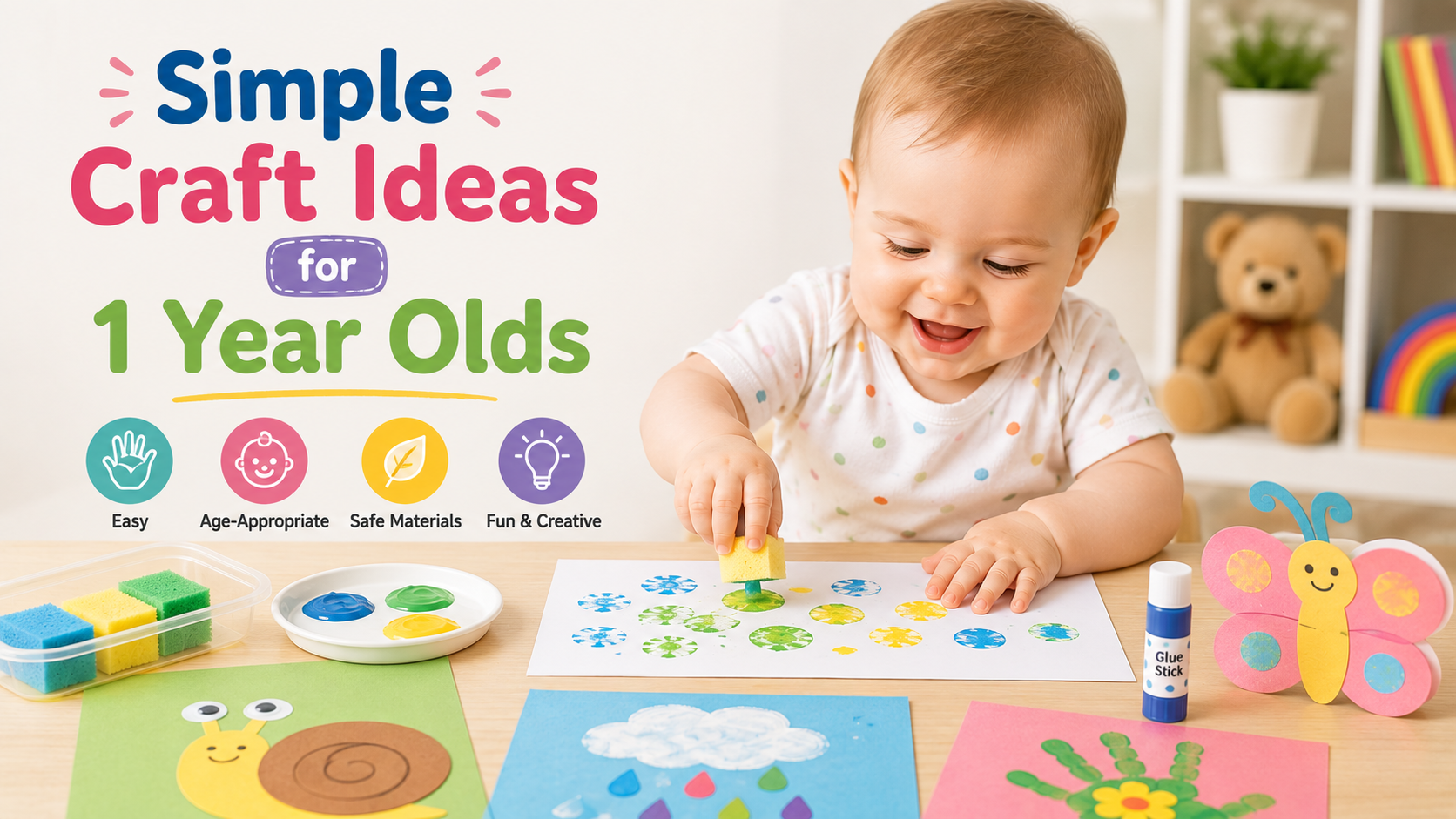
7. Sponge Stamping Cut a sponge into a simple shape, dip in paint, and let your toddler press it repeatedly — the repetition itself is the appeal.

8. Bubble Wrap Painting Paint spread on bubble wrap taped to a tray adds a textured pattern when pressed — combines motor practice with sensory feedback.

9. Simple Playdough Squishing Introduce basic playdough play — squishing and poking rather than shaping, since shaping skills come later.

10. Cotton Ball Painting Clip a clothespin onto a cotton ball dipped in paint for a dabbing motion that’s easier than holding a thin brush.

11. Contact Paper Sticking Tape contact paper sticky-side up and let your toddler press on tissue paper or fabric scraps — an early, mess-free intro to “sticking things down.”

12. Crayon Rubbing Place a textured object (a leaf, a coin) under thin paper and guide your toddler’s hand to scribble over it, revealing the pattern underneath.

Craft Ideas for 18–24 Months

By this stage, most toddlers are refining their pincer grip, can point and grasp small (but still not chokeable) objects, and can start very basic multi-step crafts.

13. Glue Stick Practice Let your toddler apply glue stick to paper themselves (even if it goes everywhere) before adding pre-cut shapes.

14. Torn Paper Collage Toddlers this age enjoy tearing paper — a genuine fine motor exercise — and sticking the pieces onto a glue-covered sheet.

15. Simple Shape Stamping with Cookie Cutters Large, toddler-safe cookie cutters dipped in paint introduce basic shape recognition through the craft itself.

16. Egg Carton Painting Painting the inside cups of an egg carton practices controlled brush movement in a contained space.

17. Yarn Wrapping Wrap yarn loosely around a cardboard shape (with an adult starting the first loop) — an early precursor to more complex fine motor crafts.

18. Basic Nature Collage On a walk, collect leaves or petals, then let your toddler stick them onto contact paper or a glue sheet at home.

19. Paper Plate Weaving (Simplified) Punch holes around a paper plate and let your toddler pull yarn through with help — mostly about the in-and-out motion at this age, not a finished weave.

20. First “Drawing” with Guidance Offer crayons and ask simple, open questions (“Can you make a big circle?”) — not expecting an actual circle, but introducing the idea that marks can represent something.

Materials Every Parent Should Keep on Hand

A simple, reusable “1-year-old craft kit” covers most of the ideas above:

  • Jumbo, non-toxic crayons
  • Washable finger paint
  • Large sheets of paper or a roll of craft paper
  • A roll of painter’s tape (to secure paper)
  • Large stickers
  • A glue stick (age 18+ months)
  • A basic homemade playdough recipe (flour, salt, water)
  • A stash of clean sponges and cotton balls

Safety Notes Specific to This Age

  • 1-year-olds still explore with their mouths — favor taste-safe paints and dough until you’re confident they’ve moved past this stage
  • Avoid anything smaller than a golf ball (beads, pom-poms, buttons) unless directly supervised hand-over-hand
  • Tape paper down to avoid slipping and frustration, not just for neatness
  • Choose crayons labeled “jumbo” or “toddler-grip” — they’re both easier to hold and too large to be a choking hazard
  • Keep sessions short and end before your toddler becomes frustrated or overstimulated

Continue exploring: Easy Arts and Crafts Ideas for Babies, Sensory Art Activities for Babies, or browse the full Baby Activities hub.

Frequently Asked

Common Questions

At 12–15 months, very little is fully independent — expect hand-over-hand guidance. By 18–24 months, most toddlers can peel a sticker, tear paper, and squish playdough without help.
Yes, this is developmentally normal. Choose taste-safe options (edible paint, taste-safe playdough) rather than trying to stop the behavior directly.
5–10 minutes is typical. Ending the activity while your toddler is still interested tends to make future craft sessions go more smoothly than pushing past their attention span.
No — household items like sponges, cardboard, and homemade dough work just as well as store-bought kits, and are often easier for this age to grip and use.

Author

Ali

Digital Marketing enthusiast with a passion for SEO, web design, analytics, and creative problem-solving.

Follow Me
Other Articles
Previous

Sensory Art Activities for Babies

Next

Baby-Safe Arts and Crafts Projects for Beginners

No Comment! Be the first one.

Leave a Reply Cancel reply

Your email address will not be published. Required fields are marked *

What is Did You Search?

The “Did You Search” website was created for all mothers and families. Just search to find all your needs about your children.

Links

  • about
  • contact
  • privacy policy
  • medical disclaimer
  • sitemap
Copyright 2026 — DidYouSearch. All rights reserved.