Skip to content
DidYouSearch DidYouSearch
  • did you search?
  • Baby Plus+
    • Baby Activities
      • Arts & Crafts
      • Indoor Activities
      • Montessori
      • Music
      • Outdoor Activities
      • Reading
      • Sensory Play
      • Tummy Time
    • Baby Development
      • Brain Development
      • Cognitive Development
      • Emotional Development
      • Fine Motor Skills
      • Growth Milestones
      • Monthly Milestones
      • Motor Skills
      • Physical Development
      • Social Development
      • Speech Development
    • Baby Feeding
      • Allergies
      • Baby Led Weaning
      • Bottle Feeding
      • Breast feeding
        • Breastfeeding Diet
        • Breastfeeding Positions
        • Latch Problems
        • Low Milk Supply
        • Mastitis
        • Pumping Schedule
        • Weaning
      • Burping
      • Cluster Feeding
      • Feeding Schedule
      • Formula Feeding
        • Formula Amount
        • Formula Brands
        • Formula Comparison
        • Formula Preparation
        • Formula Storage
      • Hydration
      • Pumping
      • Solid Foods
    • Baby Gear Reviews
      • Best Baby Carrier
      • Best Baby Monitor
      • Best Baby Strollers
      • Best Bottles
      • Best Breast Pump
      • Best Car Seat
      • Best Cribs
      • Best Diapers
      • Best Formula
      • Best Toys
    • Baby Growth
      • Growth Spurts
      • Height Charts
      • Monthly Growth
      • Percentiles
      • Weight Charts
    • Baby Health
      • Allergies
      • Cold
      • Constipation
      • Cough
      • Diarrhea
      • Ear Infection
      • Fever
      • Flu
      • Pediatric Visits
      • Rashes
      • Teething
      • Vaccines
      • Vomiting
    • Baby Nutrition
      • Dairy
      • Drinks
      • Eggs
      • Fish
      • Fruits
      • Healthy Recipes
      • Meat
      • Snacks
      • Vegetables
      • Vitamins
    • Baby Products
      • Baby Carriers
      • Bassinets
      • Bottles
      • Breast Pumps
      • Car Seats
      • Cribs
      • Diaper Bags
      • High Chairs
      • Monitors
      • Strollers
      • Swings
      • Toys
      • Walkers
    • Baby Recipes
      • BLW Recipes
      • Breakfast
      • Dinner
      • Finger Foods
      • Lunch
      • Purees
      • Snacks
    • Baby Safety
      • Baby Proofing
      • Car Seats
      • Choking Hazards
      • CPR
      • Home Safety
      • Poison Prevention
      • Safe Sleep
      • Sun Protection
      • Water Safety
  • Baby Names
    • Boy Names
    • Girl Names
    • American baby boy names
    • American baby girl names
    • Biblical Names
    • Middle Names
    • Modern Names
    • Short Names
    • Unique Names
    • Unisex Names
  • Recommended
    • Baby Shopping
      • Baby Registry
      • Budget Baby Shopping
      • Hospital Bag
      • Must Have Products
      • Newborn Checklist
      • Nursery Ideas
    • Baby Sleep
      • Bedtime Routine
      • Co Sleeping
      • Crib Safety
      • Nap Schedules
      • Night Wakings
      • Sleep Environment
      • Sleep Products
      • Sleep Regression
      • Sleep Training
      • Wake Windows
      • White Noise
    • Childcare
      • Daycare
      • Babysitters
      • Kindergarten
      • Nannies
      • Preschool
    • Newborn Care
      • Nail Care
      • Baby Hygiene
      • Bathing
      • Crying
      • Diapering
      • Ear Care
      • Eye Care
      • Skin Care
      • Soothing Techniques
      • Temperature
      • Umbilical Cord
    • Special Needs
      • Premature Babies
      • Autism Signs
      • Developmental Delays
      • Down Syndrome
      • NICU
      • Twins
    • Seasonal Baby Care
      • Spring
      • Summer
      • Travel
      • Fall
      • Holidays
      • Winter
  • Parenting
    • Bonding
    • Discipline
    • Emotional Intelligence
    • First Time Parents
    • Gentle Parenting
    • Positive Parenting
    • Routines
    • Single Parents
    • Working Parents
  • Pregnancy
    • Pregnancy Complications
    • Labor & Delivery
    • Postpartum Recovery
    • Pregnancy Exercises
    • Pregnancy Medications
    • Pregnancy Nutrition
    • Pregnancy Sleep
    • Pregnancy Symptoms
    • Pregnancy Tests
    • Pregnancy Vitamins
    • Pregnancy Weeks
  • Toddler
    • Preschool
    • Speech
    • Tantrums
    • Toddler Food
    • Toddler Sleep
    • Behavior
    • Independence
    • Learning
    • Potty Training
  • Traveling with Baby
    • Road Trips
    • Beach
    • Camping
    • Flying
    • Hotels
    • Packing Lists
  • did you search?
  • Baby Plus+
    • Baby Activities
      • Arts & Crafts
      • Indoor Activities
      • Montessori
      • Music
      • Outdoor Activities
      • Reading
      • Sensory Play
      • Tummy Time
    • Baby Development
      • Brain Development
      • Cognitive Development
      • Emotional Development
      • Fine Motor Skills
      • Growth Milestones
      • Monthly Milestones
      • Motor Skills
      • Physical Development
      • Social Development
      • Speech Development
    • Baby Feeding
      • Allergies
      • Baby Led Weaning
      • Bottle Feeding
      • Breast feeding
        • Breastfeeding Diet
        • Breastfeeding Positions
        • Latch Problems
        • Low Milk Supply
        • Mastitis
        • Pumping Schedule
        • Weaning
      • Burping
      • Cluster Feeding
      • Feeding Schedule
      • Formula Feeding
        • Formula Amount
        • Formula Brands
        • Formula Comparison
        • Formula Preparation
        • Formula Storage
      • Hydration
      • Pumping
      • Solid Foods
    • Baby Gear Reviews
      • Best Baby Carrier
      • Best Baby Monitor
      • Best Baby Strollers
      • Best Bottles
      • Best Breast Pump
      • Best Car Seat
      • Best Cribs
      • Best Diapers
      • Best Formula
      • Best Toys
    • Baby Growth
      • Growth Spurts
      • Height Charts
      • Monthly Growth
      • Percentiles
      • Weight Charts
    • Baby Health
      • Allergies
      • Cold
      • Constipation
      • Cough
      • Diarrhea
      • Ear Infection
      • Fever
      • Flu
      • Pediatric Visits
      • Rashes
      • Teething
      • Vaccines
      • Vomiting
    • Baby Nutrition
      • Dairy
      • Drinks
      • Eggs
      • Fish
      • Fruits
      • Healthy Recipes
      • Meat
      • Snacks
      • Vegetables
      • Vitamins
    • Baby Products
      • Baby Carriers
      • Bassinets
      • Bottles
      • Breast Pumps
      • Car Seats
      • Cribs
      • Diaper Bags
      • High Chairs
      • Monitors
      • Strollers
      • Swings
      • Toys
      • Walkers
    • Baby Recipes
      • BLW Recipes
      • Breakfast
      • Dinner
      • Finger Foods
      • Lunch
      • Purees
      • Snacks
    • Baby Safety
      • Baby Proofing
      • Car Seats
      • Choking Hazards
      • CPR
      • Home Safety
      • Poison Prevention
      • Safe Sleep
      • Sun Protection
      • Water Safety
  • Baby Names
    • Boy Names
    • Girl Names
    • American baby boy names
    • American baby girl names
    • Biblical Names
    • Middle Names
    • Modern Names
    • Short Names
    • Unique Names
    • Unisex Names
  • Recommended
    • Baby Shopping
      • Baby Registry
      • Budget Baby Shopping
      • Hospital Bag
      • Must Have Products
      • Newborn Checklist
      • Nursery Ideas
    • Baby Sleep
      • Bedtime Routine
      • Co Sleeping
      • Crib Safety
      • Nap Schedules
      • Night Wakings
      • Sleep Environment
      • Sleep Products
      • Sleep Regression
      • Sleep Training
      • Wake Windows
      • White Noise
    • Childcare
      • Daycare
      • Babysitters
      • Kindergarten
      • Nannies
      • Preschool
    • Newborn Care
      • Nail Care
      • Baby Hygiene
      • Bathing
      • Crying
      • Diapering
      • Ear Care
      • Eye Care
      • Skin Care
      • Soothing Techniques
      • Temperature
      • Umbilical Cord
    • Special Needs
      • Premature Babies
      • Autism Signs
      • Developmental Delays
      • Down Syndrome
      • NICU
      • Twins
    • Seasonal Baby Care
      • Spring
      • Summer
      • Travel
      • Fall
      • Holidays
      • Winter
  • Parenting
    • Bonding
    • Discipline
    • Emotional Intelligence
    • First Time Parents
    • Gentle Parenting
    • Positive Parenting
    • Routines
    • Single Parents
    • Working Parents
  • Pregnancy
    • Pregnancy Complications
    • Labor & Delivery
    • Postpartum Recovery
    • Pregnancy Exercises
    • Pregnancy Medications
    • Pregnancy Nutrition
    • Pregnancy Sleep
    • Pregnancy Symptoms
    • Pregnancy Tests
    • Pregnancy Vitamins
    • Pregnancy Weeks
  • Toddler
    • Preschool
    • Speech
    • Tantrums
    • Toddler Food
    • Toddler Sleep
    • Behavior
    • Independence
    • Learning
    • Potty Training
  • Traveling with Baby
    • Road Trips
    • Beach
    • Camping
    • Flying
    • Hotels
    • Packing Lists
Close

Search

Home/Baby Activities/Arts & Crafts/Sensory Art Activities for Babies
Arts & CraftsBaby Activities

Sensory Art Activities for Babies

By Ali
August 2, 2026 5 Min Read
0

Sensory art is different from regular craft time. Instead of focusing on making something, the goal is exploring how things feel, look, sound, and (safely) taste. For babies, this kind of open-ended sensory exploration is one of the most researched forms of early learning — it builds the neural pathways babies will later use for language, focus, and problem-solving.

This guide organizes 20 sensory art activities by the sense they target most, so you can pick based on what your baby responds to — whether that’s a baby who loves texture, one who’s calmed by soft visuals, or one who needs quiet, low-stimulation play.

Quick answer: The best starter sensory art activities for babies are edible finger painting (touch + taste), a black-and-white sensory board (sight), and a sealed sensory bag (touch, mess-free) — all work from around 6 months old.

What Makes an Activity “Sensory Art” (vs. Regular Crafts)

Contents hide
1 What Makes an Activity “Sensory Art” (vs. Regular Crafts)
2 Developmental Benefits of Sensory Art
3 How to Choose Activities for Your Baby’s Age
4 Sensory Art Activities by Touch
5 Sensory Art Activities by Sight
6 Sensory Art Activities by Sound
7 Sensory Art Activities by Smell & Taste
8 Calming Sensory Art for Overstimulated Babies
9 Safety Guidelines
10 Frequently Asked
11 Common Questions

Regular crafts usually aim toward a result — a painted handprint, a sticker page, a card. Sensory art has no end goal. The value is entirely in the doing: squishing, smearing, watching colors move, hearing crinkling paper. This distinction matters because sensory art can start earlier (as young as a few weeks old with visual stimulation) and works even for babies who aren’t ready for hand-eye coordination tasks yet.

Developmental Benefits of Sensory Art

Sensory play in the early months supports several developmental areas at once:

  • Neural connections — new sensory input helps build the brain pathways used later for complex learning
  • Emotional regulation — repetitive, textured play (like squishing dough) has a calming, focusing effect
  • Language development — narrating textures and colors (“this feels squishy,” “this is blue”) builds early vocabulary
  • Fine and gross motor skills — reaching, grasping, and pressing strengthen hand and arm muscles
  • Sensory integration — helps babies process and organize the information their senses take in, which is especially valuable for babies with sensory sensitivities

How to Choose Activities for Your Baby’s Age

  • 0–5 months: Visual sensory input only (high-contrast cards, mobiles, mirrors) — babies aren’t ready to touch/grasp art materials yet
  • 6–9 months: Taste-safe touch activities (edible paint, textured boards) once your baby can sit with support
  • 9–12 months: Broader texture play (sensory bags, bubble wrap, frozen play) as pincer grip develops
  • 12+ months: More complex multi-sensory play (sound + touch combined, playdough, nature textures)

Sensory Art Activities by Touch

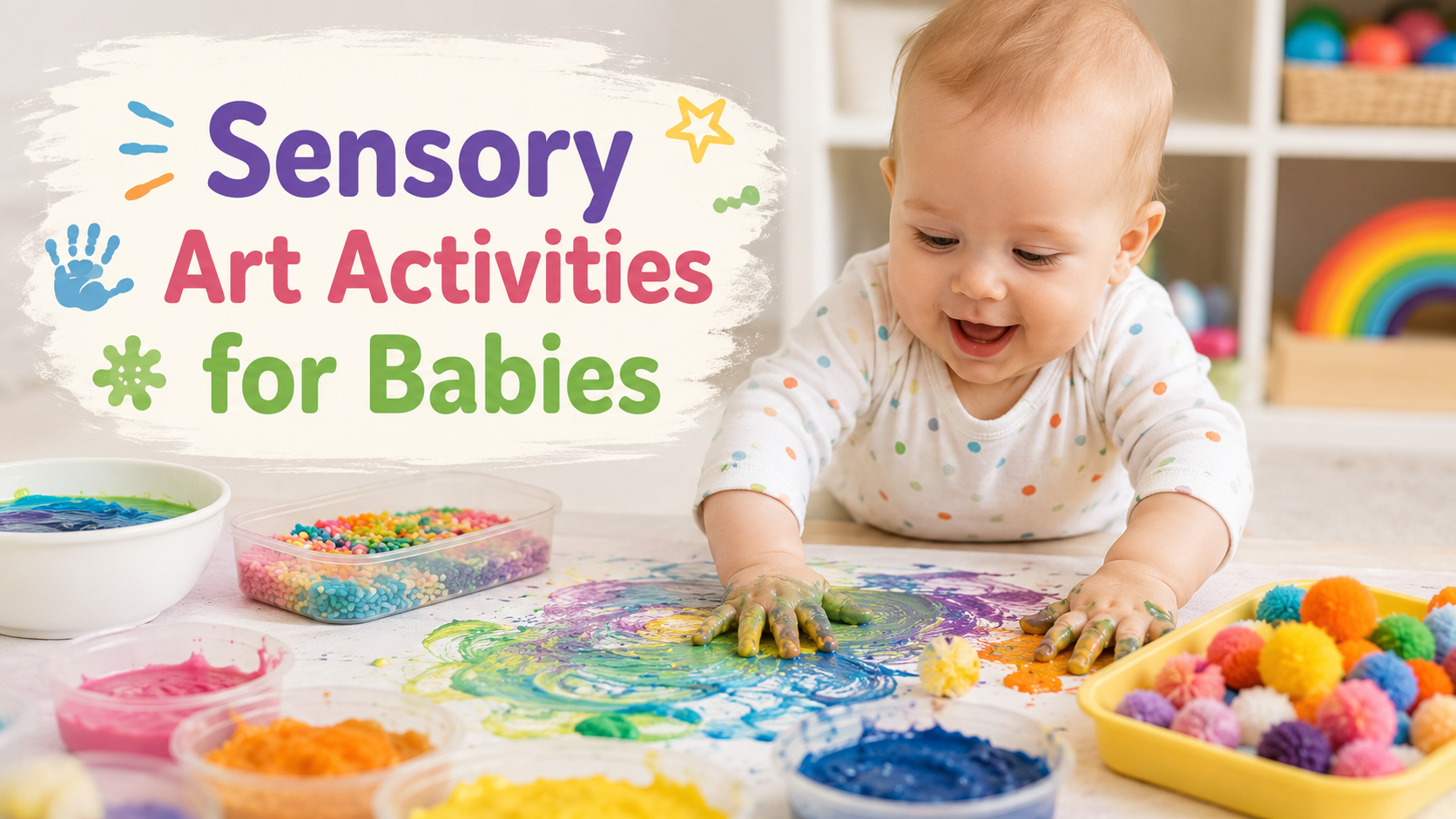
1. Edible Finger Painting Age: 6+ months Use yogurt or pureed fruit tinted with natural food coloring as paint. Babies explore both texture and taste safely.

2. DIY Sensory Bags Age: 6+ months Seal hair gel, water, or paint inside a taped zip-top bag. Babies can press and squish without any mess or choking risk — ideal for babies who still mouth objects.

3. Textured Sensory Board Age: 6+ months Glue different safe textures (felt, faux fur, bubble wrap) to a board. No loose or small parts — just an inviting surface to touch.

4. Shaving Cream Sensory Art Age: 10+ months (supervised, avoid mouth contact) Spread shaving cream on a tray and let your baby draw shapes and patterns with fingers. Wipes away easily.

5. Frozen Sensory Play Age: 9+ months Freeze small safe objects or colored water into ice cubes. Babies explore temperature and watch the ice change over time.

6. Contact Paper Sensory Art Age: 9+ months Stick contact paper (sticky side out) to a surface. Babies press on tissue paper, leaves, or fabric — everything sticks, so nothing goes in the mouth.

7. Playdough Squishing Age: 10+ months Taste-safe playdough (flour, salt, water, food coloring) offers resistance-based touch play that also builds hand strength.

Sensory Art Activities by Sight

8. High-Contrast Visual Art Cards Age: 0+ months Black-and-white patterned cards captivate very young babies whose vision is still developing. Not hands-on, but a genuine sensory activity.

9. Color-Mixing Water Play Age: 9+ months Add drops of food coloring to clear water in a shallow tray and let your baby watch (and eventually stir) the colors blend.

10. Sensory Bottles Age: 6+ months Fill a sealed bottle with water, glitter glue (not loose glitter), and small objects. Babies watch the movement as they shake or roll it.

11. Light Table Art Age: 9+ months Place colored transparent shapes or objects on a light table (or a tablet with a bright blank screen under glass) for babies to arrange and observe.

12. Bubble Wrap Painting Age: 9+ months Combines sight and touch — the visual pattern created by pressing painted bubble wrap is part of the appeal.

Sensory Art Activities by Sound

13. Crinkle Paper Art Age: 6+ months Let your baby scrunch and tear tissue paper or crinkle paper — the sound is often as engaging as the texture.

14. Musical Painting Age: 10+ months Play different music styles while your baby finger paints, and talk about how the movements change with the rhythm.

15. Rice Shaker Art Age: 10+ months A sealed bottle filled with dry rice or beans (securely glued shut) becomes a shakeable sound-and-sight sensory tool.

Sensory Art Activities by Smell & Taste

16. Scented Playdough Age: 10+ months Add a drop of vanilla extract or cinnamon to homemade playdough for a gentle scent layer (avoid essential oils, which are too strong for babies).

17. Herb and Spice Sensory Tray Age: 10+ months (supervised, no small pieces) Offer safe dried herbs like basil or mint in a shallow tray to smell and touch.

18. Edible Playdough Age: 12+ months Made from oat flour, coconut oil, and honey — fully safe to taste, ideal for babies who still explore everything by mouth.

19. Fruit and Veggie Puree Painting Age: 6+ months Same concept as edible finger paint but framed around the smell and taste exploration of new purees your baby has already tried.

Calming Sensory Art for Overstimulated Babies

Not all sensory play needs to be stimulating — some babies benefit more from calming sensory art, especially before naps or after a busy day.

20. Slow Sensory Wipe-Down Age: 6+ months Use a soft, damp cloth to gently wipe your baby’s hands and arms while narrating in a slow, quiet voice. This isn’t “art” in the traditional sense, but it’s a recognized calming sensory technique that pairs well before or after messier activities.

For babies who get overwhelmed easily, keep sessions short (5 minutes), use one texture at a time instead of multiple, and choose muted colors over bright, high-contrast ones.

Safety Guidelines

  • Supervise every sensory activity directly — no exceptions
  • Avoid loose small items (beads, sequins, buttons) for babies under 3
  • Use only taste-safe materials for babies who still mouth objects
  • Skip essential oils and strong fragrances — a baby’s sense of smell is sensitive
  • Always tape sensory bags shut and check regularly for leaks or tears
  • Stop the activity if your baby shows signs of distress rather than curiosity (crying, turning away, covering ears/eyes)

Continue exploring: Easy Arts and Crafts Ideas for Babies or browse the full Baby Activities hub.

Frequently Asked

Common Questions

 Sensory play is any activity that stimulates the senses (like tummy time or a bath), while sensory art specifically channels that exploration through creative materials like paint, dough, or textured boards.
 Newborns can benefit from visual sensory input, such as high-contrast cards, but they aren't ready for hands-on sensory art until they can sit with support, usually around 5–6 months.
 Most babies stay engaged for 5–15 minutes. Ending the session while your baby is still interested — rather than waiting for them to lose interest completely — tends to keep future sessions more successful.
 Yes. Structured sensory play is often used to help babies and toddlers with sensory processing differences build tolerance and comfort with new textures, sounds, and inputs, though a pediatric occupational therapist can guide activities for specific needs.
Author

Ali

Digital Marketing enthusiast with a passion for SEO, web design, analytics, and creative problem-solving.

Follow Me
Other Articles
Previous

Easy Arts and Crafts Ideas for Babies

Next

Simple Craft Ideas for 1 Year Olds

No Comment! Be the first one.

Leave a Reply Cancel reply

Your email address will not be published. Required fields are marked *

What is Did You Search?

The “Did You Search” website was created for all mothers and families. Just search to find all your needs about your children.

Links

  • about
  • contact
  • privacy policy
  • medical disclaimer
  • sitemap
Copyright 2026 — DidYouSearch. All rights reserved.