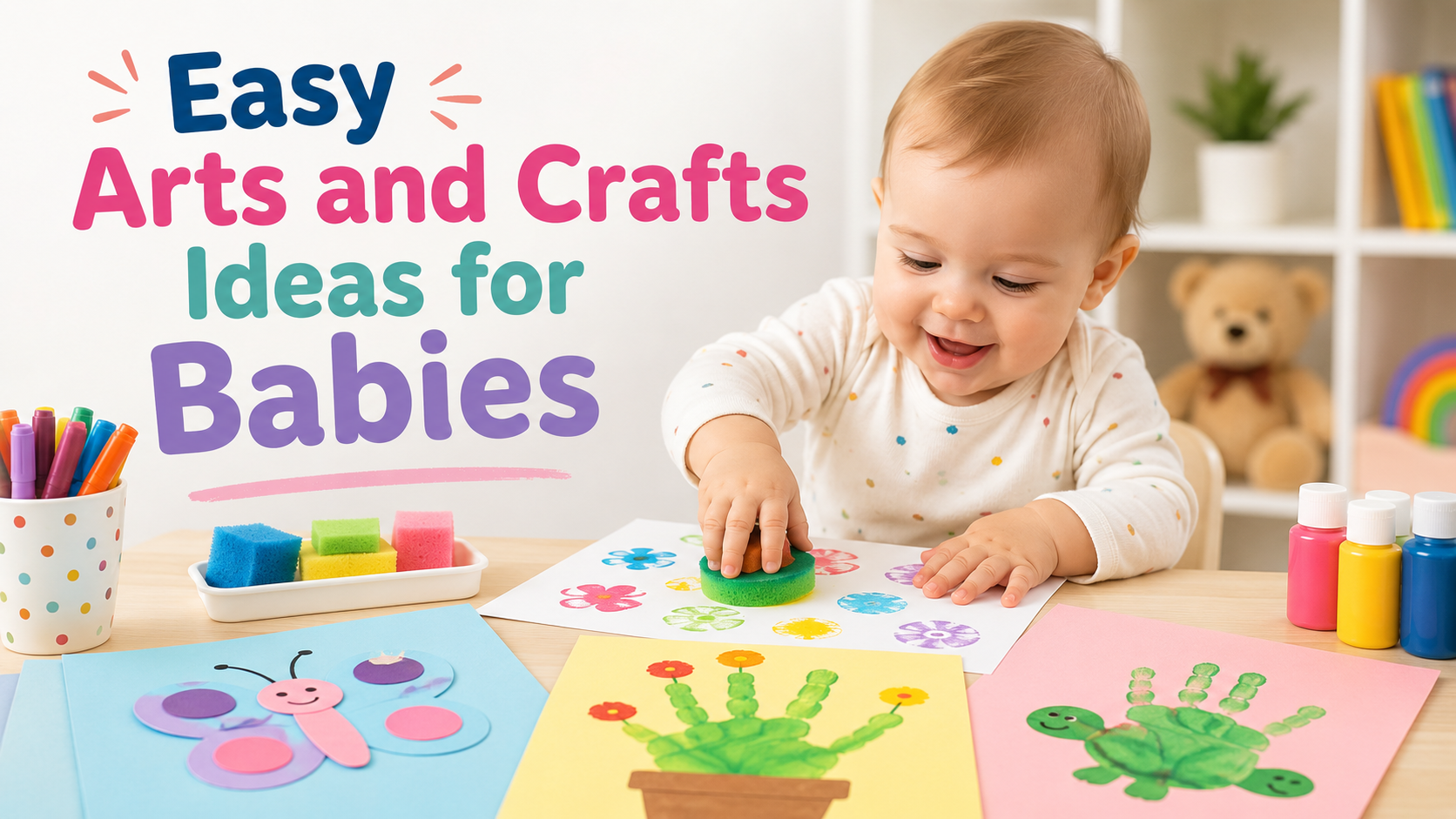

Babies don’t need a finished masterpiece — they need the experience of squishing, smearing, poking, and discovering. That’s the whole point of arts and crafts at this age: it’s not about the art, it’s about the process.
Below are 25 easy, baby-safe craft ideas you can start today with things you probably already have at home. Every activity includes the age range, materials, step-by-step instructions, and a safety note, so you can jump straight to the one that fits your baby right now.
Quick answer: The easiest baby-safe crafts are edible finger painting, handprint art, sensory bags, and playdough — they need almost no setup, use safe materials, and work for babies as young as 6 months.
Why Arts and Crafts Matter for Babies
Arts and crafts aren’t just a way to pass the time — they support real developmental milestones:
- Fine motor skills — grasping a crayon, pressing a hand into paint, pinching playdough
- Sensory development — different textures (sticky, cold, bumpy, smooth) help babies build sensory awareness
- Cause and effect — babies learn that their actions (a smear, a splash) create a visible result
- Language development — narrating colors, textures, and actions builds early vocabulary
- Bonding time — shared, screen-free activity between parent and baby
None of this requires expensive supplies. Most of the ideas below use things already in your kitchen or pantry.
What Age Can Babies Start Arts and Crafts?
Most babies can start simple sensory-based art around 6 months, once they can sit up with support and are starting solids (this matters because early “art” often overlaps with taste-safe materials). Between 9–12 months, babies can start basic finger painting and simple textures. After 12 months, activities like stickers, larger crayons, and simple playdough become appropriate as fine motor control improves.
If your baby still mouths everything (which is normal), stick to the taste-safe ideas marked below.
Safety Rules Before You Start
A few non-negotiables before any baby craft session:
- Always supervise directly — never leave a baby alone with craft materials
- Avoid small parts (buttons, pom-poms, beads) for babies under 3, due to choking risk
- Use only non-toxic, baby-safe paint or make your own edible version (recipes below)
- Skip glitter and small sequins — both are choking and eye-irritation hazards
- Test any new material on a small patch of skin first if your baby has sensitive skin
- Keep sessions short (5–15 minutes) — babies lose interest fast, and that’s normal
25 Easy Arts and Crafts Ideas for Babies
Taste-Safe Painting
1. Edible Finger Painting Age: 6+ months Mix plain yogurt with a few drops of natural food coloring, or use mashed fruit/veggie purees as “paint.” Spread a thin layer on a high-chair tray or large sheet of paper and let your baby explore with bare hands. Safety tip: Use only foods your baby has already been introduced to, to avoid triggering a new allergy during a messy activity.
2. DIY Non-Toxic Paint Age: 9+ months Combine 1 cup cornstarch, 1 cup cold water, and food coloring; heat gently until thickened, then cool. This creates a safe, washable paint for babies who occasionally mouth their hands.
3. Handprint and Footprint Art Age: 6+ months (with help) Use baby-safe paint on your baby’s palm or sole, then press onto paper or fabric. Great as a keepsake and a simple way to track growth over time.
4. Bubble Wrap Painting Age: 9+ months Tape a sheet of bubble wrap to a highchair tray, dab on a little paint, and let your baby press and pat. The texture adds a sensory bonus to a simple painting activity.
5. Sponge Stamping Age: 9+ months Cut a kitchen sponge into simple shapes, dip in paint, and let your baby press it onto paper. Easier to grip than a paintbrush at this age.
Sensory Play (Art-Adjacent)
6. DIY Sensory Bags Age: 6+ months Fill a zip-top bag with hair gel, water beads, or paint, seal tightly (and tape shut), then let your baby squish and press it — completely mess-free and safe even for babies who still mouth things, as it stays sealed.
7. Colored Rice Sensory Bin Age: 10+ months (supervised closely — choking risk) Dye dry rice with food coloring and let it dry. Pour into a shallow bin for scooping and pouring. Best for babies who no longer put everything in their mouth.
8. Frozen Sensory Play Age: 9+ months Freeze small toys or colored water in an ice tray. Let your baby touch, explore, and watch the ice melt — a simple intro to textures and temperature.
9. Textured Sensory Board Age: 6+ months Glue different safe textures (felt, bubble wrap, faux fur) onto a sturdy board for baby to touch and explore. No small or loose parts.
10. Contact Paper Sensory Art Age: 9+ months Tape a sheet of contact paper (sticky side up) to a table or window. Let your baby press on tissue paper, leaves, or fabric scraps — everything sticks, nothing gets lost or eaten.
Playdough & Molding
11. Taste-Safe Playdough Age: 10+ months Mix 1 cup flour, 1/2 cup salt, and water until dough forms; add food coloring. Safe if accidentally tasted, though not meant to be eaten regularly.
12. Edible Playdough (Peanut-Free) Age: 10+ months Combine oat flour, coconut oil, and honey (only for babies over 12 months) to make a fully edible, squishable dough.
13. Cookie Cutter Playdough Play Age: 12+ months Use large, baby-safe cookie cutters with playdough for basic shape exploration and pressing motions.
Paper & Texture Crafts
14. Torn Paper Collage Age: 12+ months Let your baby tear soft paper (tissue paper works best) and stick pieces onto a glue-covered sheet. Builds fine motor strength through tearing.
15. Egg Carton Craft Age: 12+ months (with help) Cut an egg carton into cups; let your baby paint or scribble on the inside/outside. Great low-cost recycled material.
16. Crayon Scribble Art Age: 12+ months Use jumbo, baby-safe crayons on large paper taped to a table. Focus is on the motion, not the picture.
17. Sticker Peel-and-Stick Age: 12+ months Large, easy-peel stickers on paper build fine motor pincer grip. Choose big stickers to avoid choking hazards.
Nature & Outdoor Crafts
18. Leaf and Flower Rubbing Age: 12+ months Place a leaf under thin paper and let your baby scribble over it with a crayon to reveal the leaf’s texture.
19. Nature Collage Age: 12+ months Collect leaves, petals, or grass on a walk, then stick them onto contact paper or a glue sheet.
20. Mud or Sand Play Age: 9+ months Simple outdoor sensory play in a shallow tray — safe, washable, and a great alternative to indoor mess.
Keepsake & Seasonal Crafts
21. Handprint Keepsake Ornament Age: 6+ months Press your baby’s hand into air-dry clay to create a lasting keepsake ornament.
22. Footprint Animal Art Age: 6+ months Turn a painted footprint into a simple animal shape (a bunny, chick, or bird) by adding drawn-on ears or a beak once dry.
23. Handprint Card for Family Age: 6+ months A simple handprint on a folded card — a fast, meaningful gift for grandparents or holidays.
Mess-Free Options
24. No-Mess Painting Bag Age: 6+ months Put dabs of paint inside a sealed zip-top bag, tape it to a table, and let your baby press and move the paint around from outside the bag.
25. Window Cling Art Age: 9+ months Use painter’s tape to create a shape outline on a window, then let your baby “paint” inside it with a wet sponge and water — no real paint needed.
Tips to Make Cleanup Easier
- Do messy activities in just a diaper, or use a washable smock
- Lay a plastic tablecloth or shower curtain underneath before starting
- Keep a damp cloth within arm’s reach at all times
- Choose an area with tile or vinyl flooring over carpet when possible
- Set a timer — sessions of 5–15 minutes are usually enough before a baby loses interest
Looking for more? Explore our full Baby Activities hub for sensory play, developmental milestones, and more Arts & Crafts ideas.
Frequently Asked
Common Questions