
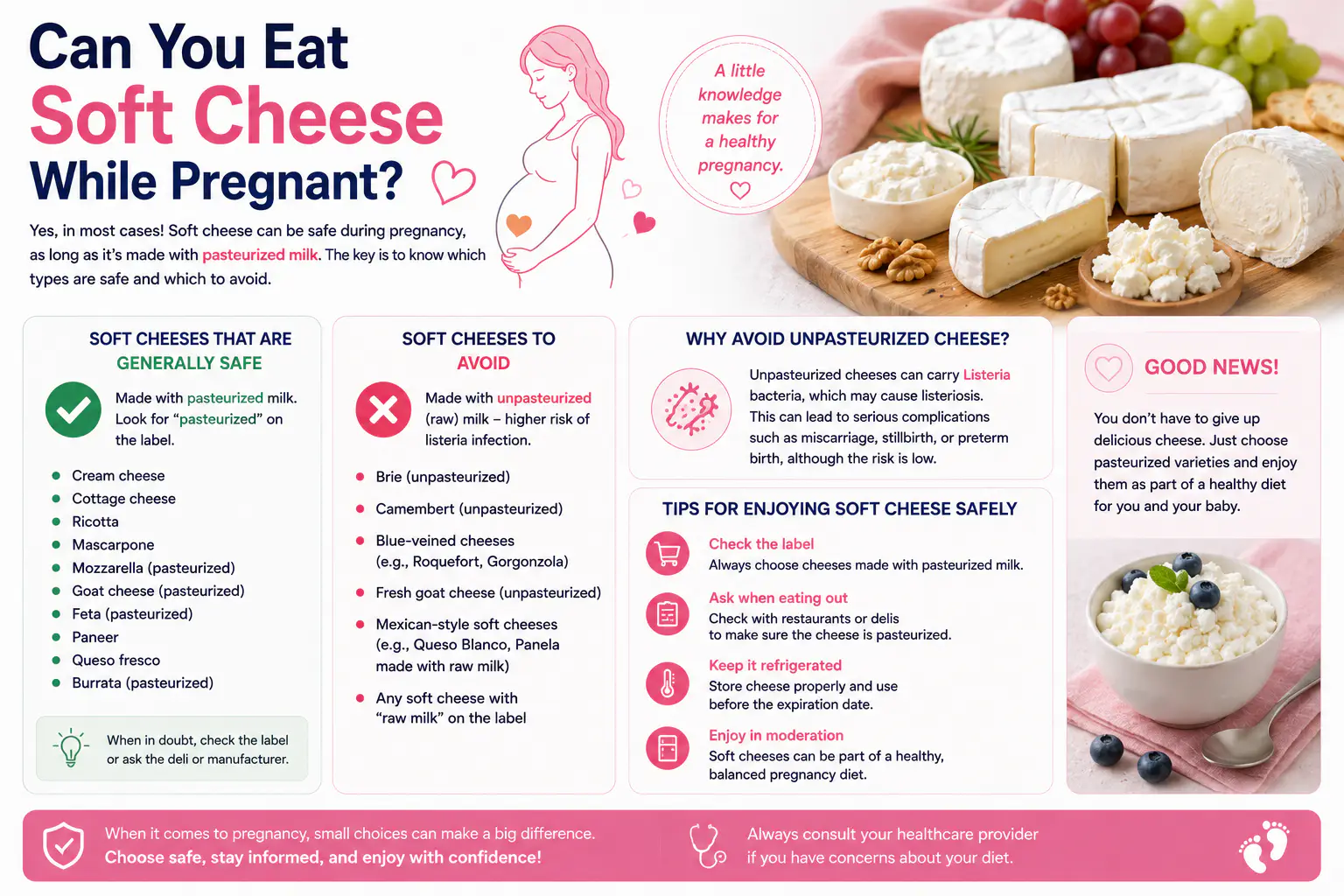

Soft cheese has a confusing reputation in pregnancy — you’ve probably heard it’s off-limits, but the real rule is more specific than “no soft cheese.” The deciding factor isn’t softness, it’s pasteurization, plus a couple of exceptions worth knowing. Here’s what’s actually safe, what to skip, and why.
The Quick Answer
According to the CDC, cheese made from pasteurized milk is generally safe during pregnancy, including many soft cheeses. Soft cheeses made from unpasteurized (raw) milk should be avoided, and a few pasteurized mold-ripened soft cheeses — like Brie and Camembert — are still worth treating with extra caution, since pasteurization reduces but doesn’t fully eliminate risk in these particular varieties.
Why Soft Cheese Is a Pregnancy Concern in the First Place
The concern isn’t the cheese itself — it’s Listeria monocytogenes, a bacterium that can grow in unpasteurized dairy and, less commonly, in contaminated pasteurized products. Pregnant women are about 10 times more likely than the general population to get listeriosis, largely due to pregnancy’s naturally altered immune response. Listeria is particularly dangerous because it can cross the placenta, and infection during pregnancy is linked to miscarriage, stillbirth, preterm labor, and serious illness in newborns.
Soft, high-moisture, low-acidity cheeses provide an environment where Listeria can survive and multiply more easily than in hard, low-moisture cheeses — which is where the “avoid soft cheese” advice originally came from. But moisture and acidity aren’t the whole story; pasteurization is the bigger factor.
Soft Cheeses That Are Generally Safe (If Pasteurized)
- Fresh mozzarella — safe both cooked and uncooked when made from pasteurized milk
- Cream cheese
- Cottage cheese
- Ricotta
- Pasteurized feta
- Pasteurized goat cheese (avoid artisanal or farm-stand versions unless confirmed pasteurized)
As a general rule, if a soft cheese is clearly labeled as made from pasteurized milk, it’s considered safe to eat, including cold, straight from the package.
Soft Cheeses to Approach With Caution or Avoid
Mold-ripened soft cheeses — Brie, Camembert, and similar rind cheeses. These are the trickiest category. Even when made from pasteurized milk, their moisture content and ripening process make them more hospitable to Listeria if contamination occurs after pasteurization. Many experts suggest either avoiding them or, if you want to eat them, heating them to an internal temperature of 165°F (as in a baked Brie recipe), which effectively kills any bacteria present.
Blue-veined cheeses — Gorgonzola, Roquefort, Danish blue. Similar reasoning applies here: high moisture content creates conditions where Listeria can grow, so these are generally recommended to be avoided or thoroughly cooked, even when pasteurized.
Unpasteurized cheeses of any kind, especially Mexican-style soft cheeses — queso fresco, queso blanco, panela, and similar varieties are common sources of Listeria outbreaks in the U.S., largely because they’re traditionally made with raw milk. Always check the label or ask before eating these.
Any cheese from an unclear or unlabeled source, such as homemade cheese, farmers market cheese without pasteurization details, or cheese served at a salad bar where cross-contamination risk is higher due to shared utensils and temperature fluctuations.
How to Tell If a Cheese Is Safe
Check the label. In the U.S., cheese packaging is required to state whether it’s made from pasteurized milk.
Ask when dining out. If a dish includes soft cheese and you’re unsure how it was made, don’t hesitate to ask your server.
When in doubt, heat it. Cooking soft cheese to 165°F effectively neutralizes Listeria risk, which is why baked Brie, melted goat cheese, or cooked queso dishes are considered safer options than eating them cold.
Be extra cautious with imported or artisanal cheeses, which are more likely to be made with raw milk, especially in countries with less strict pasteurization requirements.
A Note on International Guidelines
If you’ve seen conflicting advice online, it may be because guidance varies slightly by country. UK health authorities, for instance, take a more cautious stance and recommend avoiding all mold-ripened and blue-veined soft cheeses regardless of pasteurization, while U.S. guidance from the CDC is generally more permissive of pasteurized varieties. If you’re unsure which guidance to follow, it’s worth checking with your own healthcare provider, especially if you’re pregnant while traveling or living outside the U.S.
The Bottom Line
You don’t have to swear off soft cheese for nine months — pasteurized mozzarella, cream cheese, cottage cheese, and similar varieties are considered safe to enjoy. The cheeses worth being genuinely cautious about are mold-ripened and blue-veined soft cheeses, plus anything made with unpasteurized milk. When in doubt, check the label, ask questions when eating out, or simply heat the cheese thoroughly before eating it.
FAQ
Is feta cheese safe during pregnancy?
Yes, as long as it’s made from pasteurized milk. Check the label or ask your server, since traditional feta can sometimes be made with raw milk.
Can I eat cream cheese while pregnant?
Yes, cream cheese is made from pasteurized milk and is considered safe to eat during pregnancy, including on bagels or in recipes.
Is Brie safe to eat while pregnant?
It’s a gray area. Pasteurized Brie carries a lower risk than unpasteurized versions, but its high moisture and mold-ripening process still make it more susceptible to contamination. Heating it to 165°F, like in a baked Brie dish, is the safest way to enjoy it.
What happens if I accidentally ate unpasteurized soft cheese while pregnant?
A single serving doesn’t guarantee illness, but it’s worth monitoring for flu-like symptoms — fever, chills, muscle aches, nausea — over the following days or weeks, and contacting your doctor if any appear, since listeriosis symptoms can be delayed.
Is mozzarella considered a safe soft cheese during pregnancy?
Yes. Fresh mozzarella made from pasteurized milk is one of the more universally safe soft cheeses and can be eaten both cooked and cold.