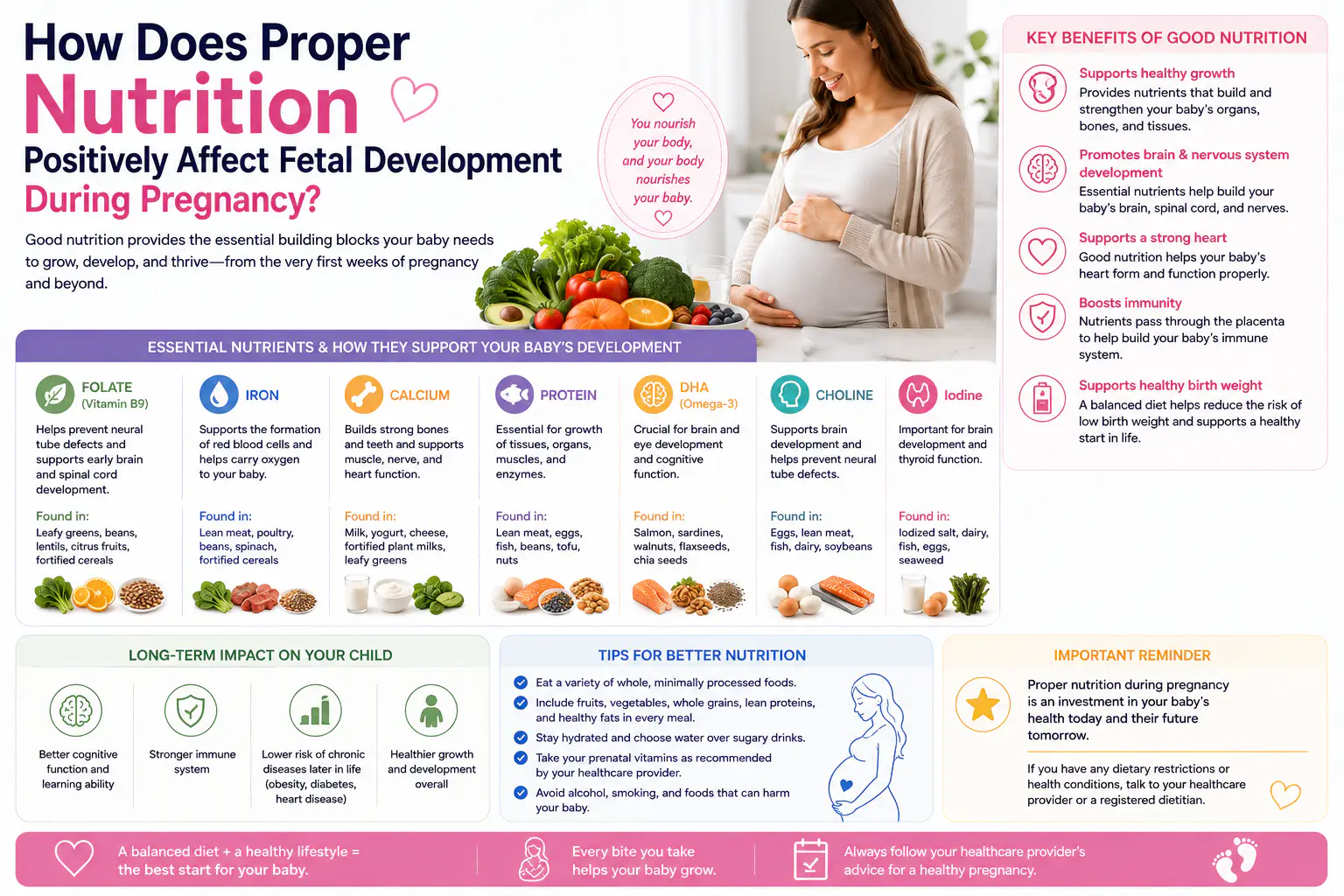

Every meal during pregnancy is doing more than fueling you — it’s supplying the raw materials your baby’s body is using, in real time, to build a brain, a nervous system, a skeleton, and every organ in between. Nutrition isn’t just a “nice to have” during pregnancy; it’s one of the most directly influential factors in how a baby grows, both before birth and for years afterward. Here’s a closer look at how proper nutrition supports fetal development, nutrient by nutrient and stage by stage.
Why Maternal Nutrition Matters So Much
The fetus depends entirely on the mother for nutrients, transferred through the placenta throughout pregnancy. Researchers describe nutrition as the major environmental factor shaping how the fetal genome expresses itself — a concept known as “fetal programming.” In other words, what a baby is exposed to nutritionally in the womb doesn’t just affect birth weight or organ formation; it can influence long-term health outcomes, including metabolic and cardiovascular disease risk later in life. This is why the concept of “eating for baby’s development,” rather than just “eating enough,” has become central to modern prenatal care.
How Nutrition Supports Brain and Nervous System Development
The brain begins forming within the first few weeks of pregnancy — often before many people know they’re pregnant — and continues developing rapidly throughout gestation. Several nutrients play an outsized role here:
Folate (folic acid). Folate is essential for neural tube closure, the earliest stage of brain and spinal cord formation. Adequate folate intake — 600 micrograms per day during pregnancy — has been shown to prevent up to 70% of neural tube defects, which is why folic acid supplementation before and during early pregnancy is one of the most consistently recommended prenatal interventions.
Choline. Choline works alongside folate to support neural tube development and has been linked to improved neuronal plasticity, meaning the brain’s ability to form and reorganize connections. Research suggests adequate choline intake may support long-term memory and cognitive function in offspring.
DHA (an omega-3 fatty acid). DHA accumulates heavily in the fetal brain and retina during the third trimester, supporting both cognitive development and vision. Studies have found that babies of mothers with higher DHA intake during pregnancy show better attention and processing outcomes in infancy and early childhood.
Iron. Beyond supporting the mother’s expanding blood volume, iron is critical for oxygen delivery to the developing fetal brain and plays a role in producing neurotransmitters that support emotional and cognitive development. Iron deficiency during pregnancy is one of the most common nutritional issues worldwide and is linked to impacts on memory, executive function, and social-emotional development in children.
Iodine and vitamin D. Iodine supports thyroid hormone production, which is essential for brain maturation, while vitamin D contributes to healthy neurodevelopment alongside its role in bone growth.
How Nutrition Supports Organ and Skeletal Development
Beyond the brain, nutrition drives the formation of essentially every organ system:
Protein supplies the building blocks for new tissue — muscle, organs, and the placenta itself — and needs increase notably as pregnancy progresses.
Calcium and vitamin D work together to mineralize the fetal skeleton, particularly in the second and third trimesters when bone growth accelerates.
Omega-3 fatty acids also support the development of the eyes and cardiovascular system, in addition to the brain.
Zinc and vitamin A contribute to healthy cell division and immune system development.
What Happens When Nutrition Falls Short
Research consistently shows that inadequate maternal nutrition — whether from undereating, nutrient deficiencies, or poor diet quality — is associated with a range of complications, including low birth weight, intrauterine growth restriction (IUGR), and preterm birth. Importantly, the relationship isn’t only about eating “less” — significant overnutrition and excessive weight gain during pregnancy also carry risks, including higher rates of gestational diabetes and larger birth weights that can complicate delivery. This is part of why prenatal nutrition guidance focuses on balance and nutrient density rather than simply “eating more.”
The Placenta’s Role
It’s worth understanding that nutrients don’t reach the baby directly — they’re transferred through the placenta, an organ that itself depends on adequate maternal nutrition to develop and function properly. Poor maternal nutrition can impair placental development and blood flow, which in turn limits how efficiently nutrients and oxygen reach the fetus, creating a compounding effect. This is one reason a nutrient-dense diet matters from the very start of pregnancy, even before the placenta is fully established.
Practical Takeaways for Supporting Fetal Development
Prioritize folate and choline early, since neural tube development happens in the first few weeks of pregnancy, often before pregnancy is confirmed.
Include iron-rich foods regularly — lean meat, beans, and fortified grains — especially as blood volume expands.
Add low-mercury fish or a DHA supplement to support brain and eye development, particularly in the second and third trimesters.
Don’t skip protein and calcium as pregnancy progresses, since these needs increase notably in the second half.
Take a prenatal vitamin to help cover nutrient gaps, especially for nutrients like folate, iron, and iodine that are hard to get from diet alone in the amounts pregnancy requires.
The Bottom Line
Proper nutrition during pregnancy directly shapes how a baby’s brain, nervous system, organs, and skeleton form — and the effects can extend well beyond birth into childhood development and even long-term health. Nutrients like folate, choline, iron, DHA, iodine, calcium, and protein each play specific, well-documented roles in fetal growth. A nutrient-dense diet, supported by a prenatal vitamin, gives your baby’s development the strongest possible foundation.
FAQ
What is the most important nutrient for fetal development?
There isn’t a single “most important” nutrient, but folate stands out for its critical role in preventing neural tube defects in the earliest weeks of pregnancy, which is why it’s recommended even before conception.
How does nutrition affect a baby’s brain development specifically?
Nutrients including folate, choline, iron, DHA, and iodine each support different aspects of brain development, from neural tube closure early in pregnancy to neuron growth, connectivity, and myelination later on.
Can poor nutrition during pregnancy affect a baby long-term?
Yes. Research on fetal programming shows that maternal nutrition can influence a child’s long-term risk for conditions like obesity, cardiovascular disease, and metabolic disorders, in addition to immediate outcomes like birth weight.
Does eating more food help fetal development?
Not necessarily. Fetal development depends more on nutrient quality than total food quantity — excessive calorie intake and weight gain carry their own risks, while nutrient-dense choices support development more effectively than simply eating more.
When during pregnancy does nutrition matter most for fetal development?
Nutrition matters throughout pregnancy, but certain windows are especially critical: folate and choline are vital in the first few weeks for neural tube development, while protein, calcium, and DHA become increasingly important in the second and third trimesters as the brain, skeleton, and organs grow rapidly.