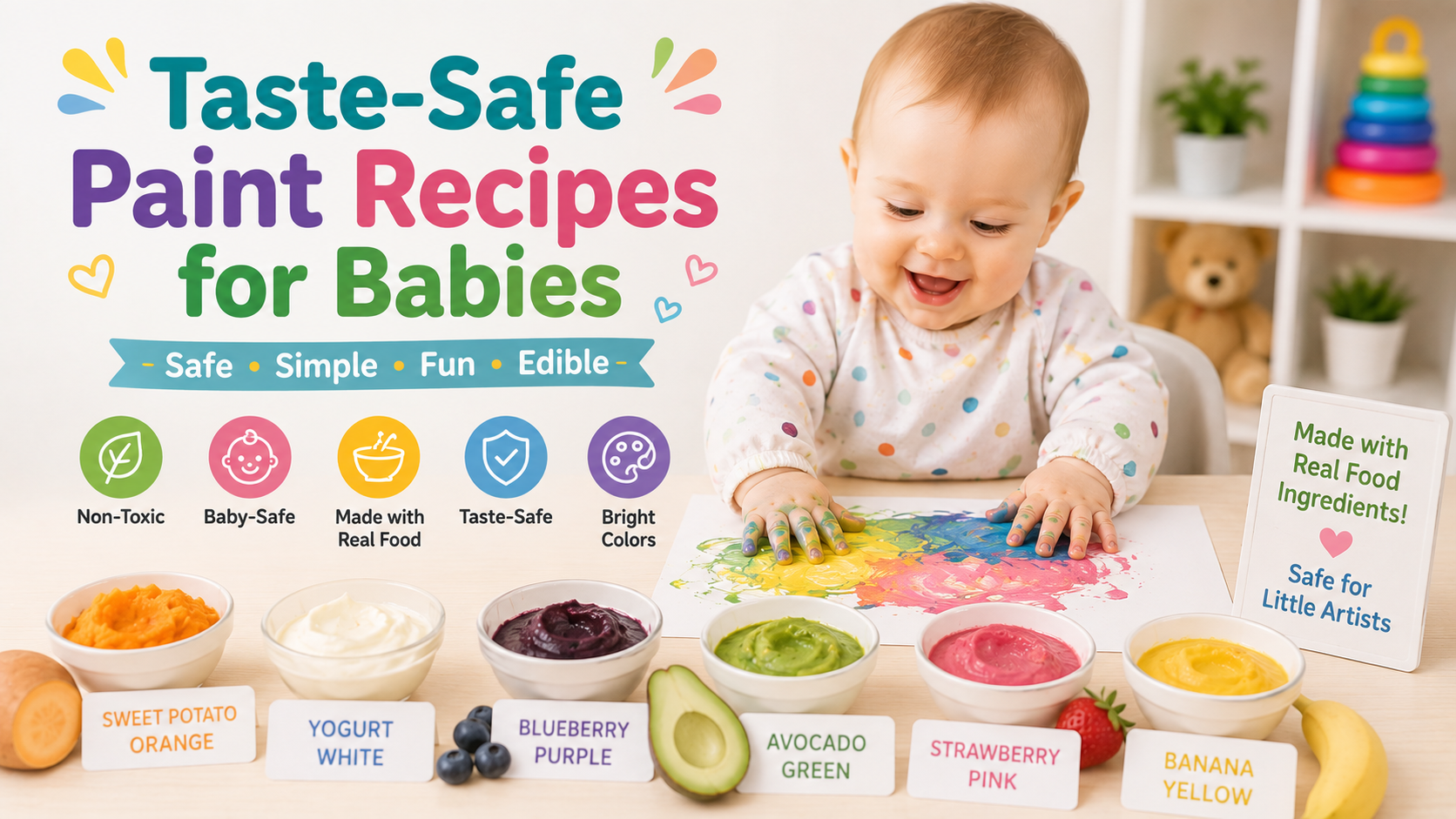

“Taste-safe” and “edible” get used interchangeably online, but they’re not the same thing — and the difference matters. Edible paint is made from real food (yogurt, purees) and is fine to actually eat. Taste-safe paint is made from non-food, non-toxic ingredients that won’t harm your baby if mouthed or licked, but aren’t meant to be swallowed in any real quantity. This guide covers the taste-safe category specifically: flour, cornstarch, and powder-based recipes that give you brighter colors and more texture options than food-based paint alone.
Quick answer: The most common taste-safe paint is a 1:2 ratio of flour to water with a few drops of food coloring — but raw flour should be baked at 300°F for 10 minutes first, since raw flour can carry bacteria that’s unsafe for babies to mouth in quantity.
Taste-Safe vs. Edible: What’s the Real Difference
| Edible Paint | Taste-Safe Paint | |
|---|---|---|
| Made from | Real food (yogurt, fruit puree) | Non-food pantry items (flour, cornstarch) |
| Safe to swallow in quantity | Yes | No — safe if mouthed, not meant to be eaten |
| Color vibrancy | Muted, food-based tones | Brighter, closer to real paint |
| Best for | Babies who still mouth everything constantly | Babies past heavy mouthing, or when you want more vivid color |
| Shelf life | Days (refrigerated) | Similar, varies by recipe |
If your baby still puts their whole hand in their mouth repeatedly during play, edible paint is the safer starting point. Once mouthing becomes occasional rather than constant, taste-safe recipes open up more color and texture options.
The Flour Safety Step Most Recipes Skip
Raw flour is not automatically safe just because it’s a food ingredient — it can carry bacteria picked up during milling, which is why raw cookie dough made with unbaked flour carries a similar caution for young children. If your recipe uses raw flour and your baby is likely to mouth their hands during play:
- Spread flour in a thin layer on a baking sheet
- Bake at 300°F (150°C) for 10 minutes
- Let it cool completely before mixing into any recipe below
This single step is missing from most flour-paint tutorials online, but it’s a simple way to remove one avoidable risk before your baby’s hands go anywhere near their mouth.
Base Recipe: Classic Flour Paint
Ingredients:
- 1 tablespoon flour (baked, see above)
- 2 tablespoons water
- 2–3 drops food coloring
Steps:
- Mix flour and water in a small jar until smooth
- Add food coloring and stir until evenly distributed
- Adjust consistency with a little more water if too thick, or more flour if too thin
Notes: This is a forgiving recipe — if the ratio is slightly off, just adjust with more of whichever ingredient is needed. For a gluten-free version, substitute gluten-free flour in the same ratio.
5 More Taste-Safe Paint Recipes
Cornstarch Paint Mix 1/4 cup cornstarch with 1/4 cup cold water, then slowly stir in 1 cup of warm (not boiling) water until it thickens into a pudding-like texture. Adding a teaspoon of cream of tartar gives it a glossier, more flexible finish once dry.
Powdered Milk Paint Mix powdered milk with a small amount of water until it reaches a tempera-paint-like consistency, then tint with food coloring. Gives a smoother, more opaque finish than flour-based paint.
Puffy Paint Combine equal parts salt, flour, and water, then tint with food coloring and put into a squeeze bottle. Painted designs puff up and lightly sparkle once dry — a fun textured option for slightly older toddlers who won’t try to eat it off the page.
Fizzy Paint Mix baking soda with a few drops of food coloring and a small amount of water to form a paste, then let your baby “paint” with a brush dipped in vinegar over the top for a gentle fizzing reaction — genuinely taste-safe, and adds a sensory/science element.
Sidewalk Chalk Paint Mix equal parts cornstarch and water with food coloring for an outdoor-friendly paint that rinses off pavement, hands, and clothing easily with water.
Comparing All 6 Recipes at a Glance
| Recipe | Texture | Best For | Prep Time |
|---|---|---|---|
| Classic Flour Paint | Smooth, thin | First-time painters, all ages | 2 min |
| Cornstarch Paint | Glossy, thick | Babies who enjoy texture | 10 min (stovetop) |
| Powdered Milk Paint | Opaque, smooth | Brighter color needs | 3 min |
| Puffy Paint | Textured, raised | Toddlers past heavy mouthing | 5 min |
| Fizzy Paint | Foamy, active | Sensory + light science play | 5 min |
| Sidewalk Chalk Paint | Thin, washable | Outdoor sessions | 3 min |
Safety and Storage Notes
- Always bake raw flour first if your baby is likely to mouth their hands (see step above)
- None of these recipes are meant to be eaten in real quantity — taste-safe means “won’t cause harm if licked,” not “nutritious” or “a food”
- Store any leftover paint in an airtight container in the fridge and discard after 3–5 days
- Do a small skin patch test first if your baby has sensitive skin or eczema, since flour and cornstarch can occasionally cause mild irritation in sensitive babies
- Choose a gluten-free flour substitute if there’s any family history of gluten sensitivity, even though this is topical use rather than eating
Continue exploring: browse the full Baby Activities hub.
Frequently Asked
Common Questions