Skip to content
DidYouSearch DidYouSearch
  • did you search?
  • Baby Plus+
    • Baby Activities
      • Arts & Crafts
      • Indoor Activities
      • Montessori
      • Music
      • Outdoor Activities
      • Reading
      • Sensory Play
      • Tummy Time
    • Baby Development
      • Brain Development
      • Cognitive Development
      • Emotional Development
      • Fine Motor Skills
      • Growth Milestones
      • Monthly Milestones
      • Motor Skills
      • Physical Development
      • Social Development
      • Speech Development
    • Baby Feeding
      • Allergies
      • Baby Led Weaning
      • Bottle Feeding
      • Breast feeding
        • Breastfeeding Diet
        • Breastfeeding Positions
        • Latch Problems
        • Low Milk Supply
        • Mastitis
        • Pumping Schedule
        • Weaning
      • Burping
      • Cluster Feeding
      • Feeding Schedule
      • Formula Feeding
        • Formula Amount
        • Formula Brands
        • Formula Comparison
        • Formula Preparation
        • Formula Storage
      • Hydration
      • Pumping
      • Solid Foods
    • Baby Gear Reviews
      • Best Baby Carrier
      • Best Baby Monitor
      • Best Baby Strollers
      • Best Bottles
      • Best Breast Pump
      • Best Car Seat
      • Best Cribs
      • Best Diapers
      • Best Formula
      • Best Toys
    • Baby Growth
      • Growth Spurts
      • Height Charts
      • Monthly Growth
      • Percentiles
      • Weight Charts
    • Baby Health
      • Allergies
      • Cold
      • Constipation
      • Cough
      • Diarrhea
      • Ear Infection
      • Fever
      • Flu
      • Pediatric Visits
      • Rashes
      • Teething
      • Vaccines
      • Vomiting
    • Baby Nutrition
      • Dairy
      • Drinks
      • Eggs
      • Fish
      • Fruits
      • Healthy Recipes
      • Meat
      • Snacks
      • Vegetables
      • Vitamins
    • Baby Products
      • Baby Carriers
      • Bassinets
      • Bottles
      • Breast Pumps
      • Car Seats
      • Cribs
      • Diaper Bags
      • High Chairs
      • Monitors
      • Strollers
      • Swings
      • Toys
      • Walkers
    • Baby Recipes
      • BLW Recipes
      • Breakfast
      • Dinner
      • Finger Foods
      • Lunch
      • Purees
      • Snacks
    • Baby Safety
      • Baby Proofing
      • Car Seats
      • Choking Hazards
      • CPR
      • Home Safety
      • Poison Prevention
      • Safe Sleep
      • Sun Protection
      • Water Safety
  • Baby Names
    • Boy Names
    • Girl Names
    • American baby boy names
    • American baby girl names
    • Biblical Names
    • Middle Names
    • Modern Names
    • Short Names
    • Unique Names
    • Unisex Names
  • Recommended
    • Baby Shopping
      • Baby Registry
      • Budget Baby Shopping
      • Hospital Bag
      • Must Have Products
      • Newborn Checklist
      • Nursery Ideas
    • Baby Sleep
      • Bedtime Routine
      • Co Sleeping
      • Crib Safety
      • Nap Schedules
      • Night Wakings
      • Sleep Environment
      • Sleep Products
      • Sleep Regression
      • Sleep Training
      • Wake Windows
      • White Noise
    • Childcare
      • Daycare
      • Babysitters
      • Kindergarten
      • Nannies
      • Preschool
    • Newborn Care
      • Nail Care
      • Baby Hygiene
      • Bathing
      • Crying
      • Diapering
      • Ear Care
      • Eye Care
      • Skin Care
      • Soothing Techniques
      • Temperature
      • Umbilical Cord
    • Special Needs
      • Premature Babies
      • Autism Signs
      • Developmental Delays
      • Down Syndrome
      • NICU
      • Twins
    • Seasonal Baby Care
      • Spring
      • Summer
      • Travel
      • Fall
      • Holidays
      • Winter
  • Parenting
    • Bonding
    • Discipline
    • Emotional Intelligence
    • First Time Parents
    • Gentle Parenting
    • Positive Parenting
    • Routines
    • Single Parents
    • Working Parents
  • Pregnancy
    • Pregnancy Complications
    • Labor & Delivery
    • Postpartum Recovery
    • Pregnancy Exercises
    • Pregnancy Medications
    • Pregnancy Nutrition
    • Pregnancy Sleep
    • Pregnancy Symptoms
    • Pregnancy Tests
    • Pregnancy Vitamins
    • Pregnancy Weeks
  • Toddler
    • Preschool
    • Speech
    • Tantrums
    • Toddler Food
    • Toddler Sleep
    • Behavior
    • Independence
    • Learning
    • Potty Training
  • Traveling with Baby
    • Road Trips
    • Beach
    • Camping
    • Flying
    • Hotels
    • Packing Lists
  • did you search?
  • Baby Plus+
    • Baby Activities
      • Arts & Crafts
      • Indoor Activities
      • Montessori
      • Music
      • Outdoor Activities
      • Reading
      • Sensory Play
      • Tummy Time
    • Baby Development
      • Brain Development
      • Cognitive Development
      • Emotional Development
      • Fine Motor Skills
      • Growth Milestones
      • Monthly Milestones
      • Motor Skills
      • Physical Development
      • Social Development
      • Speech Development
    • Baby Feeding
      • Allergies
      • Baby Led Weaning
      • Bottle Feeding
      • Breast feeding
        • Breastfeeding Diet
        • Breastfeeding Positions
        • Latch Problems
        • Low Milk Supply
        • Mastitis
        • Pumping Schedule
        • Weaning
      • Burping
      • Cluster Feeding
      • Feeding Schedule
      • Formula Feeding
        • Formula Amount
        • Formula Brands
        • Formula Comparison
        • Formula Preparation
        • Formula Storage
      • Hydration
      • Pumping
      • Solid Foods
    • Baby Gear Reviews
      • Best Baby Carrier
      • Best Baby Monitor
      • Best Baby Strollers
      • Best Bottles
      • Best Breast Pump
      • Best Car Seat
      • Best Cribs
      • Best Diapers
      • Best Formula
      • Best Toys
    • Baby Growth
      • Growth Spurts
      • Height Charts
      • Monthly Growth
      • Percentiles
      • Weight Charts
    • Baby Health
      • Allergies
      • Cold
      • Constipation
      • Cough
      • Diarrhea
      • Ear Infection
      • Fever
      • Flu
      • Pediatric Visits
      • Rashes
      • Teething
      • Vaccines
      • Vomiting
    • Baby Nutrition
      • Dairy
      • Drinks
      • Eggs
      • Fish
      • Fruits
      • Healthy Recipes
      • Meat
      • Snacks
      • Vegetables
      • Vitamins
    • Baby Products
      • Baby Carriers
      • Bassinets
      • Bottles
      • Breast Pumps
      • Car Seats
      • Cribs
      • Diaper Bags
      • High Chairs
      • Monitors
      • Strollers
      • Swings
      • Toys
      • Walkers
    • Baby Recipes
      • BLW Recipes
      • Breakfast
      • Dinner
      • Finger Foods
      • Lunch
      • Purees
      • Snacks
    • Baby Safety
      • Baby Proofing
      • Car Seats
      • Choking Hazards
      • CPR
      • Home Safety
      • Poison Prevention
      • Safe Sleep
      • Sun Protection
      • Water Safety
  • Baby Names
    • Boy Names
    • Girl Names
    • American baby boy names
    • American baby girl names
    • Biblical Names
    • Middle Names
    • Modern Names
    • Short Names
    • Unique Names
    • Unisex Names
  • Recommended
    • Baby Shopping
      • Baby Registry
      • Budget Baby Shopping
      • Hospital Bag
      • Must Have Products
      • Newborn Checklist
      • Nursery Ideas
    • Baby Sleep
      • Bedtime Routine
      • Co Sleeping
      • Crib Safety
      • Nap Schedules
      • Night Wakings
      • Sleep Environment
      • Sleep Products
      • Sleep Regression
      • Sleep Training
      • Wake Windows
      • White Noise
    • Childcare
      • Daycare
      • Babysitters
      • Kindergarten
      • Nannies
      • Preschool
    • Newborn Care
      • Nail Care
      • Baby Hygiene
      • Bathing
      • Crying
      • Diapering
      • Ear Care
      • Eye Care
      • Skin Care
      • Soothing Techniques
      • Temperature
      • Umbilical Cord
    • Special Needs
      • Premature Babies
      • Autism Signs
      • Developmental Delays
      • Down Syndrome
      • NICU
      • Twins
    • Seasonal Baby Care
      • Spring
      • Summer
      • Travel
      • Fall
      • Holidays
      • Winter
  • Parenting
    • Bonding
    • Discipline
    • Emotional Intelligence
    • First Time Parents
    • Gentle Parenting
    • Positive Parenting
    • Routines
    • Single Parents
    • Working Parents
  • Pregnancy
    • Pregnancy Complications
    • Labor & Delivery
    • Postpartum Recovery
    • Pregnancy Exercises
    • Pregnancy Medications
    • Pregnancy Nutrition
    • Pregnancy Sleep
    • Pregnancy Symptoms
    • Pregnancy Tests
    • Pregnancy Vitamins
    • Pregnancy Weeks
  • Toddler
    • Preschool
    • Speech
    • Tantrums
    • Toddler Food
    • Toddler Sleep
    • Behavior
    • Independence
    • Learning
    • Potty Training
  • Traveling with Baby
    • Road Trips
    • Beach
    • Camping
    • Flying
    • Hotels
    • Packing Lists
Close

Search

Home/Baby Activities/Arts & Crafts/DIY Sensory Bags for Babies
Arts & CraftsBaby Activities

DIY Sensory Bags for Babies

By Ali
August 2, 2026 5 Min Read
0

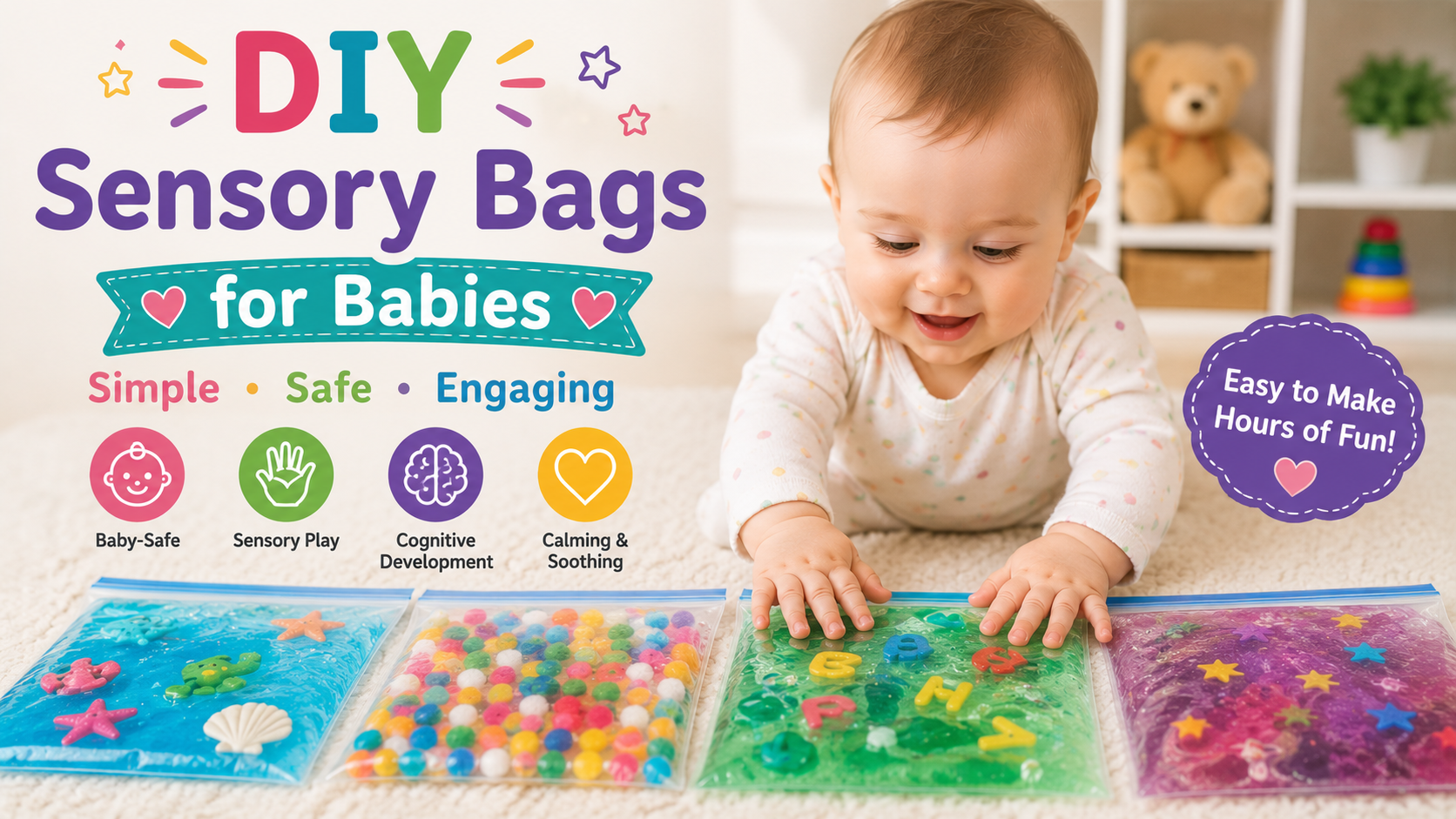
The idea behind a sensory bag is simple — seal something interesting to touch inside a bag so a baby can explore it with zero risk of putting it in their mouth. The execution is where most parents run into trouble: bags that leak, tear from a poking fingernail, or get chewed open within a day. This guide focuses on the sealing technique that actually prevents that, plus filler ideas and mounting options once your bag is secure.

Quick answer: The most leak-proof sensory bag uses two bags (one inside the other), with all excess air removed and the zip-seal reinforced with several layers of duct or gorilla tape — not just pressed closed.

Why Sensory Bags Leak (and How to Actually Stop It)

Contents hide
1 Why Sensory Bags Leak (and How to Actually Stop It)
2 The Double-Bag Sealing Method, Step by Step
3 12 Sensory Bag Filler Combinations
4 Mounting Options: Floor, Window, Table, or Highchair
5 Safety Notes for Teething and Mouthing Babies
6 Frequently Asked Questions
7 Frequently Asked
8 Common Questions

Most leaks happen for one of three reasons:

  • Air left inside the bag puts pressure on the seams, which stresses the seal over time
  • A single layer of plastic tears easily, especially from a baby’s fingernail or a tooth during a chewing phase
  • The zip-seal alone isn’t reinforced — the zip closure is a starting point, not a complete seal

The fix for all three is the same: remove the air, double-bag it, and reinforce with real tape — not just the bag’s built-in seal.

The Double-Bag Sealing Method, Step by Step

What you need:

  • Two heavy-duty freezer bags (quart or gallon size, one to go inside the other)
  • Your chosen filler
  • Duct tape or gorilla tape (regular packing tape is not strong enough for liquid fillers)

Steps:

  1. Add your filler to the first bag — don’t overfill; leave enough room for the contents to move around
  2. Squeeze out as much excess air as possible before sealing the zip closure
  3. Seal the zip closure, then reinforce it with 2–3 layers of tape along the entire top edge
  4. Place this sealed bag inside a second bag
  5. Squeeze out excess air from the outer bag as well, seal its zip closure, and reinforce with tape the same way
  6. Optional: for extra durability, especially with liquid fillers, run tape along all four edges of the outer bag, folding it over the edge to reinforce the seams themselves, not just the top

Why this works: The zip closure on either bag is rarely the weak point — the real risk is a torn seam or corner, which a second layer of plastic and reinforced edges protects against directly.

12 Sensory Bag Filler Combinations

Filler Texture Best Paired With
Hair gel Squishy, smooth A few drops of food coloring
Water + oil Flowing, “lava lamp” effect Food coloring (oil and water separate naturally)
Shaving cream Fluffy, light A drop of food coloring for marbled effect
Water beads Bouncy, textured Nothing — texture alone is the appeal
Hand sanitizer gel + glitter glue Smooth, sparkly Small foam shapes
Cooked, cooled pasta Slippery, soft A little water or oil
Pom-poms + hair gel Soft with resistance Two contrasting colors
Googly eyes + gel Playful, visual Bright gel color
Dry rice or beans (sealed, not loose) Textured, shifting Small plastic toys
Shredded paper or confetti + gel Colorful, dynamic Seasonal colors (fall leaves, snow)
Marbles + hair gel Firm, rolling Clear or lightly tinted gel
Bubble wrap pieces + gel Extra texture layer Any base gel color

Avoid anything sharp, rigid, or small enough to become a true choking hazard if the bag were ever breached — soft, lightweight fillers hold up better over time and pose less risk.

Mounting Options: Floor, Window, Table, or Highchair

Once sealed, tape the bag down flat using painter’s tape or washi tape (gentler on surfaces than duct tape) so it can’t be picked up and shaken loose:

  • Floor, for tummy time — tape all four corners down so a baby on their belly can press and explore without the bag sliding away
  • Window — bright, colorful fillers (like oil and water) become especially engaging with natural light behind them
  • High chair tray — useful for supervised seated exploration during a calm moment
  • Low table or coffee table — good for a baby who’s pulling up to stand and wants to explore at that height

Avoid leaving tape on wood floors or furniture for more than a day, since some tapes can leave residue or affect the finish over time.

Safety Notes for Teething and Mouthing Babies

  • Sensory bags are generally considered safe for babies from around 6 months old, once they can reach and grasp with intention
  • Always supervise directly — a sealed bag reduces risk but doesn’t eliminate the need for supervision
  • If your baby is actively teething, expect more determined chewing and biting at the bag — this is exactly when the double-bag method matters most
  • Trim your baby’s fingernails before sensory bag play, since sharp nails are a common cause of small punctures
  • Inspect the bag before every use, not just the first time — even a well-sealed bag should be checked for wear if it’s been played with regularly over several days
  • If you ever notice a leak, stop the activity immediately, clean up the filler, and either re-seal or discard the bag rather than trying to “just tape over it” while your baby is still playing

Frequently Asked Questions

How do I stop my sensory bag from leaking? Use two bags (one inside the other), remove all excess air before sealing, and reinforce the zip closure with several layers of duct or gorilla tape rather than relying on the bag’s built-in seal alone.

What age can babies start playing with sensory bags? Most babies can start around 6 months old, once they’re able to reach for and grasp objects with some intention.

Is it safe if my baby chews on a sensory bag? A properly double-bagged and taped sensory bag is designed to withstand chewing and biting, which is common during teething — but always supervise directly and inspect the bag regularly for wear.

What fillers should I avoid in a sensory bag? Avoid sharp, rigid, or very small items — even sealed inside a bag, these pose more risk if a leak or tear does occur, compared to soft, lightweight fillers like pom-poms or gel.

How long does a sensory bag typically last? With proper sealing and regular inspection, a sensory bag can last weeks to months of repeated play, though liquid-based fillers like oil and water tend to be more leak-prone over time than gel-based ones.

Continue exploring: browse the full Baby Activities hub.

Frequently Asked

Common Questions

Use two bags (one inside the other), remove all excess air before sealing, and reinforce the zip closure with several layers of duct or gorilla tape rather than relying on the bag's built-in seal alone.
Most babies can start around 6 months old, once they're able to reach for and grasp objects with some intention.
A properly double-bagged and taped sensory bag is designed to withstand chewing and biting, which is common during teething — but always supervise directly and inspect the bag regularly for wear.
Avoid sharp, rigid, or very small items — even sealed inside a bag, these pose more risk if a leak or tear does occur, compared to soft, lightweight fillers like pom-poms or gel.
Author

Ali

Digital Marketing enthusiast with a passion for SEO, web design, analytics, and creative problem-solving.

Follow Me
Other Articles
Previous

Bubble Wrap Painting Activity for Babies

Next

Frozen Sensory Play Ideas for Babies

No Comment! Be the first one.

Leave a Reply Cancel reply

Your email address will not be published. Required fields are marked *

What is Did You Search?

The “Did You Search” website was created for all mothers and families. Just search to find all your needs about your children.

Links

  • about
  • contact
  • privacy policy
  • medical disclaimer
  • sitemap
Copyright 2026 — DidYouSearch. All rights reserved.