
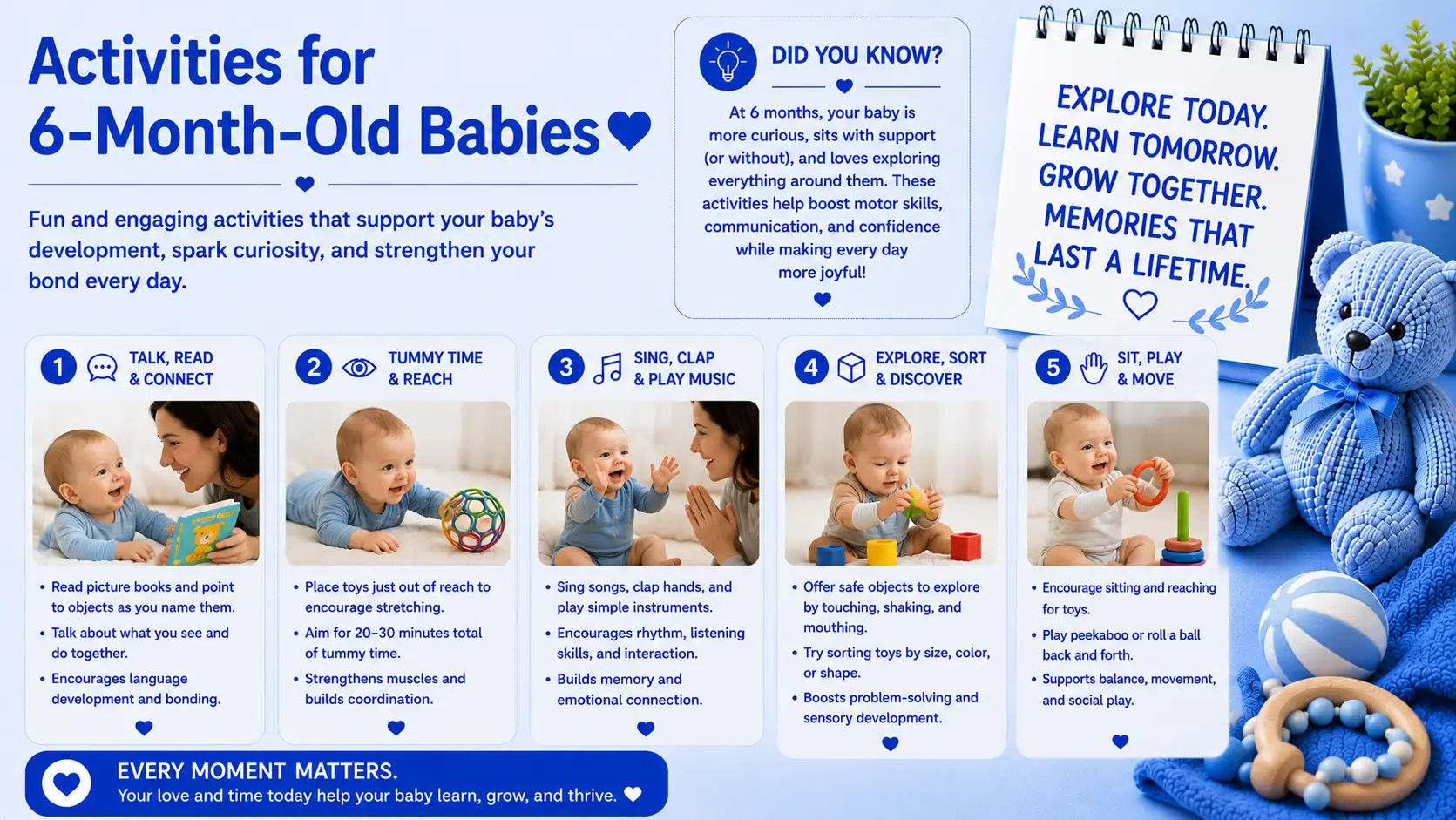

Six months is a wonderful turning point. Your baby is more alert, more social, and suddenly so interested in everything around them — your face, their toes, the dog, the ceiling fan. Many babies this age are sitting with a little support, rolling both ways, and starting to grasp and transfer objects between their hands. This is the perfect window to introduce simple, engaging activities for 6-month-old babies that support motor, sensory, cognitive, and language development — no expensive toys required.
Below are easy, research-backed activities you can start today, organized by the type of development they support.
Physical and Motor Development Activities
At six months, babies are building the strength and coordination they’ll need for sitting, crawling, and eventually walking.
Supported sitting practice. Prop your baby with pillows or sit behind them with your legs out to the sides for support. This builds core strength and gives them a new view of the world.
Tummy time with a mirror. If your baby has good head control, place a small floor mirror in front of them during tummy time. Babies this age often light up — and even laugh — at their own reflection.
Reach-and-stretch games. Sit with your baby between your legs and place a toy just out of easy reach. Encouraging them to lean and stretch strengthens balance and coordination.
The “horsey ride.” Lie on your back, bend your knees, and place your baby on your shins facing you. Gently bounce while singing — it’s great for core strength, eye contact, and giggles.
Sensory Play Ideas
Sensory exploration is one of the most searched topics for this age group, and for good reason — six-month-olds are eager to touch, mouth, and investigate texture and sound.
Texture baskets. Fill a basket with safe household items of different textures — a soft cloth, a wooden spoon, a crinkly bag, a silicone teether. Let your baby explore each one under supervision.
Water play. Pour a shallow layer of water onto a baking tray and let your baby sit in front of it to splash and bat at the surface. Add a floating bath toy to keep it interesting (expect some mess).
Sound exploration. Introduce simple instruments like rattles, bells, or a shaker egg. Pausing and waiting for your baby to shake it back teaches early cause-and-effect and turn-taking.
Textured board books. Board books with flaps, mirrors, or different fabrics stimulate both the senses and early literacy skills, and are easy to bring along anywhere.
Cognitive and Problem-Solving Activities
Around this age, babies begin developing object permanence — understanding that things still exist even when out of sight. This is a big cognitive leap and a great activity focus.
Peekaboo. The classic game directly reinforces object permanence and is almost always a hit.
Toy pickup game. Hand your baby a toy, let them drop it, then pick it up again. It seems repetitive to you, but it’s teaching cause and effect — and it’s often genuinely funny to them.
Simple hide-and-reveal. Partially hide a favorite toy under a cloth while your baby watches, then help them find it.
Stacking cups or blocks. These encourage hand-eye coordination and an early sense of spatial awareness as your baby stacks, knocks down, and starts again.
Language and Social-Emotional Activities
Six-month-olds are becoming more socially aware, and many start to show early separation anxiety — a sign they now understand you’re a separate person they’re attached to.
Say their name. Calling your baby’s name before entering a room helps them connect sound to identity and builds early listening skills.
Practice “hello” and “goodbye.” Simple, consistent rituals when you leave and return help babies process new emotions around separation.
Narrate your day. Describe what you’re doing as you go (“Now we’re washing your hands”) — this builds vocabulary long before your baby can talk back.
Rotate toys instead of buying new ones. Swapping out a few toys every week or so keeps play fresh without needing anything new, and helps sustain attention and curiosity.
A Simple Daily Routine
You don’t need a strict schedule, but many parents find it helpful to loosely rotate: floor time and tummy time in the morning, sensory or water play midday, and quiet reading or peekaboo before naps. Following your baby’s cues always matters more than any routine — if they’re fussy or tired, a quieter activity (or a break) is the right call.
FAQ
How much playtime does a 6-month-old need each day?
There’s no strict number, but most babies benefit from several short bursts of active, engaged play throughout the day — often 15–20 minutes at a time — mixed with independent exploration and rest. Follow your baby’s energy and mood rather than a fixed clock.
What are good sensory activities for a 6-month-old?
Texture baskets, water play, textured board books, and simple musical toys like bells or rattles are excellent choices. They engage touch, sound, and sight without overstimulating your baby.
Is my 6-month-old behind if they aren’t sitting up or crawling yet?
Not necessarily. Many babies sit with support before sitting independently, and most don’t crawl until closer to 9–10 months. If you have concerns about your baby’s development, it’s always worth checking in with your pediatrician.
What toys are best for a 6-month-old?
Simple, open-ended toys work best: stacking cups, soft blocks, rattles, textured books, and toys that encourage reaching and grasping. Rotating a small selection often works better than adding lots of new toys at once.
How can I help my 6-month-old with separation anxiety?
Practicing consistent “hello” and “goodbye” routines, playing peekaboo, and staying calm and warm during departures can help your baby build trust that you’ll return — which is exactly what this stage of development is about.