

Five months is a month of “almosts” — almost sitting unassisted, almost ready for solids, almost rolling both directions. Your baby is noticeably more capable than they were even a few weeks ago, spending longer stretches engaged with toys, people, and their own hands and feet. It’s also a common month for the “5-month sleep regression” to show up, often linked to the same burst of physical and cognitive growth that makes this stage so exciting.
Here’s a guide to activities for a 5-month-old, built around this month’s key developments: sitting practice, rolling in both directions, and the first signs of solid food readiness.
What’s New at 5 Months
Rolling both ways — many babies master tummy-to-back first, with back-to-tummy following soon after
Sitting with support, briefly balancing when propped on your lap, with pillows, or using their own hands
Reaching and grasping with more accuracy, often called a “raking grasp”
Transferring objects from hand to hand
Mouthing everything — a normal part of sensory exploration and, for some babies, early teething
Recognizing familiar people, and possibly showing early signs of stranger awareness or clinginess when a caregiver leaves the room
Sitting Practice Activities
Building core strength for sitting is one of the biggest developmental focuses this month.
Supported sitting with pillows arranged around baby for safety and stability
Sitting in your lap while reading or playing with a toy, giving both support and closeness
Tripod sitting practice, letting baby lean forward on their own hands for balance during short, supervised sessions
Rolling & Movement Activities
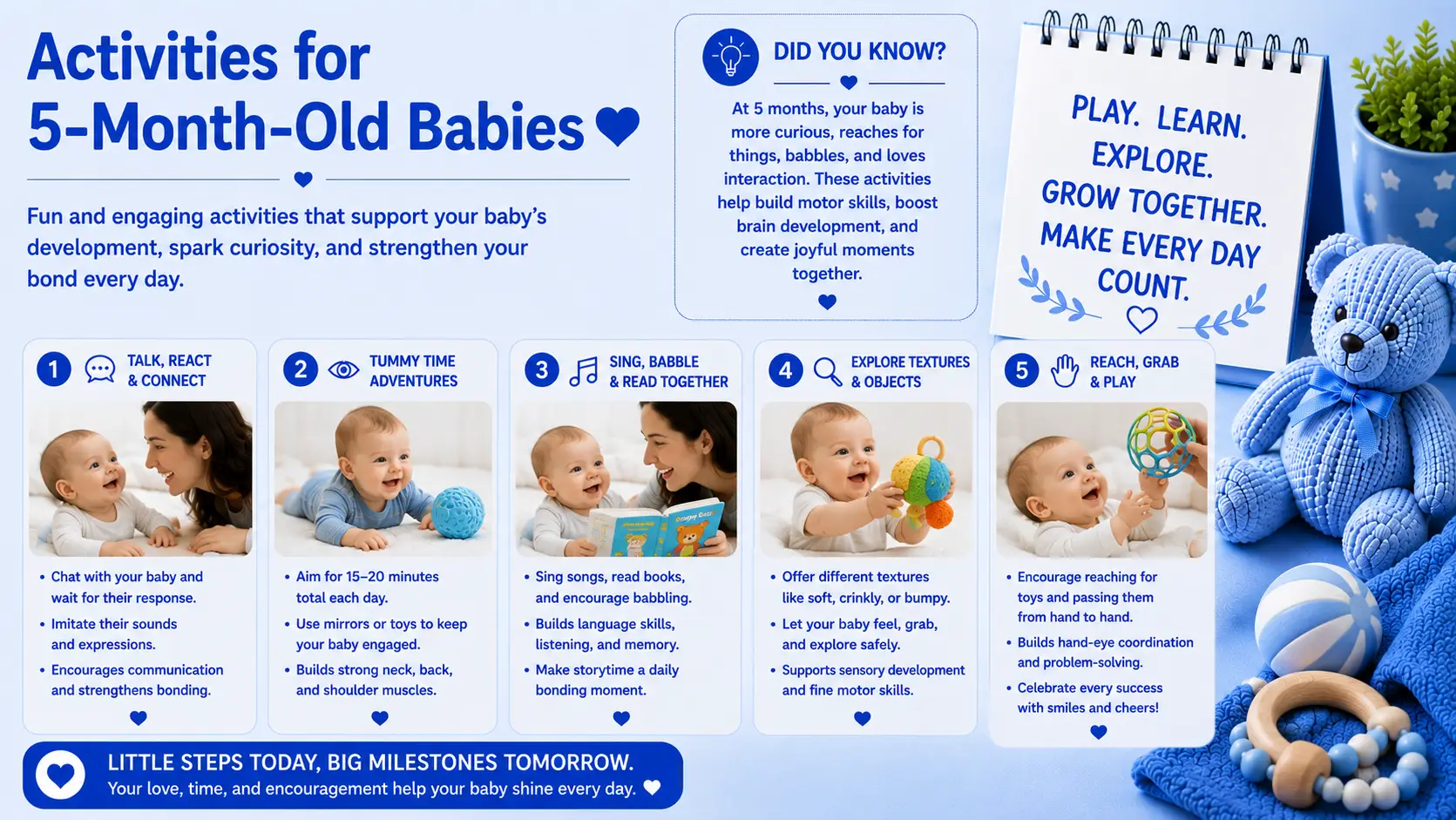
Encourage rolling in both directions by placing a toy just out of reach on either side
Longer tummy time sessions, aiming for two to three supervised sessions per day
Supported standing, letting baby bear weight and push down against a firm surface on your lap
Grasping & Fine Motor Activities
Offer toys of different textures and shapes for grasping, mouthing, and shaking
Encourage transferring, offering a second toy to a hand already holding one to prompt a switch
Rattles, teethers, and soft rings are especially popular at this age, doubling as both play and teething relief
Sensory & Language Activities
Mirror play, helping baby notice their own face and expressions
Reading together on the floor, pointing to and naming pictures
Repeating back baby’s babbling sounds to encourage back-and-forth “conversation”
Music and rhythm play, since babies at this age often enjoy bouncing or swaying to a beat
Solid Food Readiness (What to Watch For)
Some 5-month-olds begin showing readiness signs for solids, though most pediatricians and the AAP generally recommend waiting until around 6 months. Readiness signs to watch for include:
Steady head and neck control
Sitting with support
Showing interest in food or reaching for what you’re eating
A fading tongue-thrust reflex (no longer automatically pushing food back out with the tongue)
If you’re noticing these signs earlier than 6 months, talk to your pediatrician before introducing solids — timing can depend on your baby’s individual development and health history.
FAQ
What activities help a 5-month-old learn to sit up?
Supported sitting with pillows for balance, sitting in a caregiver’s lap during play, and short supervised tripod-sitting practice all help build the core strength needed for independent sitting.
Is it normal for my 5-month-old to put everything in their mouth?
Yes — mouthing objects is a normal part of sensory exploration at this age and can also be a sign of early teething, as babies use their mouths to learn about texture and shape.
When should I start solid foods with my 5-month-old?
Most pediatric guidelines recommend waiting until around 6 months, though some babies show readiness signs earlier, such as sitting with support and a fading tongue-thrust reflex. Always check with your pediatrician before starting solids early.
Why is my 5-month-old suddenly not sleeping well?
This may be the “5-month sleep regression,” often linked to developmental leaps like new motor skills (rolling, sitting) or a growth spurt, which can temporarily disrupt sleep before settling back down.
When do babies start rolling both directions?
Most babies roll from tummy to back first, with back-to-tummy typically following within a few weeks to a couple of months. Rolling timing varies widely, generally occurring somewhere between 4 and 7 months.