

Four months brings two headlines most parents search for at the same time: exciting new skills like rolling and reaching, and the infamous 4-month sleep regression. The two are actually connected — as your baby’s sleep cycles mature and their brain develops rapidly, all that new motor and cognitive activity can genuinely disrupt sleep. The good news is that giving your baby plenty of daytime practice with their emerging skills can help both development and sleep settle into a smoother rhythm.
Here’s a guide to activities for a 4-month-old, built around this month’s biggest milestones.
What’s New at 4 Months
Rolling over — many babies start rolling from tummy to back around now, with back-to-tummy usually following a bit later
Reaching and grabbing for toys and objects with much more intention
Bringing objects to the mouth as hand-eye coordination improves
Sitting briefly with support, showing off new core strength
Pushing up with straighter arms during tummy time
Because rolling can begin any time now, it’s also the point where most experts recommend transitioning out of the swaddle for sleep safety, since a swaddled baby who rolls onto their stomach can’t free their arms to reposition.
Activities to Encourage Rolling
Giving your baby supervised practice during the day is one of the best ways to support this milestone — and can help ease some of the sleep disruption that comes with it.
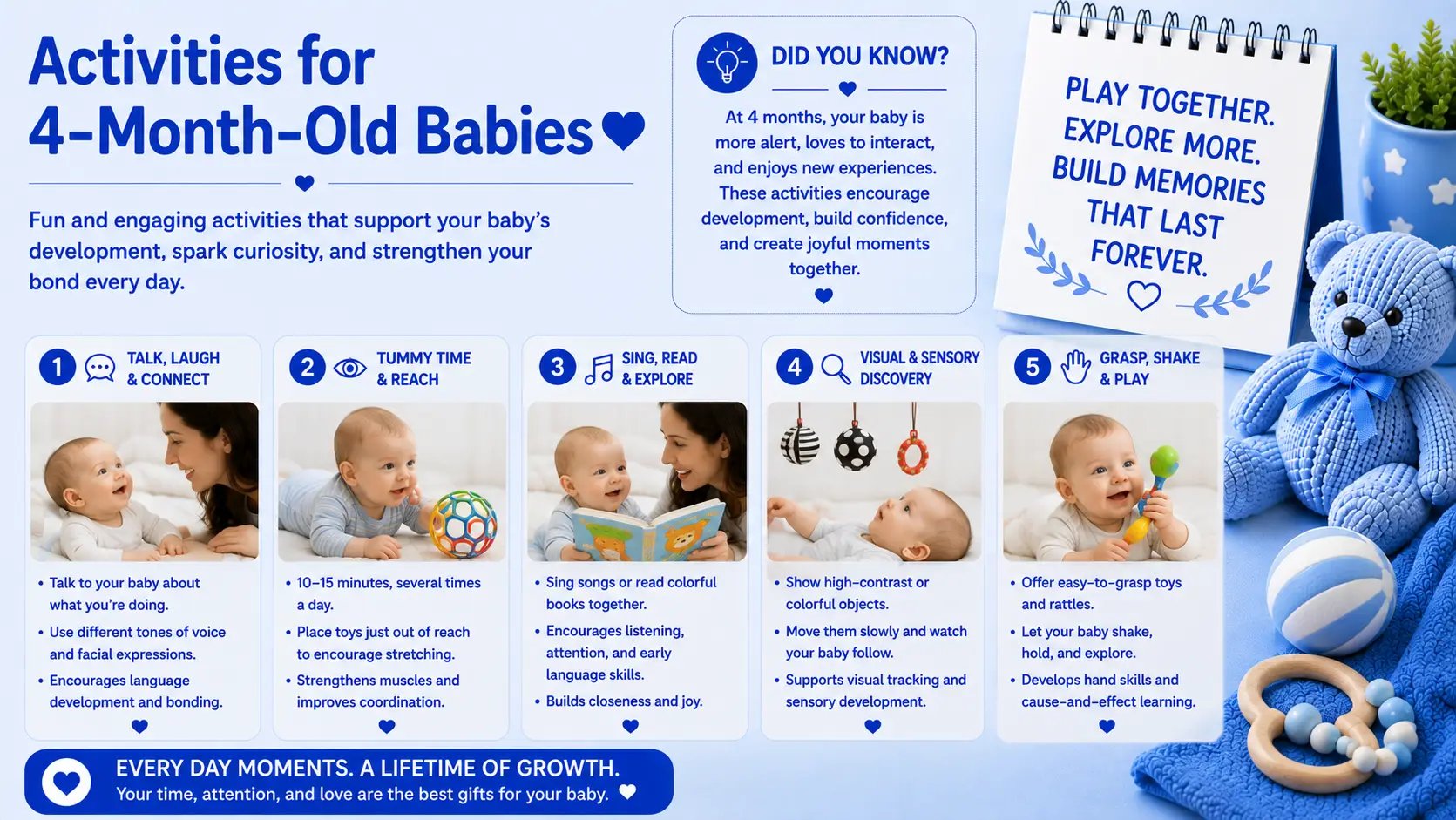
Place a toy or your face just out of reach during tummy time to motivate reaching and shifting weight
Gently shake a toy just over baby’s shoulder during tummy time to encourage them to twist and roll
Practice on both sides, since babies often master rolling one direction before the other
Give plenty of supervised floor time throughout the day, not just formal “tummy time” sessions
Reaching & Grasping Activities
Offer toys of different textures and weights to grasp, shake, and mouth
Hang toys within batting and reaching distance on a play gym
Play “give and take”, handing a toy to baby and gently taking it back to encourage grip and release
Encourage hands meeting at midline, helping them bring both hands together on a toy
Sitting Practice
Supported sitting, using pillows around baby or your own lap for extra stability
Tripod sitting practice, letting baby lean forward on their hands briefly while you stay close
Short sessions only — a minute or two at a time is plenty at this stage
Sensory & Cognitive Activities
Cause-and-effect toys, like a rattle or a button that makes a sound, since babies are starting to understand they can make things happen
Mirror play, watching reactions to their own reflection
Reading and narrating, describing pictures and objects in simple board books
Music and movement, bouncing or swaying together to a beat
Supporting Sleep Through the Regression
Since new motor skills and the 4-month sleep regression often overlap, a few strategies can help:
Give plenty of active practice time during the day so baby is less likely to “practice” rolling in the crib at night
Keep bedtime and nap routines consistent, even when nights are rough
Watch for rolling-related swaddle safety — once baby shows rolling attempts, it’s time to stop swaddling for sleep
Remember it’s temporary — the 4-month sleep regression typically passes within a few weeks as sleep cycles mature
FAQ
What activities help a 4-month-old learn to roll over?
Tummy time with a toy or face placed just out of reach, gently guiding a toy over baby’s shoulder to encourage twisting, and plenty of supervised floor time throughout the day all support rolling development.
Why is my 4-month-old suddenly waking up more at night?
This is commonly known as the 4-month sleep regression, caused by baby’s sleep cycles maturing to resemble an adult’s pattern, often coinciding with new motor and cognitive milestones like rolling and improved awareness.
When should I stop swaddling my baby?
Most experts recommend stopping swaddling as soon as a baby shows signs of rolling, typically around 3–4 months, since a swaddled baby who rolls onto their stomach may not be able to free their arms to reposition safely.
How much tummy time does a 4-month-old need?
Most guidelines suggest continuing to build tummy time toward 30 minutes or more per day, broken into several sessions, as strength and rolling skills develop.
How long does the 4-month sleep regression last?
The 4-month sleep regression typically lasts a few weeks, though timing varies by baby — some experience it slightly before or after the 4-month mark, and it generally resolves as sleep cycles mature.