
Skip to content
DidYouSearch DidYouSearch
  • did you search?
  • Baby Plus+
    • Baby Activities
      • Arts & Crafts
      • Indoor Activities
      • Montessori
      • Music
      • Outdoor Activities
      • Reading
      • Sensory Play
      • Tummy Time
    • Baby Development
      • Brain Development
      • Cognitive Development
      • Emotional Development
      • Fine Motor Skills
      • Growth Milestones
      • Monthly Milestones
      • Motor Skills
      • Physical Development
      • Social Development
      • Speech Development
    • Baby Feeding
      • Allergies
      • Baby Led Weaning
      • Bottle Feeding
      • Breast feeding
        • Breastfeeding Diet
        • Breastfeeding Positions
        • Latch Problems
        • Low Milk Supply
        • Mastitis
        • Pumping Schedule
        • Weaning
      • Burping
      • Cluster Feeding
      • Feeding Schedule
      • Formula Feeding
        • Formula Amount
        • Formula Brands
        • Formula Comparison
        • Formula Preparation
        • Formula Storage
      • Hydration
      • Pumping
      • Solid Foods
    • Baby Gear Reviews
      • Best Baby Carrier
      • Best Baby Monitor
      • Best Baby Strollers
      • Best Bottles
      • Best Breast Pump
      • Best Car Seat
      • Best Cribs
      • Best Diapers
      • Best Formula
      • Best Toys
    • Baby Growth
      • Growth Spurts
      • Height Charts
      • Monthly Growth
      • Percentiles
      • Weight Charts
    • Baby Health
      • Allergies
      • Cold
      • Constipation
      • Cough
      • Diarrhea
      • Ear Infection
      • Fever
      • Flu
      • Pediatric Visits
      • Rashes
      • Teething
      • Vaccines
      • Vomiting
    • Baby Nutrition
      • Dairy
      • Drinks
      • Eggs
      • Fish
      • Fruits
      • Healthy Recipes
      • Meat
      • Snacks
      • Vegetables
      • Vitamins
    • Baby Products
      • Baby Carriers
      • Bassinets
      • Bottles
      • Breast Pumps
      • Car Seats
      • Cribs
      • Diaper Bags
      • High Chairs
      • Monitors
      • Strollers
      • Swings
      • Toys
      • Walkers
    • Baby Recipes
      • BLW Recipes
      • Breakfast
      • Dinner
      • Finger Foods
      • Lunch
      • Purees
      • Snacks
    • Baby Safety
      • Baby Proofing
      • Car Seats
      • Choking Hazards
      • CPR
      • Home Safety
      • Poison Prevention
      • Safe Sleep
      • Sun Protection
      • Water Safety
  • Baby Names
    • Boy Names
    • Girl Names
    • American baby boy names
    • American baby girl names
    • Biblical Names
    • Middle Names
    • Modern Names
    • Short Names
    • Unique Names
    • Unisex Names
  • Recommended
    • Baby Shopping
      • Baby Registry
      • Budget Baby Shopping
      • Hospital Bag
      • Must Have Products
      • Newborn Checklist
      • Nursery Ideas
    • Baby Sleep
      • Bedtime Routine
      • Co Sleeping
      • Crib Safety
      • Nap Schedules
      • Night Wakings
      • Sleep Environment
      • Sleep Products
      • Sleep Regression
      • Sleep Training
      • Wake Windows
      • White Noise
    • Childcare
      • Daycare
      • Babysitters
      • Kindergarten
      • Nannies
      • Preschool
    • Newborn Care
      • Nail Care
      • Baby Hygiene
      • Bathing
      • Crying
      • Diapering
      • Ear Care
      • Eye Care
      • Skin Care
      • Soothing Techniques
      • Temperature
      • Umbilical Cord
    • Special Needs
      • Premature Babies
      • Autism Signs
      • Developmental Delays
      • Down Syndrome
      • NICU
      • Twins
    • Seasonal Baby Care
      • Spring
      • Summer
      • Travel
      • Fall
      • Holidays
      • Winter
  • Parenting
    • Bonding
    • Discipline
    • Emotional Intelligence
    • First Time Parents
    • Gentle Parenting
    • Positive Parenting
    • Routines
    • Single Parents
    • Working Parents
  • Pregnancy
    • Pregnancy Complications
    • Labor & Delivery
    • Postpartum Recovery
    • Pregnancy Exercises
    • Pregnancy Medications
    • Pregnancy Nutrition
    • Pregnancy Sleep
    • Pregnancy Symptoms
    • Pregnancy Tests
    • Pregnancy Vitamins
    • Pregnancy Weeks
  • Toddler
    • Preschool
    • Speech
    • Tantrums
    • Toddler Food
    • Toddler Sleep
    • Behavior
    • Independence
    • Learning
    • Potty Training
  • Traveling with Baby
    • Road Trips
    • Beach
    • Camping
    • Flying
    • Hotels
    • Packing Lists
  • did you search?
  • Baby Plus+
    • Baby Activities
      • Arts & Crafts
      • Indoor Activities
      • Montessori
      • Music
      • Outdoor Activities
      • Reading
      • Sensory Play
      • Tummy Time
    • Baby Development
      • Brain Development
      • Cognitive Development
      • Emotional Development
      • Fine Motor Skills
      • Growth Milestones
      • Monthly Milestones
      • Motor Skills
      • Physical Development
      • Social Development
      • Speech Development
    • Baby Feeding
      • Allergies
      • Baby Led Weaning
      • Bottle Feeding
      • Breast feeding
        • Breastfeeding Diet
        • Breastfeeding Positions
        • Latch Problems
        • Low Milk Supply
        • Mastitis
        • Pumping Schedule
        • Weaning
      • Burping
      • Cluster Feeding
      • Feeding Schedule
      • Formula Feeding
        • Formula Amount
        • Formula Brands
        • Formula Comparison
        • Formula Preparation
        • Formula Storage
      • Hydration
      • Pumping
      • Solid Foods
    • Baby Gear Reviews
      • Best Baby Carrier
      • Best Baby Monitor
      • Best Baby Strollers
      • Best Bottles
      • Best Breast Pump
      • Best Car Seat
      • Best Cribs
      • Best Diapers
      • Best Formula
      • Best Toys
    • Baby Growth
      • Growth Spurts
      • Height Charts
      • Monthly Growth
      • Percentiles
      • Weight Charts
    • Baby Health
      • Allergies
      • Cold
      • Constipation
      • Cough
      • Diarrhea
      • Ear Infection
      • Fever
      • Flu
      • Pediatric Visits
      • Rashes
      • Teething
      • Vaccines
      • Vomiting
    • Baby Nutrition
      • Dairy
      • Drinks
      • Eggs
      • Fish
      • Fruits
      • Healthy Recipes
      • Meat
      • Snacks
      • Vegetables
      • Vitamins
    • Baby Products
      • Baby Carriers
      • Bassinets
      • Bottles
      • Breast Pumps
      • Car Seats
      • Cribs
      • Diaper Bags
      • High Chairs
      • Monitors
      • Strollers
      • Swings
      • Toys
      • Walkers
    • Baby Recipes
      • BLW Recipes
      • Breakfast
      • Dinner
      • Finger Foods
      • Lunch
      • Purees
      • Snacks
    • Baby Safety
      • Baby Proofing
      • Car Seats
      • Choking Hazards
      • CPR
      • Home Safety
      • Poison Prevention
      • Safe Sleep
      • Sun Protection
      • Water Safety
  • Baby Names
    • Boy Names
    • Girl Names
    • American baby boy names
    • American baby girl names
    • Biblical Names
    • Middle Names
    • Modern Names
    • Short Names
    • Unique Names
    • Unisex Names
  • Recommended
    • Baby Shopping
      • Baby Registry
      • Budget Baby Shopping
      • Hospital Bag
      • Must Have Products
      • Newborn Checklist
      • Nursery Ideas
    • Baby Sleep
      • Bedtime Routine
      • Co Sleeping
      • Crib Safety
      • Nap Schedules
      • Night Wakings
      • Sleep Environment
      • Sleep Products
      • Sleep Regression
      • Sleep Training
      • Wake Windows
      • White Noise
    • Childcare
      • Daycare
      • Babysitters
      • Kindergarten
      • Nannies
      • Preschool
    • Newborn Care
      • Nail Care
      • Baby Hygiene
      • Bathing
      • Crying
      • Diapering
      • Ear Care
      • Eye Care
      • Skin Care
      • Soothing Techniques
      • Temperature
      • Umbilical Cord
    • Special Needs
      • Premature Babies
      • Autism Signs
      • Developmental Delays
      • Down Syndrome
      • NICU
      • Twins
    • Seasonal Baby Care
      • Spring
      • Summer
      • Travel
      • Fall
      • Holidays
      • Winter
  • Parenting
    • Bonding
    • Discipline
    • Emotional Intelligence
    • First Time Parents
    • Gentle Parenting
    • Positive Parenting
    • Routines
    • Single Parents
    • Working Parents
  • Pregnancy
    • Pregnancy Complications
    • Labor & Delivery
    • Postpartum Recovery
    • Pregnancy Exercises
    • Pregnancy Medications
    • Pregnancy Nutrition
    • Pregnancy Sleep
    • Pregnancy Symptoms
    • Pregnancy Tests
    • Pregnancy Vitamins
    • Pregnancy Weeks
  • Toddler
    • Preschool
    • Speech
    • Tantrums
    • Toddler Food
    • Toddler Sleep
    • Behavior
    • Independence
    • Learning
    • Potty Training
  • Traveling with Baby
    • Road Trips
    • Beach
    • Camping
    • Flying
    • Hotels
    • Packing Lists
Close

Search

Home/Baby Activities/Music/Baby Music Activities by Age
Music

Baby Music Activities by Age

By DrAdam
August 13, 2026 5 Min Read
0

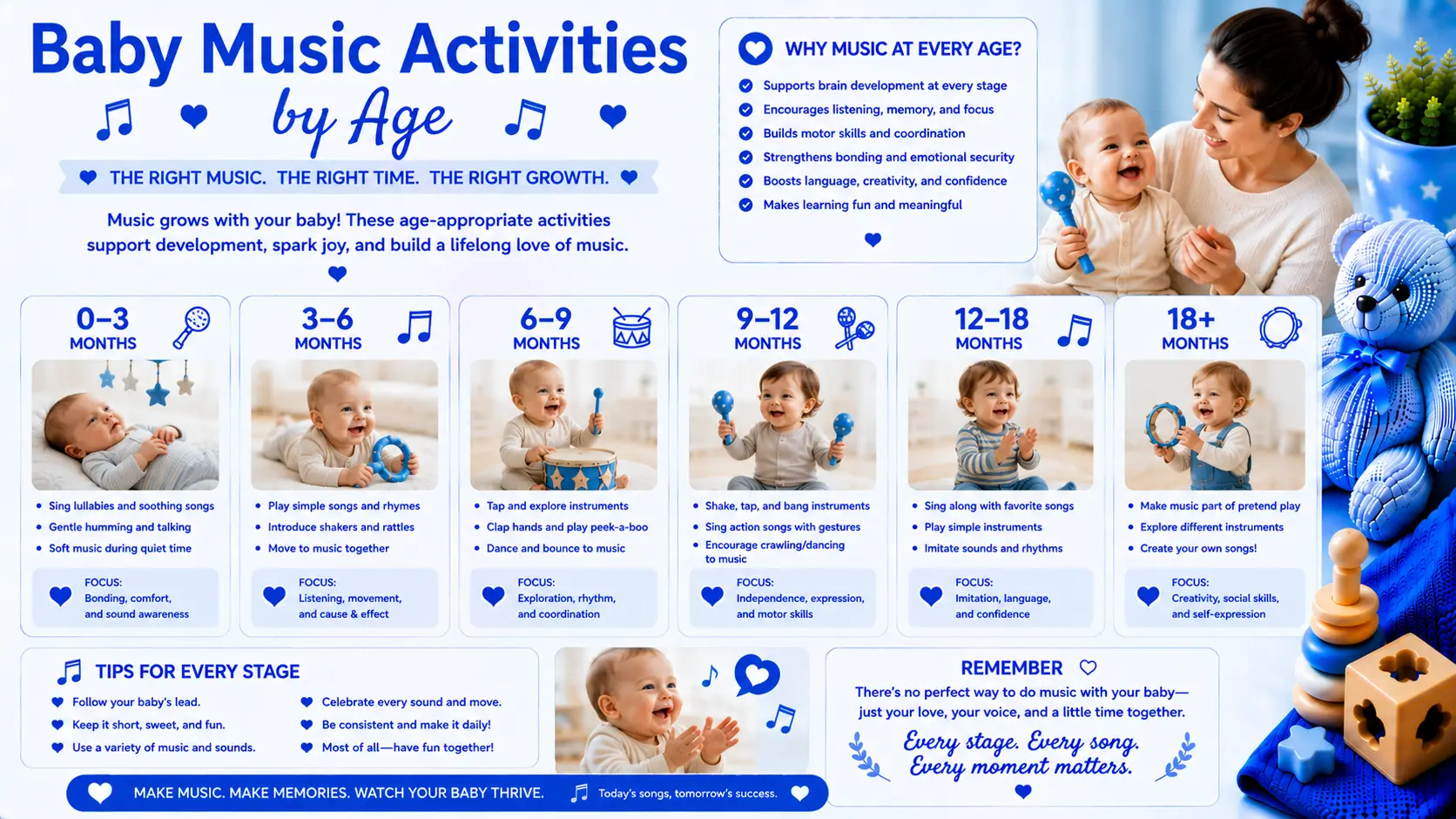
Babies are natural music lovers from the very start, but how they engage with music changes dramatically over the first two years. A newborn who simply reacts to the sound of your voice will, by their first birthday, be shaking a rattle in rhythm and babbling along to a favorite song. Matching music activities to your baby’s developmental stage helps make playtime more engaging — and more effective for building real skills.

This guide breaks down the best baby music activities by age, from birth through the toddler years, so you always know what to try next.

Why Age Matters When Choosing Music Activities

Contents hide
1 Why Age Matters When Choosing Music Activities
2 0 to 3 Months: Listening and Bonding
3 3 to 6 Months: Reacting and Engaging
4 6 to 9 Months: Exploring Sound
5 9 to 12 Months: Active Participation
6 12 to 18 Months: Finding the Beat
7 18 to 24 Months: Rhythm and Preference
8 General Tips for Every Age
9 Final Thoughts
10 FAQ
10.1 What music activities are best for a newborn?
10.2 When do babies start actively responding to music?
10.3 At what age can babies start using musical instruments?
10.4 When do toddlers start clapping in rhythm?
10.5 How long should music activities last for babies and toddlers?

Musical development follows a fairly predictable pattern that mirrors babies’ broader physical and cognitive growth. Between 0 and 6 months, babies primarily respond to music passively — through wide eyes, smiles, or little kicks. By 6 to 12 months, they begin actively exploring sound through clapping, bouncing, and shaking simple instruments. And between 12 and 24 months, toddlers start clapping in rhythm, singing snippets of familiar songs, and showing clear preferences for the music they enjoy.

Choosing activities that match your baby’s current stage keeps play both achievable and engaging — not too advanced to be frustrating, and not so simple that it fails to hold their interest.

0 to 3 Months: Listening and Bonding

At this stage, babies are absorbing sound far more than actively participating. Hearing is one of the first senses to develop, and newborns are especially attuned to their parents’ voices.

Best activities:

Sing lullabies or hum softly while feeding, rocking, or during diaper changes.

Make eye contact while singing simple, repetitive songs — babies this age respond strongly to facial expression paired with sound.

Play soft background music during tummy time or quiet play to introduce varied auditory input.

Try gentle movement songs, moving your baby’s hands or feet in time with a simple tune.

3 to 6 Months: Reacting and Engaging

By this stage, many babies are developing better head and neck control and starting to track sound and movement more intentionally. This is a great window to introduce games like peekaboo, which pairs well with music and supports babies’ growing understanding of object permanence.

Best activities:

Introduce a soft rattle or wrist rattle your baby can begin to shake with assistance.

Play call-and-response games, singing a note or sound and pausing to see if your baby “answers.”

Sing songs paired with simple physical movement, like gently rolling your baby side to side or bicycling their legs to the beat.

Vary the tempo and style of music you play — classical, world music, and simple vocal songs all offer different rhythmic and tonal patterns for developing ears.

6 to 9 Months: Exploring Sound

Babies at this age are often sitting independently and starting to reach, grasp, and explore objects with real intention — including instruments.

Best activities:

Offer safe, simple shakers or soft bells your baby can hold and experiment with.

Try turn-taking games, like passing a shaker back and forth, to introduce early social interaction through music.

Sing songs with pauses that invite your baby to fill in a sound or action, encouraging active rather than passive participation.

Bounce your baby gently on your lap in time with upbeat songs to build body awareness and rhythm.

9 to 12 Months: Active Participation

As babies approach their first birthday, they typically start clapping, bouncing, or shaking instruments with more coordination and intention — often in direct response to music.

Best activities:

Encourage clapping along to favorite songs, gently guiding their hands if needed.

Introduce simple instruments like tambourines or small drums for more active, hands-on exploration.

Play “stop and go” games, dancing or moving to music and freezing when it pauses, to build listening skills and early impulse control.

Attend a baby-friendly live music experience, such as a library storytime or parent-and-baby class — live music adds a visual and emotional dimension recorded music can’t replicate.

12 to 18 Months: Finding the Beat

Toddlers at this stage are walking or close to it, and their musical play becomes noticeably more physical and expressive.

Best activities:

Dance together to a variety of tempos, encouraging your toddler to move fast or slow depending on the music.

Offer a wider range of instruments, like maracas or small xylophones, to explore different sounds and textures.

Sing familiar songs and pause to let your toddler fill in a word or sound they recognize.

Narrate what they’re doing during instrument play (“You’re shaking that so fast!”) to connect movement, sound, and language.

18 to 24 Months: Rhythm and Preference

By age two, many toddlers begin clapping in rhythm, singing snippets of favorite songs, and showing clear preferences for certain music or instruments.

Best activities:

Let your toddler choose their own music or instrument during playtime to build a sense of independence and preference.

Play simple rhythm games, like echo-clapping short patterns for your toddler to copy.

Sing action songs with more complex movements, like clapping games or simple dance sequences.

Introduce group music time with siblings, friends, or a toddler music class to build early social and turn-taking skills.

General Tips for Every Age

Keep sessions short. A few focused minutes of musical play is enough at any age — babies and toddlers naturally have limited attention spans.

Repeat often. Familiarity builds engagement; don’t worry about “running out” of songs or games.

Follow your child’s cues. If they seem disinterested, try a different tempo, activity, or instrument rather than pushing through.

Your voice is the best instrument. Regardless of age, singing directly to your baby — however imperfectly — remains one of the most powerful musical tools available.

Final Thoughts

Music activities for babies don’t need to be complicated to be effective — they simply need to match where your baby is developmentally. From quiet lullabies in the newborn stage to rhythm games and instrument play as a toddler, each small musical moment builds on the last, supporting language, coordination, and connection along the way.

FAQ

What music activities are best for a newborn?

Newborns benefit most from hearing lullabies, soft singing, and gentle background music, paired with eye contact and touch, since they’re primarily listening and bonding rather than actively participating.

When do babies start actively responding to music?

Most babies begin actively engaging with music, such as reaching for instruments or bouncing to a beat, between 6 and 9 months old.

At what age can babies start using musical instruments?

Babies can typically begin holding and shaking simple instruments, like soft rattles, around 6 months, with more coordinated play developing closer to 9-12 months.

When do toddlers start clapping in rhythm?

Many toddlers begin clapping in rhythm and showing clear song preferences between 12 and 24 months, as coordination and musical awareness develop.

How long should music activities last for babies and toddlers?

Just a few minutes at a time is plenty. Short, frequent sessions tend to work better than long ones, since babies and toddlers have naturally limited attention spans.

Author

DrAdam

Dr. Adam. Obstetrician and Gynecologist

Follow Me
Other Articles
Previous

DIY Musical Instruments

Next

Clap Games for Babies

No Comment! Be the first one.

Leave a Reply Cancel reply

Your email address will not be published. Required fields are marked *

What is Did You Search?

The “Did You Search” website was created for all mothers and families. Just search to find all your needs about your children.

Links

  • about
  • contact
  • privacy policy
  • medical disclaimer
  • sitemap
Copyright 2026 — DidYouSearch. All rights reserved.