

You don’t need a music store or a big budget to introduce kids to the joy of making music. DIY musical instruments turn everyday household items — cardboard tubes, rubber bands, empty containers — into real, playable instruments kids can shake, strum, and bang to their heart’s content. Beyond the fun factor, building instruments together is a hands-on way to explore rhythm, pitch, and sound, while sparking creativity and giving kids a genuine sense of pride in something they made themselves.
Whether you’re looking for a rainy-day activity, a classroom project, or a way to keep kids entertained without screens, here’s a roundup of the best homemade musical instruments to try, organized by type, along with tips for making the project a success.
Why DIY Musical Instruments Are Worth Making
Making instruments blends art, play, and real musical concepts — like beat, pitch, and dynamics — into one hands-on activity. Studies suggest that playing music helps kids build stronger cognitive skills, emotional expression, and imaginative thinking, and the process of building an instrument adds an extra layer of learning before a single note is even played.
DIY instrument projects also support:
Fine motor skills. Cutting, taping, stretching rubber bands, and assembling small parts all build hand strength and coordination.
Understanding of sound and physics. Kids naturally start noticing how material, size, and tension affect the sound an instrument makes — a simple, hands-on introduction to acoustics.
Creativity and problem-solving. Open-ended projects encourage kids to experiment, decorate, and even invent their own instrument variations.
Sustainability awareness. Using recycled materials shows kids that music-making doesn’t require store-bought toys — it can come from things headed for the recycling bin.
Easy DIY Percussion Instruments
Percussion instruments are typically the easiest and safest place to start, especially for younger kids.
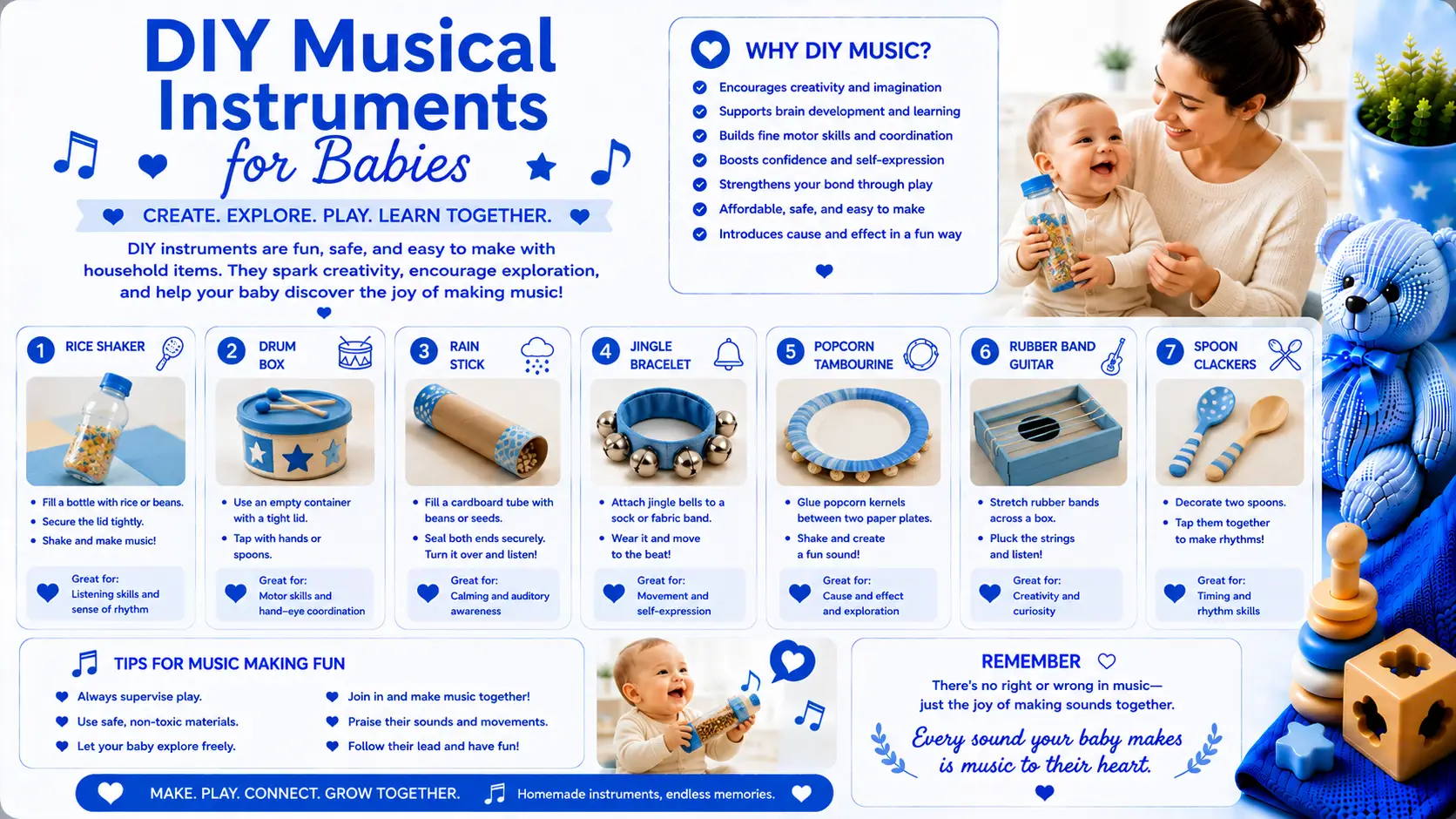
Rice or bean shakers. Fill a small container (a yogurt cup or spice jar works great) with rice, dried beans, or popcorn kernels, then seal the lid securely with tape or hot glue.
Egg shaker maracas. Fill empty plastic eggs with kernels or beans, then tape two spoons on either side as handles for an easy, colorful maraca.
Coffee-can or oatmeal-container drum. Clean out a container, glue the lid back on, and decorate with paint, stickers, or construction paper for an instant homemade drum.
Rainstick. Fill a cardboard tube with rice or small beads, and seal both ends — tilting it back and forth creates a gentle rain-like sound.
Bottle-cap castanets. Glue two bottle caps to a folded piece of cardboard so they click together when squeezed.
Pot-and-spoon drum kit. The simplest option of all — no crafting required, just pots, pans, bowls, and wooden spoons for endless banging and rhythm practice.
DIY String Instruments
String instruments introduce kids to a different kind of sound-making and are a great next step once they’ve mastered basic shakers and drums.
Rubber band guitar. Stretch a few rubber bands of different thicknesses over an empty tissue box or small container — plucking each one produces a distinct tone.
Cigar box or shoebox guitar. Stretch rubber bands over an open box, and add a stick as a “neck” for a slightly more advanced guitar-style instrument.
Nutshell fiddle. For a simple option, attach a rubber band to a walnut shell and stick for a mini, easy-to-make stringed instrument.
Pin strummer. Stretch rubber bands over a small board or box fitted with pins or nails to hold the bands in place, creating multiple playable “strings.”
DIY Wind Instruments
Wind instruments are a bit trickier to construct but offer a fun new challenge for older kids.
Straw pan flute. Cut plastic straws into different lengths, line them up, and tape them together — each length produces a different pitch when blown across the top.
Kazoo. Cover one end of a cardboard tube with wax paper secured by a rubber band, then hum into the open end for a buzzy kazoo sound.
Water xylophone. Fill several glasses with varying water levels and tap them gently with a spoon — a fun way to explore pitch as a bonus science experiment.
Tips for a Successful DIY Instrument Project
Match the project to the age. Simple shakers and drums work well for toddlers, while builds involving cutting, gluing, or small parts (like rubber band guitars or straw flutes) are better suited for kids ages 3 and up with supervision.
Watch for choking hazards. Always seal small parts like rice, beans, or beads securely, and supervise young children closely during play.
Use what you already have. Empty containers, cardboard tubes, rubber bands, and kitchen items are often all you need — no special craft supplies required.
Let kids decorate. Painting, stickers, and markers add a personal touch and make the finished instrument feel extra special.
Embrace imperfection. The goal is exploration and fun, not a polished result — some of the best learning happens when kids experiment and adjust their designs along the way.
Turn it into a performance. Once the instruments are made, set up a “family band” or living-room concert to put the new creations to use.
Final Thoughts
DIY musical instruments are proof that meaningful, screen-free fun doesn’t require a big budget or special materials — just some creativity and a few household items. Whether you’re shaking a homemade maraca, strumming a rubber band guitar, or tapping out a rhythm on pots and pans, these projects offer a simple, joyful way for kids to explore music, build new skills, and make memories along the way.
FAQ
What household items make the best DIY musical instruments?
Empty containers, cardboard tubes, rubber bands, rice or dried beans, and kitchen items like pots and spoons are among the most versatile and commonly used materials for homemade instruments.
What age is appropriate for DIY musical instrument projects?
Simple instruments like shakers and drums are great for toddlers, while more detailed builds involving cutting or small parts, such as rubber band guitars, are better suited for kids ages 3 and up with adult supervision.
Are homemade musical instruments safe for young children?
Yes, as long as small parts (like rice, beans, or beads) are securely sealed and children are supervised during both the building and playing process.
Do DIY instruments actually teach kids about real music concepts?
Yes. Building and playing homemade instruments introduces kids to concepts like rhythm, pitch, and dynamics in a hands-on, memorable way.
What’s the easiest DIY musical instrument to make with young kids?
A simple shaker, made from a sealed container filled with rice or beans, is one of the quickest and easiest options, requiring minimal supplies and no complex assembly.