
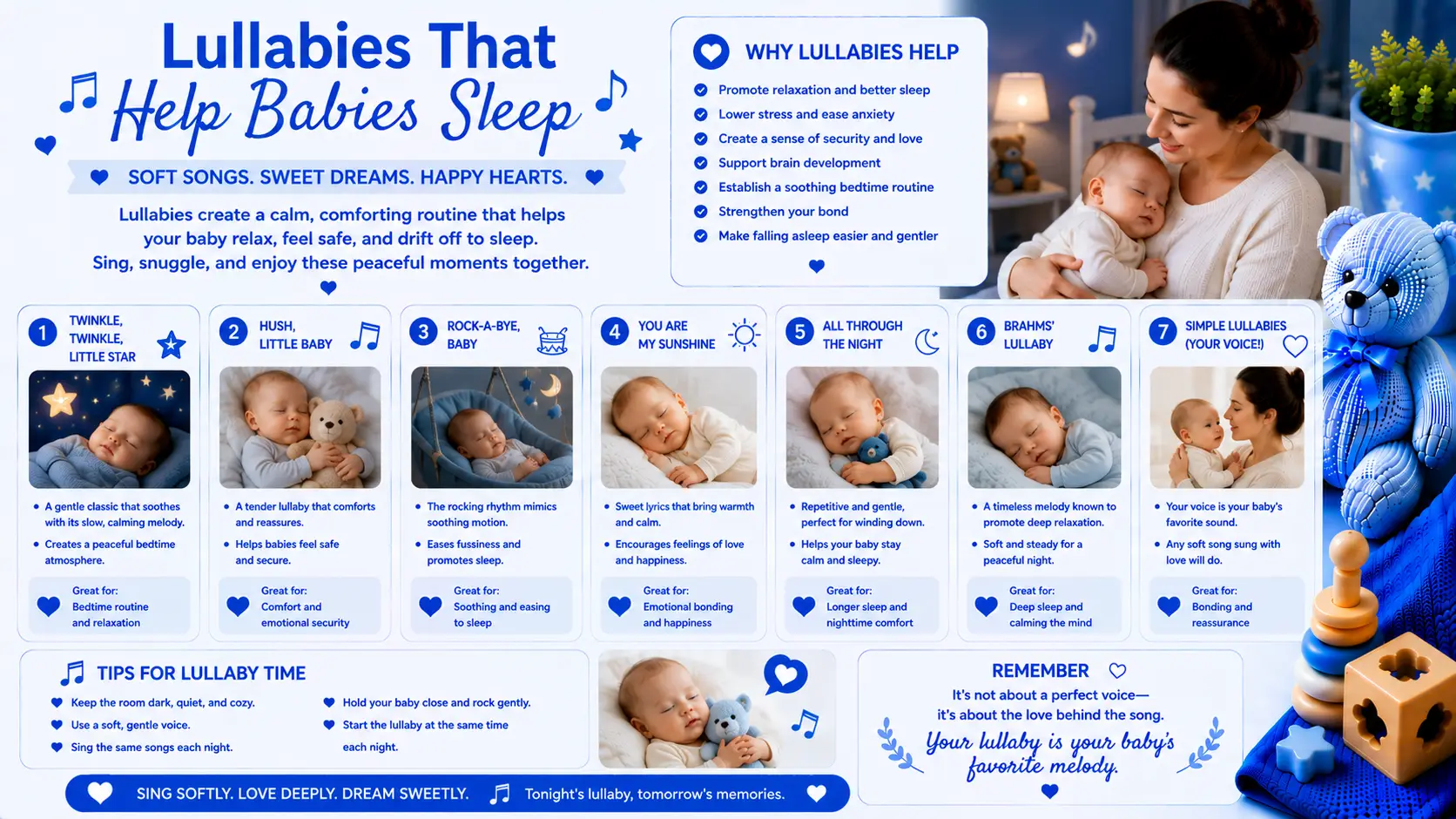

If you’ve ever sung a lullaby to a fussy baby and watched their eyelids slowly flutter shut, you already know it works — but there’s real science behind why. Lullabies that help babies sleep aren’t just a sweet tradition passed down through generations; research shows they measurably slow heart rate, lower stress hormones, and help signal to a baby’s developing brain that sleep is on the way. Understanding why lullabies work — and how to use them effectively — can turn a chaotic bedtime into a calm, predictable routine for both of you.
The Science Behind Why Lullabies Help Babies Sleep
Lullabies work because of a few overlapping factors: tempo, repetition, and the simple power of a parent’s voice.
Slow tempo calms the nervous system. Music tempo, measured in beats per minute (BPM), directly influences heart rate, breathing, and brain activity in young listeners. Research has found that music in the 60–80 BPM range — the same tempo range as many traditional lullabies — helps babies fall asleep significantly faster than faster-paced music. This slower tempo encourages what’s known as “subcortical arousal,” where the body’s systems gradually wind down in preparation for sleep, as opposed to the wide-awake “cortical arousal” babies experience during active play.
Consistency creates a sleep cue. Repetition is how babies learn that sleep is coming. Singing the same lullaby, in the same spot in your bedtime routine, night after night, becomes what sleep researchers call a conditioned signal: once that familiar melody starts, the baby’s brain begins associating it with the transition to sleep. This is why experts consistently recommend picking one calming song and sticking with it, rather than switching things up each night.
A parent’s voice is uniquely soothing. Babies prefer and respond more strongly to their own parent’s voice than to any recording, however polished. In a landmark study of premature infants, live lullaby singing was shown to slow heart rates and improve sleep — and interestingly, parents’ own stress levels decreased too. In other words, singing to your baby calms both of you at the same time.
Lullabies support bonding and emotional regulation. Beyond sleep, singing to your baby fosters oxytocin release (sometimes called the “bonding hormone”) and helps babies learn to self-regulate their emotions over time. Some research even suggests mothers who sang lullabies during pregnancy experienced stronger post-birth bonding and lower perceived stress.
Best Lullabies for Helping Babies Sleep
When it comes to the best lullabies for sleep, simplicity and predictability matter more than the specific song you choose. That said, a handful of classics have endured for generations because they naturally check the right boxes — slow tempo, gentle melody, and minimal dynamic variation:
“Twinkle, Twinkle, Little Star” – A gentle, steady melody that’s simple to repeat identically every night, making it an ideal sleep cue.
“Brahms’ Lullaby” (Cradle Song) – Composed specifically as a soothing bedtime piece, its slow tempo and soft dynamics make it one of the most naturally calming lullabies.
“Hush, Little Baby” – A gentle, repetitive folk lullaby with a soothing, predictable structure.
“Rock-a-Bye Baby” – One of the oldest known lullabies, with a slow, rocking rhythm that pairs naturally with swaying or rocking motions.
“You Are My Sunshine” – A favorite among many parents for its warm, comforting tone, even though it wasn’t originally written as a lullaby.
You don’t need to limit yourself to traditional songs — research suggests it’s the tempo, repetition, and live singing that matter most, not the specific title. Many parents successfully use modern songs, personal favorites, or even made-up melodies as their nightly lullaby.
How to Build Lullabies Into a Bedtime Routine
Pick one song and stick with it. Choose a calm, slow lullaby and sing it at the same point in your bedtime routine every night, whether that’s while rocking, patting, or laying your baby down.
Keep the routine short and consistent. Experts recommend choosing just 2–3 calming steps (bath, lullaby, dim lights, for example) that you repeat nightly to signal it’s time for sleep.
Sing during the wind-down, not necessarily for the whole night. Live, changing music can actually disturb light sleep phases. Many sleep specialists suggest using a lullaby for the wind-down period, then transitioning to white noise or silence once your baby is settled.
Don’t worry about your singing voice. Babies aren’t judging pitch — the familiarity and warmth of your voice matter far more than technical skill.
Use lullabies as positive reinforcement, too. Some research shows that singing when your baby is already calm (rather than only during crying) can reinforce positive sleep associations over time.
Start early — even in infancy. Babies begin recognizing their parents’ voices before birth, so there’s no wrong time to start incorporating lullabies into your routine.
Final Thoughts
Lullabies that help babies sleep work because of a simple but powerful combination: a slow, steady tempo, consistent repetition, and the deeply calming effect of a parent’s voice. You don’t need a perfect voice or the “right” song — what matters most is choosing a calm melody and sticking with it, night after night, until it becomes a trusted signal that sleep is on its way.
FAQ
Do lullabies actually help babies fall asleep faster?
Yes. Research shows that slow-tempo music, particularly in the 60–80 BPM range, can help babies fall asleep significantly faster compared to faster or more dynamic music.
What is the best lullaby to help a baby sleep?
There’s no single “best” song — classics like “Twinkle, Twinkle, Little Star” and “Brahms’ Lullaby” work well due to their slow tempo and simplicity, but consistency matters more than the specific song chosen.
Should I sing live or play a recorded lullaby?
Live singing tends to be more effective. Babies respond more strongly to a parent’s own voice, and studies show live lullaby singing can lower both baby and parent stress levels.
Should music play all night, or just during the bedtime routine?
Most experts recommend using lullabies during the wind-down period, then switching to white noise or silence for the rest of the night, since changing music can disturb light sleep phases.
At what age can I start singing lullabies to help my baby sleep?
You can start from birth, or even during pregnancy — babies begin recognizing their parents’ voices in the womb, and the calming benefits of singing begin immediately after birth.