Skip to content
DidYouSearch DidYouSearch
  • did you search?
  • Baby Plus+
    • Baby Activities
      • Arts & Crafts
      • Indoor Activities
      • Montessori
      • Music
      • Outdoor Activities
      • Reading
      • Sensory Play
      • Tummy Time
    • Baby Development
      • Brain Development
      • Cognitive Development
      • Emotional Development
      • Fine Motor Skills
      • Growth Milestones
      • Monthly Milestones
      • Motor Skills
      • Physical Development
      • Social Development
      • Speech Development
    • Baby Feeding
      • Allergies
      • Baby Led Weaning
      • Bottle Feeding
      • Breast feeding
        • Breastfeeding Diet
        • Breastfeeding Positions
        • Latch Problems
        • Low Milk Supply
        • Mastitis
        • Pumping Schedule
        • Weaning
      • Burping
      • Cluster Feeding
      • Feeding Schedule
      • Formula Feeding
        • Formula Amount
        • Formula Brands
        • Formula Comparison
        • Formula Preparation
        • Formula Storage
      • Hydration
      • Pumping
      • Solid Foods
    • Baby Gear Reviews
      • Best Baby Carrier
      • Best Baby Monitor
      • Best Baby Strollers
      • Best Bottles
      • Best Breast Pump
      • Best Car Seat
      • Best Cribs
      • Best Diapers
      • Best Formula
      • Best Toys
    • Baby Growth
      • Growth Spurts
      • Height Charts
      • Monthly Growth
      • Percentiles
      • Weight Charts
    • Baby Health
      • Allergies
      • Cold
      • Constipation
      • Cough
      • Diarrhea
      • Ear Infection
      • Fever
      • Flu
      • Pediatric Visits
      • Rashes
      • Teething
      • Vaccines
      • Vomiting
    • Baby Nutrition
      • Dairy
      • Drinks
      • Eggs
      • Fish
      • Fruits
      • Healthy Recipes
      • Meat
      • Snacks
      • Vegetables
      • Vitamins
    • Baby Products
      • Baby Carriers
      • Bassinets
      • Bottles
      • Breast Pumps
      • Car Seats
      • Cribs
      • Diaper Bags
      • High Chairs
      • Monitors
      • Strollers
      • Swings
      • Toys
      • Walkers
    • Baby Recipes
      • BLW Recipes
      • Breakfast
      • Dinner
      • Finger Foods
      • Lunch
      • Purees
      • Snacks
    • Baby Safety
      • Baby Proofing
      • Car Seats
      • Choking Hazards
      • CPR
      • Home Safety
      • Poison Prevention
      • Safe Sleep
      • Sun Protection
      • Water Safety
  • Baby Names
    • Boy Names
    • Girl Names
    • American baby boy names
    • American baby girl names
    • Biblical Names
    • Middle Names
    • Modern Names
    • Short Names
    • Unique Names
    • Unisex Names
  • Recommended
    • Baby Shopping
      • Baby Registry
      • Budget Baby Shopping
      • Hospital Bag
      • Must Have Products
      • Newborn Checklist
      • Nursery Ideas
    • Baby Sleep
      • Bedtime Routine
      • Co Sleeping
      • Crib Safety
      • Nap Schedules
      • Night Wakings
      • Sleep Environment
      • Sleep Products
      • Sleep Regression
      • Sleep Training
      • Wake Windows
      • White Noise
    • Childcare
      • Daycare
      • Babysitters
      • Kindergarten
      • Nannies
      • Preschool
    • Newborn Care
      • Nail Care
      • Baby Hygiene
      • Bathing
      • Crying
      • Diapering
      • Ear Care
      • Eye Care
      • Skin Care
      • Soothing Techniques
      • Temperature
      • Umbilical Cord
    • Special Needs
      • Premature Babies
      • Autism Signs
      • Developmental Delays
      • Down Syndrome
      • NICU
      • Twins
    • Seasonal Baby Care
      • Spring
      • Summer
      • Travel
      • Fall
      • Holidays
      • Winter
  • Parenting
    • Bonding
    • Discipline
    • Emotional Intelligence
    • First Time Parents
    • Gentle Parenting
    • Positive Parenting
    • Routines
    • Single Parents
    • Working Parents
  • Pregnancy
    • Pregnancy Complications
    • Labor & Delivery
    • Postpartum Recovery
    • Pregnancy Exercises
    • Pregnancy Medications
    • Pregnancy Nutrition
    • Pregnancy Sleep
    • Pregnancy Symptoms
    • Pregnancy Tests
    • Pregnancy Vitamins
    • Pregnancy Weeks
  • Toddler
    • Preschool
    • Speech
    • Tantrums
    • Toddler Food
    • Toddler Sleep
    • Behavior
    • Independence
    • Learning
    • Potty Training
  • Traveling with Baby
    • Road Trips
    • Beach
    • Camping
    • Flying
    • Hotels
    • Packing Lists
  • did you search?
  • Baby Plus+
    • Baby Activities
      • Arts & Crafts
      • Indoor Activities
      • Montessori
      • Music
      • Outdoor Activities
      • Reading
      • Sensory Play
      • Tummy Time
    • Baby Development
      • Brain Development
      • Cognitive Development
      • Emotional Development
      • Fine Motor Skills
      • Growth Milestones
      • Monthly Milestones
      • Motor Skills
      • Physical Development
      • Social Development
      • Speech Development
    • Baby Feeding
      • Allergies
      • Baby Led Weaning
      • Bottle Feeding
      • Breast feeding
        • Breastfeeding Diet
        • Breastfeeding Positions
        • Latch Problems
        • Low Milk Supply
        • Mastitis
        • Pumping Schedule
        • Weaning
      • Burping
      • Cluster Feeding
      • Feeding Schedule
      • Formula Feeding
        • Formula Amount
        • Formula Brands
        • Formula Comparison
        • Formula Preparation
        • Formula Storage
      • Hydration
      • Pumping
      • Solid Foods
    • Baby Gear Reviews
      • Best Baby Carrier
      • Best Baby Monitor
      • Best Baby Strollers
      • Best Bottles
      • Best Breast Pump
      • Best Car Seat
      • Best Cribs
      • Best Diapers
      • Best Formula
      • Best Toys
    • Baby Growth
      • Growth Spurts
      • Height Charts
      • Monthly Growth
      • Percentiles
      • Weight Charts
    • Baby Health
      • Allergies
      • Cold
      • Constipation
      • Cough
      • Diarrhea
      • Ear Infection
      • Fever
      • Flu
      • Pediatric Visits
      • Rashes
      • Teething
      • Vaccines
      • Vomiting
    • Baby Nutrition
      • Dairy
      • Drinks
      • Eggs
      • Fish
      • Fruits
      • Healthy Recipes
      • Meat
      • Snacks
      • Vegetables
      • Vitamins
    • Baby Products
      • Baby Carriers
      • Bassinets
      • Bottles
      • Breast Pumps
      • Car Seats
      • Cribs
      • Diaper Bags
      • High Chairs
      • Monitors
      • Strollers
      • Swings
      • Toys
      • Walkers
    • Baby Recipes
      • BLW Recipes
      • Breakfast
      • Dinner
      • Finger Foods
      • Lunch
      • Purees
      • Snacks
    • Baby Safety
      • Baby Proofing
      • Car Seats
      • Choking Hazards
      • CPR
      • Home Safety
      • Poison Prevention
      • Safe Sleep
      • Sun Protection
      • Water Safety
  • Baby Names
    • Boy Names
    • Girl Names
    • American baby boy names
    • American baby girl names
    • Biblical Names
    • Middle Names
    • Modern Names
    • Short Names
    • Unique Names
    • Unisex Names
  • Recommended
    • Baby Shopping
      • Baby Registry
      • Budget Baby Shopping
      • Hospital Bag
      • Must Have Products
      • Newborn Checklist
      • Nursery Ideas
    • Baby Sleep
      • Bedtime Routine
      • Co Sleeping
      • Crib Safety
      • Nap Schedules
      • Night Wakings
      • Sleep Environment
      • Sleep Products
      • Sleep Regression
      • Sleep Training
      • Wake Windows
      • White Noise
    • Childcare
      • Daycare
      • Babysitters
      • Kindergarten
      • Nannies
      • Preschool
    • Newborn Care
      • Nail Care
      • Baby Hygiene
      • Bathing
      • Crying
      • Diapering
      • Ear Care
      • Eye Care
      • Skin Care
      • Soothing Techniques
      • Temperature
      • Umbilical Cord
    • Special Needs
      • Premature Babies
      • Autism Signs
      • Developmental Delays
      • Down Syndrome
      • NICU
      • Twins
    • Seasonal Baby Care
      • Spring
      • Summer
      • Travel
      • Fall
      • Holidays
      • Winter
  • Parenting
    • Bonding
    • Discipline
    • Emotional Intelligence
    • First Time Parents
    • Gentle Parenting
    • Positive Parenting
    • Routines
    • Single Parents
    • Working Parents
  • Pregnancy
    • Pregnancy Complications
    • Labor & Delivery
    • Postpartum Recovery
    • Pregnancy Exercises
    • Pregnancy Medications
    • Pregnancy Nutrition
    • Pregnancy Sleep
    • Pregnancy Symptoms
    • Pregnancy Tests
    • Pregnancy Vitamins
    • Pregnancy Weeks
  • Toddler
    • Preschool
    • Speech
    • Tantrums
    • Toddler Food
    • Toddler Sleep
    • Behavior
    • Independence
    • Learning
    • Potty Training
  • Traveling with Baby
    • Road Trips
    • Beach
    • Camping
    • Flying
    • Hotels
    • Packing Lists
Close

Search

Home/Baby Activities/Music/Clap Games for Babies
Music

Clap Games for Babies

By DrAdam
August 13, 2026 5 Min Read
0

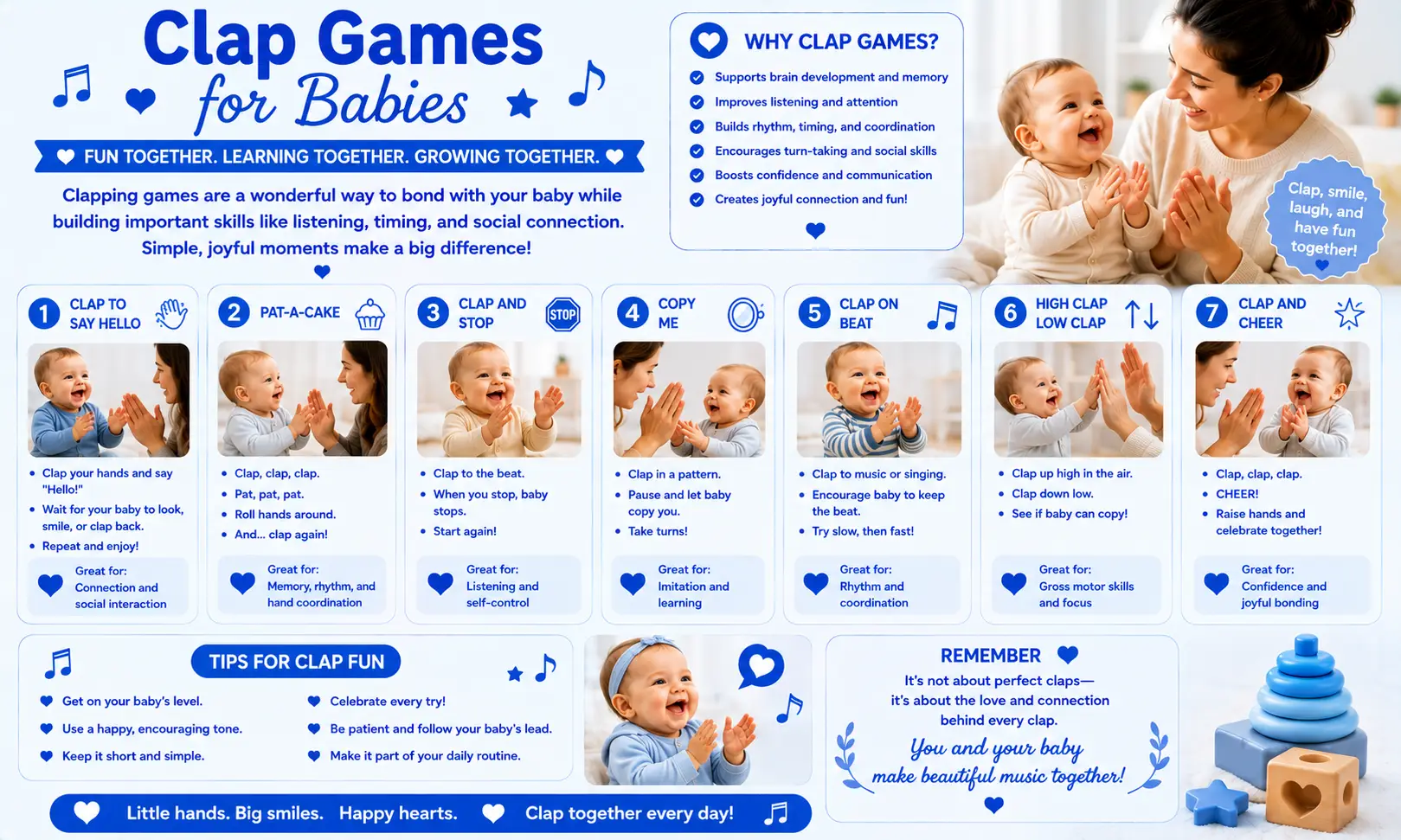
There’s nothing quite like the moment a baby claps for the first time — wobbly, off-rhythm, and absolutely delighted with themselves. Clap games for babies aren’t just adorable; they’re actually one of the most effective, low-effort ways to support a real developmental milestone. Clapping requires coordination, imitation, and social awareness, and games like pat-a-cake have been helping babies build these skills for generations, long before anyone understood the science behind them.

Here’s what to know about when babies start clapping, why it matters, and the best clap games to help your baby get there.

When Do Babies Start Clapping?

Contents hide
1 When Do Babies Start Clapping?
2 Why Clapping Matters for Development
3 Best Clap Games for Babies
3.1 Pat-a-Cake
3.2 Clap-Along Songs
3.3 Round of Applause
3.4 Baby See, Baby Do
3.5 Shape Clapping (For Older Toddlers)
4 Tips for Encouraging Your Baby to Clap
5 When to Check In With Your Pediatrician
6 Final Thoughts
7 FAQ
7.1 At what age do babies typically start clapping?
7.2 What is the best game to teach a baby to clap?
7.3 Why is clapping considered an important developmental milestone?
7.4 How can I help my baby learn to clap?
7.5 When should I be concerned if my baby isn’t clapping yet?

Clapping is considered a fine motor milestone that most babies reach somewhere between 9 and 12 months old, though the full range of “normal” is wider than that. Some babies begin as early as 6 to 8 months, bringing their hands together without full coordination yet, while others may not clap intentionally until closer to 15 months. As with most developmental milestones, every baby moves at their own pace.

The process typically unfolds in stages. Around 2 to 3 months, babies start realizing their hands are connected to their bodies, which lays the groundwork for intentional hand movements like waving, pointing, and eventually clapping. By 6 to 8 months, many babies can bring their hands together in front of their body, even if the motion isn’t a true “clap” yet. It isn’t until around 9 to 12 months that most babies gain the coordination, eyesight, and arm strength to bring their hands together consistently — often by imitating a parent’s clapping first. By around 12 months, many babies start to understand that clapping is a form of communication, associating it with excitement, praise, or joy.

Why Clapping Matters for Development

Clapping might look like a simple party trick, but it reflects several important developmental gains happening at once:

Fine motor skills. Clapping requires babies to coordinate the small muscles in their hands and arms to bring both hands together with control.

Imitation and cognitive development. Babies typically learn to clap by watching and copying their caregivers, which requires focus, observation, and memory.

Social awareness. Once babies realize that clapping communicates excitement or approval, it becomes an early form of non-verbal communication — an important building block for language development.

Cause and effect. Clapping games help babies understand that their actions (bringing their hands together) create a predictable result (a sound and often a big, happy reaction from you).

Best Clap Games for Babies

Pat-a-Cake

The classic clapping game remains one of the best tools for teaching babies to clap. Once your baby can sit up independently, typically around 4 to 6 months, you can begin gently guiding their hands together while singing the familiar rhyme. Over time, babies start to anticipate the clapping moments and attempt the motion on their own.

Clap-Along Songs

Play a favorite song with a clear beat and clap along to the rhythm, either using your own hands or gently guiding your baby’s. Pausing before the clapping part of a familiar song encourages your baby to anticipate and eventually join in on their own.

Round of Applause

A simple, no-song-required game: clap enthusiastically whenever your baby does something exciting, like reaching a toy or finishing a bite of food. This reinforces the idea that clapping expresses joy and celebration, encouraging your baby to mimic the gesture in similar moments.

Baby See, Baby Do

Sit facing your baby and say, “Do what I do!” Make a simple gesture — a clap, a wave, a funny face — and clap enthusiastically when your baby copies you. This game, often recommended for babies around 15 to 18 months, builds imitation skills alongside clapping.

Shape Clapping (For Older Toddlers)

Once toddlers have mastered basic clapping, try tracing shapes in the air with your clapping hands — a “circle” of applause, a “triangle,” or a “square.” It’s a playful way to combine an established skill with early shape recognition.

Tips for Encouraging Your Baby to Clap

Clap often, and clap big. Babies learn primarily through imitation, so the more they see you clapping — during songs, celebrations, or simple praise — the more likely they are to try it themselves.

Guide their hands gently. For babies who haven’t clapped independently yet, gently bringing their hands together during a song or game helps them feel the motion.

Celebrate every attempt. Even a lopsided, one-handed almost-clap deserves enthusiastic praise — positive reinforcement encourages babies to keep practicing.

Pair clapping with music. Songs with a clear, steady beat make it easier for babies to anticipate and attempt clapping in rhythm.

Don’t worry about perfect timing. Coordination takes time to develop; babies often “clap” by patting their hands together loosely before achieving a full, controlled clap.

When to Check In With Your Pediatrician

Because clapping is considered a key motor milestone, it’s worth mentioning to your pediatrician if your baby hasn’t attempted any form of clapping by around 15 months, or if you notice other developmental concerns alongside it. Every baby develops at their own pace, but your child’s doctor can help put any concerns in context during a regular checkup.

Final Thoughts

Clap games for babies are simple, joyful, and surprisingly powerful — a few minutes of pat-a-cake or clapping along to a favorite song helps build fine motor skills, imitation, and early communication all at once. Whether your baby is just starting to bring their hands together or already clapping along to every song they hear, these small, playful moments add up to real developmental progress.

FAQ

At what age do babies typically start clapping?

Most babies begin clapping somewhere between 9 and 12 months, though some may start as early as 6 to 8 months or as late as 15 months.

What is the best game to teach a baby to clap?

Pat-a-cake is widely considered one of the most effective clapping games, since its repetitive motion and familiar rhythm make it easy for babies to imitate.

Why is clapping considered an important developmental milestone?

Clapping reflects fine motor coordination, imitation skills, and growing social awareness, and is often one of the building blocks for early non-verbal communication.

How can I help my baby learn to clap?

Clap often yourself, gently guide your baby’s hands together during songs or games, and offer enthusiastic praise for every attempt, even imperfect ones.

When should I be concerned if my baby isn’t clapping yet?

If your baby hasn’t attempted any clapping motion by around 15 months, or if you have concerns alongside other developmental delays, it’s worth discussing with your pediatrician.

Author

DrAdam

Dr. Adam. Obstetrician and Gynecologist

Follow Me
Other Articles
Previous

Baby Music Activities by Age

Next

Action Songs for Babies

No Comment! Be the first one.

Leave a Reply Cancel reply

Your email address will not be published. Required fields are marked *

What is Did You Search?

The “Did You Search” website was created for all mothers and families. Just search to find all your needs about your children.

Links

  • about
  • contact
  • privacy policy
  • medical disclaimer
  • sitemap
Copyright 2026 — DidYouSearch. All rights reserved.