
Skip to content
DidYouSearch DidYouSearch
  • did you search?
  • Baby Plus+
    • Baby Activities
      • Arts & Crafts
      • Indoor Activities
      • Montessori
      • Music
      • Outdoor Activities
      • Reading
      • Sensory Play
      • Tummy Time
    • Baby Development
      • Brain Development
      • Cognitive Development
      • Emotional Development
      • Fine Motor Skills
      • Growth Milestones
      • Monthly Milestones
      • Motor Skills
      • Physical Development
      • Social Development
      • Speech Development
    • Baby Feeding
      • Allergies
      • Baby Led Weaning
      • Bottle Feeding
      • Breast feeding
        • Breastfeeding Diet
        • Breastfeeding Positions
        • Latch Problems
        • Low Milk Supply
        • Mastitis
        • Pumping Schedule
        • Weaning
      • Burping
      • Cluster Feeding
      • Feeding Schedule
      • Formula Feeding
        • Formula Amount
        • Formula Brands
        • Formula Comparison
        • Formula Preparation
        • Formula Storage
      • Hydration
      • Pumping
      • Solid Foods
    • Baby Gear Reviews
      • Best Baby Carrier
      • Best Baby Monitor
      • Best Baby Strollers
      • Best Bottles
      • Best Breast Pump
      • Best Car Seat
      • Best Cribs
      • Best Diapers
      • Best Formula
      • Best Toys
    • Baby Growth
      • Growth Spurts
      • Height Charts
      • Monthly Growth
      • Percentiles
      • Weight Charts
    • Baby Health
      • Allergies
      • Cold
      • Constipation
      • Cough
      • Diarrhea
      • Ear Infection
      • Fever
      • Flu
      • Pediatric Visits
      • Rashes
      • Teething
      • Vaccines
      • Vomiting
    • Baby Nutrition
      • Dairy
      • Drinks
      • Eggs
      • Fish
      • Fruits
      • Healthy Recipes
      • Meat
      • Snacks
      • Vegetables
      • Vitamins
    • Baby Products
      • Baby Carriers
      • Bassinets
      • Bottles
      • Breast Pumps
      • Car Seats
      • Cribs
      • Diaper Bags
      • High Chairs
      • Monitors
      • Strollers
      • Swings
      • Toys
      • Walkers
    • Baby Recipes
      • BLW Recipes
      • Breakfast
      • Dinner
      • Finger Foods
      • Lunch
      • Purees
      • Snacks
    • Baby Safety
      • Baby Proofing
      • Car Seats
      • Choking Hazards
      • CPR
      • Home Safety
      • Poison Prevention
      • Safe Sleep
      • Sun Protection
      • Water Safety
  • Baby Names
    • Boy Names
    • Girl Names
    • American baby boy names
    • American baby girl names
    • Biblical Names
    • Middle Names
    • Modern Names
    • Short Names
    • Unique Names
    • Unisex Names
  • Recommended
    • Baby Shopping
      • Baby Registry
      • Budget Baby Shopping
      • Hospital Bag
      • Must Have Products
      • Newborn Checklist
      • Nursery Ideas
    • Baby Sleep
      • Bedtime Routine
      • Co Sleeping
      • Crib Safety
      • Nap Schedules
      • Night Wakings
      • Sleep Environment
      • Sleep Products
      • Sleep Regression
      • Sleep Training
      • Wake Windows
      • White Noise
    • Childcare
      • Daycare
      • Babysitters
      • Kindergarten
      • Nannies
      • Preschool
    • Newborn Care
      • Nail Care
      • Baby Hygiene
      • Bathing
      • Crying
      • Diapering
      • Ear Care
      • Eye Care
      • Skin Care
      • Soothing Techniques
      • Temperature
      • Umbilical Cord
    • Special Needs
      • Premature Babies
      • Autism Signs
      • Developmental Delays
      • Down Syndrome
      • NICU
      • Twins
    • Seasonal Baby Care
      • Spring
      • Summer
      • Travel
      • Fall
      • Holidays
      • Winter
  • Parenting
    • Bonding
    • Discipline
    • Emotional Intelligence
    • First Time Parents
    • Gentle Parenting
    • Positive Parenting
    • Routines
    • Single Parents
    • Working Parents
  • Pregnancy
    • Pregnancy Complications
    • Labor & Delivery
    • Postpartum Recovery
    • Pregnancy Exercises
    • Pregnancy Medications
    • Pregnancy Nutrition
    • Pregnancy Sleep
    • Pregnancy Symptoms
    • Pregnancy Tests
    • Pregnancy Vitamins
    • Pregnancy Weeks
  • Toddler
    • Preschool
    • Speech
    • Tantrums
    • Toddler Food
    • Toddler Sleep
    • Behavior
    • Independence
    • Learning
    • Potty Training
  • Traveling with Baby
    • Road Trips
    • Beach
    • Camping
    • Flying
    • Hotels
    • Packing Lists
  • did you search?
  • Baby Plus+
    • Baby Activities
      • Arts & Crafts
      • Indoor Activities
      • Montessori
      • Music
      • Outdoor Activities
      • Reading
      • Sensory Play
      • Tummy Time
    • Baby Development
      • Brain Development
      • Cognitive Development
      • Emotional Development
      • Fine Motor Skills
      • Growth Milestones
      • Monthly Milestones
      • Motor Skills
      • Physical Development
      • Social Development
      • Speech Development
    • Baby Feeding
      • Allergies
      • Baby Led Weaning
      • Bottle Feeding
      • Breast feeding
        • Breastfeeding Diet
        • Breastfeeding Positions
        • Latch Problems
        • Low Milk Supply
        • Mastitis
        • Pumping Schedule
        • Weaning
      • Burping
      • Cluster Feeding
      • Feeding Schedule
      • Formula Feeding
        • Formula Amount
        • Formula Brands
        • Formula Comparison
        • Formula Preparation
        • Formula Storage
      • Hydration
      • Pumping
      • Solid Foods
    • Baby Gear Reviews
      • Best Baby Carrier
      • Best Baby Monitor
      • Best Baby Strollers
      • Best Bottles
      • Best Breast Pump
      • Best Car Seat
      • Best Cribs
      • Best Diapers
      • Best Formula
      • Best Toys
    • Baby Growth
      • Growth Spurts
      • Height Charts
      • Monthly Growth
      • Percentiles
      • Weight Charts
    • Baby Health
      • Allergies
      • Cold
      • Constipation
      • Cough
      • Diarrhea
      • Ear Infection
      • Fever
      • Flu
      • Pediatric Visits
      • Rashes
      • Teething
      • Vaccines
      • Vomiting
    • Baby Nutrition
      • Dairy
      • Drinks
      • Eggs
      • Fish
      • Fruits
      • Healthy Recipes
      • Meat
      • Snacks
      • Vegetables
      • Vitamins
    • Baby Products
      • Baby Carriers
      • Bassinets
      • Bottles
      • Breast Pumps
      • Car Seats
      • Cribs
      • Diaper Bags
      • High Chairs
      • Monitors
      • Strollers
      • Swings
      • Toys
      • Walkers
    • Baby Recipes
      • BLW Recipes
      • Breakfast
      • Dinner
      • Finger Foods
      • Lunch
      • Purees
      • Snacks
    • Baby Safety
      • Baby Proofing
      • Car Seats
      • Choking Hazards
      • CPR
      • Home Safety
      • Poison Prevention
      • Safe Sleep
      • Sun Protection
      • Water Safety
  • Baby Names
    • Boy Names
    • Girl Names
    • American baby boy names
    • American baby girl names
    • Biblical Names
    • Middle Names
    • Modern Names
    • Short Names
    • Unique Names
    • Unisex Names
  • Recommended
    • Baby Shopping
      • Baby Registry
      • Budget Baby Shopping
      • Hospital Bag
      • Must Have Products
      • Newborn Checklist
      • Nursery Ideas
    • Baby Sleep
      • Bedtime Routine
      • Co Sleeping
      • Crib Safety
      • Nap Schedules
      • Night Wakings
      • Sleep Environment
      • Sleep Products
      • Sleep Regression
      • Sleep Training
      • Wake Windows
      • White Noise
    • Childcare
      • Daycare
      • Babysitters
      • Kindergarten
      • Nannies
      • Preschool
    • Newborn Care
      • Nail Care
      • Baby Hygiene
      • Bathing
      • Crying
      • Diapering
      • Ear Care
      • Eye Care
      • Skin Care
      • Soothing Techniques
      • Temperature
      • Umbilical Cord
    • Special Needs
      • Premature Babies
      • Autism Signs
      • Developmental Delays
      • Down Syndrome
      • NICU
      • Twins
    • Seasonal Baby Care
      • Spring
      • Summer
      • Travel
      • Fall
      • Holidays
      • Winter
  • Parenting
    • Bonding
    • Discipline
    • Emotional Intelligence
    • First Time Parents
    • Gentle Parenting
    • Positive Parenting
    • Routines
    • Single Parents
    • Working Parents
  • Pregnancy
    • Pregnancy Complications
    • Labor & Delivery
    • Postpartum Recovery
    • Pregnancy Exercises
    • Pregnancy Medications
    • Pregnancy Nutrition
    • Pregnancy Sleep
    • Pregnancy Symptoms
    • Pregnancy Tests
    • Pregnancy Vitamins
    • Pregnancy Weeks
  • Toddler
    • Preschool
    • Speech
    • Tantrums
    • Toddler Food
    • Toddler Sleep
    • Behavior
    • Independence
    • Learning
    • Potty Training
  • Traveling with Baby
    • Road Trips
    • Beach
    • Camping
    • Flying
    • Hotels
    • Packing Lists
Close

Search

Home/Baby Activities/Music/Music During Tummy Time
Music

Music During Tummy Time

By DrAdam
August 13, 2026 5 Min Read
0

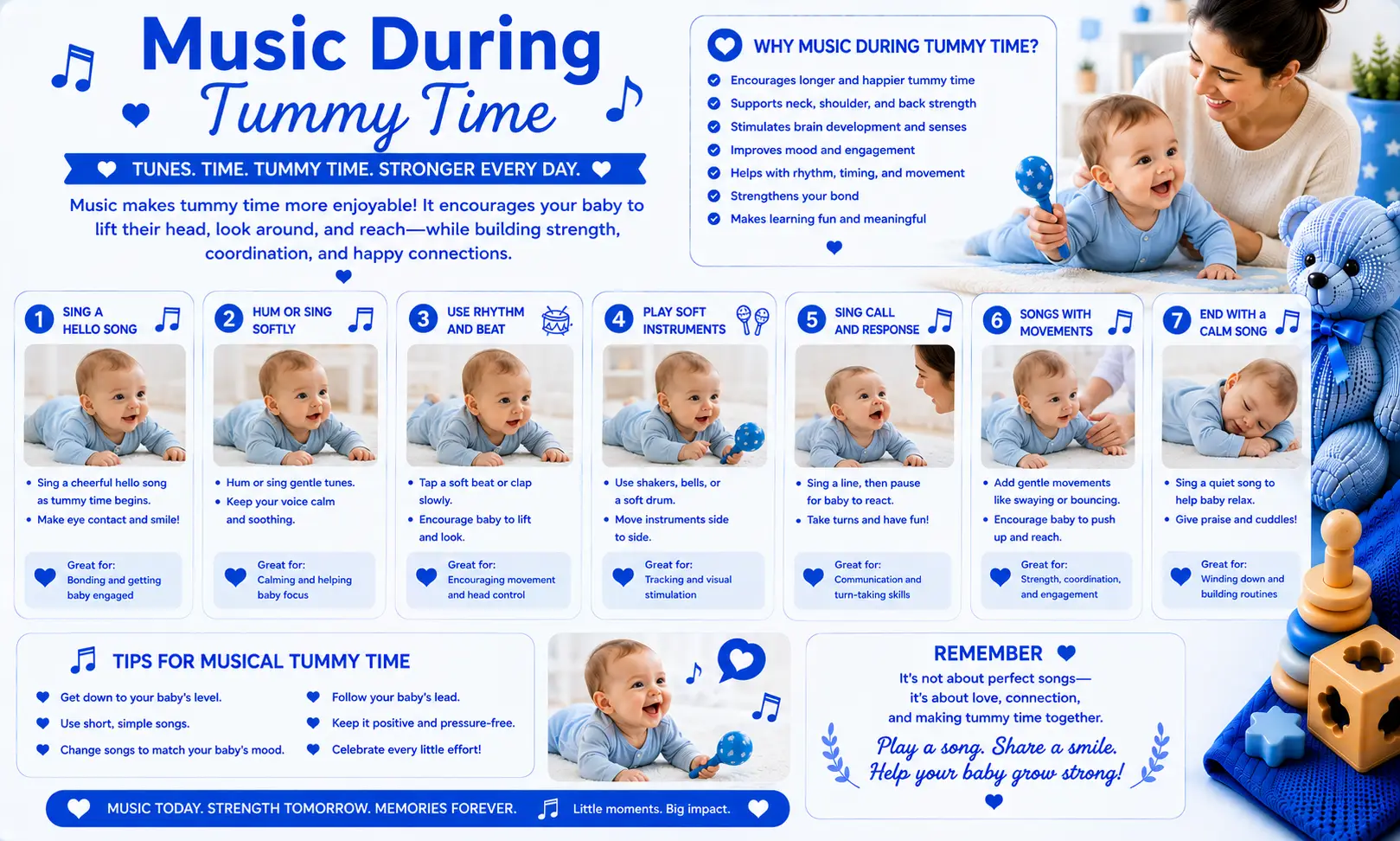
Tummy time isn’t always a baby’s favorite activity — and that’s putting it mildly. Many babies fuss, protest, or simply lose interest within seconds of being placed on their stomach. Adding music during tummy time can make a real difference, turning a sometimes-dreaded routine into a calmer, more engaging experience for both of you. Predictable rhythm helps regulate a baby’s nervous system, which can reduce fussing and give them the mental space they need to practice lifting their head and building strength.

Here’s why music helps during tummy time, how to use it effectively, and simple songs and tips to try at home.

Why Tummy Time Matters

Contents hide
1 Why Tummy Time Matters
2 Why Music Helps During Tummy Time
3 How to Use Music During Tummy Time
3.1 Choose Your Sound Source Wisely
3.2 Match the Music to the Goal
3.3 Add Movement and Props as Baby Grows
3.4 Keep Sessions Short and Consistent
4 Songs to Try During Tummy Time
5 Additional Tips for a Successful Tummy Time Session
6 Final Thoughts
7 FAQ
7.1 Does music actually help babies during tummy time?
7.2 Should I sing live or play recorded music during tummy time?
7.3 What kind of music is best for tummy time?
7.4 How long should tummy time sessions last?
7.5 Can I use toys along with music during tummy time?

Before getting into the music side of things, it helps to understand why tummy time is so important in the first place. Supervised tummy time — placing your baby on their stomach while they’re awake and watched — helps strengthen your baby’s neck, shoulder, and core muscles, supports the development of key motor skills, and helps prevent flat spots on the back of the head. Pediatricians generally recommend starting tummy time a day or two after birth, working up to a total of 15 to 30 minutes daily by around 2 months of age, spread across several short sessions.

Of course, getting a baby to tolerate — let alone enjoy — tummy time is often the hard part. That’s where music comes in.

Why Music Helps During Tummy Time

Music calms infants by regulating their nervous system while also encouraging motor development, making it a genuinely useful tool rather than just a pleasant distraction. The predictable rhythm of a familiar song gives babies something calming to focus on, which can reduce the fussiness that often derails tummy time before it even gets started.

Music during tummy time can help by:

Calming the nervous system. A steady rhythm and a familiar voice help babies settle into a more relaxed, “calm-alert” state, which makes them more receptive to practicing new movements.

Encouraging active movement. Upbeat, rhythmic songs can motivate babies to reach, turn, or lift their head to track a sound or a shaking rattle.

Extending tolerance. Babies who are calm and engaged often tolerate longer tummy time sessions than those who are simply placed down with no additional stimulation.

Supporting bonding. Singing directly to your baby during tummy time adds a face-to-face, voice-driven connection that strengthens your relationship while supporting development.

How to Use Music During Tummy Time

Choose Your Sound Source Wisely

Your own voice singing a familiar song is more effective for your baby than any recording. If you do use recorded music, keep the volume moderate enough that your voice remains clearly audible above it — babies respond most strongly to a parent’s live voice.

Match the Music to the Goal

Different moments in a tummy time session call for different types of music:

For calming and settling in: Lullabies, gentle folk songs, or slow acoustic music work well. Sing softly and let the rhythm do the settling work before asking your baby to do anything effortful.

For active engagement: Once your baby seems calm and alert, switch to a slightly faster, brighter tempo. Upbeat nursery rhymes or simple percussion-driven songs can encourage movement, reaching, and attention.

Add Movement and Props as Baby Grows

As your baby develops the ability to track objects and reach, add a small shaker or rattle to your tummy time music sessions. Hold it slightly above and to the side of your baby’s eye line and shake it in a steady beat — the reach-and-look combination helps strengthen the neck, shoulder, and core muscles all at once.

Keep Sessions Short and Consistent

For newborns, aim for just one to three minutes of tummy time at a stretch, several times a day. As your baby’s tolerance grows, sessions can gradually extend to five to ten minutes with music helping to hold their attention.

Songs to Try During Tummy Time

“Head, Shoulders, Knees, and Toes” – Sing softly while your baby is on their tummy, gently touching the corresponding body parts to add a tactile, interactive element.

Familiar lullabies – Slow, soothing songs like a favorite bedtime lullaby work well at the start of a session to help your baby settle before more active movement.

Custom made-up songs – Try adapting a familiar tune with new words related to what you want your baby to do, such as singing about lifting their head or reaching for a toy, sung to a melody they already recognize. This gives your baby a predictable cue for what comes next.

Simple percussion-driven nursery rhymes – Songs with a strong, steady beat pair well with a shaker or rattle to encourage active reaching and tracking.

Additional Tips for a Successful Tummy Time Session

Sync your own breathing to the tempo. Slower breathing calms your own nervous system, and your baby can feel that shift through your touch and voice.

Get face-to-face. Lying in front of your baby while singing adds visual engagement and encourages them to lift their head to see you.

Use toys alongside music. Placing a toy just within reach, combined with a rhythmic song, gives your baby a reason to stretch, turn, and explore.

Watch for cues. If your baby seems overstimulated or frustrated, shorten the session, lower the volume, or switch to a calmer song.

Be consistent. Using the same song or type of music regularly during tummy time can help your baby build a positive association with the activity over time.

Final Thoughts

Music during tummy time is a simple, low-effort way to make one of the trickier parts of early infant development a little easier — and more enjoyable — for both of you. Whether you’re softly singing a lullaby to settle your baby in or shaking a rattle to an upbeat rhythm to encourage reaching, music adds structure, calm, and connection to every session.

FAQ

Does music actually help babies during tummy time?

Yes. A steady rhythm helps calm a baby’s nervous system and can reduce fussiness, while upbeat music can encourage active movement like reaching and head-lifting.

Should I sing live or play recorded music during tummy time?

Live singing is generally more effective, since babies respond more strongly to a parent’s voice than to recorded music. If you do play music, keep the volume low enough that your voice remains audible.

What kind of music is best for tummy time?

Slow, gentle songs work well for calming and settling in, while upbeat, rhythmic music is better suited for encouraging active movement once your baby is alert and engaged.

How long should tummy time sessions last?

Newborns typically start with just one to three minutes at a time, several times a day, gradually working up to a total of 15 to 30 minutes daily by around 2 months, per pediatric guidelines.

Can I use toys along with music during tummy time?

Absolutely. Pairing a rhythmic song with a shaker, rattle, or toy placed just within reach can encourage your baby to stretch, turn, and track movement, adding extra developmental benefit to the session.


Author

DrAdam

Dr. Adam. Obstetrician and Gynecologist

Follow Me
Other Articles
Previous

Action Songs for Babies

Next

Classical Music for Babies

No Comment! Be the first one.

Leave a Reply Cancel reply

Your email address will not be published. Required fields are marked *

What is Did You Search?

The “Did You Search” website was created for all mothers and families. Just search to find all your needs about your children.

Links

  • about
  • contact
  • privacy policy
  • medical disclaimer
  • sitemap
Copyright 2026 — DidYouSearch. All rights reserved.