
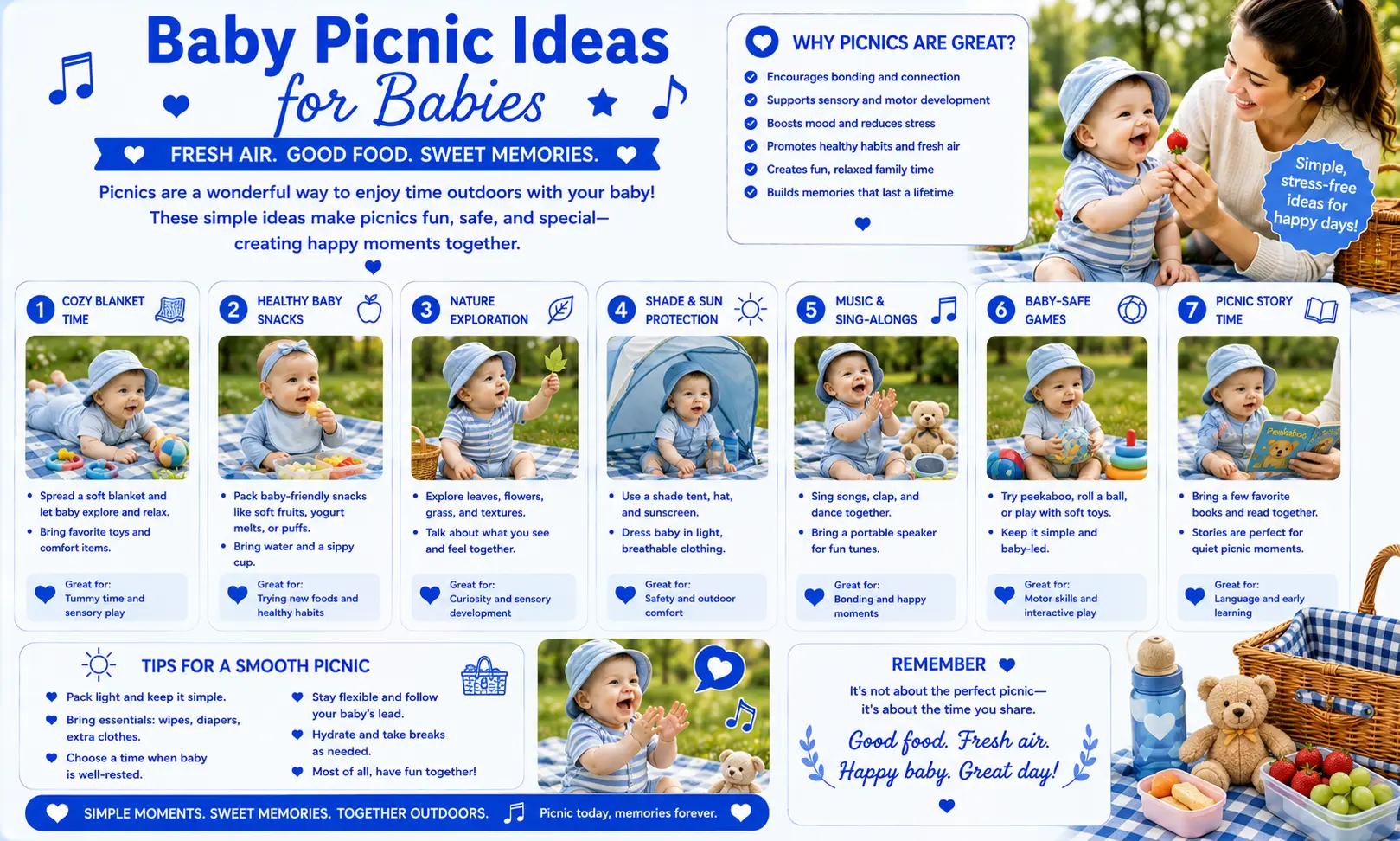

A picnic might just be one of the easiest outdoor activities for babies. There’s no strict schedule to follow, no equipment to rent, and no destination too far — just a blanket, some shade, and a little planning. Whether you’re introducing your baby to solid foods for the first time or simply looking for a change of scenery from the usual highchair, these baby picnic ideas will help you plan an outing that’s relaxing for you and enjoyable for your little one.
Picnics are also a wonderful way for babies to get comfortable with new textures, tastes, and surroundings — all while sitting somewhere they may actually prefer to a highchair. Below, you’ll find location tips, gear must-haves, food ideas, and a few ways to keep baby entertained once the eating is done.
Why a Picnic Is a Great Outing for Babies
Picnics offer a low-pressure way to combine outdoor time, feeding, and play in one simple outing.
A relaxed feeding environment. Many babies who struggle in a highchair are much happier eating on a blanket outdoors, making a picnic a great opportunity to introduce new foods.
Sensory and developmental benefits. Fresh air, grass, and a change of scenery offer the same sensory stimulation as other outdoor play, alongside mealtime.
Low cost and low effort. A baby picnic doesn’t require special gear or a long drive — a backyard, local park, or even a shaded patio will do.
A flexible schedule. Unlike a restaurant outing, a picnic can start, pause, or end whenever your baby needs it to.
Choosing the Best Picnic Spot for a Baby
Not every park bench or open field works well for a baby picnic. Look for a spot that’s:
Shaded, either by trees or a portable umbrella, to protect sensitive skin.
Flat and grassy, so your baby can sit, crawl, or roll safely.
Close to a bathroom or car, in case you need to change a diaper or head home early.
Away from busy paths or roads, especially once your baby becomes mobile.
If you don’t have a park nearby, your own backyard or a quiet patio works just as well — the goal is a change of scenery, not a specific destination.
Picnic Gear Checklist
A smooth baby picnic starts with smart packing. Consider bringing:
A large, easy-to-clean picnic blanket or a portable playmat
A sun umbrella or pop-up shade tent
A cooler bag with ice packs for perishable food
Reusable, spill-proof cups or bottles
A bib and a stash of wet wipes (picnics can get messy)
Sunscreen and a wide-brimmed hat
A few lightweight toys or board books to keep baby entertained
Baby Picnic Food Ideas
What you pack depends on your baby’s age and whether they’ve started solids.
For Babies Just Starting Solids
Stick to soft, easy-to-mash finger foods that won’t pose a choking risk, such as:
Banana slices or avocado chunks
Steamed and cooled vegetable sticks (carrot, sweet potato, zucchini)
Soft fruit like ripe peach or melon, cut into manageable pieces
Plain, unsweetened yogurt in a spill-proof pouch or container
For Older Babies and Toddlers
Once your baby is confident with finger foods, you can expand the picnic menu with:
Mini sandwiches or wraps cut into small, easy-to-hold pieces
Cheese cubes or crackers
Fruit kebabs on baby-safe skewers
Homemade oat or banana muffins for a mess-friendly sweet treat
A small container of hummus with soft veggie sticks for dipping
A muffin tin or divided container is a simple trick borrowed from parenting bloggers everywhere — it keeps different foods separated and makes it easy for little hands to grab what they want.
Keeping Baby Entertained at a Picnic
Once the eating winds down, a little entertainment goes a long way:
Bubbles are always a picnic favorite and easy to pack.
A soft ball encourages rolling, crawling, or early walking practice.
Board books are perfect for a shaded reading break on the blanket.
Textured toys or a small basket of leaves and grass let babies explore nature safely under supervision.
Baby Picnic Safety Tips
Avoid peak sun hours (typically 10 a.m. to 4 p.m.) and keep babies under 6 months in the shade rather than direct sunlight.
Check food for choking hazards, cutting grapes lengthwise and avoiding whole nuts or hard raw vegetables.
Keep perishable food cold in a cooler bag to avoid spoilage, especially on hot days.
Watch for bugs and allergens in grassy areas, and consider a baby-safe insect repellent if needed.
Supervise closely anytime your baby is exploring textures like grass, sand, or dirt.
Final Thoughts
A baby picnic doesn’t need to be elaborate to be a success. A shaded blanket, a few soft finger foods, and a little fresh air are often all it takes to turn an ordinary afternoon into a memorable outing. Start simple, follow your baby’s cues, and let picnics become an easy addition to your outdoor routine.
FAQ
At what age can babies go on a picnic?
Babies can join a picnic from a young age, even before starting solids — for younger babies, it’s more about the outdoor environment than the food. Once your baby starts solids, usually around 6 months, you can begin introducing picnic-friendly finger foods.
What foods should be avoided at a baby picnic?
Avoid choking hazards like whole grapes, nuts, popcorn, and hard raw vegetables. Whole grapes should always be sliced lengthwise, and any new food should ideally be tried at home first in case of an allergic reaction.
How do I keep a baby cool and comfortable during an outdoor picnic?
Choose a shaded spot, dress your baby in lightweight, breathable clothing, and bring a portable shade umbrella if natural shade isn’t available. Keep drinks on hand and avoid outings during the hottest part of the day.
What should I pack for a baby’s first picnic?
A picnic blanket, sun protection, a cooler bag for food, spill-proof cups, wipes, and a few soft finger foods are the essentials. A couple of toys or a board book can help keep baby entertained once eating is done.
Can a baby picnic happen in the backyard instead of a park?
Absolutely. A backyard or patio picnic offers all the same benefits as a park outing, with the added convenience of being close to home, a bathroom, and everything else you might need.