
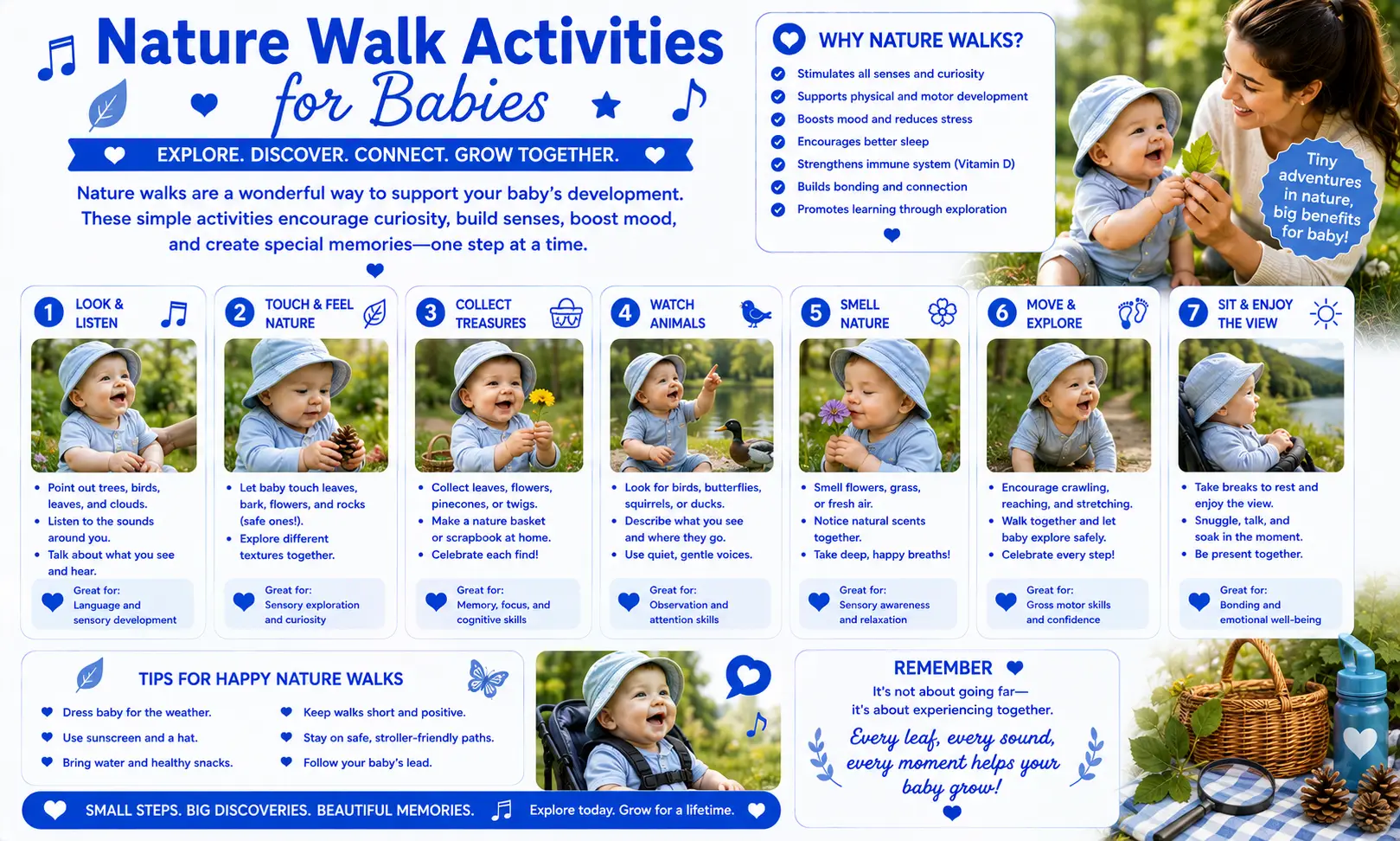

A nature walk doesn’t need a trailhead or a national park to be worthwhile. A quiet stretch of sidewalk lined with trees, a neighborhood park, or a backyard trail can all become the setting for an adventure — as long as you’ve got the right activities to keep kids engaged. Nature walk activities turn an ordinary stroll into a hands-on learning experience, sparking curiosity about plants, animals, and the world right outside the door.
Whether you’re a parent looking for screen-free ways to fill an afternoon, or a teacher planning an outdoor lesson, these ideas are simple, low-cost, and easy to adapt for toddlers through school-age kids.
Why Nature Walks Are So Good for Kids
Before jumping into activity ideas, it’s worth understanding why nature walks are worth the effort.
Physical activity. Walking, climbing over roots, or crouching to inspect a bug all build strength, balance, and coordination.
Sensory and cognitive development. New sights, sounds, smells, and textures stimulate the brain in ways that structured indoor play often can’t.
Emotional regulation. Time outdoors has been shown to reduce stress and improve mood in both kids and adults, making nature walks a great tool for calming an overstimulated child.
Curiosity and early science skills. Observing plants, insects, and weather patterns naturally builds the foundation for scientific thinking, long before kids ever open a textbook.
10 Nature Walk Activities Kids Will Love
Nature Scavenger Hunt
Create a simple checklist of items to find — a pinecone, a red leaf, a smooth rock, a feather — and let kids search as you walk. This is one of the most popular nature walk activities for a reason: it gives kids a clear goal and keeps them engaged for longer stretches.
Play “I Spy” With Nature Clues
Take turns spying something in nature and describing it with clues (“I spy something green and bumpy”). It’s a simple game that sharpens observation skills and works for almost any age.
Start a Nature Journal
Bring along a small notebook and let kids sketch, write, or press leaves and flowers they find. Older kids can jot down the date, weather, and any animals they spotted, turning it into an ongoing nature diary.
Try a Sound Hunt
Stop for a minute of silence and challenge kids to count how many different sounds they can hear — birds, wind, rustling leaves, distant traffic. It’s a great way to slow down and tune into the environment.
Go on an Animal Locator Hunt
Challenge kids to spot as many different animals as possible — squirrels, birds, insects, or even tracks in the dirt. This works well in almost any season and adds an element of friendly competition.
Make Leaf or Bark Rubbings
Place a leaf or a piece of bark under a sheet of paper and rub a crayon over the top to reveal the texture and pattern underneath. It’s an easy nature-inspired craft that can be extended at home by identifying the tree species.
Collect and Sort Natural Treasures
Bring a small bag or basket and let kids collect sticks, acorns, rocks, and leaves along the way. Once home, sort the finds by color, size, or type — a great follow-up activity that extends the walk’s learning value.
Draw a Nature Map
After the walk, have kids draw a simple map of the route, marking landmarks like a big tree, a pond, or a bridge. This activity supports early spatial thinking and gives kids a fun way to relive the walk.
Focus on the Five Senses
Ask kids what they can see, hear, smell, feel, and (if appropriate) taste along the trail. This kind of sensory-focused nature walk activity works especially well for toddlers and preschoolers who are still building descriptive vocabulary.
“Adopt” a Tree
Pick a tree to visit on every walk and observe how it changes across the seasons. Kids can track its growth, note when leaves change color, or watch for birds and squirrels that make it home.
Tips for a Successful Nature Walk
Dress for the weather with closed-toe shoes and layers, and pack a change of clothes if mud or water might be involved.
Keep it unstructured when needed. Not every walk needs a plan — sometimes the best nature walk activity is simply letting kids lead and explore at their own pace.
Bring the right gear. A magnifying glass, small binoculars, or a bug-catching jar can make the walk feel like a real expedition.
Choose safe, low-traffic routes, especially with younger children, and steer clear of paths near busy roads.
Keep outings short for little ones. A 15- to 20-minute walk may be plenty for toddlers, while older kids can handle longer trails.
Final Thoughts
Nature walk activities don’t require special equipment, a big budget, or a dramatic landscape — just a willingness to slow down and look closely at the world outside. Whether it’s a scavenger hunt, a sound hunt, or simply stopping to watch a bug cross the path, these small moments add up to a lifelong appreciation for the outdoors.
FAQ
What is a good age to start nature walk activities with kids?
Even toddlers can enjoy simple nature walks, especially sensory-focused activities like touching leaves or listening for bird sounds. More structured activities like scavenger hunts and journaling tend to work best from preschool age onward.
How long should a nature walk be for young children?
For toddlers and preschoolers, 15 to 30 minutes is often enough to stay engaged without becoming tired or overstimulated. School-age kids can typically handle longer walks or short hikes.
What should I bring on a nature walk with kids?
A small bag for collecting items, a magnifying glass, water, sun protection, and a nature journal or scavenger hunt checklist are all useful additions. A change of clothes is also handy in case of mud or water play.
What are good nature walk activities for a classroom or group setting?
Scavenger hunts, nature journaling, and mapping the walk route afterward all work well for groups, since they combine movement with hands-on learning that’s easy to adapt to different age levels.
How can I make a nature walk more educational?
Encourage observation with prompts like “What do you notice?” or “What does that remind you of?” Following up with an activity at home, like sorting collected items or looking up a spotted animal, helps reinforce what kids learned outdoors.