
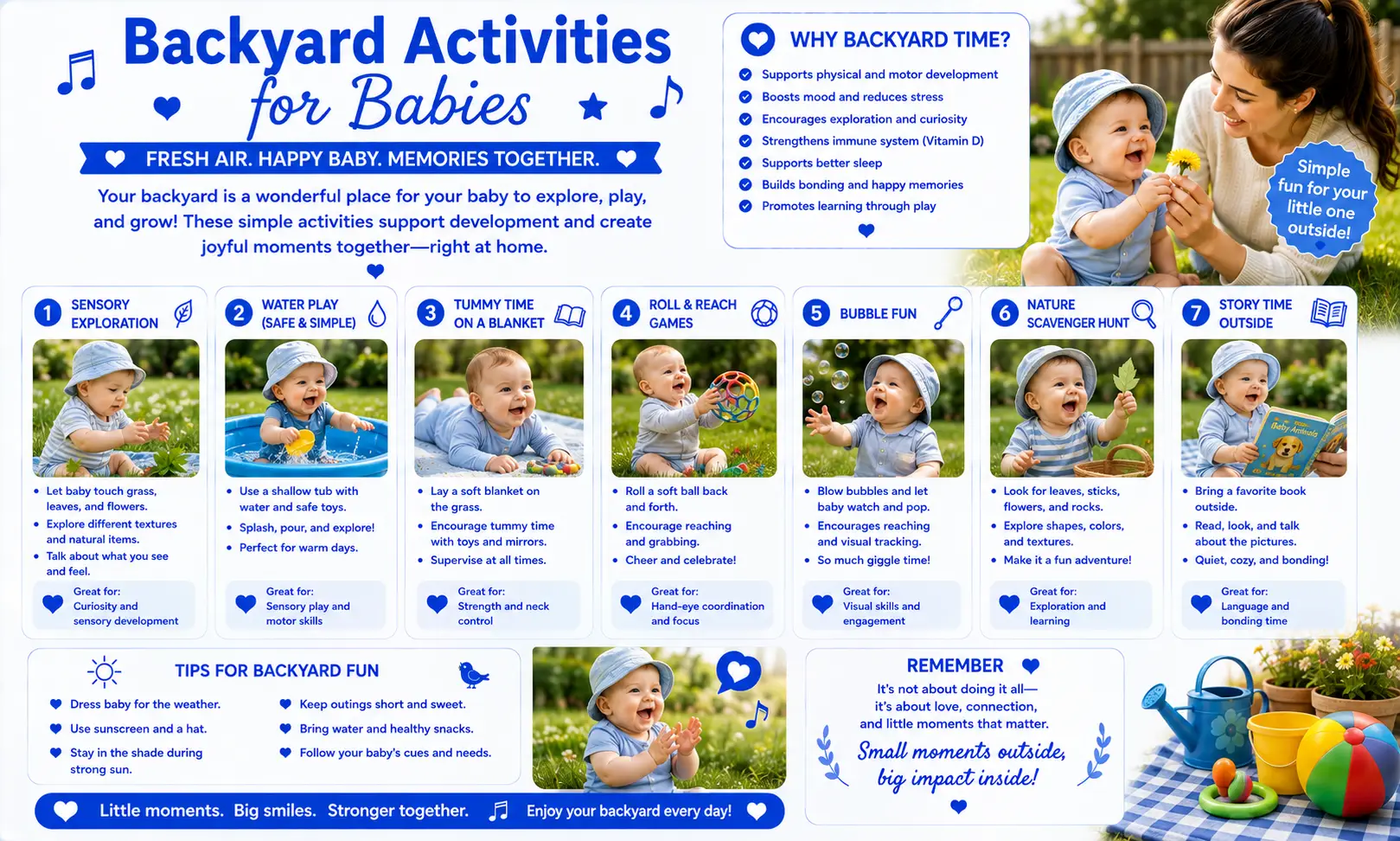

You don’t have to load up the diaper bag and drive anywhere to give your baby a great outdoor experience. Some of the best backyard activities for babies happen just steps from your back door, using things you probably already have around the house. Whether you’ve got a sprawling lawn or a small patio, your backyard can become one of your baby’s favorite places to explore, learn, and burn off a little energy.
Backyard play is also incredibly convenient for parents. There’s no packing the car, no worrying about nap schedules on the road, and you’re always just a few steps from a bathroom, a bottle, or a quiet place to nurse. Below are some of the best backyard activities for babies and toddlers, along with tips to keep the space safe and enjoyable all season long.
Why Backyard Time Is So Good for Babies
A backyard offers many of the same developmental benefits as a trip to the park, minus the travel time.
Sensory exploration. Grass, dirt, water, and sunlight give babies new textures and sensations to discover, right at home.
Gross motor development. Crawling across uneven grass or reaching for a ball helps strengthen the muscles babies will later use to stand and walk.
Vitamin D and fresh air. A little supervised sun exposure supports healthy development, and fresh air is often calming for fussy babies.
Familiar, low-stress environment. Because it’s home, you can let your baby nap, feed, or play without worrying about unfamiliar surroundings or strict timing.
9 Backyard Activities for Babies
Set Up a Shaded Blanket Spot
A simple blanket spread out under a tree or umbrella creates an instant outdoor play space. Add a few toys or board books, and let your baby explore, roll, or practice tummy time in the fresh air.
Try Water Play in a Shallow Bin or Wading Pool
An inexpensive wading pool, a large bucket, or even a plastic tray with a couple of inches of water can keep babies entertained for a long time. Add cups, spoons, or floating toys for extra sensory fun — just remember that babies can drown in only a few inches of water, so close supervision is essential.
Blow Bubbles on the Patio
Bubbles are a backyard classic for a reason. Babies love watching them float and pop, and once they’re mobile, chasing and popping bubbles is great for balance and coordination.
Create a Sensory Bin With Natural Materials
Fill a shallow container with grass clippings, smooth stones, or sand and let your baby explore the different textures with supervision. This kind of open-ended sensory play is one of the simplest ways to support early development.
Go for a Backyard “Nature Walk”
Even a small yard has plenty to point out — leaves, flowers, bugs, birds, or clouds. Carry or walk your baby around the perimeter, narrating what you see to support early language development.
Try a Baby Swing
A baby-safe swing with a high back and leg holes, hung from a sturdy tree branch or a small play set, is a backyard favorite. The gentle back-and-forth motion helps develop balance and the vestibular system.
Have a Backyard Picnic
Lay out a blanket, pack a few soft finger foods if your baby has started solids, and enjoy a meal outside together. It’s a low-effort activity that turns an ordinary feeding time into a fun outdoor activity for babies.
Let Your Baby Help With Light Gardening
Even young babies enjoy sitting nearby while you dig in the soil, and older babies can get their hands dirty with supervision. Planting flowers or vegetables together is a hands-on way to introduce cause and effect as they watch things grow.
Nap or Nurse in the Fresh Air
A shaded hammock, cot, or reclined stroller makes a peaceful spot for an outdoor nap. The change of scenery, gentle breeze, and soft outdoor sounds can be surprisingly soothing for babies who nap better outside than in.
Backyard Safety Tips for Babies
A few precautions go a long way toward making backyard time both fun and safe:
Check for hazards like sharp tools, chemicals, or small stones before letting your baby explore on a blanket or the grass.
Provide shade and avoid extended sun exposure during peak hours (typically 10 a.m. to 4 p.m.).
Use sunscreen appropriately — babies under 6 months should rely on shade and clothing rather than sunscreen, while pediatrician-approved sunscreen is generally fine after 6 months.
Watch closely around any water, even shallow bins or wading pools.
Check for bugs and use baby-safe insect repellent if needed, especially in grassy or wooded areas.
Final Thoughts
Your backyard doesn’t need a big budget or a full playground to be a great place for your baby to grow and explore. A blanket, some bubbles, and a little fresh air are often all it takes. Start small, follow your baby’s cues, and let backyard time become a regular, easy part of your routine.
FAQ
What backyard activities are safe for a newborn?
For newborns, gentle activities like shaded blanket time, outdoor naps, or being held while you sit outside are ideal. Newborns don’t need active stimulation so much as fresh air and a change of scenery.
How can I make a small backyard or patio baby-friendly?
Even a small space can work well with a shaded blanket area, a few soft toys, a shallow water bin, and a portable shade umbrella. Backyard size matters less than shade, safety, and a clean, hazard-free surface.
Is it safe to let a baby play in grass or dirt?
Yes, in most cases. Just check the area for hazards first, avoid recently treated lawns, and supervise closely, especially if your baby is at the stage of putting things in their mouth.
What age can babies start using a backyard swing?
Babies can typically use a baby-safe swing with a high back and leg holes once they have good head and neck control, usually around 6 months, though it’s best to check with your pediatrician.
How long should a baby stay outside in the backyard?
Many pediatricians recommend starting with 15 to 30 minutes at a time, adjusting based on weather, temperature, and how your baby responds to being outside.