
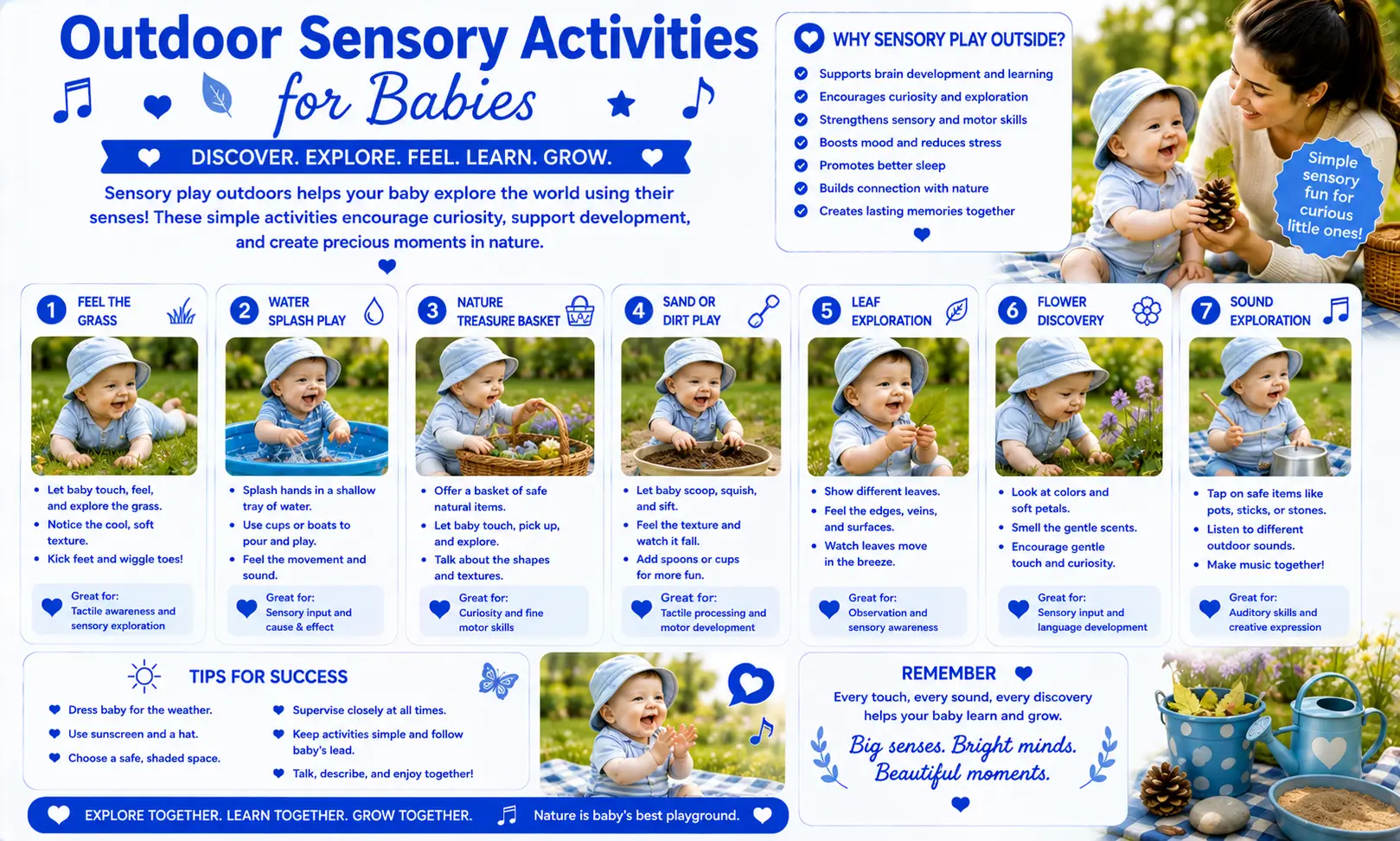

Step outside with a child for even a few minutes, and sensory play is already happening — the crunch of grass underfoot, the smell of fresh dirt, the sound of wind moving through leaves. Outdoor sensory activities simply take that natural experience and turn it into something a little more intentional, giving kids the chance to explore touch, sound, sight, smell, and movement in ways that indoor play just can’t match.
These activities are valuable for every child, but they can be especially beneficial for kids with sensory processing disorder (SPD), autism, or ADHD, since outdoor spaces offer more room, more novelty, and less overstimulation than many indoor environments. Below, you’ll find some of the best outdoor sensory activities for kids, organized by the type of sensory input they provide, along with a few tips for keeping outdoor sensory play safe and enjoyable.
What Is Outdoor Sensory Play?
Sensory play refers to any activity that stimulates one or more of the senses: sight, sound, touch, taste, and smell, plus two lesser-known senses — the vestibular sense (movement and balance) and proprioception (body awareness). Outdoor environments naturally offer more sensory variety than most indoor spaces, making them an ideal setting for this kind of exploration.
Why Outdoor Sensory Activities Matter
Supports development. Sensory play helps build fine and gross motor skills, language, problem-solving, and social skills.
Improves focus and regulation. Research has linked outdoor sensory play to better attention and emotional regulation, particularly in children with ADHD.
Encourages independence and confidence. Exploring textures, taking small risks, and navigating outdoor spaces helps kids build self-confidence.
Reduces screen time. Outdoor sensory activities give kids an engaging, hands-on alternative to tablets and screens.
Touch-Based Sensory Activities
Dig in a sandpit or dirt patch. Digging, scooping, and pouring sand or soil is one of the simplest and most satisfying tactile sensory activities.
Set up a mud kitchen. Old pots, pans, and utensils turn mud and water into an open-ended sensory experience kids can return to again and again.
Go barefoot (when safe). Walking on grass, sand, or smooth stones gives kids direct tactile feedback that shoes tend to block out.
Create an outdoor sensory bin. Fill a bin with natural materials like pinecones, leaves, rocks, or pea gravel for hands-on exploration.
Water Play Activities
Set up a water table or shallow bin. Add cups, scoops, and funnels for pouring and splashing.
Run through sprinklers. A classic warm-weather sensory activity that combines cooling relief with plenty of movement.
Try water balloons or squirt guns for an added element of excitement and coordination practice.
Add color or scented bubbles to water play for an extra sensory layer that engages sight and smell along with touch.
Movement and Balance Activities
Balance on stepping stones or a low balance beam to build vestibular input and coordination.
Climb trees or playground structures, which combine proprioceptive input with problem-solving.
Ride a bike or scooter, offering rhythmic movement that many kids find calming.
Do “heavy work” activities like raking leaves, pushing a wheelbarrow, or carrying watering cans, which provide proprioceptive input that helps kids feel more regulated and aware of their bodies.
Sight and Sound Activities
Go on a color walk, looking for a specific color in nature, or matching leaves and flowers to paint swatches.
Do a sound hunt, pausing to count how many different outdoor sounds you can hear.
Watch clouds or shadows, which offers a calm, low-stimulation way to engage visual attention.
Play with wind-based toys like pinwheels, kites, or ribbon wands to visually track movement.
Smell and Taste Activities
Smell flowers, herbs, and pine needles on a walk, and talk about how each one is different.
Start a small herb or vegetable garden so kids can smell and eventually taste what they’ve grown.
Try a rain walk, since rain brings out unique earthy smells that are hard to replicate indoors.
Nature-Based Multi-Sensory Activities
Take a nature walk or scavenger hunt, which naturally combines sight, sound, smell, and touch in one activity.
Hug a tree and describe what the bark feels like — rough, smooth, or prickly.
Play in the rain (with the right gear), since rainy days offer sounds, smells, and textures you won’t find on a sunny afternoon.
Try gardening tasks like digging, weeding, or watering, which combine tactile play with a sense of accomplishment.
Outdoor Sensory Play Safety Tips
Scan the play area first for hazards like sharp objects, broken glass, or unstable surfaces.
Supervise water and sand play closely, especially with younger children.
Watch for signs of overstimulation, and be ready to offer a break or a quieter activity if needed.
Dress for the activity and weather, with sun protection, appropriate footwear, and a change of clothes on hand for messier play.
Introduce new textures gradually for children who are sensitive to touch or resistant to getting dirty.
Final Thoughts
Outdoor sensory activities don’t require special equipment or a big budget — most of what kids need is already waiting in the backyard, at the park, or on a nearby trail. By offering a mix of touch, movement, sound, and nature-based play, you can support your child’s development while giving them a fun, screen-free way to spend time outside.
FAQ
What are outdoor sensory activities?
Outdoor sensory activities are play experiences that stimulate one or more of the senses — touch, sight, sound, smell, taste, movement, or body awareness — using elements found in outdoor environments like sand, water, plants, and open space.
Are outdoor sensory activities helpful for kids with autism or ADHD?
Yes. Many occupational therapists recommend outdoor sensory play for children with autism, sensory processing disorder, or ADHD, since it can support attention, emotional regulation, and motor skill development in a lower-stimulation setting than many indoor spaces.
What age is appropriate for outdoor sensory play?
Outdoor sensory activities can be adapted for almost any age, from infants exploring grass and textures on a blanket to older kids engaging in more structured activities like nature walks or gardening.
What materials are best for an outdoor sensory bin?
Natural materials like sand, pea gravel, pinecones, leaves, smooth stones, and water all work well. The best materials depend on your child’s age and sensitivities, so it’s fine to start simple and add variety over time.
How can I encourage a sensory-sensitive child to try outdoor sensory play?
Start with low-intensity activities, like a short nature walk or watching (rather than touching) water play, and gradually introduce messier or more tactile activities as your child becomes more comfortable. Letting them observe you or another child enjoying the activity first can also help.