
Few things capture a child’s attention quite like water. Whether it’s splashing in a kiddie pool, pouring water between cups, or running through a sprinkler, water play activities are simple to set up and almost guaranteed to keep kids entertained for hours. Best of all, you don’t need a pool, fancy equipment, or a big budget — just a bucket, a warm day, and a little imagination.
Beyond the fun factor, water play is packed with developmental benefits. It’s one of the most accessible forms of sensory play, and it works just as well in a backyard as it does at the kitchen sink on a rainy afternoon. Below, you’ll find some of the best water play activities for kids, along with setup tips and safety guidelines to keep everyone splashing safely.
Why Water Play Is So Good for Kids
Sensory development. The sound, temperature, and feel of water offer rich sensory input that helps kids learn through their senses.
Fine and gross motor skills. Pouring, scooping, and squeezing build hand strength and coordination, while splashing and running through sprinklers support larger movements.
Early science and math concepts. Water play naturally introduces ideas like volume, buoyancy, and cause and effect — what floats, what sinks, and why.
Language and social skills. Water play invites conversation, pretend play, and cooperative games, all of which support communication development.
A calming, screen-free activity. Many parents notice that water play has a soothing effect, making it a great option for winding down or burning off extra energy.
Setting Up a Backyard Water Play Zone
You don’t need much to turn your backyard into a mini splash zone:
Choose a flat, grassy or soft surface away from steps, concrete edges, or sharp objects.
Use non-slip mats or towels if playing on a hard surface like a patio or deck.
Set up shade with an umbrella or pop-up tent to prevent overheating.
Keep towels, sunscreen, and drinking water on hand for breaks between activities.
Gather containers and tools like cups, buckets, sponges, funnels, and anything that floats or sinks.
Water Play Activities for Toddlers and Preschoolers
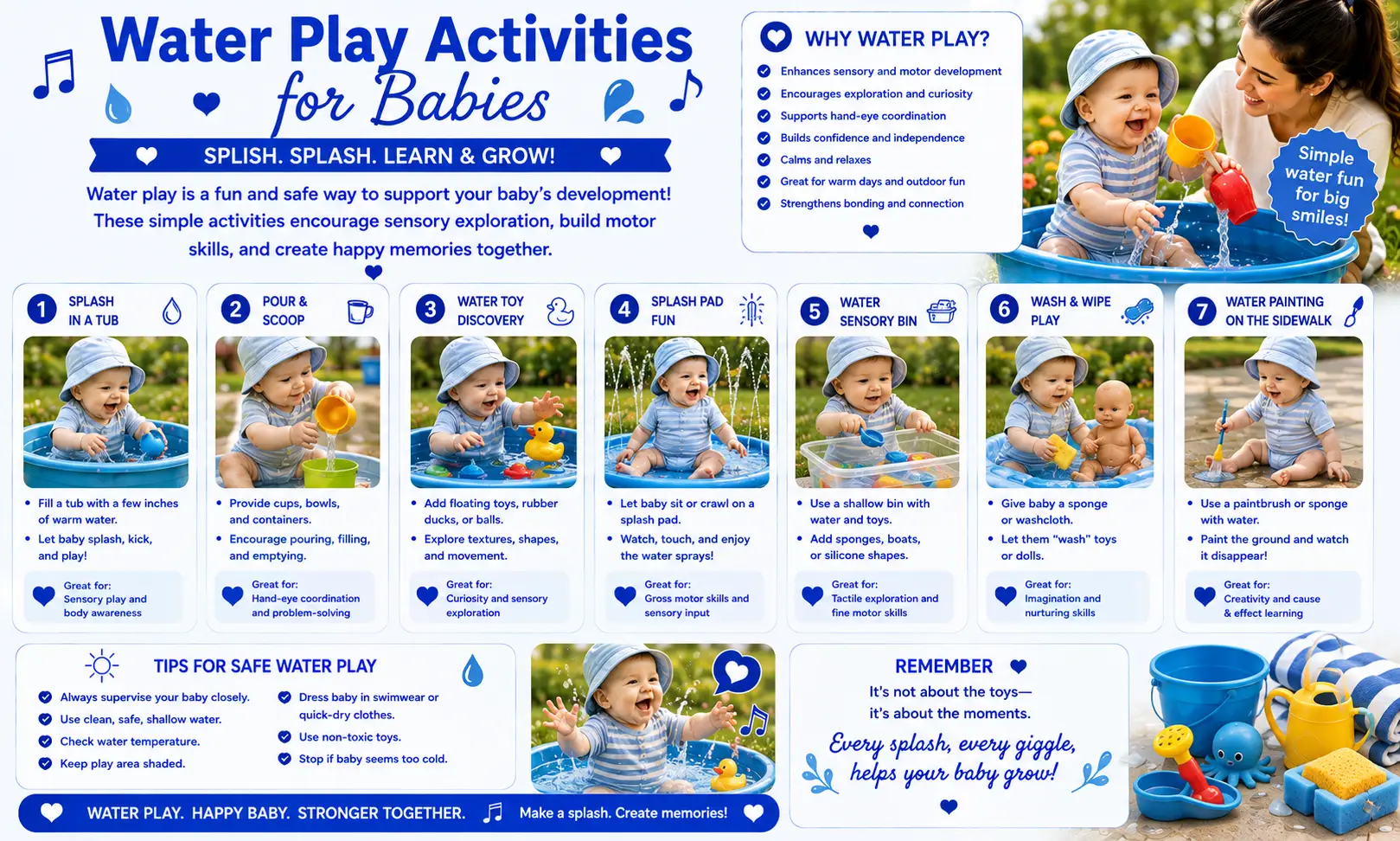
Pouring and Scooping Station
Fill a shallow bin or water table with water and provide cups, funnels, and pitchers. Simply pouring water from one container to another is endlessly entertaining and builds fine motor control.
Sponge Squeeze
Fill a bucket with water and give kids a sponge to soak up and squeeze into an empty container. It’s a simple way to build hand strength while keeping things cool.
Sink or Float Experiment
Gather a variety of household objects and let kids predict whether each one will sink or float before testing it out. It’s an easy introduction to basic science concepts.
Water Painting
Give kids a bucket of water and a paintbrush and let them “paint” the fence, sidewalk, or patio. It’s mess-free, endlessly repeatable, and great for practicing letters or shapes.
Bath Toy Wash
Set up a soapy water bin and a rinse bin, and let kids “wash” toys, plastic animals, or bath figures. It combines pretend play with a satisfying sensory task.
Water Play Activities for Bigger Kids
Sprinkler Run
A classic warm-weather activity that requires zero setup — just turn on the hose or a kid-friendly sprinkler toy and let kids run through the spray.
Water Balloon Games
Fill water balloons for a game of toss, a water balloon piñata, or an impromptu water balloon “baseball” game using a bat or broom handle.
Sponge Relay or Cup Race
Divide kids into teams and have them race to fill a bucket using only a soaked sponge, or race across the yard trying not to spill a full cup of water.
Frozen Treasure Dig
Freeze small toys inside a block of ice and let kids use warm water, salt, or plastic tools to melt and “excavate” their frozen treasures.
Water Blaster Targets
Set up sponges or paper targets and let kids test their aim with a water blaster — a fun way to combine water play with a little friendly competition.
Water Play Safety Tips
Never leave kids unsupervised near water, even in just a few inches, since young children can drown quickly and quietly.
Empty and store bins and pools when not actively supervising water play.
Choose age-appropriate activities, especially for toddlers who may still be prone to putting objects in their mouths.
Apply sunscreen and reapply after prolonged water exposure.
Watch for slippery surfaces around pools, water tables, or splash zones.
Final Thoughts
Water play activities are proof that some of the best summer fun doesn’t require much planning or expense. A bucket, a hose, and a little creativity can turn an ordinary afternoon into hours of splashing, pouring, and learning. Rotate through a few different setups throughout the season to keep things fresh, and don’t be surprised if the simplest ideas — like a bucket of water and a sponge — end up being the biggest hit.
FAQ
What age can babies start water play activities?
Babies as young as a few months old can enjoy supervised water play, such as splashing in a shallow bin or baby pool with just an inch or two of water. Always stay within arm’s reach.
How much water is needed for safe water play?
Very little. A small amount of water in a shallow bin or bucket is enough for most water play activities, and using less water also reduces drowning risk for young children.
What household items work well for water play?
Cups, bowls, funnels, sponges, spoons, and any container that floats or sinks all work well. Recycled bottles and containers are a budget-friendly way to build out a water play kit.
Is water play safe in cooler weather?
Yes, as long as kids are dressed appropriately and don’t get too cold. Many water play activities, like pouring and sink-or-float experiments, can also be adapted for indoor play at the sink or in the bath.
How do I keep water play from becoming too messy?
Set clear boundaries about where water play can happen, use towels or mats to catch spills, and stick to smaller amounts of water in contained bins rather than open, unrestricted setups.