Skip to content
DidYouSearch DidYouSearch
  • did you search?
  • Baby Plus+
    • Baby Activities
      • Arts & Crafts
      • Indoor Activities
      • Montessori
      • Music
      • Outdoor Activities
      • Reading
      • Sensory Play
      • Tummy Time
    • Baby Development
      • Brain Development
      • Cognitive Development
      • Emotional Development
      • Fine Motor Skills
      • Growth Milestones
      • Monthly Milestones
      • Motor Skills
      • Physical Development
      • Social Development
      • Speech Development
    • Baby Feeding
      • Allergies
      • Baby Led Weaning
      • Bottle Feeding
      • Breast feeding
        • Breastfeeding Diet
        • Breastfeeding Positions
        • Latch Problems
        • Low Milk Supply
        • Mastitis
        • Pumping Schedule
        • Weaning
      • Burping
      • Cluster Feeding
      • Feeding Schedule
      • Formula Feeding
        • Formula Amount
        • Formula Brands
        • Formula Comparison
        • Formula Preparation
        • Formula Storage
      • Hydration
      • Pumping
      • Solid Foods
    • Baby Gear Reviews
      • Best Baby Carrier
      • Best Baby Monitor
      • Best Baby Strollers
      • Best Bottles
      • Best Breast Pump
      • Best Car Seat
      • Best Cribs
      • Best Diapers
      • Best Formula
      • Best Toys
    • Baby Growth
      • Growth Spurts
      • Height Charts
      • Monthly Growth
      • Percentiles
      • Weight Charts
    • Baby Health
      • Allergies
      • Cold
      • Constipation
      • Cough
      • Diarrhea
      • Ear Infection
      • Fever
      • Flu
      • Pediatric Visits
      • Rashes
      • Teething
      • Vaccines
      • Vomiting
    • Baby Nutrition
      • Dairy
      • Drinks
      • Eggs
      • Fish
      • Fruits
      • Healthy Recipes
      • Meat
      • Snacks
      • Vegetables
      • Vitamins
    • Baby Products
      • Baby Carriers
      • Bassinets
      • Bottles
      • Breast Pumps
      • Car Seats
      • Cribs
      • Diaper Bags
      • High Chairs
      • Monitors
      • Strollers
      • Swings
      • Toys
      • Walkers
    • Baby Recipes
      • BLW Recipes
      • Breakfast
      • Dinner
      • Finger Foods
      • Lunch
      • Purees
      • Snacks
    • Baby Safety
      • Baby Proofing
      • Car Seats
      • Choking Hazards
      • CPR
      • Home Safety
      • Poison Prevention
      • Safe Sleep
      • Sun Protection
      • Water Safety
  • Baby Names
    • Boy Names
    • Girl Names
    • American baby boy names
    • American baby girl names
    • Biblical Names
    • Middle Names
    • Modern Names
    • Short Names
    • Unique Names
    • Unisex Names
  • Recommended
    • Baby Shopping
      • Baby Registry
      • Budget Baby Shopping
      • Hospital Bag
      • Must Have Products
      • Newborn Checklist
      • Nursery Ideas
    • Baby Sleep
      • Bedtime Routine
      • Co Sleeping
      • Crib Safety
      • Nap Schedules
      • Night Wakings
      • Sleep Environment
      • Sleep Products
      • Sleep Regression
      • Sleep Training
      • Wake Windows
      • White Noise
    • Childcare
      • Daycare
      • Babysitters
      • Kindergarten
      • Nannies
      • Preschool
    • Newborn Care
      • Nail Care
      • Baby Hygiene
      • Bathing
      • Crying
      • Diapering
      • Ear Care
      • Eye Care
      • Skin Care
      • Soothing Techniques
      • Temperature
      • Umbilical Cord
    • Special Needs
      • Premature Babies
      • Autism Signs
      • Developmental Delays
      • Down Syndrome
      • NICU
      • Twins
    • Seasonal Baby Care
      • Spring
      • Summer
      • Travel
      • Fall
      • Holidays
      • Winter
  • Parenting
    • Bonding
    • Discipline
    • Emotional Intelligence
    • First Time Parents
    • Gentle Parenting
    • Positive Parenting
    • Routines
    • Single Parents
    • Working Parents
  • Pregnancy
    • Pregnancy Complications
    • Labor & Delivery
    • Postpartum Recovery
    • Pregnancy Exercises
    • Pregnancy Medications
    • Pregnancy Nutrition
    • Pregnancy Sleep
    • Pregnancy Symptoms
    • Pregnancy Tests
    • Pregnancy Vitamins
    • Pregnancy Weeks
  • Toddler
    • Preschool
    • Speech
    • Tantrums
    • Toddler Food
    • Toddler Sleep
    • Behavior
    • Independence
    • Learning
    • Potty Training
  • Traveling with Baby
    • Road Trips
    • Beach
    • Camping
    • Flying
    • Hotels
    • Packing Lists
  • did you search?
  • Baby Plus+
    • Baby Activities
      • Arts & Crafts
      • Indoor Activities
      • Montessori
      • Music
      • Outdoor Activities
      • Reading
      • Sensory Play
      • Tummy Time
    • Baby Development
      • Brain Development
      • Cognitive Development
      • Emotional Development
      • Fine Motor Skills
      • Growth Milestones
      • Monthly Milestones
      • Motor Skills
      • Physical Development
      • Social Development
      • Speech Development
    • Baby Feeding
      • Allergies
      • Baby Led Weaning
      • Bottle Feeding
      • Breast feeding
        • Breastfeeding Diet
        • Breastfeeding Positions
        • Latch Problems
        • Low Milk Supply
        • Mastitis
        • Pumping Schedule
        • Weaning
      • Burping
      • Cluster Feeding
      • Feeding Schedule
      • Formula Feeding
        • Formula Amount
        • Formula Brands
        • Formula Comparison
        • Formula Preparation
        • Formula Storage
      • Hydration
      • Pumping
      • Solid Foods
    • Baby Gear Reviews
      • Best Baby Carrier
      • Best Baby Monitor
      • Best Baby Strollers
      • Best Bottles
      • Best Breast Pump
      • Best Car Seat
      • Best Cribs
      • Best Diapers
      • Best Formula
      • Best Toys
    • Baby Growth
      • Growth Spurts
      • Height Charts
      • Monthly Growth
      • Percentiles
      • Weight Charts
    • Baby Health
      • Allergies
      • Cold
      • Constipation
      • Cough
      • Diarrhea
      • Ear Infection
      • Fever
      • Flu
      • Pediatric Visits
      • Rashes
      • Teething
      • Vaccines
      • Vomiting
    • Baby Nutrition
      • Dairy
      • Drinks
      • Eggs
      • Fish
      • Fruits
      • Healthy Recipes
      • Meat
      • Snacks
      • Vegetables
      • Vitamins
    • Baby Products
      • Baby Carriers
      • Bassinets
      • Bottles
      • Breast Pumps
      • Car Seats
      • Cribs
      • Diaper Bags
      • High Chairs
      • Monitors
      • Strollers
      • Swings
      • Toys
      • Walkers
    • Baby Recipes
      • BLW Recipes
      • Breakfast
      • Dinner
      • Finger Foods
      • Lunch
      • Purees
      • Snacks
    • Baby Safety
      • Baby Proofing
      • Car Seats
      • Choking Hazards
      • CPR
      • Home Safety
      • Poison Prevention
      • Safe Sleep
      • Sun Protection
      • Water Safety
  • Baby Names
    • Boy Names
    • Girl Names
    • American baby boy names
    • American baby girl names
    • Biblical Names
    • Middle Names
    • Modern Names
    • Short Names
    • Unique Names
    • Unisex Names
  • Recommended
    • Baby Shopping
      • Baby Registry
      • Budget Baby Shopping
      • Hospital Bag
      • Must Have Products
      • Newborn Checklist
      • Nursery Ideas
    • Baby Sleep
      • Bedtime Routine
      • Co Sleeping
      • Crib Safety
      • Nap Schedules
      • Night Wakings
      • Sleep Environment
      • Sleep Products
      • Sleep Regression
      • Sleep Training
      • Wake Windows
      • White Noise
    • Childcare
      • Daycare
      • Babysitters
      • Kindergarten
      • Nannies
      • Preschool
    • Newborn Care
      • Nail Care
      • Baby Hygiene
      • Bathing
      • Crying
      • Diapering
      • Ear Care
      • Eye Care
      • Skin Care
      • Soothing Techniques
      • Temperature
      • Umbilical Cord
    • Special Needs
      • Premature Babies
      • Autism Signs
      • Developmental Delays
      • Down Syndrome
      • NICU
      • Twins
    • Seasonal Baby Care
      • Spring
      • Summer
      • Travel
      • Fall
      • Holidays
      • Winter
  • Parenting
    • Bonding
    • Discipline
    • Emotional Intelligence
    • First Time Parents
    • Gentle Parenting
    • Positive Parenting
    • Routines
    • Single Parents
    • Working Parents
  • Pregnancy
    • Pregnancy Complications
    • Labor & Delivery
    • Postpartum Recovery
    • Pregnancy Exercises
    • Pregnancy Medications
    • Pregnancy Nutrition
    • Pregnancy Sleep
    • Pregnancy Symptoms
    • Pregnancy Tests
    • Pregnancy Vitamins
    • Pregnancy Weeks
  • Toddler
    • Preschool
    • Speech
    • Tantrums
    • Toddler Food
    • Toddler Sleep
    • Behavior
    • Independence
    • Learning
    • Potty Training
  • Traveling with Baby
    • Road Trips
    • Beach
    • Camping
    • Flying
    • Hotels
    • Packing Lists
Close

Search

Home/Baby Activities/Reading/Reading Routine for Babies
Reading

Reading Routine for Babies

By DrAdam
August 14, 2026 5 Min Read
0

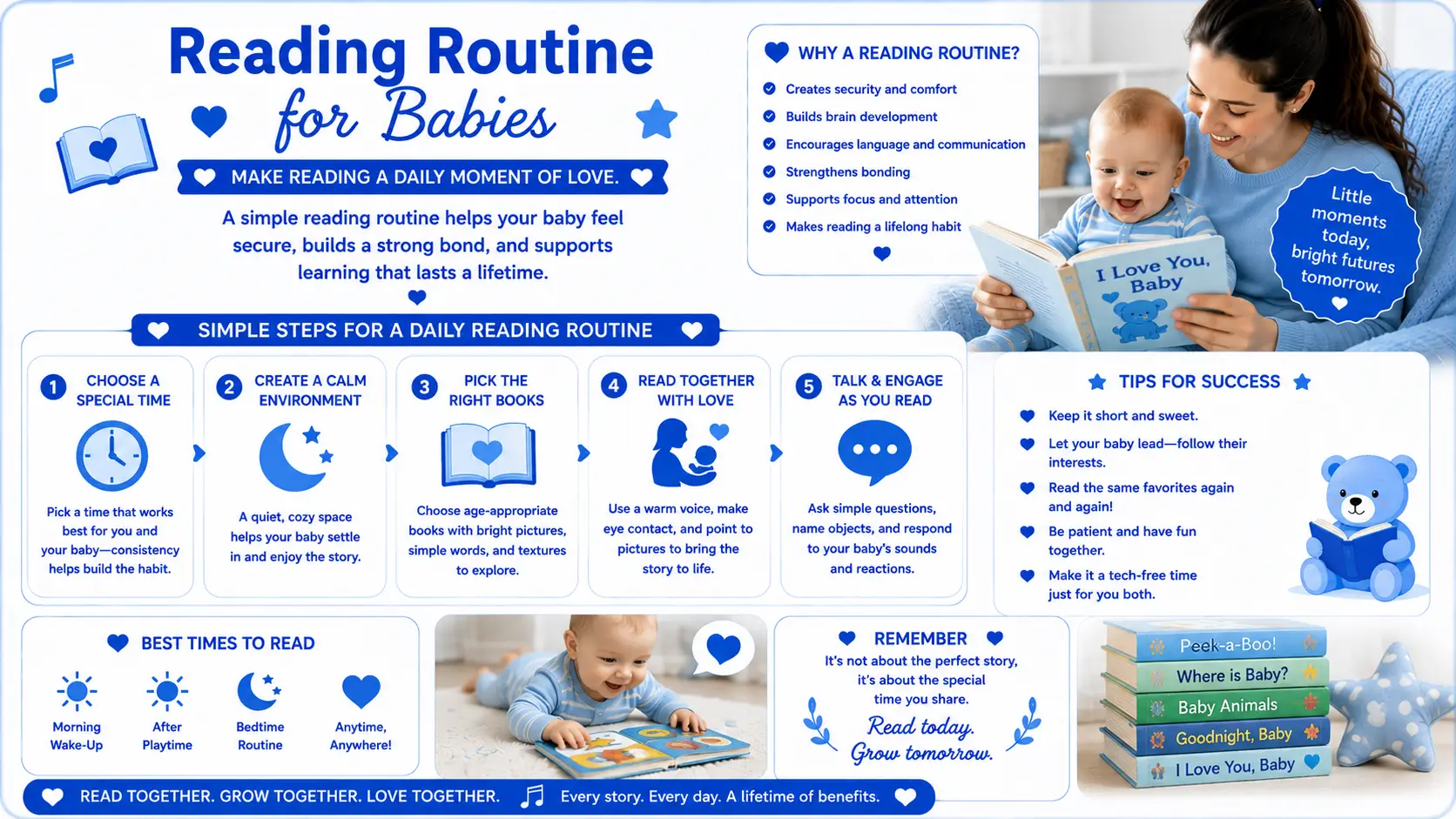
You don’t need a strict schedule, a stack of flashcards, or a perfectly quiet room to build a reading habit with your baby. What you do need is consistency — the same handful of minutes, most days, woven into moments you’re already spending together. Building a reading routine for babies is less about rigid rules and more about turning reading into a predictable, comforting part of everyday life.

Here’s how to build one that actually sticks, based on what pediatric experts, early-literacy specialists, and experienced parents consistently recommend.

Why a Reading Routine Matters

Contents hide
1 Why a Reading Routine Matters
2 When to Start a Reading Routine
3 Building a Reading Routine That Actually Works
3.1 Anchor It to an Existing Habit
3.2 Keep It Short
3.3 Pick a Consistent Time, But Stay Flexible
3.4 Mix Repetition with New Titles
3.5 Make It Physically Comfortable
3.6 Read With Expression
3.7 Don’t Feel Locked to the Text
3.8 Keeping the Routine Going as Your Baby Grows
4 The Bottom Line
5 FAQ
5.1 When should I start a reading routine with my baby?
5.2 How long should a baby reading routine be?
5.3 Is bedtime the best time for a reading routine?
5.4 Should I read the same book every day?
5.5 What if my baby doesn’t seem interested in reading time?

Babies thrive on predictability. A consistent routine — whether it’s bath, book, bed, or a few pages after a diaper change — gives them a sense of security and helps them understand what comes next. Beyond the comfort factor, routine reading has real developmental payoff: research consistently shows that the more words a baby hears in their first few years, the stronger their language and vocabulary development tends to be. Reading daily, even just for a few minutes, is one of the simplest ways to rack up that word exposure.

A routine also takes the decision-making out of it. When reading is baked into a specific moment of the day, you’re far less likely to skip it on busy or exhausting days, since it’s already attached to something you’re doing anyway.

When to Start a Reading Routine

It’s never too early. Many experts recommend introducing books as early as the first few weeks of life, even before a baby can focus on more than a simple black-and-white image. You can start by simply narrating what’s on the page while your newborn looks and listens — the goal at this stage isn’t comprehension, it’s exposure to your voice and the rhythm of language.

If you didn’t start in the newborn stage, don’t worry — there’s no missed window. Whether your baby is six weeks or six months old, today is a perfectly good day to start.

Building a Reading Routine That Actually Works

Anchor It to an Existing Habit

The easiest way to build any routine is to attach it to something you already do daily. Reading right before naptime, after a feeding, or as the final step of a bath-and-bedtime sequence works well because you don’t have to remember a brand-new task — you’re just adding a book to a habit that already exists.

Keep It Short

A reading routine doesn’t need to be long to be effective. Two or three short board books can take less than ten minutes total, and for a tired baby at the end of the day, that’s often exactly the right amount. If your baby loses interest halfway through a book, that’s completely normal — following their attention span matters more than finishing every page.

Pick a Consistent Time, But Stay Flexible

Bedtime is the classic choice for a reading routine, since a calm story helps signal that it’s time to wind down and sleep. But reading doesn’t have to live exclusively at bedtime — some families find more success reading first thing in the morning, during a fussy pre-nap window, or even mid-afternoon when energy (and patience) is higher. The key isn’t which time you choose, it’s picking one that’s realistic for your household and sticking with it.

Mix Repetition with New Titles

Babies genuinely benefit from hearing the same book over and over — repetition helps them recognize patterns, predict what comes next, and build vocabulary through familiar words. A great approach many parents use is having one “steady” book that stays in rotation for weeks, alongside one or two new titles that rotate more frequently. That way your baby gets the comfort of the familiar plus regular exposure to new words and stories.

Make It Physically Comfortable

Cuddling up together — skin contact, a soft chair, dim lighting — reinforces the calming, bonding side of the routine. For babies, being held or positioned face-to-face so they can watch your mouth and expressions adds an extra layer of engagement beyond just hearing the words.

Read With Expression

Babies respond strongly to tone, rhythm, and vocal variety. Reading in a flat, quiet voice works fine for winding down at bedtime, but a livelier, more expressive voice during daytime reading tends to hold a baby’s attention longer and makes the whole experience more fun for both of you.

Don’t Feel Locked to the Text

You don’t have to read every word on the page. Pausing to name objects, point at pictures, make animal sounds, or comment on what’s happening is just as valuable — sometimes more so — than reading the story exactly as written.

Keeping the Routine Going as Your Baby Grows

As your baby moves from newborn to toddler, the routine itself can stay largely the same even as the books change. What shifts is the level of participation: older babies start reaching for pages, pointing at pictures, and eventually “reading” a familiar book back to you in their own babbling way. Letting them take a more active role — holding the book, choosing between two options, turning pages — keeps the routine engaging as their skills develop.

The Bottom Line

A reading routine for babies doesn’t need to be elaborate to work. Pick a consistent moment in your day, keep sessions short and low-pressure, and lean into repetition without worrying about reading every page perfectly. The habit itself — showing up with a book, day after day — is what builds the lifelong benefits, far more than any single book or perfect technique.

FAQ

When should I start a reading routine with my baby?

As early as the first few weeks of life. Experts widely agree there’s no such thing as starting too early, since even newborns benefit from hearing your voice and the rhythm of language.

How long should a baby reading routine be?

Just a few minutes is enough. Two or three short board books, or even a single story, is a completely sufficient daily routine, especially for younger babies with shorter attention spans.

Is bedtime the best time for a reading routine?

Bedtime is popular because a calming story helps signal it’s time to sleep, but it’s not the only option. Morning, after a feeding, or before naptime can all work just as well — consistency matters more than the specific time of day.

Should I read the same book every day?

Yes, at least some of the time. Babies benefit from repetition, which helps them recognize patterns and build vocabulary. Mixing one familiar favorite with a rotating new title tends to work well.

What if my baby doesn’t seem interested in reading time?

That’s normal, especially with younger babies who have short attention spans. Keep sessions brief, follow their cues, and don’t force it if they’re tired or fussy — consistency over time matters more than a “perfect” session every day.


Author

DrAdam

Dr. Adam. Obstetrician and Gynecologist

Follow Me
Other Articles
Previous

Interactive Books for Babies

Next

Bedtime Reading Tips

No Comment! Be the first one.

Leave a Reply Cancel reply

Your email address will not be published. Required fields are marked *

What is Did You Search?

The “Did You Search” website was created for all mothers and families. Just search to find all your needs about your children.

Links

  • about
  • contact
  • privacy policy
  • medical disclaimer
  • sitemap
Copyright 2026 — DidYouSearch. All rights reserved.