
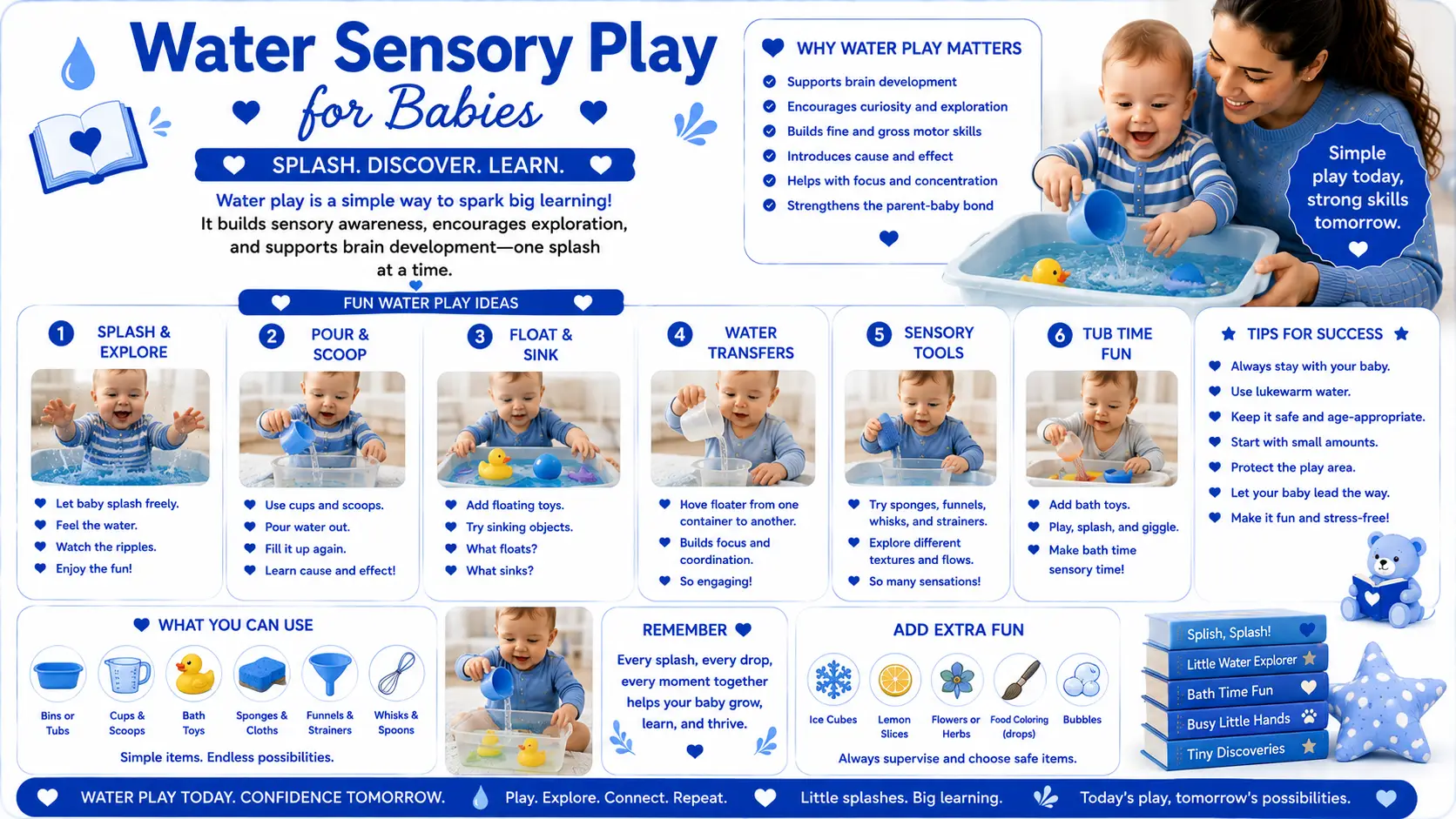

Few things capture a child’s attention like water. Whether it’s splashing in the bath, scooping from a bin, or running through a sprinkler, water sensory play is one of the simplest and most engaging ways to support development at every age. It’s low-cost, endlessly adaptable, and works just as well indoors on a rainy afternoon as it does outdoors in summer.
This guide covers what water sensory play actually is, its developmental benefits, easy setups for different ages, and safety tips every parent should know.
What Is Water Sensory Play?
Water sensory play is any activity where a child interacts with water — pouring, scooping, splashing, floating objects, or exploring temperature and texture. It can be as simple as a bin of water and a few cups, or as elaborate as a backyard water table with toys and tools. The key feature is that it’s open-ended: there’s no “right” way to play, which makes it ideal for independent exploration.
Benefits of Water Sensory Play
Water play isn’t just a way to cool off — it supports real developmental skills:
Fine and gross motor skills — pouring, scooping, and squeezing builds hand strength and coordination
Language development — describing wet, cold, full, or empty introduces new vocabulary
Cause-and-effect learning — what floats, what sinks, what splashes builds early science thinking
Concentration and focus — the immersive nature of water play tends to hold children’s attention longer than many other activities
Emotional regulation — the repetitive motion of pouring and splashing can be calming for children who need to decompress
Social skills — water tables and shared bins encourage turn-taking and cooperative play
Water Sensory Play Ideas by Age
Babies (6–18 months)
A shallow tub with a few inches of water and floating toys, always within arm’s reach
Sponges and cups for early scooping and squeezing
Warm bath time with cups for pouring
Toddlers (18 months–3 years)
Water bin play — a plastic tub filled with water, cups, funnels, and scoops for pouring and transferring
Mini car wash — add a few drops of dish soap and toy cars for a soapy, sudsy sensory experience
Sensory bin aquarium — blue food coloring and plastic sea creatures turn a simple bin into an ocean scene
Ice and water scooping — add ice cubes and lemon slices to a bin for a cooling, multi-sensory activity
Preschoolers (3–5 years)
Sink or float experiments — gather natural items like sticks, leaves, and rocks and predict what will float
Water table play — a dedicated table with cups, wheels, and channels supports longer, independent play sessions
Color-mixing water play — add food coloring to separate containers and let kids mix colors together
Frozen color pops — freeze colored water on sticks, then use the melting ice to “paint” on paper as it thaws
Outdoor and Warm-Weather Ideas (All Ages)
Sprinklers, splash pads, or a kiddie pool for active, full-body play
Water balloon activities for older toddlers and preschoolers
Painting the sidewalk or fence with plain water and paintbrushes — mess-free and endlessly repeatable
Water Sensory Play Safety Tips
Water play is generally low-risk, but a few precautions matter:
Never leave a child unattended near water, even in shallow bins — drowning can happen in just a few inches
Use non-slip mats for indoor water play to prevent slipping on wet floors
Choose age-appropriate water depth; for babies and young toddlers, a few inches is plenty
Supervise closely if small toys or beads are used, to avoid choking hazards
Dry surfaces and toys thoroughly after play to prevent mold or mildew buildup
Final Thoughts
Water sensory play is one of the easiest activities to set up with things you already have — a bin, some cups, and a few inches of water can hold a child’s attention for a surprisingly long time. Whether you’re filling a kiddie pool for a hot afternoon or setting up a simple scooping station on a rainy day, water play offers rich, hands-on learning at every age.
FAQ
What age can babies start water sensory play?
Water sensory play can start as early as 6 months, once a baby can sit up with support. Keep water shallow, use warm temperatures, and always stay within arm’s reach.
Is water sensory play messy?
It can be, especially with pouring and splashing activities. Laying down towels, using a shower curtain as a splash mat, or setting up outdoors makes cleanup much easier.
How long should water play sessions last?
There’s no strict rule — toddlers often stay engaged for 20 to 30 minutes, while preschoolers with a water table or more complex setup may play even longer. Let your child’s interest guide the length.
What household items work well for water sensory play?
Cups, funnels, sponges, measuring spoons, colanders, and plastic containers all make great water play tools. You don’t need specialized toys to create a rich sensory experience.
Is water sensory play safe for children with sensory sensitivities?
Many children with sensory sensitivities enjoy water play because it offers calming, repetitive input, but every child responds differently to water temperature and texture. Start slow, follow your child’s cues, and consult an occupational therapist if you have specific concerns.