
Ice might be one of the most underrated sensory materials around. It’s cheap, easy to prep, and offers a completely different experience from water or sand — cold, slippery, slowly changing, and a little unpredictable. Ice sensory activities work year-round: they’re a natural way to cool off in summer and a fun way to bring the outdoors in during winter.
This guide covers the benefits of ice play, easy activity ideas by theme, and safety tips to keep in mind before you start freezing.
What Is Ice Sensory Play?
Ice sensory play uses frozen water — cubes, blocks, or shapes — as the main material for hands-on exploration. It can be as simple as a bowl of ice cubes on a warm day or as involved as freezing toys inside a block for kids to “excavate.” Because ice slowly melts and changes as children play, it naturally introduces early science concepts alongside sensory exploration.
Benefits of Ice Sensory Activities
Ice play offers a surprising range of developmental benefits:
Fine motor skills — chipping, scooping, and gripping slippery ice builds grip strength and hand-eye coordination
Sensory development — ice stimulates touch, sight, hearing, and sometimes taste, helping children learn concepts like cold, wet, and slippery
Language development — words like “melt,” “solid,” “frozen,” and “slippery” naturally come up during play
Problem-solving skills — figuring out how to free a frozen toy encourages trial and error
Early science learning — melting, temperature, and states of matter are all introduced through simple, hands-on observation
Easy Ice Sensory Activity Ideas
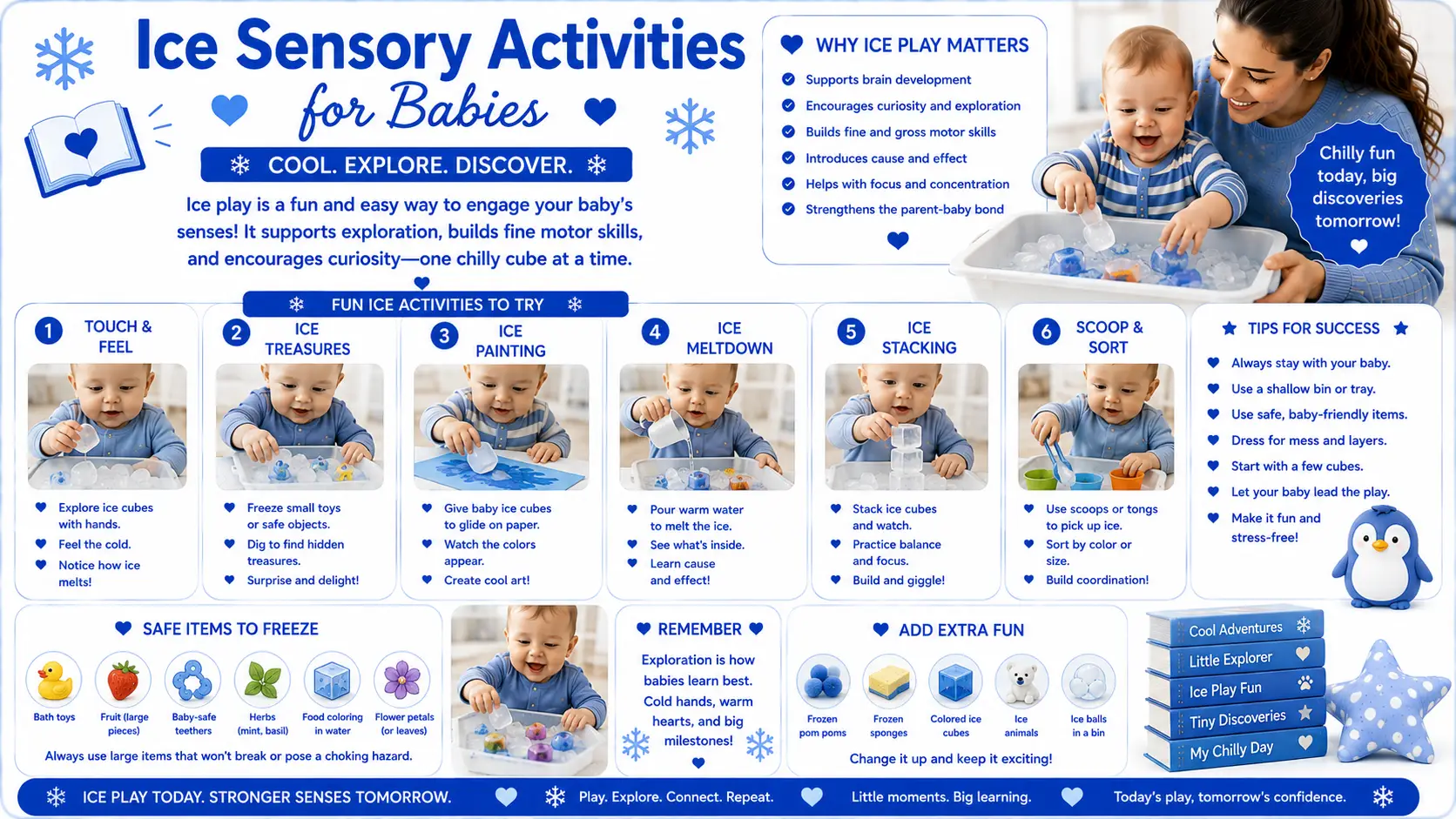
Ice excavation Freeze small toys, plastic animals, or gems inside a bowl or container of water. Once frozen, give kids tools like spoons, droppers, or a spray bottle of warm water to “rescue” the objects. This is one of the most popular ice sensory activities for toddlers and preschoolers because it combines patience, fine motor work, and a fun reveal.
Colored ice painting Freeze water with food coloring in an ice cube tray, then let kids use the cubes to paint on paper as they melt. It’s a simple way to explore color mixing and texture at the same time.
Ice cube sensory bin Fill a bin with plain ice cubes and add tools like tongs, spoons, and small cups. As the ice melts, the activity naturally transitions into water play — no need to reset the bin.
Frozen dinosaur (or toy) eggs Freeze small toys inside balloons filled with water for a fun, egg-shaped block. Kids can chip, melt, or run warm water over the “eggs” to hatch what’s inside.
Salt and ice melting experiment Sprinkle salt over ice cubes or a block and watch the melting patterns form. This simple experiment is a great introduction to basic chemistry concepts for preschoolers.
Ice and sand contrast play Add ice cubes to a bin of dry sand for a temperature and texture contrast. The mix of warm, grainy sand and cold, smooth ice keeps kids engaged longer than either material alone.
Frozen glove or mold hands Fill a rubber glove with water, freeze it, then peel away the glove to reveal an icy hand shape. It’s a fun seasonal twist that toddlers find fascinating as it slowly melts.
Scented or edible ice cubes For taste-safe ice play, freeze fruit slices, herbs, or edible flowers into ice cubes. This adds a smell and taste-safe element that’s especially good for babies and toddlers who still mouth objects.
Ice Sensory Play Safety Tips
Always supervise ice play, especially with younger children who may put ice in their mouths
Use age-appropriate ice sizes to avoid choking hazards for babies and toddlers
If using tools like mallets or hammers to break ice, provide safety goggles and supervise closely
Keep sessions short in very cold weather to avoid discomfort or numbness in little hands
Lay down towels or play outdoors, since melting ice creates a lot of water
Final Thoughts
Ice sensory activities are proof that some of the best sensory play doesn’t require a big shopping list — just water, a freezer, and a little creativity. Whether you’re freezing toys for an excavation challenge or letting kids paint with colored ice cubes, these activities offer rich sensory and science learning that keeps kids engaged well past the first few minutes.
FAQ
What age is appropriate for ice sensory play?
Ice sensory play can start around 12 months, once babies can safely hold and explore objects without putting large pieces in their mouths. Always supervise closely and use larger ice pieces for younger children to prevent choking.
Is ice sensory play messy?
Yes, since melting ice creates water as it plays out. Setting up on a towel, tray, or outdoors makes cleanup much easier, and many parents let the activity transition naturally into water play as the ice melts.
How long does ice sensory play last?
It depends on the ice size and room temperature, but most ice cube activities last 15 to 30 minutes before fully melting. Larger frozen blocks with toys inside can extend play time significantly.
What household items work well for ice sensory play?
Spoons, tongs, droppers, spray bottles, and small cups all work well for scooping, chipping, and melting ice. You don’t need special tools — most ice play ideas use items already in your kitchen.
Can ice sensory play be done indoors?
Yes, as long as you protect surfaces from water. A shallow tray, towel, or high chair setup works well indoors, though outdoor play is often easier for messier activities like ice excavation or melting experiments.