
Long before children can describe how something feels, they’re learning it with their hands. Texture exploration activities — play that focuses on rough, smooth, soft, bumpy, sticky, and everything in between — help children build the vocabulary and sensory awareness they need to understand and describe their world.
Unlike sensory play that focuses on one material, texture exploration is about contrast: giving kids a range of different feels to compare side by side. It’s simple to set up, works at any age, and often uses items you already have around the house or backyard.
What Is Texture Exploration Play?
Texture exploration is any sensory activity centered on the sense of touch, where children compare and describe how different materials feel. That might mean walking barefoot across different surfaces, sorting objects by feel, or comparing rough tree bark to a smooth stone. The goal isn’t just entertainment — it’s helping children build tactile discrimination, or the ability to notice and describe subtle differences by touch.
Benefits of Texture Exploration Activities
Texture-focused sensory play supports several areas of early development:
Language development — words like rough, smooth, bumpy, squishy, and sticky expand descriptive vocabulary
Tactile discrimination — comparing textures side by side helps children notice and process subtle sensory differences
Fine motor skills — pinching, rubbing, and manipulating different materials builds hand strength and control
Cognitive development — sorting and categorizing objects by texture supports early classification skills
Sensory regulation — for some children, tactile input can be calming; for others, it’s stimulating and engaging, which makes texture play useful for a range of sensory needs
Texture Exploration Activity Ideas
Texture walk or path Lay out a path of different textured materials — bubble wrap, artificial turf, sponges, soft fabric, sandpaper — and let children walk, crawl, or step across each one barefoot. Talk through how each surface feels as they go.
Texture sorting tray Fill a compartmented tray with a variety of objects: feathers, foil, sandpaper, cotton balls, felt, or pinecones. Encourage children to sort them into groups like “soft” and “rough,” or match pairs with similar textures.
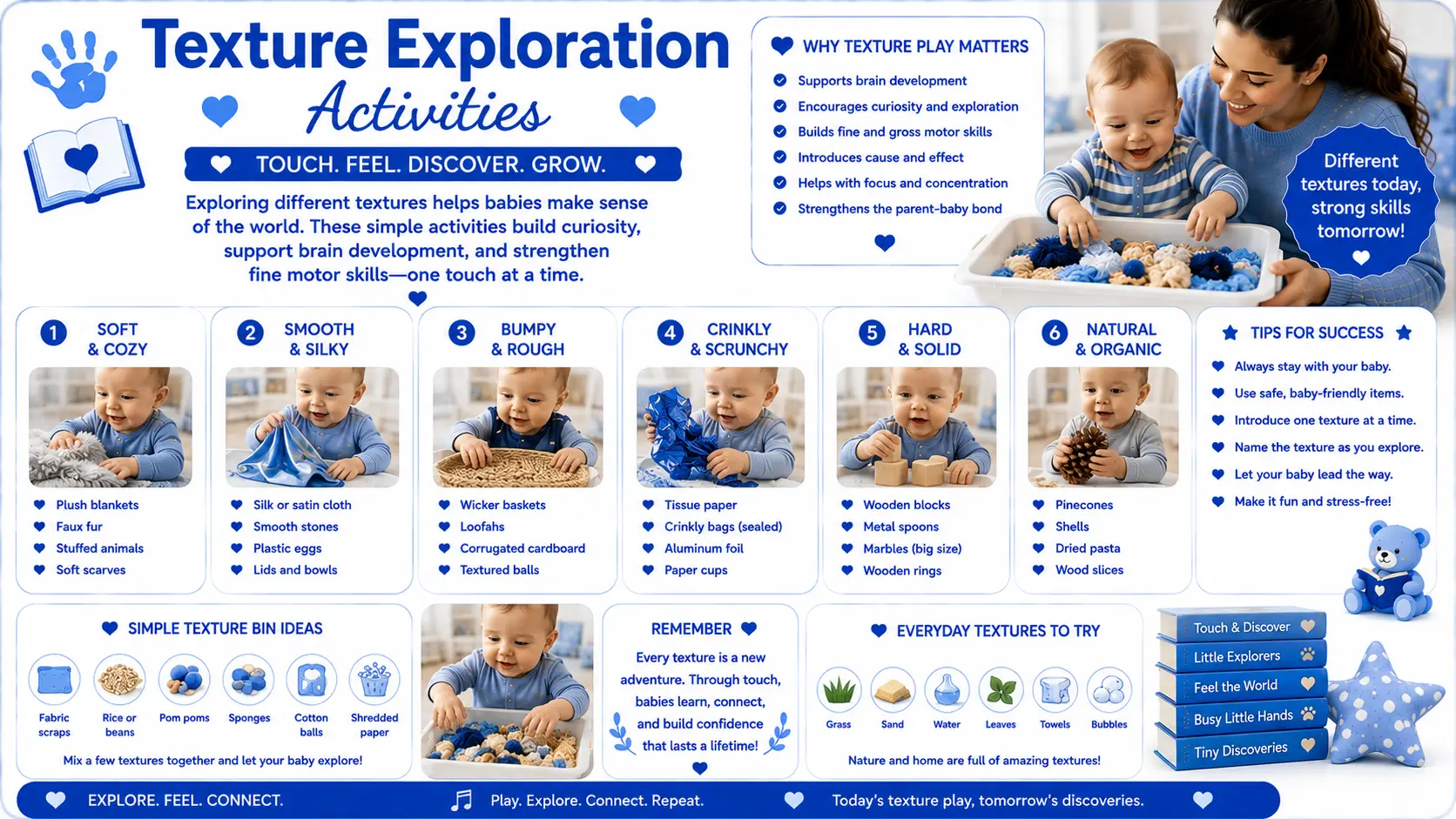
Texture bins Fill a bin with a tactile material like rice, beans, sand, or water beads, then add textured objects like fabric swatches or foam shapes for kids to dig through and discover.
Nature texture hunt Head outside and collect items with different textures — smooth stones, rough bark, prickly pinecones, soft leaves. This connects texture exploration to the natural world and works well for toddlers through preschoolers.
Blindfolded guessing game For preschoolers, place a few safe household objects in a bag or box and have them reach in, describe the texture, and guess what it is without looking. This builds vocabulary, reasoning, and careful listening.
Texture painting Mix sensory materials like sand, coffee grounds, or salt into paint for a textured art project. Kids get to see and feel the difference as they paint, adding another layer to the activity.
Fabric swatch exploration Gather a few types of fabric — cotton, wool, corduroy, silk — and let babies and toddlers touch, compare, and describe how each one feels. This is an easy, low-mess option for younger children.
Texture obstacle course Set up stepping stones, textured balls, foam mats, and soft pillows in a sequence for kids to crawl or walk through. This combines texture exploration with gross motor movement and balance.
Texture Exploration by Age
Babies benefit from simple, supervised exploration — soft fabric swatches, textured balls, and board books with different textures to touch
Toddlers enjoy texture bins, sorting trays, and short texture walks with a few clearly different surfaces
Preschoolers are ready for more complex activities, like blindfolded guessing games, texture painting, and multi-step obstacle courses
Safety Tips for Texture Exploration
Always supervise young children, especially with small objects that could pose a choking hazard
Check materials for allergens (some fabrics, foods, or plants may trigger reactions)
Avoid sharp or rough textures that could scratch delicate skin for very young babies
Offer an “opt-out” option for any texture a child seems uncomfortable with, especially children with sensory sensitivities
Final Thoughts
Texture exploration activities are one of the simplest ways to build vocabulary, sensory awareness, and fine motor skills without needing a big shopping list. A handful of fabric swatches, a walk outside, or a tray of household objects can turn into a rich learning experience — all it takes is a little variety and the freedom to touch, compare, and explore.
FAQ
What age should texture exploration activities start?
Texture exploration can start from birth through simple touch — offering soft blankets, textured toys, or board books. More structured activities like sorting trays or texture walks work well from toddlerhood onward.
What household items work well for texture exploration?
Fabric scraps, sponges, bubble wrap, sandpaper, cotton balls, foil, and kitchen items like dried pasta or rice all offer great texture variety without needing to buy anything special.
How does texture exploration help with speech and language development?
Describing how something feels — rough, smooth, sticky, soft — gives children new vocabulary to practice and encourages them to talk about their sensory experiences, which supports overall language development.
Is texture exploration helpful for children with sensory processing challenges?
Many occupational therapists use texture-based activities to support children with sensory processing challenges, but responses vary widely from child to child. If you have specific concerns, it’s best to work with an occupational therapist for personalized guidance.
Can texture exploration activities be messy?
Some can be, particularly texture painting or bins with loose fillers like rice or sand. Many texture activities, like fabric swatches, sorting trays, or nature walks, are low-mess and easy to clean up.