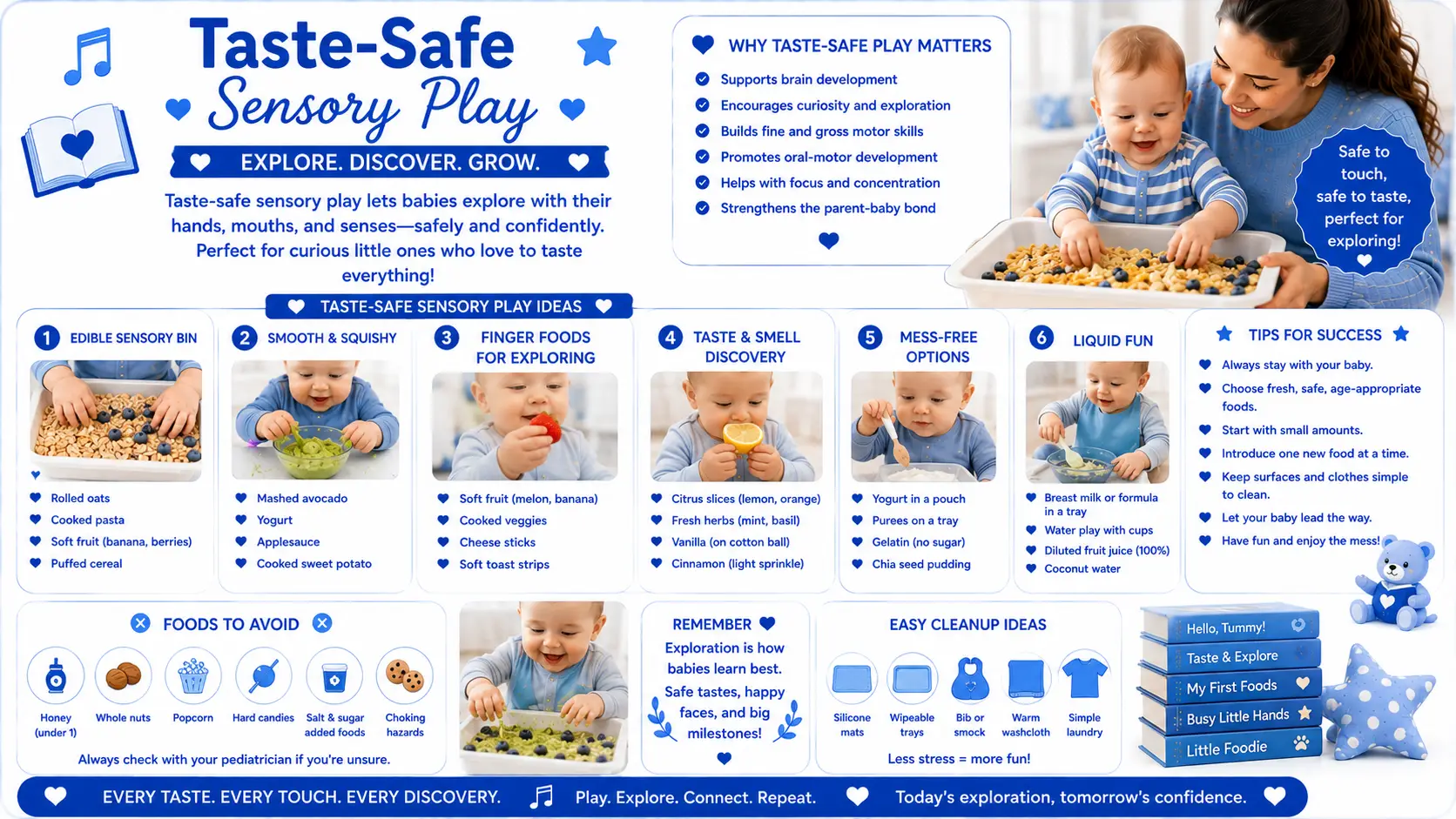

If your baby or toddler still puts everything in their mouth, regular sensory play can feel stressful — one eye on the activity, one eye on what’s about to get eaten. That’s where taste-safe sensory play comes in. It uses fully edible ingredients so little ones can explore textures, colors, and smells with their hands (and mouths) without any risk.
Taste-safe sensory play is especially popular for babies and toddlers between 6 months and 3 years, when mouthing objects is a normal part of exploring the world. Below, we’ll cover what makes an activity truly taste-safe, easy recipes to try, and answers to the questions parents ask most.
What Does “Taste-Safe” Actually Mean?
A sensory activity is considered taste-safe when it’s made entirely from edible ingredients, contains no choking hazards for your child’s age, and avoids high-salt, high-sugar, or artificial additives that aren’t meant to be eaten in large amounts. It’s worth noting that taste-safe doesn’t mean “tasty” — many recipes are intentionally bland so kids explore the texture without wanting to keep eating it.
A few important distinctions:
Taste-safe means safe if tasted or mouthed occasionally
It does not mean a full meal-sized portion is fine to eat
Standard playdough recipes with added salt are not taste-safe for babies, since the salt content can be unsafe in large amounts
Always check for food allergies before introducing any edible sensory material
Benefits of Taste-Safe Sensory Play
Beyond peace of mind, taste-safe sensory play offers real developmental value:
Builds fine motor skills through scooping, squeezing, and pouring
Supports language development as you describe textures, colors, and smells
Encourages sensory exploration without needing to end the activity every time something goes in a mouth
May reduce food aversions by giving kids low-pressure, playful exposure to new textures and smells
Extends independent play time, since parents don’t need to intervene as often
Easy Taste-Safe Sensory Play Ideas
Most of these use ingredients you probably already have in the kitchen.
Chickpea foam (aquafaba foam) Whip the liquid from a can of chickpeas with an electric mixer until it forms light, fluffy peaks. Add a drop of food coloring for extra visual interest. It’s soft, squishy, and completely taste-safe.
Colored yogurt finger paint Mix plain yogurt with a few drops of natural food coloring in separate bowls. Great for finger painting on a high chair tray, cardboard, or freezer paper.
Taste-safe “mud” Combine cornstarch, cocoa powder, and water gradually until it reaches an oobleck-like texture — firm when squeezed, runny when at rest. Add toy dinosaurs or cars for imaginative digging play.
Edible sensory spaghetti Cook plain spaghetti, toss with a little oil, and separate into portions dyed with food coloring. Kids can squish, swirl, and sort the noodles by color.
Fruit purée sensory bags Spoon fruit purée into a sealed zip-top bag, squeeze out the air, and tape it to a high chair tray or table. Babies can press and explore the texture without any mess.
Taste-safe sand Mix flour, cocoa powder, and a small amount of oil until it feels like sand but holds its shape when pressed. Perfect for scooping and molding.
Frozen fruit sensory bin Fill a shallow tray with frozen berries, banana slices, or melon chunks for a cold, taste-safe texture experience — especially soothing for teething babies.
Taste-Safe Sensory Play Safety Tips
Even taste-safe activities need supervision:
Never leave a baby or toddler unattended during sensory play
Cut or mash any whole fruit pieces to reduce choking risk for younger babies
Avoid added salt, sugar, or artificial dyes in homemade recipes when possible
Introduce one new food-based ingredient at a time to watch for allergic reactions
Wash hands and surfaces well after play, since edible sensory materials can spoil quickly
Final Thoughts
Taste-safe sensory play is one of the easiest ways to give mouthing babies and toddlers rich, hands-on learning experiences without constant worry. With a few pantry staples — yogurt, chickpea liquid, spaghetti, or fruit purée — you can set up a new sensory activity in minutes and let your little one explore safely and freely.
FAQ
What age is taste-safe sensory play appropriate for?
Taste-safe sensory play works well from around 6 months, once babies start reaching for and mouthing objects, through the toddler and preschool years when children may still put things in their mouths during play.
Is taste-safe sensory play messy?
It can be, since many recipes involve food-based textures like purées, yogurt, or foam. Using a splat mat, high chair tray, or outdoor setup makes cleanup much easier.
What ingredients should I avoid in taste-safe sensory play?
Avoid added salt, excess sugar, artificial dyes, small hard foods like whole grapes or nuts, and any ingredient your child has a known allergy to. Homemade playdough with salt, for example, is not taste-safe for babies.
Can taste-safe sensory play help picky eaters?
Many parents find that playful, low-pressure exposure to new textures and smells through sensory play can help reduce food aversions over time, though it isn’t a guaranteed fix and works best alongside relaxed mealtime routines.
Do I need to supervise taste-safe sensory play?
Yes. Even though the ingredients are edible, supervision is still important to prevent choking, manage mess, and make sure your child doesn’t eat large quantities of any one ingredient.