
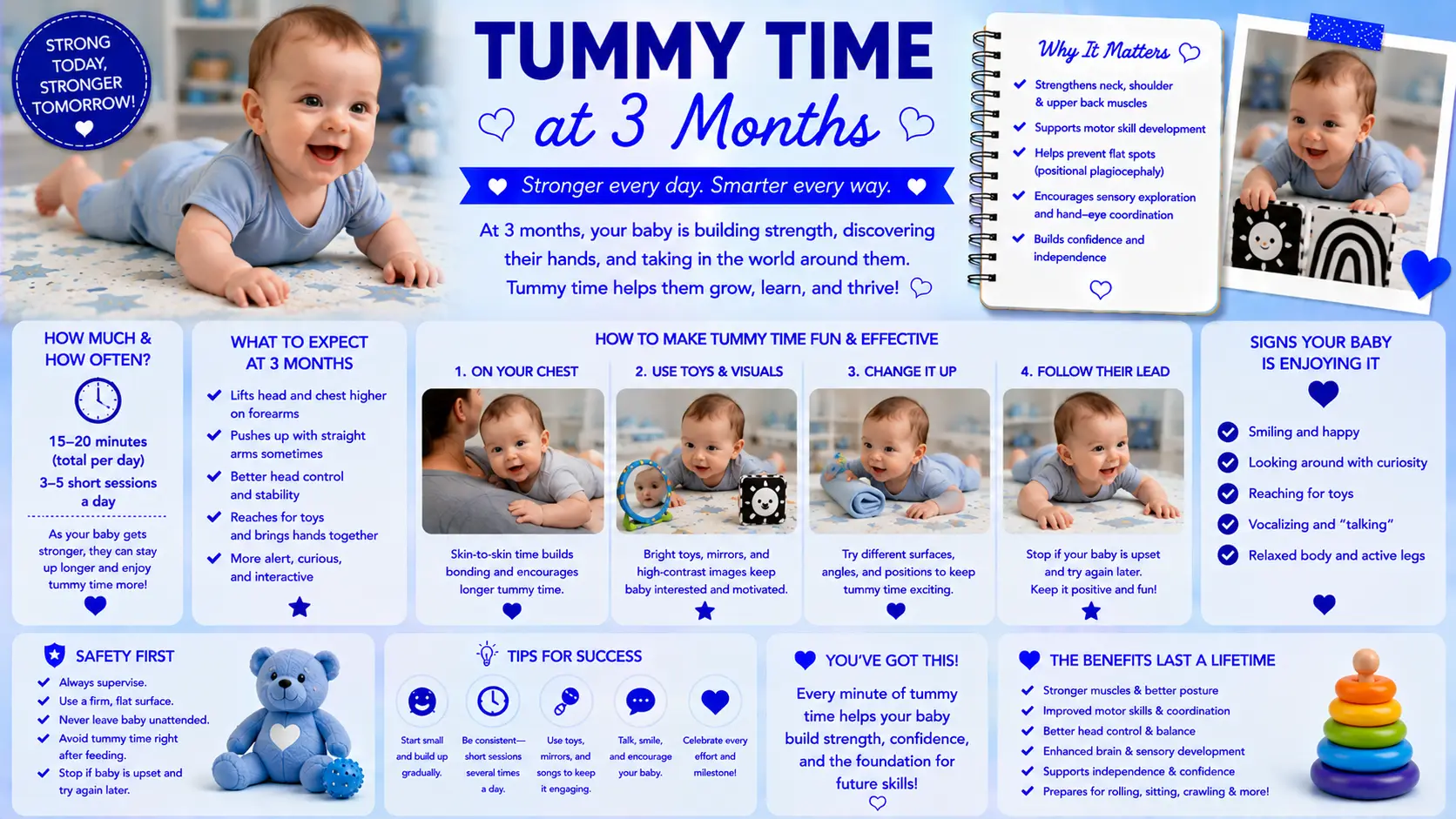

By three months, tummy time shifts from short, sometimes fussy practice sessions into a more active part of your baby’s day. At this stage, many babies can lift their head higher, push up on their forearms, and start looking around with better control. Experts generally recommend working toward about 30–60 minutes of total tummy time daily, broken into several shorter sessions of 5–10 minutes each.
This supervised belly time strengthens the neck, shoulders, arms, and back muscles your baby needs for rolling, sitting, crawling, and later walking. It also helps prevent flat spots on the head (positional plagiocephaly) that can develop from too much time on the back, and it gives babies a new view of the world that supports visual tracking and early exploration.
How Much Tummy Time Does a 3-Month-Old Need?
Most sources suggest aiming for 30–60 minutes total per day at three months. Some pediatric guidance points toward building up to around an hour by this age, while others note 30 minutes as a solid target if sessions stay positive. Spread it across the day rather than forcing one long stretch—three to five sessions of 5–10 minutes often works well.
Remember that time on your chest, across your lap, or in a supported position still counts. Many parents find that “tummy-to-tummy” contact is far more tolerable early on and gradually transitions to the floor as strength improves. Watch your baby’s cues: stop or switch positions when they get fussy, and try again later when they’re alert and content (after a diaper change or between feeds often works best).
What Tummy Time Looks Like at 3 Months
Around this age, you may notice clear progress:
Your baby pushes up on their forearms or elbows, with the chest starting to lift off the surface.
Head control improves—they can lift their head to about 45 degrees (and sometimes closer to 90) and hold it more steadily without as much bobbing.
They turn their head smoothly to both sides to look at faces, toys, or sounds.
Legs straighten more so the lower belly rests on the floor, and they may begin tracking objects with their eyes.
Every baby develops at their own pace. Some three-month-olds already do mini push-ups and reach toward toys; others still prefer shorter sessions. Consistent daily practice matters more than hitting exact minutes every single day.
Benefits Beyond Muscle Strength
Tummy time builds the foundation for later motor milestones. Stronger neck and upper-body muscles make rolling easier in the coming months. It encourages reaching, weight-shifting, and eventually pivoting or belly-crawling. The position also promotes better head shape by reducing constant pressure on the back of the skull, and the change in perspective supports visual development and early sensory exploration.
Parents often notice that babies who get regular tummy time become more comfortable on the floor overall, which supports freer movement and play as they grow.
Practical Tips to Make Tummy Time Work
Place a firm blanket or play mat on a clear floor space (never on a soft bed or sofa). Get down at eye level—your face is the best motivation. Shake a rattle, hold a high-contrast toy or unbreakable mirror just in front of them, or sing and talk to encourage lifting and turning. A rolled towel or small nursing pillow under the chest can give extra support and make the position more comfortable at first.
If your baby resists floor time, start on your chest while you recline, or try across your lap. Short, frequent sessions beat one long struggle. Many parents find success right after a diaper change or when the baby is freshly awake and fed (but not immediately after a big feed if reflux is an issue). Consistency helps most babies grow more tolerant over time.
Always supervise closely and keep the area free of soft bedding or objects that could pose a risk. Remember the safe-sleep rule: back to sleep, tummy to play.
When to Check In with Your Pediatrician
Most babies progress with practice, but talk to your doctor if by three months your little one shows little interest in lifting their head at all, strongly prefers one side, or seems unusually floppy or stiff. Early guidance can address issues such as torticollis or delayed motor skills.
Tummy time at three months is less about perfect form and more about regular, positive practice. Keep sessions short and engaging, celebrate small gains in head control and pushing up, and adjust based on what your baby enjoys. Over the next weeks you’ll likely see stronger lifts, more confident turns, and a growing willingness to explore the floor—laying solid groundwork for the exciting milestones ahead.
FAQ
How much tummy time should a 3-month-old get each day?
Most guidance recommends 30–60 minutes total, divided into several short sessions of about 5–10 minutes. Some sources encourage working toward a full hour by three months if your baby tolerates it well. Quality and consistency matter more than hitting an exact number every day.
What if my 3-month-old hates tummy time?
This is very common. Try chest-to-chest or lap positions first, keep sessions very short, get face-to-face, use toys or mirrors, and stop at the first signs of frustration. Gradually increase as strength and comfort grow. Many babies become more accepting with gentle, frequent practice.
Does tummy time help prevent a flat head?
Yes. Regular supervised time on the belly reduces prolonged pressure on the back of the head and is one of the recommended ways to help prevent or improve positional plagiocephaly.
What milestones should I look for during tummy time at 3 months?
Expect improved head lifts (around 45 degrees or higher), pushing up on forearms with the chest beginning to rise, smoother head turning to both sides, and beginning to track faces or toys visually. Progress varies, so focus on steady improvement rather than rigid timelines.
Is it okay if my baby only does a few minutes at a time?
Absolutely. Short, frequent sessions add up and are often more successful than longer forced ones. As your baby’s neck and upper-body strength increase, they naturally tolerate longer periods.