
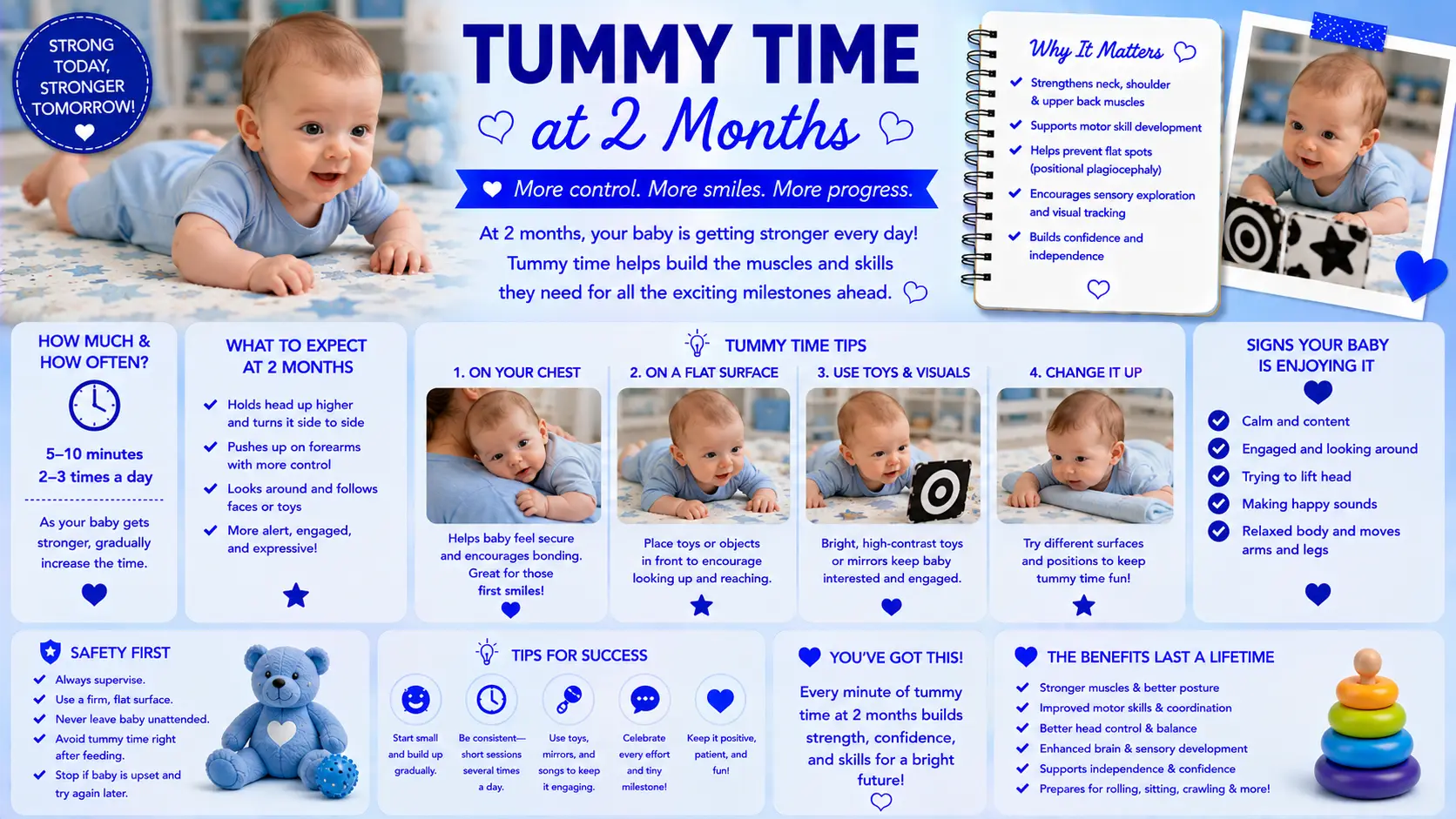

By the time your baby reaches 2 months, tummy time has likely become a more familiar (if still imperfect) part of the daily routine. What started as brief, wobbly sessions in the newborn weeks is now building real strength and skill. At this age, tummy time shifts from simply getting comfortable on the belly to actively practicing head control, early pushing, and visual tracking.
How Much Tummy Time at 2 Months?
Pediatric guidance consistently points to a total of 15–30 minutes of tummy time per day by about 2 months of age. Some sources suggest aiming closer to 20–30 minutes, broken into several shorter sessions rather than one long stretch. Typical session lengths at this stage are 5–10 minutes, repeated three or four times throughout the day.
Flexibility is key. Some days your baby may only manage a couple of minutes before protesting; other times they may stay happily engaged longer. Consistency across the day matters more than hitting an exact number in a single sitting. Spread the sessions after naps, diaper changes, or during calm, alert windows when your baby is most receptive.
What Tummy Time Should Look Like at 2 Months
At 2 months, most babies show clear progress from the newborn stage. You can expect:
Lifting and holding the head up for longer periods, often 45–90 degrees off the surface.
Beginning to push up slightly onto the forearms (though elbows may still sit behind the shoulders).
Tracking faces, toys, or high-contrast objects with their eyes while on their tummy.
More comfort spending time on a firm floor surface rather than only on a parent’s chest.
Occasional tilting of the head to one side—encourage turning both ways to support even muscle development.
Many babies still keep their hips and knees somewhat flexed and may need a little help. Placing a rolled towel or small blanket under the chest can provide gentle support that makes lifting the head easier and more successful. This is still normal and helpful at this age.
Benefits of Tummy Time at 2 Months
The benefits continue to compound. Stronger neck, shoulder, and upper-body muscles prepare your baby for the next milestones—rolling, sitting, and eventually crawling. Regular tummy time also reduces the risk of flat spots on the head and gives babies valuable sensory experiences: new views of the room, different textures under their hands and chest, and the chance to practice weight shifting.
At 2 months, these sessions directly support the CDC’s developmental milestones, which include holding the head up when on the tummy and moving both arms and legs. Babies who get consistent practice often show earlier and smoother progress toward later motor skills.
How to Make Tummy Time Successful at 2 Months
Floor time is now the priority. Spread a firm blanket or play mat in a clear area and stay right there with your baby. Helpful approaches include:
Get down at eye level so your face is the main attraction.
Place a baby-safe mirror or high-contrast toys just in front of them to encourage lifting and turning the head.
Gently move a toy or soft book from side to side to promote tracking and neck rotation.
Use a rolled towel under the chest for support when needed.
Talk, sing, or make faces—your interaction is often the best motivator.
Try short sessions in different locations (living room floor, outdoor blanket on a safe surface) to keep things interesting.
If your baby still prefers chest-to-chest or lap time, continue using those positions as part of the total daily minutes while gradually increasing floor sessions. Carrying your baby tummy-down in a supported “football” hold can also count toward practice when you’re moving around the house.
What If Your 2-Month-Old Still Resists Tummy Time?
Many parents notice that resistance peaks or lingers around this age. The work is harder as babies gain awareness, and frustration is common. Keep sessions short and positive. End before full meltdown when possible so the experience stays associated with success rather than distress. Try different times of day, add more visual interest, or return briefly to supported positions. Most babies gradually increase their tolerance with patient, repeated exposure.
If your baby shows little improvement in head lifting after consistent practice, prefers one side strongly, or seems unusually distressed, check in with your pediatrician. Early guidance can address issues like mild torticollis or delayed strength.
Safety Reminders
Always supervise tummy time and keep your baby awake. Use a firm, flat surface free of pillows, soft bedding, or loose items. Never leave your baby unattended, even for a moment. Stop if they show signs of significant distress beyond normal mild fussiness, and resume later when they are calmer.
FAQ
How much tummy time should a 2-month-old get each day?
Aim for a total of 15–30 minutes spread across several short sessions (often 5–10 minutes each, three or four times a day). Work toward this gradually and adjust based on your baby’s tolerance.
What should tummy time look like at 2 months?
Your baby should be lifting and holding their head higher and longer (often 45–90 degrees), beginning to push up on their forearms, and tracking objects or faces with their eyes. Floor time becomes more prominent than solely chest or lap positions.
My 2-month-old still hates tummy time—what can I do?
Keep sessions brief, get face-to-face on the floor, use mirrors or interesting toys, try a rolled towel under the chest for support, and practice when your baby is well-rested and content. Persistence with positive short experiences usually helps over time.
Does tummy time at 2 months help prevent flat head?
Yes. Continued supervised time on the tummy reduces prolonged pressure on the back of the skull and encourages the head movements that promote a more rounded shape.
When should I worry about my 2-month-old’s progress with tummy time?
If your baby shows little to no head lifting after regular practice, consistently turns only to one side, or seems unusually delayed compared with other developmental areas, discuss it with your pediatrician. Most variations are within normal range, but early feedback is valuable.