
Skip to content
DidYouSearch DidYouSearch
  • did you search?
  • Baby Plus+
    • Baby Activities
      • Arts & Crafts
      • Indoor Activities
      • Montessori
      • Music
      • Outdoor Activities
      • Reading
      • Sensory Play
      • Tummy Time
    • Baby Development
      • Brain Development
      • Cognitive Development
      • Emotional Development
      • Fine Motor Skills
      • Growth Milestones
      • Monthly Milestones
      • Motor Skills
      • Physical Development
      • Social Development
      • Speech Development
    • Baby Feeding
      • Allergies
      • Baby Led Weaning
      • Bottle Feeding
      • Breast feeding
        • Breastfeeding Diet
        • Breastfeeding Positions
        • Latch Problems
        • Low Milk Supply
        • Mastitis
        • Pumping Schedule
        • Weaning
      • Burping
      • Cluster Feeding
      • Feeding Schedule
      • Formula Feeding
        • Formula Amount
        • Formula Brands
        • Formula Comparison
        • Formula Preparation
        • Formula Storage
      • Hydration
      • Pumping
      • Solid Foods
    • Baby Gear Reviews
      • Best Baby Carrier
      • Best Baby Monitor
      • Best Baby Strollers
      • Best Bottles
      • Best Breast Pump
      • Best Car Seat
      • Best Cribs
      • Best Diapers
      • Best Formula
      • Best Toys
    • Baby Growth
      • Growth Spurts
      • Height Charts
      • Monthly Growth
      • Percentiles
      • Weight Charts
    • Baby Health
      • Allergies
      • Cold
      • Constipation
      • Cough
      • Diarrhea
      • Ear Infection
      • Fever
      • Flu
      • Pediatric Visits
      • Rashes
      • Teething
      • Vaccines
      • Vomiting
    • Baby Nutrition
      • Dairy
      • Drinks
      • Eggs
      • Fish
      • Fruits
      • Healthy Recipes
      • Meat
      • Snacks
      • Vegetables
      • Vitamins
    • Baby Products
      • Baby Carriers
      • Bassinets
      • Bottles
      • Breast Pumps
      • Car Seats
      • Cribs
      • Diaper Bags
      • High Chairs
      • Monitors
      • Strollers
      • Swings
      • Toys
      • Walkers
    • Baby Recipes
      • BLW Recipes
      • Breakfast
      • Dinner
      • Finger Foods
      • Lunch
      • Purees
      • Snacks
    • Baby Safety
      • Baby Proofing
      • Car Seats
      • Choking Hazards
      • CPR
      • Home Safety
      • Poison Prevention
      • Safe Sleep
      • Sun Protection
      • Water Safety
  • Baby Names
    • Boy Names
    • Girl Names
    • American baby boy names
    • American baby girl names
    • Biblical Names
    • Middle Names
    • Modern Names
    • Short Names
    • Unique Names
    • Unisex Names
  • Recommended
    • Baby Shopping
      • Baby Registry
      • Budget Baby Shopping
      • Hospital Bag
      • Must Have Products
      • Newborn Checklist
      • Nursery Ideas
    • Baby Sleep
      • Bedtime Routine
      • Co Sleeping
      • Crib Safety
      • Nap Schedules
      • Night Wakings
      • Sleep Environment
      • Sleep Products
      • Sleep Regression
      • Sleep Training
      • Wake Windows
      • White Noise
    • Childcare
      • Daycare
      • Babysitters
      • Kindergarten
      • Nannies
      • Preschool
    • Newborn Care
      • Nail Care
      • Baby Hygiene
      • Bathing
      • Crying
      • Diapering
      • Ear Care
      • Eye Care
      • Skin Care
      • Soothing Techniques
      • Temperature
      • Umbilical Cord
    • Special Needs
      • Premature Babies
      • Autism Signs
      • Developmental Delays
      • Down Syndrome
      • NICU
      • Twins
    • Seasonal Baby Care
      • Spring
      • Summer
      • Travel
      • Fall
      • Holidays
      • Winter
  • Parenting
    • Bonding
    • Discipline
    • Emotional Intelligence
    • First Time Parents
    • Gentle Parenting
    • Positive Parenting
    • Routines
    • Single Parents
    • Working Parents
  • Pregnancy
    • Pregnancy Complications
    • Labor & Delivery
    • Postpartum Recovery
    • Pregnancy Exercises
    • Pregnancy Medications
    • Pregnancy Nutrition
    • Pregnancy Sleep
    • Pregnancy Symptoms
    • Pregnancy Tests
    • Pregnancy Vitamins
    • Pregnancy Weeks
  • Toddler
    • Preschool
    • Speech
    • Tantrums
    • Toddler Food
    • Toddler Sleep
    • Behavior
    • Independence
    • Learning
    • Potty Training
  • Traveling with Baby
    • Road Trips
    • Beach
    • Camping
    • Flying
    • Hotels
    • Packing Lists
  • did you search?
  • Baby Plus+
    • Baby Activities
      • Arts & Crafts
      • Indoor Activities
      • Montessori
      • Music
      • Outdoor Activities
      • Reading
      • Sensory Play
      • Tummy Time
    • Baby Development
      • Brain Development
      • Cognitive Development
      • Emotional Development
      • Fine Motor Skills
      • Growth Milestones
      • Monthly Milestones
      • Motor Skills
      • Physical Development
      • Social Development
      • Speech Development
    • Baby Feeding
      • Allergies
      • Baby Led Weaning
      • Bottle Feeding
      • Breast feeding
        • Breastfeeding Diet
        • Breastfeeding Positions
        • Latch Problems
        • Low Milk Supply
        • Mastitis
        • Pumping Schedule
        • Weaning
      • Burping
      • Cluster Feeding
      • Feeding Schedule
      • Formula Feeding
        • Formula Amount
        • Formula Brands
        • Formula Comparison
        • Formula Preparation
        • Formula Storage
      • Hydration
      • Pumping
      • Solid Foods
    • Baby Gear Reviews
      • Best Baby Carrier
      • Best Baby Monitor
      • Best Baby Strollers
      • Best Bottles
      • Best Breast Pump
      • Best Car Seat
      • Best Cribs
      • Best Diapers
      • Best Formula
      • Best Toys
    • Baby Growth
      • Growth Spurts
      • Height Charts
      • Monthly Growth
      • Percentiles
      • Weight Charts
    • Baby Health
      • Allergies
      • Cold
      • Constipation
      • Cough
      • Diarrhea
      • Ear Infection
      • Fever
      • Flu
      • Pediatric Visits
      • Rashes
      • Teething
      • Vaccines
      • Vomiting
    • Baby Nutrition
      • Dairy
      • Drinks
      • Eggs
      • Fish
      • Fruits
      • Healthy Recipes
      • Meat
      • Snacks
      • Vegetables
      • Vitamins
    • Baby Products
      • Baby Carriers
      • Bassinets
      • Bottles
      • Breast Pumps
      • Car Seats
      • Cribs
      • Diaper Bags
      • High Chairs
      • Monitors
      • Strollers
      • Swings
      • Toys
      • Walkers
    • Baby Recipes
      • BLW Recipes
      • Breakfast
      • Dinner
      • Finger Foods
      • Lunch
      • Purees
      • Snacks
    • Baby Safety
      • Baby Proofing
      • Car Seats
      • Choking Hazards
      • CPR
      • Home Safety
      • Poison Prevention
      • Safe Sleep
      • Sun Protection
      • Water Safety
  • Baby Names
    • Boy Names
    • Girl Names
    • American baby boy names
    • American baby girl names
    • Biblical Names
    • Middle Names
    • Modern Names
    • Short Names
    • Unique Names
    • Unisex Names
  • Recommended
    • Baby Shopping
      • Baby Registry
      • Budget Baby Shopping
      • Hospital Bag
      • Must Have Products
      • Newborn Checklist
      • Nursery Ideas
    • Baby Sleep
      • Bedtime Routine
      • Co Sleeping
      • Crib Safety
      • Nap Schedules
      • Night Wakings
      • Sleep Environment
      • Sleep Products
      • Sleep Regression
      • Sleep Training
      • Wake Windows
      • White Noise
    • Childcare
      • Daycare
      • Babysitters
      • Kindergarten
      • Nannies
      • Preschool
    • Newborn Care
      • Nail Care
      • Baby Hygiene
      • Bathing
      • Crying
      • Diapering
      • Ear Care
      • Eye Care
      • Skin Care
      • Soothing Techniques
      • Temperature
      • Umbilical Cord
    • Special Needs
      • Premature Babies
      • Autism Signs
      • Developmental Delays
      • Down Syndrome
      • NICU
      • Twins
    • Seasonal Baby Care
      • Spring
      • Summer
      • Travel
      • Fall
      • Holidays
      • Winter
  • Parenting
    • Bonding
    • Discipline
    • Emotional Intelligence
    • First Time Parents
    • Gentle Parenting
    • Positive Parenting
    • Routines
    • Single Parents
    • Working Parents
  • Pregnancy
    • Pregnancy Complications
    • Labor & Delivery
    • Postpartum Recovery
    • Pregnancy Exercises
    • Pregnancy Medications
    • Pregnancy Nutrition
    • Pregnancy Sleep
    • Pregnancy Symptoms
    • Pregnancy Tests
    • Pregnancy Vitamins
    • Pregnancy Weeks
  • Toddler
    • Preschool
    • Speech
    • Tantrums
    • Toddler Food
    • Toddler Sleep
    • Behavior
    • Independence
    • Learning
    • Potty Training
  • Traveling with Baby
    • Road Trips
    • Beach
    • Camping
    • Flying
    • Hotels
    • Packing Lists
Close

Search

Home/Baby Activities/Tummy Time/Tummy Time for Newborns
Tummy Time

Tummy Time for Newborns

By DrAdam
August 15, 2026 4 Min Read
0

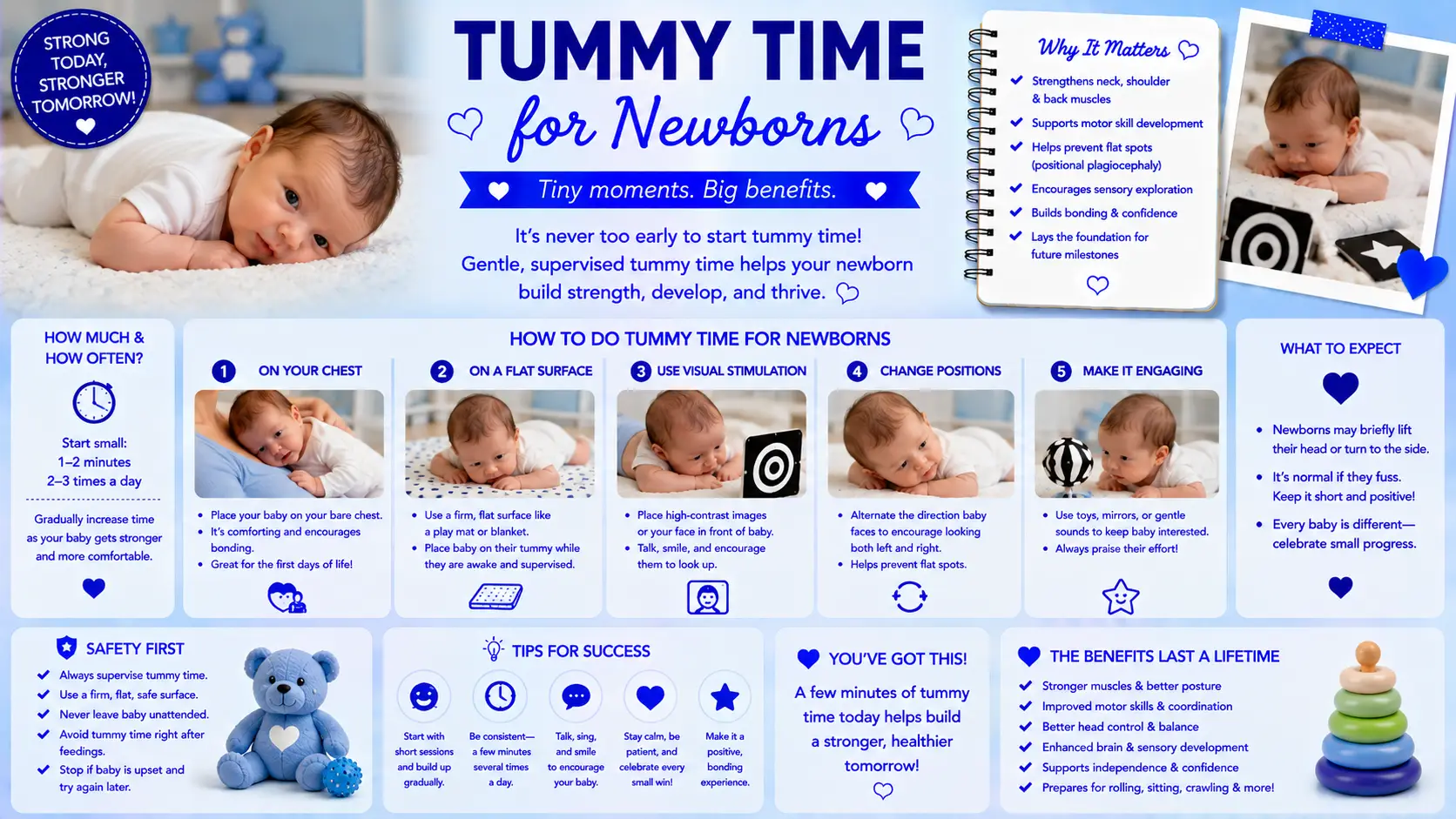
Tummy time is one of the simplest and most important activities you can do with your newborn. It means placing your baby on their stomach while they are awake and supervised. In a world where “back to sleep” is the golden rule for reducing SIDS risk, supervised tummy time during the day gives babies the opposite experience their developing bodies need.

When to Start Tummy Time for Newborns

Contents hide
1 When to Start Tummy Time for Newborns
2 How Long Should Tummy Time Be for Newborns?
3 Benefits of Tummy Time for Newborns
4 How to Do Tummy Time with a Newborn
5 Making Tummy Time Easier (Especially If Your Baby Hates It)
6 Safety Basics
7 FAQ
7.1 When should I start tummy time with my newborn?
7.2 How much tummy time does a newborn need each day?
7.3 What if my baby cries or hates tummy time?
7.4 Can tummy time prevent flat head syndrome?
7.5 Is it safe to do tummy time right after feeding?

You can begin tummy time as early as the first day or two after birth, or as soon as you bring your baby home from the hospital. Many parents start with skin-to-skin “tummy-to-tummy” on their own chest while reclining. This feels familiar and comforting for a brand-new baby and still counts as valuable practice.

There is no need to wait until the umbilical cord stump falls off for chest or lap versions, though many families prefer a firm floor surface once the stump has healed. Always check with your pediatrician if your baby was premature or has any medical considerations.

How Long Should Tummy Time Be for Newborns?

Start small. Aim for two or three short sessions of 1–5 minutes each day. A few minutes after a diaper change or when your baby is calm and alert works well. As the days and weeks pass, gradually increase the length and frequency.

By around 2 months, many pediatricians recommend working toward a total of 15–30 minutes of tummy time spread throughout the day. By 3–4 months the goal often rises further (some sources suggest building toward an hour or more of cumulative time broken into shorter sessions). The exact amount matters less than consistency and watching your baby’s cues—stop when they become fussy or tired.

Benefits of Tummy Time for Newborns

Supervised tummy time strengthens the neck, shoulder, arm, and core muscles your baby will later use to roll, sit, crawl, and walk. It improves head control and motor skills while giving babies a new vantage point on the world.

It also helps prevent flat spots on the back of the head (positional plagiocephaly) that can develop when babies spend long periods lying on their backs. Additional benefits include better sensory awareness, early weight-shifting practice, and bonding opportunities when you get down on the floor with them.

How to Do Tummy Time with a Newborn

Begin with the easiest positions:

Place your baby belly-down on your chest while you recline. They will naturally try to lift their head to see your face.

Drape them across your lap, supporting their chest with one hand if needed.

Once ready, move to a firm, flat surface such as a blanket or play mat on the floor.

Always stay within arm’s reach and never leave your baby unattended. Wait about 20 minutes after feeding to reduce the chance of spit-up. Keep sessions short at first and end on a positive note when possible.

Making Tummy Time Easier (Especially If Your Baby Hates It)

Many newborns protest at first—lifting their head against gravity is hard work. This is completely normal. Try these approaches:

Get face-to-face on the floor so they can see you and hear your voice.

Use high-contrast toys, a baby-safe mirror, or soft rattles placed just in front of them to encourage lifting and turning the head.

Roll a small towel under the chest for a slight incline that makes head-lifting easier.

Switch locations or times of day—after a nap when they are rested often works better than when they are hungry or overtired.

Keep sessions brief and frequent rather than long and frustrating.

If your baby consistently resists or seems delayed in head control, mention it to your pediatrician. Most babies grow to tolerate and eventually enjoy tummy time with gentle, repeated practice.

Safety Basics

Tummy time is only for when your baby is awake and an adult is watching. Never let a baby sleep on their stomach. Use a firm surface free of soft bedding, pillows, or loose items. Stop if your baby shows signs of distress beyond normal mild fussiness, and always follow your healthcare provider’s guidance.

FAQ

When should I start tummy time with my newborn?

Most healthy babies can start within the first day or two after birth, often beginning on a parent’s chest. The American Academy of Pediatrics and similar organizations encourage beginning as soon as you are home from the hospital.

How much tummy time does a newborn need each day?

Begin with a total of just a few minutes broken into short sessions (1–5 minutes, two or three times a day). Gradually increase so that by about 2 months many babies are getting 15–30 minutes total daily, spread out.

What if my baby cries or hates tummy time?

This is very common. Switch to chest-to-chest, keep sessions very short, use interesting toys or your face for motivation, try an incline with a rolled towel, and practice when your baby is well-rested and content. Persistence with short, positive experiences usually helps.

Can tummy time prevent flat head syndrome?

Yes. Regular supervised time on the tummy reduces prolonged pressure on the back of the skull and encourages movement that promotes a more rounded head shape.

Is it safe to do tummy time right after feeding?

It is better to wait roughly 20 minutes after a feed to lower the risk of spit-up. Choose calm, alert times instead of immediately after eating or when your baby is overly tired.


Author

DrAdam

Dr. Adam. Obstetrician and Gynecologist

Follow Me
Other Articles
Previous

When Should You Start Tummy Time?

Next

Tummy Time at 2 Months

No Comment! Be the first one.

Leave a Reply Cancel reply

Your email address will not be published. Required fields are marked *

What is Did You Search?

The “Did You Search” website was created for all mothers and families. Just search to find all your needs about your children.

Links

  • about
  • contact
  • privacy policy
  • medical disclaimer
  • sitemap
Copyright 2026 — DidYouSearch. All rights reserved.