
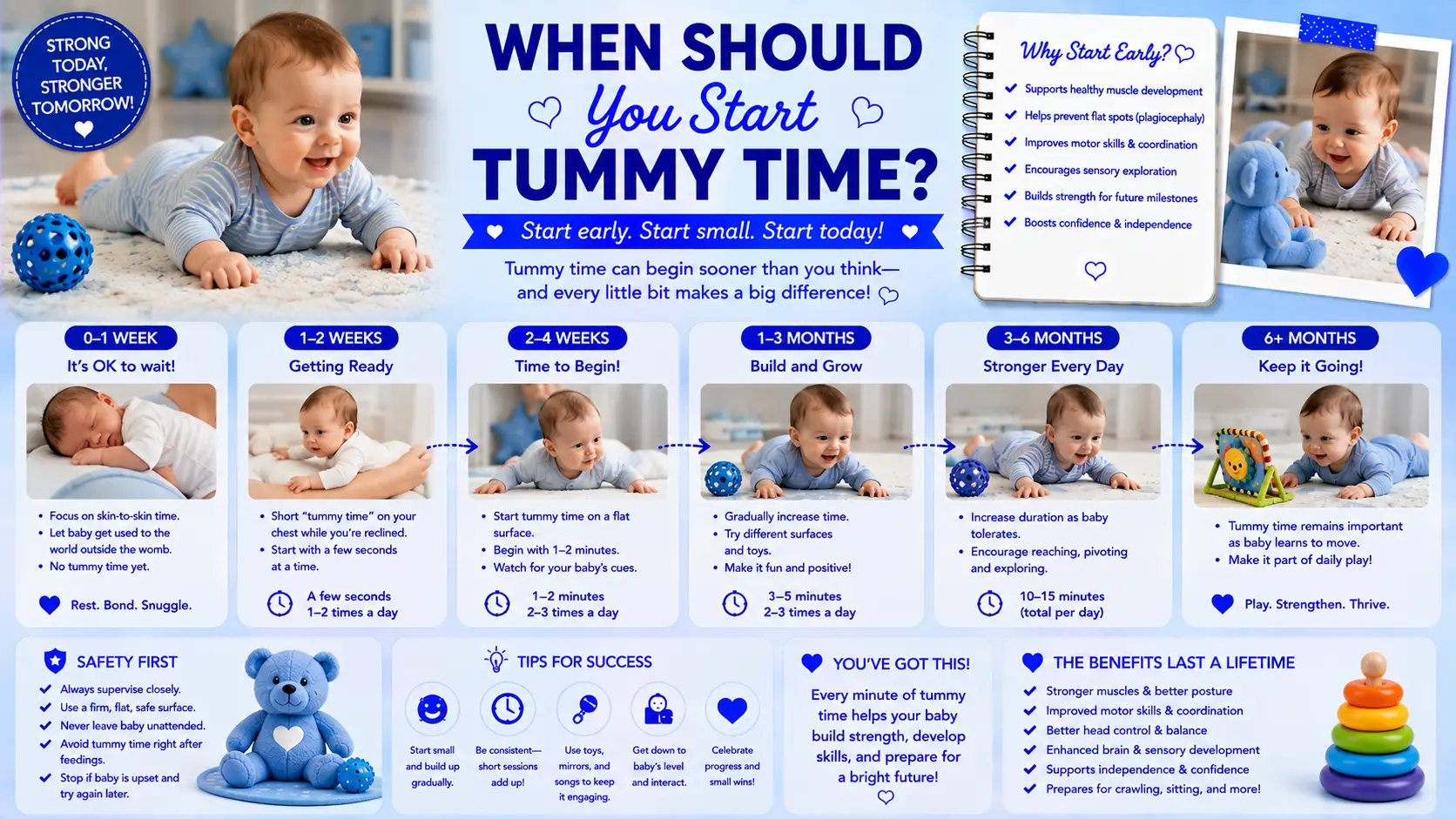

The short answer is: as soon as your baby comes home from the hospital. The American Academy of Pediatrics (AAP) and other leading health organizations recommend beginning supervised tummy time right away—often within the first day or two of life.
You don’t need to wait until your newborn can hold their head up or roll. Starting early helps babies get used to the position, builds strength gradually, and makes tummy time feel more natural as they grow.
Why Start Tummy Time So Soon?
Newborns spend a lot of time on their backs for safe sleep. That’s essential for reducing the risk of SIDS, but it means they miss out on the muscle-building work that happens on the stomach. Early tummy time counters this by strengthening the neck, shoulders, arms, and core. It also helps prevent flat spots on the back of the head and supports the motor skills needed for rolling, sitting, and crawling later on.
Babies who begin regular tummy time early tend to tolerate it better and progress more smoothly. Waiting too long can make the position feel harder or less comfortable once they are older and stronger but less familiar with it.
How to Start Tummy Time with a Newborn
In the first days and weeks, keep it simple and short. You don’t have to place your baby flat on the floor right away.
A popular and effective way to begin is chest-to-chest. Lie back or recline and place your baby on your chest while both of you are awake. Your baby will naturally try to lift their head to look at your face. This counts as tummy time, feels secure, and doubles as bonding time (including skin-to-skin contact when appropriate).
You can also try placing your baby across your lap, face down, or on a firm blanket on the floor for very brief sessions. Always stay right there, watching closely. Never leave a baby unsupervised on their tummy, and if they fall asleep, gently roll them onto their back.
Many parents wonder about the umbilical cord stump. Most sources encourage starting tummy time right away, even while the cord is still healing, as long as sessions are short, the area stays clean and dry, and you avoid anything that irritates it. If you have concerns, ask your pediatrician or midwife for personalized guidance. One older AAP patient education note suggested waiting until the cord falls off (usually around 1–2 weeks), but the broader current consensus from HealthyChildren.org and other major resources is to begin from the first day home.
How Much Tummy Time at the Very Beginning
For newborns, aim for two or three short sessions of 3–5 minutes each day (or even 1–2 minutes if your baby is fussy). The total might only reach 10–15 minutes at first. Consistency matters more than long stretches. As your baby gains strength over the first weeks, gradually increase the time and move toward floor-based sessions.
By about 7 weeks to 2 months, many babies can handle 15–30 minutes total per day, still broken into shorter periods.
Special Situations
If your baby was born preterm, has reflux, or has any physical or medical conditions, talk to your pediatrician before starting or about how to adapt tummy time. Some babies may need extra support, different positioning, or a slower progression.
For babies with reflux, wait 20–30 minutes after feeding to reduce discomfort. Premature infants often benefit from starting once they are medically stable and home, following their doctor’s advice.
Tips for Making Early Tummy Time Work
Choose times when your baby is awake, calm, and not overly hungry or tired—right after a diaper change or when they first wake from a nap often works well. Get down on their level so they can see your face. Talk, sing, or make gentle facial expressions to keep them engaged.
A rolled-up towel or thin blanket under the chest can help prop a very young baby slightly and make head-lifting easier. High-contrast toys or a mirror placed nearby also encourage them to look up and around.
If your baby fusses, end the session positively and try again later. Most newborns protest at first because the position is hard work. Short, frequent practice usually leads to greater comfort within a few weeks.
The Bigger Picture
Starting tummy time early sets a foundation that pays off for months. It supports healthy head shape, stronger muscles, and better movement skills. Combined with back-sleeping, limited time in restrictive devices (car seats, swings, bouncers), and plenty of held time, it gives your baby a balanced start.
You don’t need fancy equipment—just a firm surface, your attention, and a willingness to start small. Every few minutes counts.
FAQ
Can I start tummy time on the first day home from the hospital?
Yes. The AAP and most pediatric experts recommend beginning supervised tummy time as soon as your baby is home. Chest-to-chest is an excellent, gentle way to introduce it.
Is it safe to do tummy time while the umbilical cord is still attached?
In most cases, yes, with short sessions and care to keep the area clean and dry. Check with your healthcare provider if you have specific concerns about healing.
What if my newborn hates tummy time right away?
This is very common. Keep sessions brief (even 1 minute), try chest-to-chest instead of the floor, and stop before major fussing. Early practice usually helps babies adapt more easily over time.
Do premature babies start tummy time at the same time?
It depends on their medical status. Once they are stable and home, your pediatrician can guide you on the safest way and timing to begin.
How long should the first tummy time sessions last?
Start with 1–5 minutes, two or three times a day. Focus on positive, supervised experiences rather than a specific total in the earliest days.