
Skip to content
DidYouSearch DidYouSearch
  • did you search?
  • Baby Plus+
    • Baby Activities
      • Arts & Crafts
      • Indoor Activities
      • Montessori
      • Music
      • Outdoor Activities
      • Reading
      • Sensory Play
      • Tummy Time
    • Baby Development
      • Brain Development
      • Cognitive Development
      • Emotional Development
      • Fine Motor Skills
      • Growth Milestones
      • Monthly Milestones
      • Motor Skills
      • Physical Development
      • Social Development
      • Speech Development
    • Baby Feeding
      • Allergies
      • Baby Led Weaning
      • Bottle Feeding
      • Breast feeding
        • Breastfeeding Diet
        • Breastfeeding Positions
        • Latch Problems
        • Low Milk Supply
        • Mastitis
        • Pumping Schedule
        • Weaning
      • Burping
      • Cluster Feeding
      • Feeding Schedule
      • Formula Feeding
        • Formula Amount
        • Formula Brands
        • Formula Comparison
        • Formula Preparation
        • Formula Storage
      • Hydration
      • Pumping
      • Solid Foods
    • Baby Gear Reviews
      • Best Baby Carrier
      • Best Baby Monitor
      • Best Baby Strollers
      • Best Bottles
      • Best Breast Pump
      • Best Car Seat
      • Best Cribs
      • Best Diapers
      • Best Formula
      • Best Toys
    • Baby Growth
      • Growth Spurts
      • Height Charts
      • Monthly Growth
      • Percentiles
      • Weight Charts
    • Baby Health
      • Allergies
      • Cold
      • Constipation
      • Cough
      • Diarrhea
      • Ear Infection
      • Fever
      • Flu
      • Pediatric Visits
      • Rashes
      • Teething
      • Vaccines
      • Vomiting
    • Baby Nutrition
      • Dairy
      • Drinks
      • Eggs
      • Fish
      • Fruits
      • Healthy Recipes
      • Meat
      • Snacks
      • Vegetables
      • Vitamins
    • Baby Products
      • Baby Carriers
      • Bassinets
      • Bottles
      • Breast Pumps
      • Car Seats
      • Cribs
      • Diaper Bags
      • High Chairs
      • Monitors
      • Strollers
      • Swings
      • Toys
      • Walkers
    • Baby Recipes
      • BLW Recipes
      • Breakfast
      • Dinner
      • Finger Foods
      • Lunch
      • Purees
      • Snacks
    • Baby Safety
      • Baby Proofing
      • Car Seats
      • Choking Hazards
      • CPR
      • Home Safety
      • Poison Prevention
      • Safe Sleep
      • Sun Protection
      • Water Safety
  • Baby Names
    • Boy Names
    • Girl Names
    • American baby boy names
    • American baby girl names
    • Biblical Names
    • Middle Names
    • Modern Names
    • Short Names
    • Unique Names
    • Unisex Names
  • Recommended
    • Baby Shopping
      • Baby Registry
      • Budget Baby Shopping
      • Hospital Bag
      • Must Have Products
      • Newborn Checklist
      • Nursery Ideas
    • Baby Sleep
      • Bedtime Routine
      • Co Sleeping
      • Crib Safety
      • Nap Schedules
      • Night Wakings
      • Sleep Environment
      • Sleep Products
      • Sleep Regression
      • Sleep Training
      • Wake Windows
      • White Noise
    • Childcare
      • Daycare
      • Babysitters
      • Kindergarten
      • Nannies
      • Preschool
    • Newborn Care
      • Nail Care
      • Baby Hygiene
      • Bathing
      • Crying
      • Diapering
      • Ear Care
      • Eye Care
      • Skin Care
      • Soothing Techniques
      • Temperature
      • Umbilical Cord
    • Special Needs
      • Premature Babies
      • Autism Signs
      • Developmental Delays
      • Down Syndrome
      • NICU
      • Twins
    • Seasonal Baby Care
      • Spring
      • Summer
      • Travel
      • Fall
      • Holidays
      • Winter
  • Parenting
    • Bonding
    • Discipline
    • Emotional Intelligence
    • First Time Parents
    • Gentle Parenting
    • Positive Parenting
    • Routines
    • Single Parents
    • Working Parents
  • Pregnancy
    • Pregnancy Complications
    • Labor & Delivery
    • Postpartum Recovery
    • Pregnancy Exercises
    • Pregnancy Medications
    • Pregnancy Nutrition
    • Pregnancy Sleep
    • Pregnancy Symptoms
    • Pregnancy Tests
    • Pregnancy Vitamins
    • Pregnancy Weeks
  • Toddler
    • Preschool
    • Speech
    • Tantrums
    • Toddler Food
    • Toddler Sleep
    • Behavior
    • Independence
    • Learning
    • Potty Training
  • Traveling with Baby
    • Road Trips
    • Beach
    • Camping
    • Flying
    • Hotels
    • Packing Lists
  • did you search?
  • Baby Plus+
    • Baby Activities
      • Arts & Crafts
      • Indoor Activities
      • Montessori
      • Music
      • Outdoor Activities
      • Reading
      • Sensory Play
      • Tummy Time
    • Baby Development
      • Brain Development
      • Cognitive Development
      • Emotional Development
      • Fine Motor Skills
      • Growth Milestones
      • Monthly Milestones
      • Motor Skills
      • Physical Development
      • Social Development
      • Speech Development
    • Baby Feeding
      • Allergies
      • Baby Led Weaning
      • Bottle Feeding
      • Breast feeding
        • Breastfeeding Diet
        • Breastfeeding Positions
        • Latch Problems
        • Low Milk Supply
        • Mastitis
        • Pumping Schedule
        • Weaning
      • Burping
      • Cluster Feeding
      • Feeding Schedule
      • Formula Feeding
        • Formula Amount
        • Formula Brands
        • Formula Comparison
        • Formula Preparation
        • Formula Storage
      • Hydration
      • Pumping
      • Solid Foods
    • Baby Gear Reviews
      • Best Baby Carrier
      • Best Baby Monitor
      • Best Baby Strollers
      • Best Bottles
      • Best Breast Pump
      • Best Car Seat
      • Best Cribs
      • Best Diapers
      • Best Formula
      • Best Toys
    • Baby Growth
      • Growth Spurts
      • Height Charts
      • Monthly Growth
      • Percentiles
      • Weight Charts
    • Baby Health
      • Allergies
      • Cold
      • Constipation
      • Cough
      • Diarrhea
      • Ear Infection
      • Fever
      • Flu
      • Pediatric Visits
      • Rashes
      • Teething
      • Vaccines
      • Vomiting
    • Baby Nutrition
      • Dairy
      • Drinks
      • Eggs
      • Fish
      • Fruits
      • Healthy Recipes
      • Meat
      • Snacks
      • Vegetables
      • Vitamins
    • Baby Products
      • Baby Carriers
      • Bassinets
      • Bottles
      • Breast Pumps
      • Car Seats
      • Cribs
      • Diaper Bags
      • High Chairs
      • Monitors
      • Strollers
      • Swings
      • Toys
      • Walkers
    • Baby Recipes
      • BLW Recipes
      • Breakfast
      • Dinner
      • Finger Foods
      • Lunch
      • Purees
      • Snacks
    • Baby Safety
      • Baby Proofing
      • Car Seats
      • Choking Hazards
      • CPR
      • Home Safety
      • Poison Prevention
      • Safe Sleep
      • Sun Protection
      • Water Safety
  • Baby Names
    • Boy Names
    • Girl Names
    • American baby boy names
    • American baby girl names
    • Biblical Names
    • Middle Names
    • Modern Names
    • Short Names
    • Unique Names
    • Unisex Names
  • Recommended
    • Baby Shopping
      • Baby Registry
      • Budget Baby Shopping
      • Hospital Bag
      • Must Have Products
      • Newborn Checklist
      • Nursery Ideas
    • Baby Sleep
      • Bedtime Routine
      • Co Sleeping
      • Crib Safety
      • Nap Schedules
      • Night Wakings
      • Sleep Environment
      • Sleep Products
      • Sleep Regression
      • Sleep Training
      • Wake Windows
      • White Noise
    • Childcare
      • Daycare
      • Babysitters
      • Kindergarten
      • Nannies
      • Preschool
    • Newborn Care
      • Nail Care
      • Baby Hygiene
      • Bathing
      • Crying
      • Diapering
      • Ear Care
      • Eye Care
      • Skin Care
      • Soothing Techniques
      • Temperature
      • Umbilical Cord
    • Special Needs
      • Premature Babies
      • Autism Signs
      • Developmental Delays
      • Down Syndrome
      • NICU
      • Twins
    • Seasonal Baby Care
      • Spring
      • Summer
      • Travel
      • Fall
      • Holidays
      • Winter
  • Parenting
    • Bonding
    • Discipline
    • Emotional Intelligence
    • First Time Parents
    • Gentle Parenting
    • Positive Parenting
    • Routines
    • Single Parents
    • Working Parents
  • Pregnancy
    • Pregnancy Complications
    • Labor & Delivery
    • Postpartum Recovery
    • Pregnancy Exercises
    • Pregnancy Medications
    • Pregnancy Nutrition
    • Pregnancy Sleep
    • Pregnancy Symptoms
    • Pregnancy Tests
    • Pregnancy Vitamins
    • Pregnancy Weeks
  • Toddler
    • Preschool
    • Speech
    • Tantrums
    • Toddler Food
    • Toddler Sleep
    • Behavior
    • Independence
    • Learning
    • Potty Training
  • Traveling with Baby
    • Road Trips
    • Beach
    • Camping
    • Flying
    • Hotels
    • Packing Lists
Close

Search

Home/Baby Activities/Tummy Time/How Much Tummy Time Does a Baby Need?
Tummy Time

How Much Tummy Time Does a Baby Need?

By DrAdam
August 15, 2026 4 Min Read
0

Tummy time is one of the simplest, most effective things you can do to support your baby’s early development. It means placing your baby on their stomach while they’re awake and supervised. Experts, including the American Academy of Pediatrics (AAP), recommend starting as soon as your baby comes home from the hospital—often within the first day or two.

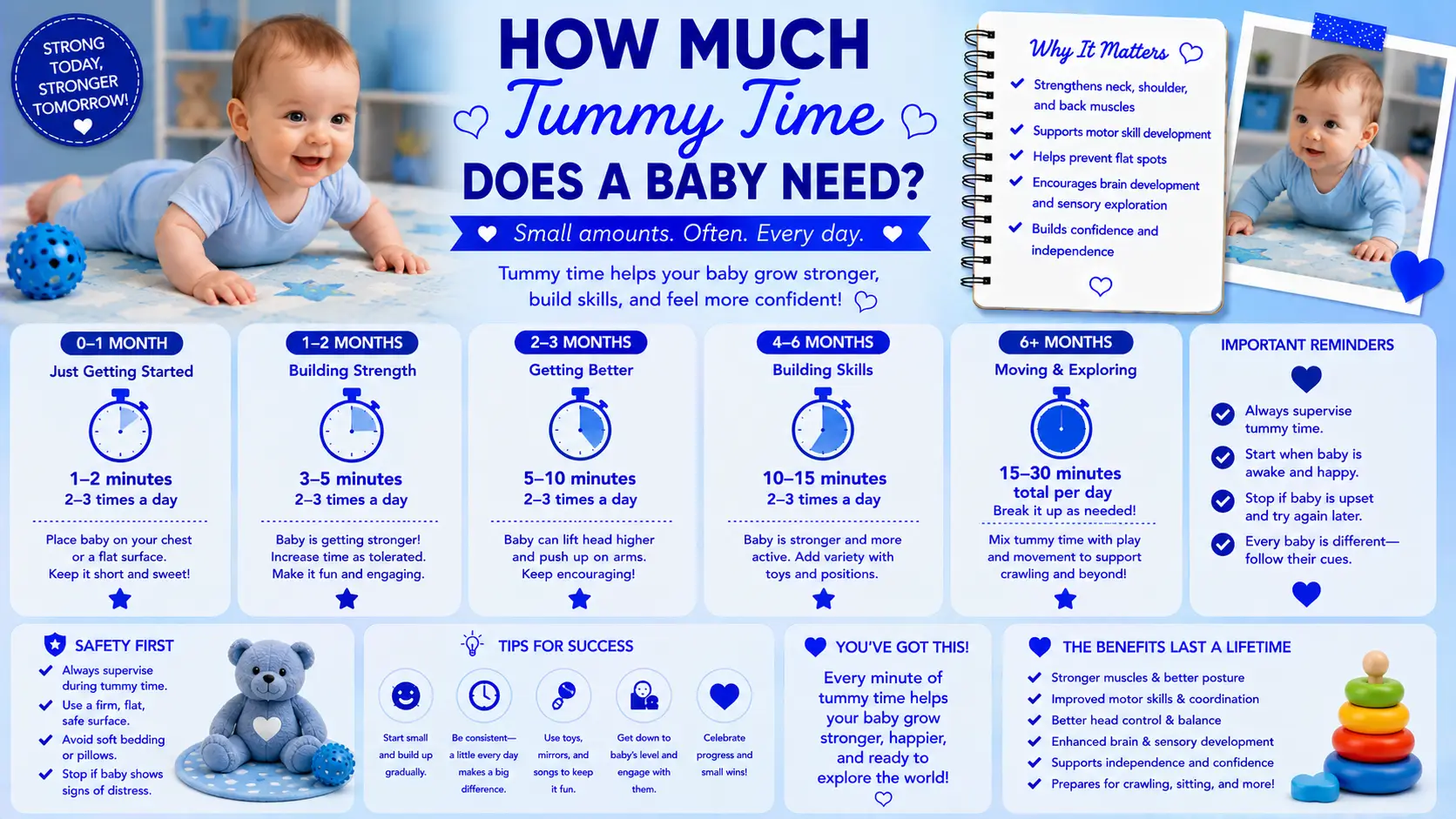
The big question parents ask is how much tummy time a baby needs. The answer depends on age, but the principle is the same: start short and build gradually. Short, frequent sessions work far better than long ones that leave everyone frustrated.

How Much Tummy Time by Age

Contents hide
1 How Much Tummy Time by Age
2 Why Tummy Time Matters
3 Practical Tips for Success
4 What If Your Baby Hates Tummy Time?
5 Making It Part of Daily Life
6 FAQ
6.1 When should I start tummy time?
6.2 How much tummy time does a newborn need?
6.3 Does tummy time prevent a flat head?
6.4 What if my baby falls asleep during tummy time?
6.5 How long should I continue tummy time?

Newborns (0–1 month): Begin with 2–3 sessions of 3–5 minutes each day. That’s roughly 10–15 minutes total. Some sources suggest starting even shorter—1–2 minutes a few times a day—especially if your baby protests. Chest-to-chest while you recline or placing baby across your lap counts and often feels easier at first.

By 2 months: Aim for 15–30 minutes total per day, still broken into several short sessions. Pediatricians commonly recommend reaching this range around the 7-week mark.

By 3 months: Work toward 30 minutes or more daily. Many babies tolerate longer stretches as head control improves.

4–6 months and beyond: Build up to 60–90 minutes total per day until your baby starts crawling. Sessions can last longer now because your baby has stronger neck, shoulder, and core muscles. Once they can roll or get themselves into and out of the position, floor play naturally incorporates plenty of tummy time.

These numbers are guidelines, not rigid rules. Consistency matters more than hitting an exact daily total. A few minutes after every diaper change or when your baby wakes from a nap adds up quickly.

Why Tummy Time Matters

Supervised tummy time strengthens the neck, shoulders, arms, and back muscles your baby needs for rolling, sitting, crawling, and eventually walking. It also improves motor control and helps prevent flat spots on the back of the head (positional plagiocephaly) that can develop from spending too much time on the back during sleep or in car seats, swings, and carriers.

Additional benefits include better visual tracking (looking around at eye level instead of only at the ceiling) and opportunities for bonding when you get down on the floor with them.

Remember the core rule: Back to sleep, tummy to play. Always place your baby on their back for sleep and naps to reduce the risk of SIDS. Tummy time happens only when they’re awake and you’re watching.

Practical Tips for Success

Choose a firm, flat surface— a blanket on the floor works perfectly. Avoid soft beds or sofas where a baby could roll or sink. For newborns who struggle to lift their head, place a rolled towel or thin blanket under the chest for gentle support.

Get face-to-face. Lie on your stomach opposite your baby so they can see your face. High-contrast toys, a mirror, or simply talking and singing keep things interesting. Place toys slightly out of reach to encourage reaching and pivoting.

If your baby has reflux, wait 20–30 minutes after feeding. Premature babies or those with certain conditions may need a modified approach—check with your pediatrician.

What If Your Baby Hates Tummy Time?

Many babies fuss at first. The position is hard work. Keep sessions short and end on a positive note before full-blown crying. Try different positions: on your chest, across your lap, or propped slightly. Start earlier in the day when your baby is alert but not overstimulated.

Most babies grow more comfortable within a few weeks of consistent practice. If your baby still strongly resists after 6–8 weeks or shows limited head lifting, talk to your pediatrician. Occasional physical therapy guidance can help.

Making It Part of Daily Life

Weave tummy time into existing routines rather than treating it as a separate chore. After a diaper change, during playtime, or while you’re doing light household tasks nearby all work well. Limit time in restrictive devices (car seats, bouncers, swings) when not traveling, and offer plenty of held time and side-lying play as well. These variations reduce pressure on the head and support overall development.

By the time your baby is crawling, tummy time has largely served its purpose and blends into free floor play. Continue offering opportunities on the stomach as long as they enjoy it.

FAQ

When should I start tummy time?

You can begin the day your baby comes home from the hospital, or within the first few days. Early, gentle exposure helps babies adapt more easily.

How much tummy time does a newborn need?

Start with 2–3 sessions of 3–5 minutes (or even 1–2 minutes if needed). The goal is gradual increase rather than a specific number on day one.

Does tummy time prevent a flat head?

Yes. Regular supervised time on the tummy, along with varying sleep and play positions and limiting device time, significantly reduces the risk of flat spots on the back of the head.

What if my baby falls asleep during tummy time?

Gently roll them onto their back. Never leave a baby unattended on their stomach, even if they appear comfortable.

How long should I continue tummy time?

Keep offering it until your baby is crawling or can independently move into and out of the tummy position. Most babies reach this stage between 6 and 10 months, though timing varies.


Author

DrAdam

Dr. Adam. Obstetrician and Gynecologist

Follow Me
Other Articles
Previous

Best Tummy Time Toys

Next

When Should You Start Tummy Time?

No Comment! Be the first one.

Leave a Reply Cancel reply

Your email address will not be published. Required fields are marked *

What is Did You Search?

The “Did You Search” website was created for all mothers and families. Just search to find all your needs about your children.

Links

  • about
  • contact
  • privacy policy
  • medical disclaimer
  • sitemap
Copyright 2026 — DidYouSearch. All rights reserved.