
Tummy time is essential for building your baby’s neck, shoulder, arm, and core strength, preventing flat spots on the head, and laying the groundwork for rolling, sitting, and crawling. But many babies resist it at first. The right toys can transform those short sessions from a struggle into engaging play that motivates little ones to lift their heads, push up, reach, and stay longer on their bellies.
Parents and pediatric experts frequently search for the best tummy time toys, tummy time mirrors, water mats for tummy time, and play gyms that actually keep babies interested. The most effective options share a few key traits: high-contrast patterns that young eyes can see easily, unbreakable mirrors that encourage head lifting, interesting textures or sounds, and designs that support reaching or weight-shifting without overwhelming a newborn.
Here are standout categories and popular toys that consistently rank high with parents, pediatricians, and occupational therapists.
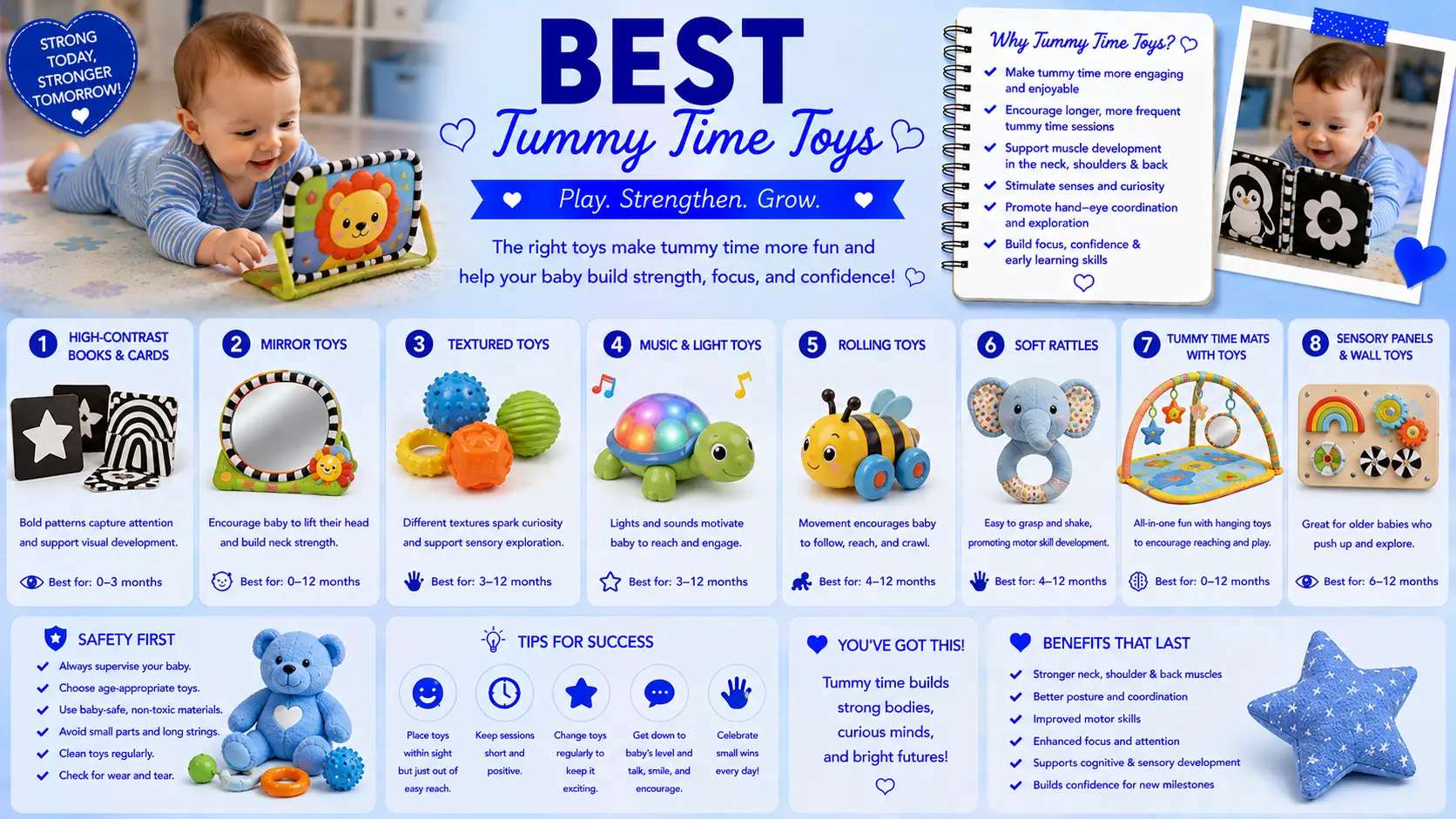
Mirrors: The Number-One Motivator
Babies are fascinated by faces—especially their own. A floor mirror is often the single most recommended tummy time toy because it gives them a reason to lift and hold their head up.
Popular choices include soft or foldable floor mirrors with high-contrast fabric edges or attached crinkle toys (such as Bright Starts or Sassy styles). Place the mirror about 8–12 inches from your baby’s face. Many parents report that babies who previously fussed immediately settle and smile once they catch their reflection. These mirrors work from the earliest weeks and remain useful well into the sitting stage.
Water Mats: Sensory Fun That Holds Attention
Inflatable water mats filled with floating toys create a cool, gently moving surface that captivates babies. The visual tracking of colorful sea creatures or shapes encourages head lifting and reaching, while the slight give under their chest can feel more comfortable than a hard floor.
These are especially helpful for babies who dislike traditional tummy time. Most are recommended starting around 3 months (always supervise closely and empty/dry thoroughly to prevent mold). They’re portable, deflate for storage, and often become a favorite for longer sessions.
Play Gyms and Activity Mats
A good play gym turns tummy time into interactive floor play. Look for ones with detachable toys, mirrors, high-contrast cards, and hanging elements that can be adjusted as your baby grows.
The Lovevery Play Gym stands out for its Montessori-inspired design, organic materials, and stage-based accessories that last from newborn through toddlerhood. More budget-friendly options like the Fisher-Price Kick & Play Piano Gym feature lights, music, and a detachable piano that babies kick or reach for—many parents say this is the toy that finally made tummy time click. Gyms with soft mats also provide a defined, comfortable space on hardwood or tile floors.
High-Contrast Books, Soft Books, and Sensory Toys
Newborn vision is limited, so black-and-white or bold-contrast patterns are ideal. Soft fabric books with crinkle pages, mirrors, and varied textures (Taf Toys, Manhattan Toy, or Melissa & Doug styles) can be propped open in front of baby. These encourage visual tracking and reaching while offering tactile exploration.
Lightweight O-balls, rattles with easy grips, and simple spinning or suction toys also work well. They promote bilateral reaching and cause-and-effect learning without rolling too far away. Light-up or musical bars (like the Baby Einstein Glow & Discover) can motivate weight shifts and reaching once babies are a bit older and more tolerant of stimulation.
Supportive Props
For younger babies still building strength, a firm but soft prop under the chest (rolled towel, specialized tummy-time pillow, or bolster) makes the position more accessible. Some activity mats include built-in supports. These are temporary tools—remove them as your baby gains strength so they practice true weight-bearing on their arms.
How to Choose and Use Tummy Time Toys Effectively
Start simple. You don’t need every gadget. One or two well-chosen items—often a mirror plus a high-contrast book or soft toy—are usually enough. Match the toy to your baby’s age and current abilities: high-contrast and mirrors for newborns, reaching and interactive elements for 3–6 months, and movement-encouraging toys as they approach crawling.
Rotate toys to keep interest high. Get down on the floor with your baby, talk, and interact—your face is still the best “toy.” Place objects slightly to the side or just out of easy reach to encourage turning and weight-shifting. Always supervise, stop when baby shows clear frustration, and never leave them alone on their tummy.
Safety notes: Choose age-appropriate, non-toxic items without small parts. Avoid overly soft surfaces that make it hard for babies to push up. Clean toys regularly, especially water mats.
FAQ
What are the best tummy time toys for newborns?
Unbreakable floor mirrors, high-contrast black-and-white cards or soft books, and simple fabric toys with faces or bold patterns. Keep sessions short and pair toys with chest-to-chest time if needed.
Do tummy time mirrors really help?
Yes. Pediatricians and occupational therapists consistently recommend them because babies are highly motivated by faces. Seeing their reflection encourages longer head lifts and builds neck strength.
Are water mats safe and worth it for tummy time?
When used under close supervision and properly maintained (emptied and dried), many parents and therapists find them highly effective for increasing tolerance and engagement, especially for babies who resist the floor.
When should I introduce toys during tummy time?
You can start with simple visual items (mirrors, high-contrast images) from the first weeks. Add reaching toys and interactive elements as your baby shows interest in grasping, usually around 2–4 months.
My baby hates tummy time—will toys fix that?
Toys help a lot for many families by providing distraction and motivation, but they’re not magic. Combine them with short sessions, preferred positions (like your chest), and consistency. If resistance continues or milestones seem delayed, check with your pediatrician.