
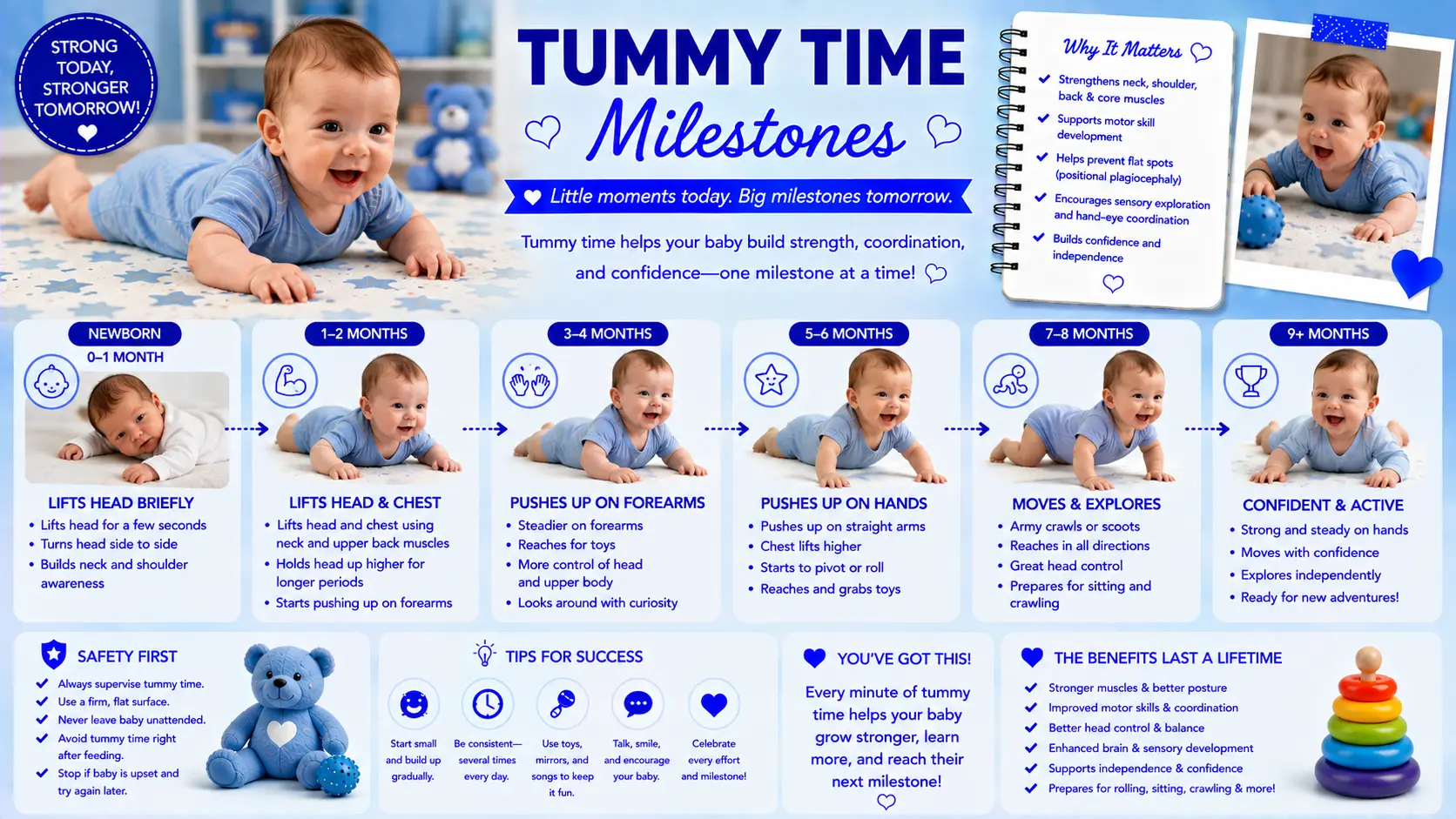

Tummy time is one of the simplest yet most powerful things you can do for your baby’s development. It means placing your baby on their stomach while they are awake and supervised. This position strengthens neck, shoulder, arm, back, and core muscles, builds motor skills, supports visual and sensory development, and helps prevent flat spots on the head (positional plagiocephaly). It also lays the foundation for later milestones like rolling, sitting, crawling, and walking.
Pediatric experts and organizations like the American Academy of Pediatrics and NIH recommend starting early and making it a daily habit. The familiar advice is “back to sleep, tummy to play.”
When to Start Tummy Time
You can begin tummy time as soon as your baby comes home from the hospital—often a day or two after birth—for healthy, full-term babies. Start with very short sessions (1–5 minutes, a few times a day) when your baby is awake, calm, and alert. Early practice on your chest (skin-to-skin or tummy-to-tummy while you recline) feels familiar and comforting while still working those muscles.
Gradually move to a firm floor surface with a blanket or play mat. Always supervise closely and never leave your baby unattended on their tummy. If they fall asleep, gently roll them onto their back.
Tummy Time Milestones by Age
Every baby develops at their own pace, but here’s a typical progression of what you might see:
Newborn to 1 month Your baby may lift their head briefly (often with a wobbly neck), turn their head to one side, and keep arms and legs bent close to the body. Comfort is the main goal. Sessions on your chest or lap work well. Many babies tolerate only a minute or two at first.
1–2 months Head lifts last longer. Your baby may begin pushing up slightly on their forearms and track faces or high-contrast toys with their eyes. Aim for short floor sessions. By around 2 months, many babies manage 15–30 minutes total per day spread across several sessions.
3–4 months Stronger head control appears—lifting the head 45–90 degrees without much bobbing. Elbows move under or in front of the shoulders for support, and the chest starts to rise off the floor. Your baby turns their head smoothly both ways and becomes more interested in looking around. Daily totals often reach 30–60 minutes.
5–6 months Expect “mini push-ups” on straight arms, reaching for nearby toys, pivoting in circles, and early rolling (often tummy to back first). Some babies start “swimming” motions with arms and legs lifted. Floor play becomes more self-directed. Work toward 60 minutes or more total each day.
6 months and beyond Tummy time blends into active floor play. Babies may get onto hands and knees, belly-crawl, transition toward sitting, or practice early crawling skills. Continue offering plenty of supervised floor time until independent mobility is solid. Once your baby crawls or moves freely in and out of sitting, formal “tummy time sessions” can ease off, though floor exploration remains valuable.
How Much Tummy Time by Age
There is no strict upper limit—more is generally better as long as your baby is content—but here are common guidelines:
Newborns: Start with 1–5 minutes, 2–3 times a day (aiming toward ~20 minutes total).
By 2 months: 15–30 minutes total daily.
By 3–4 months: 30–60 minutes.
By 6 months: 60–90 minutes or more, broken into shorter sessions.
Spread it throughout the day—after diaper changes, during play, or when your baby is most alert. Quality and consistency matter more than hitting exact minutes every single day.
Tips for Success (Especially If Your Baby Hates Tummy Time)
Many babies protest at first. Lifting the head against gravity is hard work, and the view from the floor can feel boring or frustrating. This is normal.
Try these approaches:
Start on your chest so your baby sees your face and hears your voice.
Use a rolled towel or small blanket under the chest for gentle support.
Get down at eye level, sing, talk, or make faces.
Offer high-contrast books, mirrors, or toys just within reach.
Keep sessions short and positive—stop before major fussing escalates.
Try different times of day and positions (lap, across your thighs, football hold).
Wait 20–30 minutes after feeding if reflux is an issue.
Consistency pays off. Babies who practice regularly usually grow more comfortable and stronger over weeks.
Safety Reminders
Always supervise. Use a firm, flat surface. Avoid soft beds, sofas, or adult pillows. Stop if your baby shows signs of distress beyond typical fussiness, and consult your pediatrician with any concerns about head preference (possible torticollis), lack of progress, or developmental delays.
Tummy time is not just exercise—it’s play, bonding, and preparation for the next stages of movement. Celebrate the small wins: that first steady head lift, the determined push-up, or the moment your baby starts reaching for a toy. Those moments add up to stronger muscles and growing confidence.
FAQ
When should I start tummy time with my newborn?
You can begin the day your baby comes home from the hospital (or even earlier under medical guidance). Start with brief, supervised sessions on your chest while both of you are awake.
How much tummy time does my baby need each day?
Begin with a few minutes several times a day. Work up to 15–30 minutes total by about 2 months and 60+ minutes by 6 months, always broken into shorter, positive sessions.
What if my baby hates tummy time?
This is extremely common. Try chest-to-chest contact, shorter sessions, extra support under the chest, engaging toys or your face at eye level, and different times of day. Persistence with a positive approach usually helps.
Does tummy time prevent flat head syndrome?
Yes. Regular supervised tummy time reduces pressure on the back of the head and helps prevent positional plagiocephaly while strengthening the muscles needed for healthy development.
When can I stop doing tummy time?
Continue until your baby is crawling or moving independently in and out of sitting (typically around 6–9 months or later). After that, ongoing floor play remains beneficial, but structured sessions are less necessary.