
Skip to content
DidYouSearch DidYouSearch
  • did you search?
  • Baby Plus+
    • Baby Activities
      • Arts & Crafts
      • Indoor Activities
      • Montessori
      • Music
      • Outdoor Activities
      • Reading
      • Sensory Play
      • Tummy Time
    • Baby Development
      • Brain Development
      • Cognitive Development
      • Emotional Development
      • Fine Motor Skills
      • Growth Milestones
      • Monthly Milestones
      • Motor Skills
      • Physical Development
      • Social Development
      • Speech Development
    • Baby Feeding
      • Allergies
      • Baby Led Weaning
      • Bottle Feeding
      • Breast feeding
        • Breastfeeding Diet
        • Breastfeeding Positions
        • Latch Problems
        • Low Milk Supply
        • Mastitis
        • Pumping Schedule
        • Weaning
      • Burping
      • Cluster Feeding
      • Feeding Schedule
      • Formula Feeding
        • Formula Amount
        • Formula Brands
        • Formula Comparison
        • Formula Preparation
        • Formula Storage
      • Hydration
      • Pumping
      • Solid Foods
    • Baby Gear Reviews
      • Best Baby Carrier
      • Best Baby Monitor
      • Best Baby Strollers
      • Best Bottles
      • Best Breast Pump
      • Best Car Seat
      • Best Cribs
      • Best Diapers
      • Best Formula
      • Best Toys
    • Baby Growth
      • Growth Spurts
      • Height Charts
      • Monthly Growth
      • Percentiles
      • Weight Charts
    • Baby Health
      • Allergies
      • Cold
      • Constipation
      • Cough
      • Diarrhea
      • Ear Infection
      • Fever
      • Flu
      • Pediatric Visits
      • Rashes
      • Teething
      • Vaccines
      • Vomiting
    • Baby Nutrition
      • Dairy
      • Drinks
      • Eggs
      • Fish
      • Fruits
      • Healthy Recipes
      • Meat
      • Snacks
      • Vegetables
      • Vitamins
    • Baby Products
      • Baby Carriers
      • Bassinets
      • Bottles
      • Breast Pumps
      • Car Seats
      • Cribs
      • Diaper Bags
      • High Chairs
      • Monitors
      • Strollers
      • Swings
      • Toys
      • Walkers
    • Baby Recipes
      • BLW Recipes
      • Breakfast
      • Dinner
      • Finger Foods
      • Lunch
      • Purees
      • Snacks
    • Baby Safety
      • Baby Proofing
      • Car Seats
      • Choking Hazards
      • CPR
      • Home Safety
      • Poison Prevention
      • Safe Sleep
      • Sun Protection
      • Water Safety
  • Baby Names
    • Boy Names
    • Girl Names
    • American baby boy names
    • American baby girl names
    • Biblical Names
    • Middle Names
    • Modern Names
    • Short Names
    • Unique Names
    • Unisex Names
  • Recommended
    • Baby Shopping
      • Baby Registry
      • Budget Baby Shopping
      • Hospital Bag
      • Must Have Products
      • Newborn Checklist
      • Nursery Ideas
    • Baby Sleep
      • Bedtime Routine
      • Co Sleeping
      • Crib Safety
      • Nap Schedules
      • Night Wakings
      • Sleep Environment
      • Sleep Products
      • Sleep Regression
      • Sleep Training
      • Wake Windows
      • White Noise
    • Childcare
      • Daycare
      • Babysitters
      • Kindergarten
      • Nannies
      • Preschool
    • Newborn Care
      • Nail Care
      • Baby Hygiene
      • Bathing
      • Crying
      • Diapering
      • Ear Care
      • Eye Care
      • Skin Care
      • Soothing Techniques
      • Temperature
      • Umbilical Cord
    • Special Needs
      • Premature Babies
      • Autism Signs
      • Developmental Delays
      • Down Syndrome
      • NICU
      • Twins
    • Seasonal Baby Care
      • Spring
      • Summer
      • Travel
      • Fall
      • Holidays
      • Winter
  • Parenting
    • Bonding
    • Discipline
    • Emotional Intelligence
    • First Time Parents
    • Gentle Parenting
    • Positive Parenting
    • Routines
    • Single Parents
    • Working Parents
  • Pregnancy
    • Pregnancy Complications
    • Labor & Delivery
    • Postpartum Recovery
    • Pregnancy Exercises
    • Pregnancy Medications
    • Pregnancy Nutrition
    • Pregnancy Sleep
    • Pregnancy Symptoms
    • Pregnancy Tests
    • Pregnancy Vitamins
    • Pregnancy Weeks
  • Toddler
    • Preschool
    • Speech
    • Tantrums
    • Toddler Food
    • Toddler Sleep
    • Behavior
    • Independence
    • Learning
    • Potty Training
  • Traveling with Baby
    • Road Trips
    • Beach
    • Camping
    • Flying
    • Hotels
    • Packing Lists
  • did you search?
  • Baby Plus+
    • Baby Activities
      • Arts & Crafts
      • Indoor Activities
      • Montessori
      • Music
      • Outdoor Activities
      • Reading
      • Sensory Play
      • Tummy Time
    • Baby Development
      • Brain Development
      • Cognitive Development
      • Emotional Development
      • Fine Motor Skills
      • Growth Milestones
      • Monthly Milestones
      • Motor Skills
      • Physical Development
      • Social Development
      • Speech Development
    • Baby Feeding
      • Allergies
      • Baby Led Weaning
      • Bottle Feeding
      • Breast feeding
        • Breastfeeding Diet
        • Breastfeeding Positions
        • Latch Problems
        • Low Milk Supply
        • Mastitis
        • Pumping Schedule
        • Weaning
      • Burping
      • Cluster Feeding
      • Feeding Schedule
      • Formula Feeding
        • Formula Amount
        • Formula Brands
        • Formula Comparison
        • Formula Preparation
        • Formula Storage
      • Hydration
      • Pumping
      • Solid Foods
    • Baby Gear Reviews
      • Best Baby Carrier
      • Best Baby Monitor
      • Best Baby Strollers
      • Best Bottles
      • Best Breast Pump
      • Best Car Seat
      • Best Cribs
      • Best Diapers
      • Best Formula
      • Best Toys
    • Baby Growth
      • Growth Spurts
      • Height Charts
      • Monthly Growth
      • Percentiles
      • Weight Charts
    • Baby Health
      • Allergies
      • Cold
      • Constipation
      • Cough
      • Diarrhea
      • Ear Infection
      • Fever
      • Flu
      • Pediatric Visits
      • Rashes
      • Teething
      • Vaccines
      • Vomiting
    • Baby Nutrition
      • Dairy
      • Drinks
      • Eggs
      • Fish
      • Fruits
      • Healthy Recipes
      • Meat
      • Snacks
      • Vegetables
      • Vitamins
    • Baby Products
      • Baby Carriers
      • Bassinets
      • Bottles
      • Breast Pumps
      • Car Seats
      • Cribs
      • Diaper Bags
      • High Chairs
      • Monitors
      • Strollers
      • Swings
      • Toys
      • Walkers
    • Baby Recipes
      • BLW Recipes
      • Breakfast
      • Dinner
      • Finger Foods
      • Lunch
      • Purees
      • Snacks
    • Baby Safety
      • Baby Proofing
      • Car Seats
      • Choking Hazards
      • CPR
      • Home Safety
      • Poison Prevention
      • Safe Sleep
      • Sun Protection
      • Water Safety
  • Baby Names
    • Boy Names
    • Girl Names
    • American baby boy names
    • American baby girl names
    • Biblical Names
    • Middle Names
    • Modern Names
    • Short Names
    • Unique Names
    • Unisex Names
  • Recommended
    • Baby Shopping
      • Baby Registry
      • Budget Baby Shopping
      • Hospital Bag
      • Must Have Products
      • Newborn Checklist
      • Nursery Ideas
    • Baby Sleep
      • Bedtime Routine
      • Co Sleeping
      • Crib Safety
      • Nap Schedules
      • Night Wakings
      • Sleep Environment
      • Sleep Products
      • Sleep Regression
      • Sleep Training
      • Wake Windows
      • White Noise
    • Childcare
      • Daycare
      • Babysitters
      • Kindergarten
      • Nannies
      • Preschool
    • Newborn Care
      • Nail Care
      • Baby Hygiene
      • Bathing
      • Crying
      • Diapering
      • Ear Care
      • Eye Care
      • Skin Care
      • Soothing Techniques
      • Temperature
      • Umbilical Cord
    • Special Needs
      • Premature Babies
      • Autism Signs
      • Developmental Delays
      • Down Syndrome
      • NICU
      • Twins
    • Seasonal Baby Care
      • Spring
      • Summer
      • Travel
      • Fall
      • Holidays
      • Winter
  • Parenting
    • Bonding
    • Discipline
    • Emotional Intelligence
    • First Time Parents
    • Gentle Parenting
    • Positive Parenting
    • Routines
    • Single Parents
    • Working Parents
  • Pregnancy
    • Pregnancy Complications
    • Labor & Delivery
    • Postpartum Recovery
    • Pregnancy Exercises
    • Pregnancy Medications
    • Pregnancy Nutrition
    • Pregnancy Sleep
    • Pregnancy Symptoms
    • Pregnancy Tests
    • Pregnancy Vitamins
    • Pregnancy Weeks
  • Toddler
    • Preschool
    • Speech
    • Tantrums
    • Toddler Food
    • Toddler Sleep
    • Behavior
    • Independence
    • Learning
    • Potty Training
  • Traveling with Baby
    • Road Trips
    • Beach
    • Camping
    • Flying
    • Hotels
    • Packing Lists
Close

Search

Home/Baby Activities/Tummy Time/Tummy Time Games
Tummy Time

Tummy Time Games

By DrAdam
August 15, 2026 5 Min Read
0

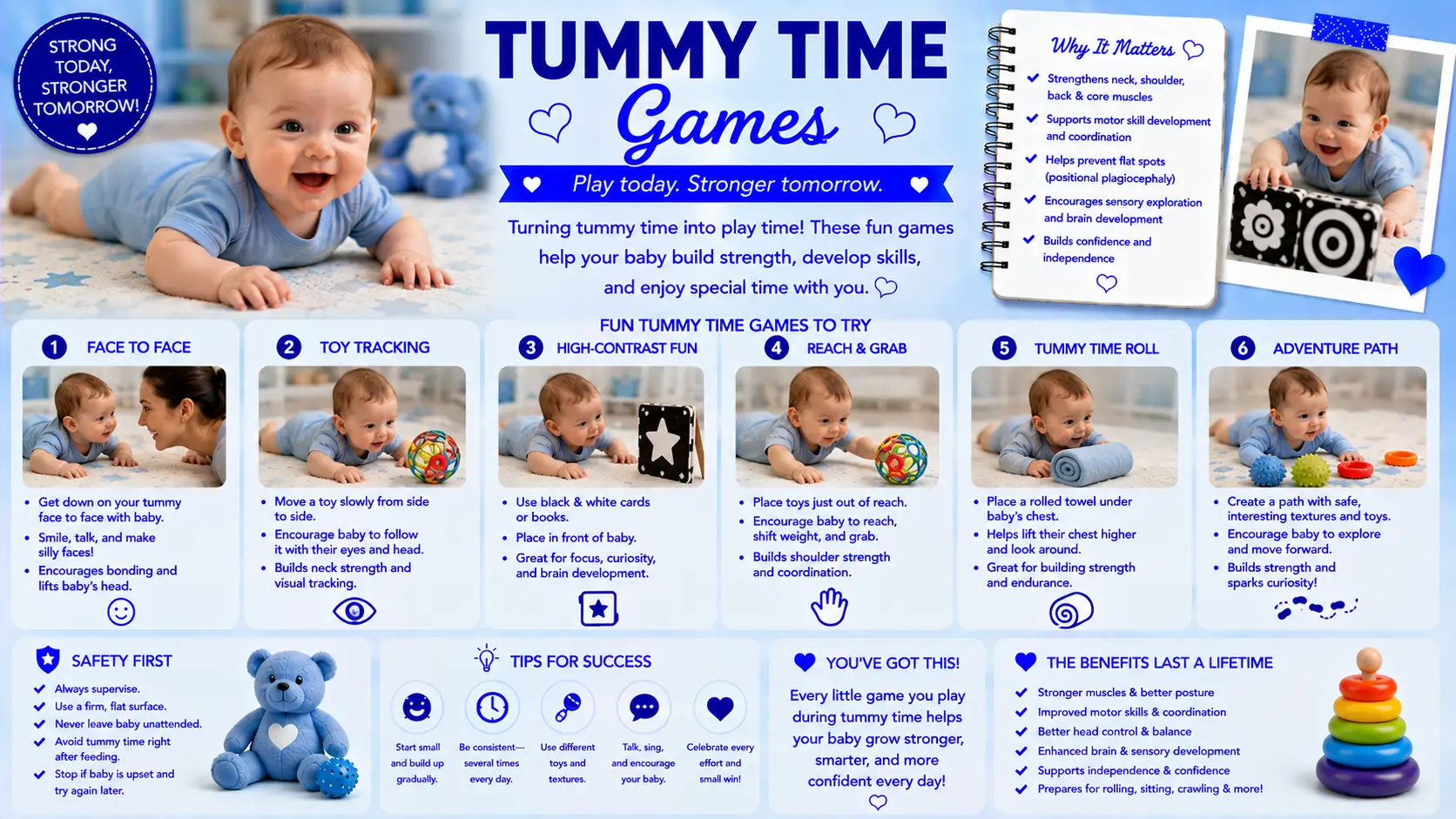
Tummy time is essential for building your baby’s neck, shoulder, core, and arm strength, supporting motor milestones like rolling and crawling, and helping prevent flat spots on the head. But let’s be honest—many babies protest at first, and short sessions can feel like a chore for parents too. The secret to longer, happier practice is turning it into play. Fun tummy time games and activities keep your little one engaged, motivated to lift their head, and more willing to stay on their belly.

By incorporating simple games, toys, and interactive moments, you transform supervised tummy time from a workout into enjoyable bonding time. Experts and parents alike emphasize that variety and engagement make the biggest difference. Here’s how to make tummy time fun with age-appropriate ideas that incorporate popular searches like “fun tummy time activities,” “tummy time games for babies,” and “how to make tummy time more enjoyable.”

Why Games Matter During Tummy Time

Contents hide
1 Why Games Matter During Tummy Time
2 Newborn to 6 Weeks: Gentle Starter Games
3 6 Weeks to 3 Months: Building Engagement
4 3 to 6 Months and Beyond: Interactive Games
5 Practical Tips to Keep Sessions Positive
6 FAQ
6.1 How can I make tummy time fun if my baby hates it?
6.2 What are the best tummy time toys or games for newborns?
6.3 When should I introduce more interactive tummy time games?
6.4 Do tummy time games help with developmental milestones?
6.5 How long should tummy time games last each day?

When babies are entertained, they tolerate the position longer and practice the movements that build strength. Games encourage head lifting, visual tracking, reaching, and weight shifting—all while creating positive associations. Start early (even from birth on your chest), keep sessions short and positive at first, and always supervise closely on a firm, flat surface.

Newborn to 6 Weeks: Gentle Starter Games

At this stage, the goal is comfort and brief exposure. Focus on close contact and simple sensory input.

Chest-to-chest (or “mummy tummy time”): Lie back at a slight incline and place your baby tummy-down on your chest, face-to-face. Talk, sing, or make exaggerated expressions. This counts as tummy time while offering skin-to-skin benefits and a clear view of your face—their favorite thing.

Baby airplane or football hold: Cradle your baby tummy-down across your forearm (support the head and neck carefully) and walk around the house. Narrate what you see—“Look at the window!” or “We’re flying to the kitchen!” Babies often love the motion.

Black-and-white visual play: Place high-contrast cards, books, or simple patterns about 8–12 inches from your baby’s face. Newborns track light and dark best, so this holds attention while encouraging brief head lifts.

Gentle ball roll: Place your baby tummy-down on a yoga or exercise ball (with a blanket for comfort) and, while supporting them firmly, slowly rock forward, back, and side to side. The movement introduces proprioception in a fun way.

6 Weeks to 3 Months: Building Engagement

As head control improves, introduce more interaction and light props.

Lap time and propped support: Sit with legs outstretched and rest your baby’s chest against your thighs, or use a rolled towel under the chest on the floor. Sing nursery songs with hand motions or gently stroke their back.

Mirror magic: Prop a baby-safe, non-breakable mirror at an angle so your baby can see their reflection. Many infants become fascinated by the “other baby” and lift their heads to investigate.

Wrist rattles or crinkle toys: Attach soft rattles or crinkle fabric to wrists so sounds and textures stay within easy reach and sight. Movement creates noise that encourages arm exploration.

Track the toy: Slowly move a colorful rattle or high-contrast toy side to side in front of your baby. This builds visual tracking and motivates head turning.

3 to 6 Months and Beyond: Interactive Games

Stronger babies are ready for reaching, sensory play, and more dynamic fun.

Water mat or splash tray: Use a commercial water-filled tummy time mat with floating shapes, or a shallow baking tray with a little water and floating rubber ducks (supervised closely). Babies love watching and “catching” the movement.

Pop-up toys and peek-a-boo: Activate simple pop-up toys or play classic peek-a-boo while your baby is on their tummy. The surprise element often brings giggles and longer stays.

Book wall or sensory tray: Prop board books upright or place safe household textures (sponges, soft scarves, wooden spoons) just in front of your baby. Encourage reaching and exploration.

Floor face-to-face play: Get down at eye level yourself. Make faces, talk, or roll a soft ball slowly. As strength grows, place toys slightly farther away to encourage pivoting or early scooting.

Activity gym or play mat exploration: Use a play gym with dangling toys so your baby can bat, reach, and look upward while building upper-body strength.

Practical Tips to Keep Sessions Positive

Time tummy time when your baby is calm and alert—often after a diaper change or short nap, but not right after feeding. Keep early sessions to a few minutes and end on a high note before major fussing. Switch positions or activities if interest wanes. If your baby still resists, mix in side-lying play as a bridge and gradually increase floor time. Consistency matters more than perfect minutes.

Always stay within arm’s reach, use a firm surface, and stop if your baby shows genuine distress beyond typical effort. Consult your pediatrician with concerns about tolerance or development.

Turning tummy time into games doesn’t require expensive toys. Your face, voice, everyday objects, and a bit of creativity go a long way. Over weeks, many babies shift from protest to preference, building the strength and confidence that lead to rolling, sitting, and crawling. The more playful the approach, the more both of you will look forward to these daily moments of connection and growth.

FAQ

How can I make tummy time fun if my baby hates it?

Start with chest-to-chest contact, keep sessions very short, use mirrors or your face at eye level, add soft music or singing, and try props like a rolled towel for support. End positively and try again later. Most babies improve with gentle, consistent practice.

What are the best tummy time toys or games for newborns?

High-contrast black-and-white cards or books, your face during chest time, soft wrist rattles, and gentle rocking on a supported surface work well. Focus on visual and auditory engagement rather than complex toys.

When should I introduce more interactive tummy time games?

Around 6–8 weeks, as head control improves, you can add mirrors, tracking toys, and light props. By 3–4 months, water mats, pop-up toys, and reaching games become more effective.

Do tummy time games help with developmental milestones?

Yes. Engaging activities encourage the head lifting, weight shifting, and reaching that strengthen muscles needed for rolling, sitting, crawling, and beyond, while also supporting visual tracking and sensory development.

How long should tummy time games last each day?

Begin with a few minutes several times daily and gradually increase as tolerated. Aim for cumulative totals that grow with age (often 15–30 minutes by 2 months and more later), broken into short, enjoyable sessions rather than one long stretch.


Author

DrAdam

Dr. Adam. Obstetrician and Gynecologist

Follow Me
Other Articles
Previous

Tummy Time Milestones

Next

Mirror Activities for Tummy Time

No Comment! Be the first one.

Leave a Reply Cancel reply

Your email address will not be published. Required fields are marked *

What is Did You Search?

The “Did You Search” website was created for all mothers and families. Just search to find all your needs about your children.

Links

  • about
  • contact
  • privacy policy
  • medical disclaimer
  • sitemap
Copyright 2026 — DidYouSearch. All rights reserved.