Skip to content
DidYouSearch DidYouSearch
  • did you search?
  • Baby Plus+
    • Baby Activities
      • Arts & Crafts
      • Indoor Activities
      • Montessori
      • Music
      • Outdoor Activities
      • Reading
      • Sensory Play
      • Tummy Time
    • Baby Development
      • Brain Development
      • Cognitive Development
      • Emotional Development
      • Fine Motor Skills
      • Growth Milestones
      • Monthly Milestones
      • Motor Skills
      • Physical Development
      • Social Development
      • Speech Development
    • Baby Feeding
      • Allergies
      • Baby Led Weaning
      • Bottle Feeding
      • Breast feeding
        • Breastfeeding Diet
        • Breastfeeding Positions
        • Latch Problems
        • Low Milk Supply
        • Mastitis
        • Pumping Schedule
        • Weaning
      • Burping
      • Cluster Feeding
      • Feeding Schedule
      • Formula Feeding
        • Formula Amount
        • Formula Brands
        • Formula Comparison
        • Formula Preparation
        • Formula Storage
      • Hydration
      • Pumping
      • Solid Foods
    • Baby Gear Reviews
      • Best Baby Carrier
      • Best Baby Monitor
      • Best Baby Strollers
      • Best Bottles
      • Best Breast Pump
      • Best Car Seat
      • Best Cribs
      • Best Diapers
      • Best Formula
      • Best Toys
    • Baby Growth
      • Growth Spurts
      • Height Charts
      • Monthly Growth
      • Percentiles
      • Weight Charts
    • Baby Health
      • Allergies
      • Cold
      • Constipation
      • Cough
      • Diarrhea
      • Ear Infection
      • Fever
      • Flu
      • Pediatric Visits
      • Rashes
      • Teething
      • Vaccines
      • Vomiting
    • Baby Nutrition
      • Dairy
      • Drinks
      • Eggs
      • Fish
      • Fruits
      • Healthy Recipes
      • Meat
      • Snacks
      • Vegetables
      • Vitamins
    • Baby Products
      • Baby Carriers
      • Bassinets
      • Bottles
      • Breast Pumps
      • Car Seats
      • Cribs
      • Diaper Bags
      • High Chairs
      • Monitors
      • Strollers
      • Swings
      • Toys
      • Walkers
    • Baby Recipes
      • BLW Recipes
      • Breakfast
      • Dinner
      • Finger Foods
      • Lunch
      • Purees
      • Snacks
    • Baby Safety
      • Baby Proofing
      • Car Seats
      • Choking Hazards
      • CPR
      • Home Safety
      • Poison Prevention
      • Safe Sleep
      • Sun Protection
      • Water Safety
  • Baby Names
    • Boy Names
    • Girl Names
    • American baby boy names
    • American baby girl names
    • Biblical Names
    • Middle Names
    • Modern Names
    • Short Names
    • Unique Names
    • Unisex Names
  • Recommended
    • Baby Shopping
      • Baby Registry
      • Budget Baby Shopping
      • Hospital Bag
      • Must Have Products
      • Newborn Checklist
      • Nursery Ideas
    • Baby Sleep
      • Bedtime Routine
      • Co Sleeping
      • Crib Safety
      • Nap Schedules
      • Night Wakings
      • Sleep Environment
      • Sleep Products
      • Sleep Regression
      • Sleep Training
      • Wake Windows
      • White Noise
    • Childcare
      • Daycare
      • Babysitters
      • Kindergarten
      • Nannies
      • Preschool
    • Newborn Care
      • Nail Care
      • Baby Hygiene
      • Bathing
      • Crying
      • Diapering
      • Ear Care
      • Eye Care
      • Skin Care
      • Soothing Techniques
      • Temperature
      • Umbilical Cord
    • Special Needs
      • Premature Babies
      • Autism Signs
      • Developmental Delays
      • Down Syndrome
      • NICU
      • Twins
    • Seasonal Baby Care
      • Spring
      • Summer
      • Travel
      • Fall
      • Holidays
      • Winter
  • Parenting
    • Bonding
    • Discipline
    • Emotional Intelligence
    • First Time Parents
    • Gentle Parenting
    • Positive Parenting
    • Routines
    • Single Parents
    • Working Parents
  • Pregnancy
    • Pregnancy Complications
    • Labor & Delivery
    • Postpartum Recovery
    • Pregnancy Exercises
    • Pregnancy Medications
    • Pregnancy Nutrition
    • Pregnancy Sleep
    • Pregnancy Symptoms
    • Pregnancy Tests
    • Pregnancy Vitamins
    • Pregnancy Weeks
  • Toddler
    • Preschool
    • Speech
    • Tantrums
    • Toddler Food
    • Toddler Sleep
    • Behavior
    • Independence
    • Learning
    • Potty Training
  • Traveling with Baby
    • Road Trips
    • Beach
    • Camping
    • Flying
    • Hotels
    • Packing Lists
  • did you search?
  • Baby Plus+
    • Baby Activities
      • Arts & Crafts
      • Indoor Activities
      • Montessori
      • Music
      • Outdoor Activities
      • Reading
      • Sensory Play
      • Tummy Time
    • Baby Development
      • Brain Development
      • Cognitive Development
      • Emotional Development
      • Fine Motor Skills
      • Growth Milestones
      • Monthly Milestones
      • Motor Skills
      • Physical Development
      • Social Development
      • Speech Development
    • Baby Feeding
      • Allergies
      • Baby Led Weaning
      • Bottle Feeding
      • Breast feeding
        • Breastfeeding Diet
        • Breastfeeding Positions
        • Latch Problems
        • Low Milk Supply
        • Mastitis
        • Pumping Schedule
        • Weaning
      • Burping
      • Cluster Feeding
      • Feeding Schedule
      • Formula Feeding
        • Formula Amount
        • Formula Brands
        • Formula Comparison
        • Formula Preparation
        • Formula Storage
      • Hydration
      • Pumping
      • Solid Foods
    • Baby Gear Reviews
      • Best Baby Carrier
      • Best Baby Monitor
      • Best Baby Strollers
      • Best Bottles
      • Best Breast Pump
      • Best Car Seat
      • Best Cribs
      • Best Diapers
      • Best Formula
      • Best Toys
    • Baby Growth
      • Growth Spurts
      • Height Charts
      • Monthly Growth
      • Percentiles
      • Weight Charts
    • Baby Health
      • Allergies
      • Cold
      • Constipation
      • Cough
      • Diarrhea
      • Ear Infection
      • Fever
      • Flu
      • Pediatric Visits
      • Rashes
      • Teething
      • Vaccines
      • Vomiting
    • Baby Nutrition
      • Dairy
      • Drinks
      • Eggs
      • Fish
      • Fruits
      • Healthy Recipes
      • Meat
      • Snacks
      • Vegetables
      • Vitamins
    • Baby Products
      • Baby Carriers
      • Bassinets
      • Bottles
      • Breast Pumps
      • Car Seats
      • Cribs
      • Diaper Bags
      • High Chairs
      • Monitors
      • Strollers
      • Swings
      • Toys
      • Walkers
    • Baby Recipes
      • BLW Recipes
      • Breakfast
      • Dinner
      • Finger Foods
      • Lunch
      • Purees
      • Snacks
    • Baby Safety
      • Baby Proofing
      • Car Seats
      • Choking Hazards
      • CPR
      • Home Safety
      • Poison Prevention
      • Safe Sleep
      • Sun Protection
      • Water Safety
  • Baby Names
    • Boy Names
    • Girl Names
    • American baby boy names
    • American baby girl names
    • Biblical Names
    • Middle Names
    • Modern Names
    • Short Names
    • Unique Names
    • Unisex Names
  • Recommended
    • Baby Shopping
      • Baby Registry
      • Budget Baby Shopping
      • Hospital Bag
      • Must Have Products
      • Newborn Checklist
      • Nursery Ideas
    • Baby Sleep
      • Bedtime Routine
      • Co Sleeping
      • Crib Safety
      • Nap Schedules
      • Night Wakings
      • Sleep Environment
      • Sleep Products
      • Sleep Regression
      • Sleep Training
      • Wake Windows
      • White Noise
    • Childcare
      • Daycare
      • Babysitters
      • Kindergarten
      • Nannies
      • Preschool
    • Newborn Care
      • Nail Care
      • Baby Hygiene
      • Bathing
      • Crying
      • Diapering
      • Ear Care
      • Eye Care
      • Skin Care
      • Soothing Techniques
      • Temperature
      • Umbilical Cord
    • Special Needs
      • Premature Babies
      • Autism Signs
      • Developmental Delays
      • Down Syndrome
      • NICU
      • Twins
    • Seasonal Baby Care
      • Spring
      • Summer
      • Travel
      • Fall
      • Holidays
      • Winter
  • Parenting
    • Bonding
    • Discipline
    • Emotional Intelligence
    • First Time Parents
    • Gentle Parenting
    • Positive Parenting
    • Routines
    • Single Parents
    • Working Parents
  • Pregnancy
    • Pregnancy Complications
    • Labor & Delivery
    • Postpartum Recovery
    • Pregnancy Exercises
    • Pregnancy Medications
    • Pregnancy Nutrition
    • Pregnancy Sleep
    • Pregnancy Symptoms
    • Pregnancy Tests
    • Pregnancy Vitamins
    • Pregnancy Weeks
  • Toddler
    • Preschool
    • Speech
    • Tantrums
    • Toddler Food
    • Toddler Sleep
    • Behavior
    • Independence
    • Learning
    • Potty Training
  • Traveling with Baby
    • Road Trips
    • Beach
    • Camping
    • Flying
    • Hotels
    • Packing Lists
Close

Search

Home/Baby Activities/Tummy Time/Mirror Activities for Tummy Time
Tummy Time

Mirror Activities for Tummy Time

By DrAdam
August 15, 2026 5 Min Read
0

Mirrors turn ordinary tummy time into one of the most engaging activities for babies. When you place a baby-safe mirror in front of your little one during supervised tummy time, something magical happens: they often lift their head higher, stay longer, and become fascinated by the “other baby” looking back. This simple tool supports physical strength, visual development, and early self-awareness while making sessions more enjoyable for both of you.

Parents searching for “tummy time mirror activities,” “how to use a mirror for tummy time,” or “benefits of mirror play during tummy time” quickly discover that this is one of the most recommended ways to encourage longer, happier practice. Here’s everything you need to know to get started.

Why Mirrors Work So Well During Tummy Time

Contents hide
1 Why Mirrors Work So Well During Tummy Time
2 How to Set Up Mirror Activities for Tummy Time
3 Simple and Effective Mirror Activities
4 Choosing the Right Tummy Time Mirror
5 Tips for Success
6 FAQ
6.1 When can I start using a mirror during tummy time?
6.2 What are the main benefits of mirror play during tummy time?
6.3 How do I choose a safe tummy time mirror?
6.4 My baby doesn’t seem interested in the mirror—what should I do?
6.5 Can mirror activities help if my baby hates tummy time?

Babies are hardwired to look at faces. A mirror provides a constantly changing, responsive “face” that moves with them. This motivates head lifting and chest raising—the exact muscles tummy time is designed to strengthen. At the same time, mirror play builds visual tracking, spatial awareness, and the foundations of self-recognition.

Key benefits include:

Stronger neck, shoulder, and core muscles as babies push up to get a better view

Improved visual tracking and focus

Early body awareness and the beginning of self-recognition (full recognition usually appears later, around 15–24 months)

Language and social development when you join in and label features or emotions

Longer, more positive tummy time sessions because the activity feels like play rather than work

How to Set Up Mirror Activities for Tummy Time

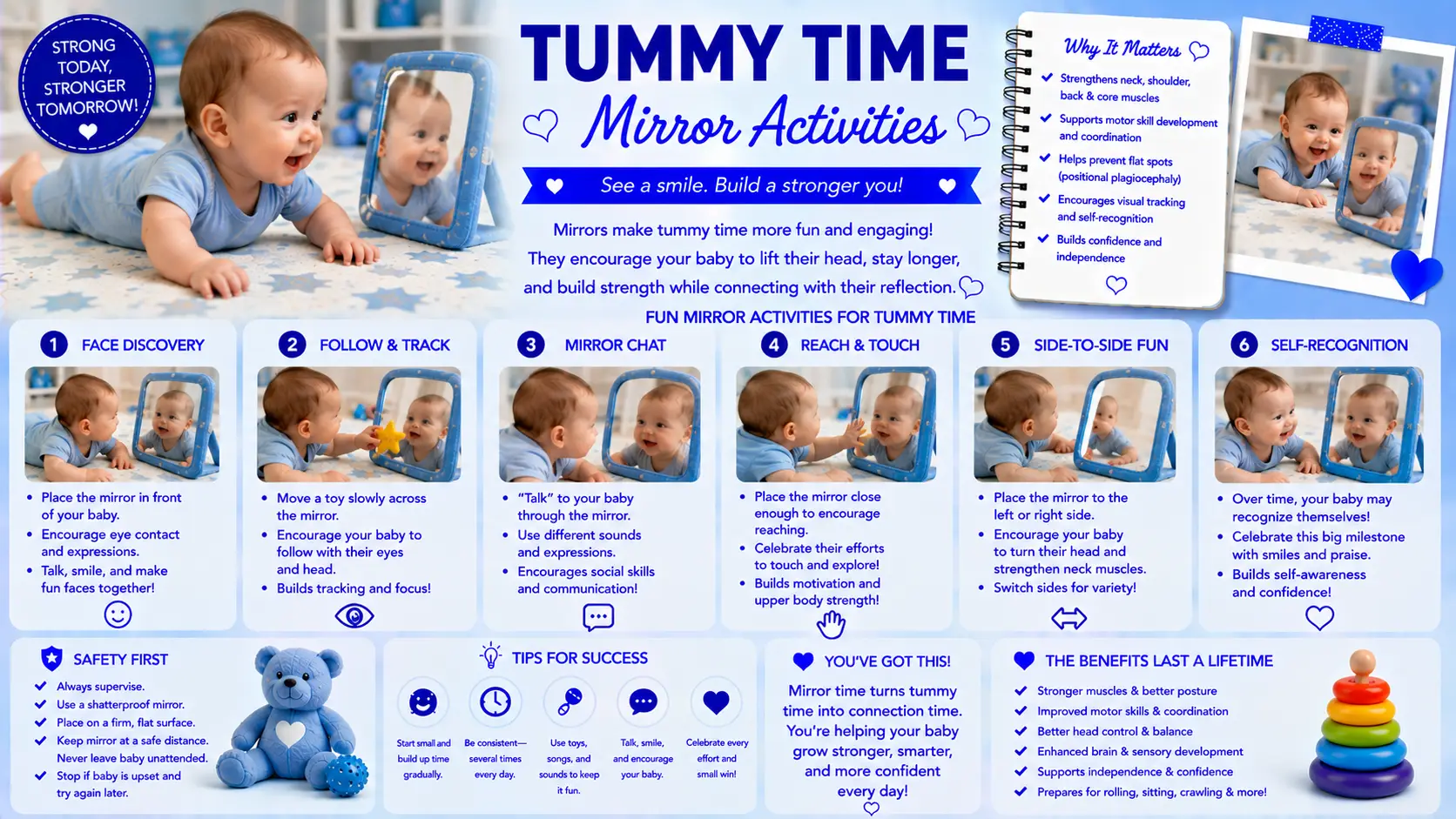
Safety comes first. Always use a shatterproof, acrylic, or specially designed baby floor mirror. Never use glass. Place it on a firm, flat surface such as a play mat or blanket, and stay within arm’s reach the entire time.

Position the mirror so your baby can see their reflection when they lift their head. Keep it relatively low at first so the effort of looking up builds strength. As your baby gets stronger, you can prop it at a slight angle or move it slightly farther away to encourage reaching and pivoting.

Start with short sessions when your baby is calm and alert. Many parents find the best times are after a diaper change or during a natural play window—not right after feeding.

Simple and Effective Mirror Activities

Basic reflection play (newborns and early months) Place the mirror directly in front of your baby during tummy time. Talk softly about what they see: “Look at that cute baby! You’re lifting your head so high.” Many infants become absorbed watching their own movements.

Face-to-face conversations Get down on the floor beside or opposite your baby so both of you appear in the mirror. Make exaggerated faces, smile, stick out your tongue, or open and close your mouth. Name the expressions (“I’m smiling—you’re smiling too!”). This turns tummy time into a social game and supports language development.

Body-part labeling Gently touch your baby’s nose, then point to the nose in the mirror. Do the same with eyes, mouth, hands, and ears. Over time, this helps build body awareness and vocabulary.

Tracking and reaching games Slowly move a soft toy or your hand in front of the mirror so the reflection moves. Encourage your baby to follow it with their eyes and eventually reach toward the image. This combines visual tracking with motor practice.

Black-and-white or high-contrast backs Many tummy time mirrors have high-contrast patterns on the reverse side. Flip the mirror occasionally for visual variety, especially in the early months when babies respond strongly to bold contrasts.

Prop and progress For younger babies, place a rolled towel under the chest for support while they look in the mirror. As strength improves, remove the prop and watch them work harder to keep the interesting face in view.

Choosing the Right Tummy Time Mirror

Look for features that make the experience safer and more engaging:

Shatterproof and lightweight

Stable base or the ability to stand upright

Soft edges or fabric framing

High-contrast patterns or attached sensory elements (crinkle fabric, teething rings)

Appropriate size—large enough for a clear reflection but not so big that it tips easily

Popular options include floor mirrors designed specifically for tummy time, often with dual-sided designs (mirror on one side, black-and-white patterns on the other). Always supervise and clean the surface regularly.

Tips for Success

If your baby seems uninterested at first, try joining them in the reflection or pairing the mirror with your voice and facial expressions. Some babies prefer the mirror slightly to the side rather than straight ahead. Keep sessions positive—end before frustration sets in and try again later. Consistency helps; many babies who initially resist tummy time begin to look forward to “mirror time.”

As your baby grows, the same mirror continues to be useful. Older infants may smile at their reflection, pat the glass, or use it as motivation to roll or scoot closer.

Mirror activities offer a low-cost, high-impact way to make tummy time more effective and enjoyable. By combining the physical benefits of the prone position with the captivating power of reflection, you give your baby both a workout and a window into early self-discovery. Grab a safe mirror, get down on the floor, and watch the fascination begin.

FAQ

When can I start using a mirror during tummy time?

You can introduce a baby-safe mirror from the earliest tummy time sessions, even in the newborn period. Start with short periods on your chest or with support, then move to the floor as your baby becomes more comfortable.

What are the main benefits of mirror play during tummy time?

Mirrors encourage head lifting and muscle strengthening, support visual tracking and focus, promote early body awareness, and make sessions longer and more enjoyable. They also create natural opportunities for language and social interaction.

How do I choose a safe tummy time mirror?

Select a shatterproof acrylic or specially designed baby floor mirror with soft edges and a stable base. Avoid glass mirrors. Look for ones that can stand upright or lie flat and are easy to clean.

My baby doesn’t seem interested in the mirror—what should I do?

Join the reflection yourself by making faces and talking. Try different angles or distances, pair it with high-contrast patterns, or keep sessions very short. Interest often grows with repeated, positive exposure.

Can mirror activities help if my baby hates tummy time?

Yes. The engaging visual feedback of a mirror is one of the most effective ways to increase tolerance. Many babies stay longer when they have something interesting to look at, turning a challenging position into curious play.


Author

DrAdam

Dr. Adam. Obstetrician and Gynecologist

Follow Me
Other Articles
Previous

Tummy Time Games

Next

High Contrast Activities During Tummy Time

No Comment! Be the first one.

Leave a Reply Cancel reply

Your email address will not be published. Required fields are marked *

What is Did You Search?

The “Did You Search” website was created for all mothers and families. Just search to find all your needs about your children.

Links

  • about
  • contact
  • privacy policy
  • medical disclaimer
  • sitemap
Copyright 2026 — DidYouSearch. All rights reserved.