
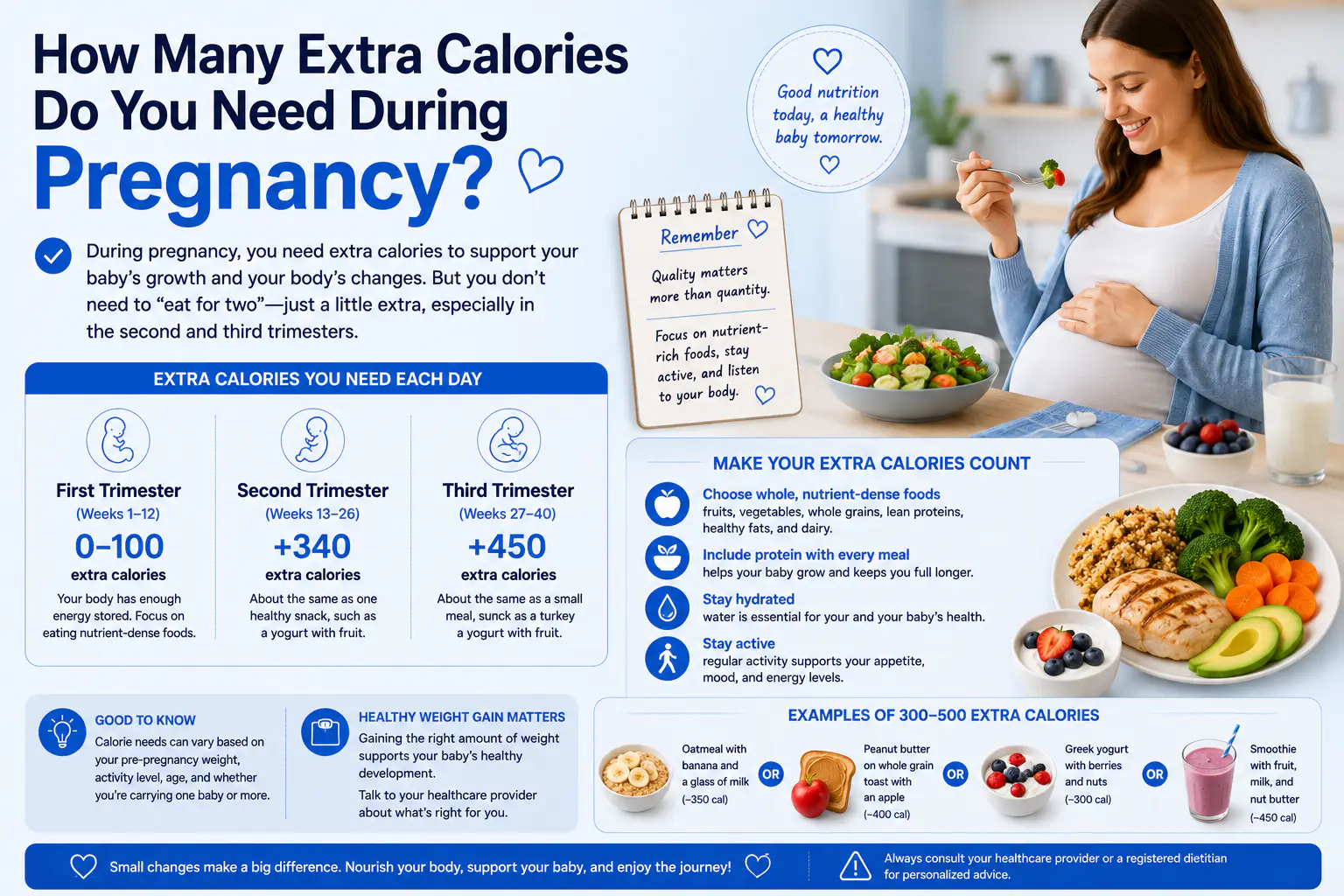

“Eating for two” is one of the most repeated phrases in pregnancy — and one of the most misleading. The truth is, most people need far fewer extra calories than that saying implies, and the amount changes quite a bit depending on which trimester you’re in. Here’s what the research and major health organizations actually recommend.
The Quick Answer
According to ACOG (the American College of Obstetricians and Gynecologists), most people don’t need any extra calories in the first trimester, need about 340 extra calories per day in the second trimester, and about 450 extra calories per day in the third trimester. That’s a far cry from doubling your intake — it’s closer to adding a snack or two to your usual day.
Why “Eating for Two” Is a Myth
The idea that pregnancy requires roughly double the food comes from an outdated interpretation of pregnancy nutrition. In reality, a baby’s calorie needs are tiny compared to an adult’s, even though their nutrient needs are high. Eating significantly more than recommended doesn’t make for a healthier pregnancy — it’s associated with excess weight gain, which can raise the risk of complications like gestational diabetes and delivery complications. The better framing many dietitians use is “eating twice as healthy,” not twice as much.
Calorie Needs by Trimester
First trimester: no extra calories needed. Most people can continue eating their usual pre-pregnancy calorie intake — generally around 1,800–2,200 calories a day, depending on age, activity level, and body size. Nausea and food aversions often make eating a challenge anyway during these early weeks, so the lack of extra calorie demand works in your favor. The priority here is nutrient density (folate, iron, choline) rather than quantity.
Second trimester: about 340 extra calories per day. This is roughly equivalent to a glass of milk and a slice of whole-grain toast with peanut butter, or a yogurt with a handful of nuts. It’s a modest bump, not a second meal.
Third trimester: about 450 extra calories per day. As your baby grows most rapidly in these final weeks, calorie needs increase slightly further. Around 450 extra calories might look like a serving of low-fat dairy, a couple ounces of lean protein, and a serving of whole grains spread across the day.
These figures are general guidelines for someone who was at a moderate, healthy weight before pregnancy and has a single pregnancy. If you were under or overweight before conceiving, or you’re carrying multiples, your needs will look different — which is exactly why individualized guidance from your OB or a registered dietitian matters more than a one-size-fits-all number.
What About Twins or Triplets?
If you’re carrying twins, general guidance suggests around 600 extra calories per day. For triplets, that number rises to roughly 900 extra calories per day. As with singleton pregnancies, these are starting points — your care team will tailor recommendations based on your specific pregnancy and weight gain progress.
How This Connects to Healthy Weight Gain
Calorie needs and recommended weight gain go hand in hand. General weight gain guidelines (for a single pregnancy) look like this:
Underweight before pregnancy: 28–40 pounds total
Normal weight before pregnancy: 25–35 pounds total
Overweight before pregnancy: 15–25 pounds total
Obese before pregnancy: 11–20 pounds total
A common rule of thumb is gaining about 2–4 pounds total during the first trimester, then roughly 1 pound per week through the rest of pregnancy for someone at a typical starting weight. Your provider will track this at each appointment and can flag if you need more or fewer calories than the general guidelines suggest.
Focus on Quality, Not Just Quantity
Because the calorie increase is so modest, especially early on, the more useful question is often what those calories are made of rather than how many there are. Nutrient-dense choices — leafy greens, eggs, dairy, beans, lean protein, and whole grains — help you meet increased needs for folate, iron, calcium, choline, and DHA without needing large quantities of food. A prenatal vitamin helps fill any remaining gaps, but it’s meant to complement your diet, not replace real food.
The Bottom Line
Pregnancy doesn’t require eating for two — it requires eating a little more, and eating it more thoughtfully. Most people need zero extra calories in the first trimester, about 340 in the second, and about 450 in the third. These are general benchmarks, not strict targets, and your individual needs may differ based on your pre-pregnancy weight, activity level, and whether you’re carrying more than one baby. Your OB or a registered dietitian is the best resource for calorie and weight gain guidance specific to your pregnancy.
FAQ
Do you need extra calories in the first trimester?
No. Most people don’t need any additional calories in the first trimester and can continue their usual pre-pregnancy intake. The focus should be on nutrient-dense foods rather than eating more.
How many extra calories do you need in the second trimester?
About 340 extra calories per day, which is roughly equivalent to a glass of milk plus a piece of whole-grain toast with peanut butter.
How many extra calories do you need in the third trimester?
About 450 extra calories per day, slightly more than the second trimester, to support your baby’s most rapid growth phase.
How many extra calories do you need if you’re pregnant with twins?
General guidance suggests around 600 extra calories per day for twins and about 900 extra calories per day for triplets, though your provider will personalize this based on your pregnancy.
Is it true that you should “eat for two” during pregnancy?
No, this is a common myth. Calorie needs increase only modestly, especially in the first and second trimesters, and eating significantly more than recommended can increase the risk of excess weight gain and related complications.