
Exhausted but wide awake at 2 a.m., tossing and turning while everyone else in the house is fast asleep? You’re far from alone. Pregnancy insomnia affects the vast majority of expectant parents at some point — some research puts the number as high as 78-94% — and it can hit at almost any stage, for a whole range of reasons. Here’s what’s actually behind it and what you can do to sleep a little better.
It’s Incredibly Common — and Not a Sign Something’s Wrong
First, some reassurance: struggling to sleep during pregnancy is one of the most normal things you can experience. It’s not a red flag about your pregnancy, and it doesn’t mean anything is wrong with you or your baby. It’s simply your body responding to a huge amount of hormonal and physical change, often at the exact time you need rest the most.
Sleep trouble tends to show up in a U-shaped pattern — worse in the first trimester, easier in the second, and worse again in the third.
Common Causes of Pregnancy Insomnia
Hormonal Changes
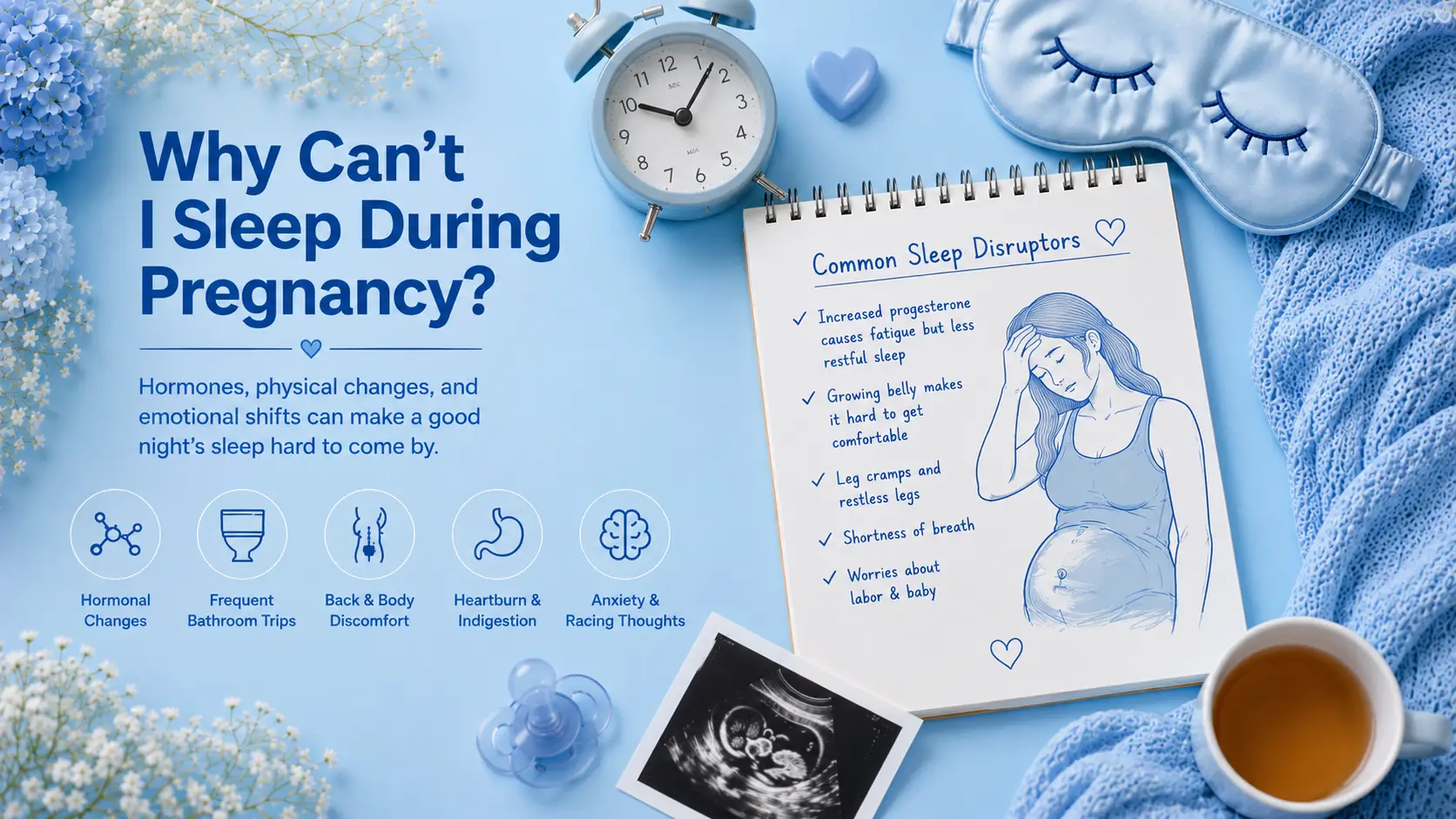
Progesterone and estrogen levels rise dramatically during pregnancy, and both can interfere with sleep in different ways. Progesterone has a sedative-like effect that can leave you feeling exhausted during the day, but it also relaxes the muscles around your bladder, leading to more nighttime bathroom trips. Estrogen, on the other hand, has a stimulating effect that can make it harder to fall asleep or stay asleep once you wake up.
Frequent Urination
As your uterus grows, it puts increasing pressure on your bladder — meaning it takes less urine to trigger the urge to go. This is one of the most common reasons pregnant women report waking up multiple times a night, especially in the first and third trimesters.
Physical Discomfort
A growing belly, backaches, tender breasts, and round ligament pain can all make it hard to get and stay comfortable in bed. As you move into the second and third trimesters, finding a good sleep position becomes its own nightly challenge.
Nausea and Heartburn
Morning sickness isn’t limited to mornings — nausea can strike overnight too, especially in early pregnancy. Later on, heartburn and acid reflux become more common as your growing uterus puts pressure on your stomach and slows digestion.
Leg Cramps and Restless Legs Syndrome
Many pregnant women develop leg cramps or restless legs syndrome (RLS), an uncomfortable urge to move your legs that tends to worsen at night. RLS during pregnancy is often linked to lower iron levels, so it’s worth mentioning to your provider if it’s a regular problem.
Stress and Racing Thoughts
It’s completely normal for your mind to start running through to-do lists, worries about labor, or big-picture questions about parenthood the moment your head hits the pillow. Anxiety and stress are major contributors to pregnancy insomnia, particularly as your due date approaches.
Snoring and Sleep-Disordered Breathing
Rising estrogen levels can cause swelling in your nasal passages, leading to congestion and snoring that wasn’t an issue before pregnancy. In some cases, this can develop into mild sleep apnea, which is worth flagging to your doctor if you notice loud snoring or gasping during sleep.
Why Trouble Sleeping Often Peaks in the Third Trimester
By the third trimester, several of these factors tend to converge at once: a much larger belly makes side sleeping the only truly comfortable option, the baby’s movements can wake you, heartburn worsens, and bathroom trips become more frequent. It’s genuinely one of the hardest stretches for sleep in pregnancy — but it’s temporary, and there are ways to make it more manageable.
What Can Help You Sleep Better
Prioritize side sleeping. Left-side sleeping is generally recommended, with a pillow between your knees and one supporting your belly.
Limit fluids in the evening. Stay hydrated throughout the day, but ease off in the hour or two before bed to cut down on nighttime bathroom trips.
Cut caffeine after midday. Caffeine’s effects can linger longer than you’d expect and interfere with falling asleep.
Build a wind-down routine. A warm shower, light stretching, or reading can help signal to your body that it’s time to rest.
Keep screens out of bed. Blue light from phones and TVs can suppress melatonin production, making it harder to drift off.
Try a light snack before bed. Something like crackers with peanut butter can help stabilize blood sugar and prevent nighttime hunger.
Move during the day. Gentle exercise like walking or prenatal yoga can improve sleep quality, as long as it’s not too close to bedtime.
Practice relaxation techniques. Deep breathing, meditation, or progressive muscle relaxation can help quiet a racing mind.
Check in on iron levels. If restless legs are a major issue, ask your provider about your iron status, since RLS is often linked to anemia in pregnancy.
Be cautious with sleep aids. Most over-the-counter sleep medications, including melatonin, aren’t recommended without medical guidance during pregnancy — always check with your doctor first.
When to Talk to Your Doctor
Some sleep disruption is expected, but it’s worth reaching out to your provider if:
You’re consistently unable to function during the day despite trying to rest
You experience loud snoring, gasping, or choking sounds during sleep
Restless legs are severe or happening every night
Anxiety or racing thoughts feel overwhelming or persistent
Poor sleep is affecting your mood or mental health
Left unaddressed, chronic pregnancy insomnia has been linked to a higher risk of complications like longer labors and increased rates of cesarean delivery, so it’s not something to just push through silently if it’s significantly affecting you.
The Bottom Line
If you’re lying awake wondering why sleep suddenly feels impossible, know that it’s an incredibly common part of pregnancy — driven by hormones, physical discomfort, and a mind that has a lot to process. Small changes to your evening routine and sleep position can genuinely help, and if things feel unmanageable, your OB-GYN or midwife can offer safe, pregnancy-appropriate solutions.
FAQ
Is it normal to have insomnia during early pregnancy?
Yes. Around 13-25% of women report sleep disruption in the first trimester, largely driven by rising hormone levels, nausea, and more frequent urination.
Can insomnia be an early sign of pregnancy?
It’s possible. Hormone levels begin climbing shortly after conception, and some women notice sleep changes early on — though most don’t connect it to pregnancy until after a positive test.
Why is my third trimester insomnia so much worse than earlier in pregnancy?
By the third trimester, physical discomfort, frequent urination, heartburn, and baby movement all tend to peak at once, making it the most sleep-disrupted stage for most people.
Is it safe to take melatonin or other sleep aids while pregnant?
Most over-the-counter sleep aids, including melatonin, aren’t recommended without talking to your provider first. Your body already increases melatonin naturally during pregnancy, and supplementing may not be advisable.
Can lack of sleep during pregnancy harm my baby?
Occasional poor sleep isn’t harmful, but chronic, severe sleep deprivation has been associated with a higher risk of complications like longer labor. If insomnia is persistent or severe, it’s worth discussing with your doctor.