
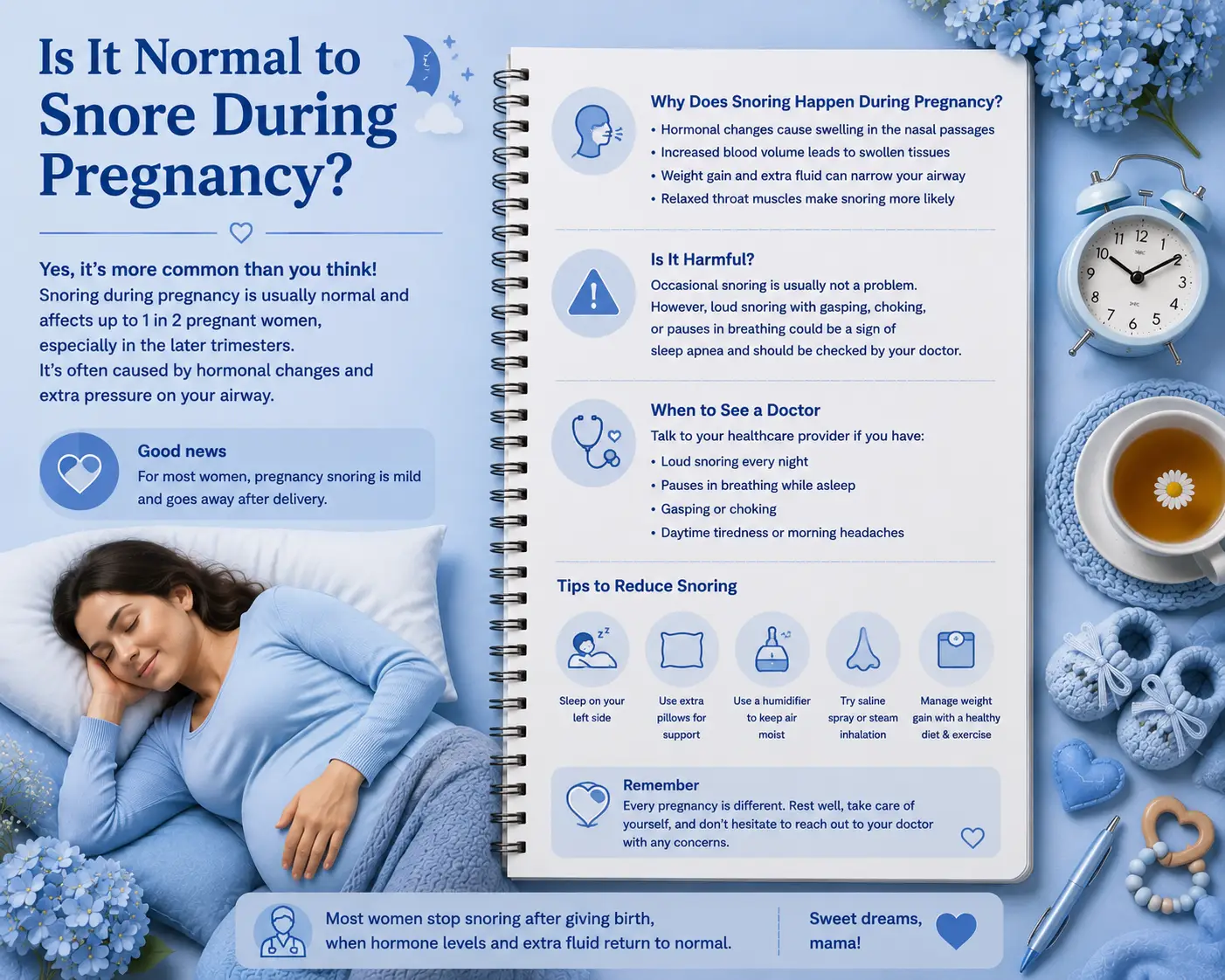

Yes, snoring during pregnancy is common and usually normal. Many people who never snored before start making nighttime noise once they’re expecting, especially as the pregnancy progresses. Studies show that somewhere between 14% and 53% of pregnant people snore at least a few nights a week, with the numbers climbing higher in the later months.
It’s often more of an annoyance (for you and anyone sharing the bed) than a serious problem. Still, it’s worth understanding why it happens, when it might signal something else, and simple ways to quiet things down.
Why Snoring Becomes More Common in Pregnancy
Pregnancy changes your body in ways that make the airway narrower or more congested, which leads to the soft tissues vibrating as you breathe.
Hormonal shifts play a big role. Rising estrogen and progesterone cause the mucous membranes in your nose and throat to swell. This often creates nasal congestion (sometimes called pregnancy rhinitis) that gets worse when you lie down. Increased blood volume—up to 45% more than usual—adds to the fluid retention and swelling around the airways.
Weight gain is another factor. Extra tissue around the neck and chest can put pressure on the airway. Even healthy, recommended weight gain can contribute, especially in the third trimester. Sleeping on your back tends to make snoring louder because gravity allows the tongue and soft palate to fall back more easily. Other contributors include preexisting tendencies to snore, dry air, or simply being overtired.
These changes explain why many people first notice snoring (or more intense snoring) in the second trimester, often around week 16 or later, with it becoming more frequent in the third trimester.
When Snoring Might Need Attention
Most pregnancy snoring is harmless and temporary. However, frequent or loud snoring can sometimes point to obstructive sleep apnea (OSA), a condition where breathing repeatedly pauses or becomes shallow during sleep. Pregnancy raises the risk of OSA, particularly for those who are overweight, older, or already had some snoring issues.
Research has linked habitual snoring and sleep-disordered breathing in pregnancy with higher chances of certain complications, including elevated blood pressure, preeclampsia, gestational diabetes, and in some studies, issues like cesarean delivery or smaller-than-expected babies. Not every person who snores will develop these problems—many do not—but the associations mean it’s smart to mention noticeable snoring to your healthcare provider.
Watch for red flags such as:
Loud snoring most nights
Gasping, choking, or pauses in breathing (often noticed by a partner)
Excessive daytime sleepiness, morning headaches, or feeling unrefreshed
High blood pressure or other pregnancy complications
If these appear, your provider may recommend screening or a sleep study. Untreated OSA can affect oxygen levels and overall rest, which matters for both you and the baby.
Practical Ways to Reduce Snoring While Pregnant
You don’t have to just live with the noise. Several low-effort steps often help:
Sleep on your side, ideally the left side. This position is also recommended for better blood flow and reduces airway collapse compared with back sleeping. A pregnancy pillow can make it more comfortable.
Elevate your upper body slightly with an extra pillow or adjustable bed wedge. This keeps the airway more open without forcing your head into an awkward angle.
Try nasal strips, saline rinses, or a humidifier. These ease congestion so you’re more likely to breathe through your nose.
Stay within the weight-gain range your provider recommends. Focus on balanced nutrition rather than restriction.
Practice good sleep habits: consistent bedtime, limited late caffeine, and a cool, dark room. Avoid alcohol and tobacco entirely (standard pregnancy advice that also helps snoring).
These tips address the most common triggers of pregnancy snoring and can improve overall sleep quality.
Does the Snoring Go Away After Birth?
For many people, yes. About half of those who start snoring during pregnancy stop or see big improvement once the baby is born and hormones, fluid levels, and weight begin returning toward baseline. Even if some snoring lingers, it often lessens over the following months.
FAQ
Is snoring normal during pregnancy?
Yes. It affects a large percentage of pregnant people, often starting or worsening in the second and third trimesters due to normal hormonal and physical changes. Mild snoring by itself is typically not a concern.
What causes snoring in pregnancy?
The main drivers are pregnancy hormones that swell nasal and throat tissues, increased blood volume and fluid retention, weight gain around the neck and chest, and sleeping positions that narrow the airway.
Can snoring during pregnancy harm the baby?
Occasional or mild snoring usually does not. However, if it is linked to sleep apnea or other sleep-disordered breathing, there may be associations with higher risks of certain complications. Discuss persistent loud snoring with your doctor for personalized advice.
How can I stop snoring while pregnant?
Side-sleeping (especially left side), elevating your torso, using nasal strips or a humidifier, managing weight gain appropriately, and good sleep hygiene are the most practical first steps. Medical evaluation is needed if symptoms of sleep apnea appear.
When does pregnancy snoring usually start and end?
It commonly begins in the second trimester and peaks in the third. Many people notice significant improvement or resolution after delivery as the body recovers, though individual timelines vary.