
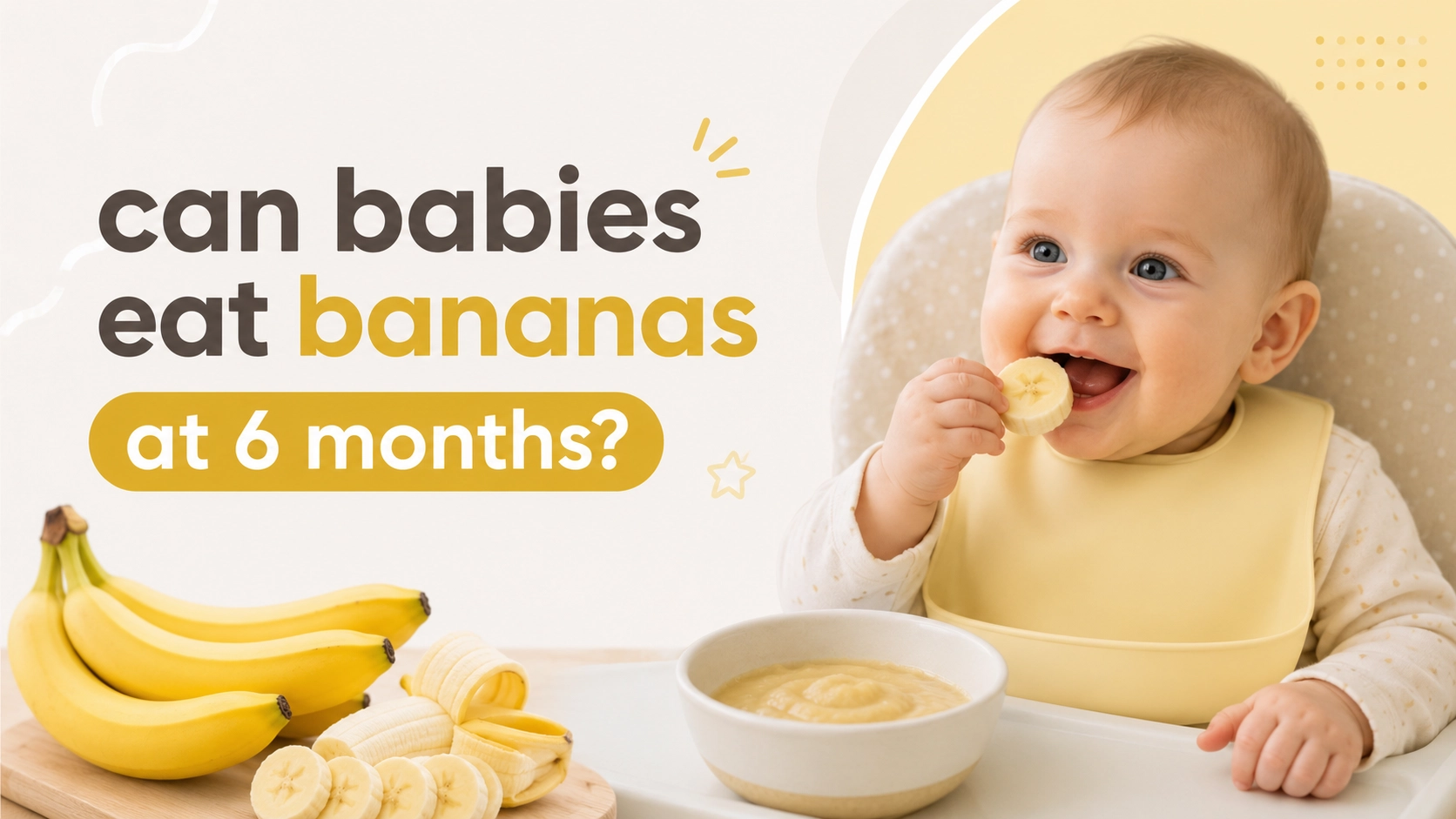

Yes. Most babies can safely eat bananas starting at around 6 months of age, as long as they are showing signs of readiness for solid foods. Bananas are naturally soft, easy to mash, and rich in nutrients like potassium, vitamin B6, vitamin C, and fiber, making them one of the most popular first foods for infants.
Before offering banana, make sure your baby:
- Can sit with support and hold their head steady.
- Shows interest in food.
- Has lost the tongue-thrust reflex that pushes food out of the mouth.
For traditional spoon-feeding, mash a ripe banana until smooth. If needed, add a little breast milk, formula, or water to create a thinner consistency. If you’re following baby-led weaning (BLW), offer a peeled banana with part of the peel left on as a natural handle, or cut it into thick spears that your baby can grasp.
Benefits of Bananas for a 6-Month-Old
Bananas provide several important nutrients that support healthy growth and development.
- Potassium helps maintain healthy muscles and nerve function.
- Vitamin B6 supports brain development.
- Vitamin C contributes to immune health and helps with iron absorption.
- Dietary fiber supports healthy digestion.
- Natural carbohydrates provide energy for your growing baby.
Because bananas are naturally sweet and soft, many babies accept them easily during the transition to solid foods.
How to Serve Banana Safely
Safety is the most important consideration.
For babies around 6 months:
- Mash ripe bananas until completely smooth for beginners.
- Avoid serving firm, unripe bananas.
- Never give large round chunks that could become a choking hazard.
- Always supervise your baby while eating.
If using baby-led weaning, choose a ripe banana that is soft enough to mash easily between your fingers.
How Much Banana Can a Baby Eat?
When introducing any new food, start small.
A good starting amount is:
- 1–2 teaspoons of mashed banana for the first few meals.
- Gradually increase to 2–4 tablespoons as your baby becomes comfortable with solids.
At 6 months, breast milk or formula should still provide most of your baby’s nutrition. Solid foods are meant for learning and gradual nutritional support.
Can Bananas Cause Constipation?
This is one of the most common questions parents ask.
Ripe bananas generally do not cause constipation in most babies and may even help support healthy digestion because of their fiber content. However, some babies may experience changes in bowel movements when starting solids.
Very unripe (green) bananas contain more resistant starch, which may contribute to firmer stools in some infants.
If your baby becomes constipated:
- Offer plenty of breast milk or formula.
- Continue introducing a variety of fruits and vegetables.
- Speak with your pediatrician if constipation persists.
Can Babies Be Allergic to Bananas?
Banana allergy is rare, but it is possible.
Watch for symptoms such as:
- Hives
- Swelling of the lips or face
- Vomiting
- Wheezing or difficulty breathing
If your baby develops severe symptoms, seek emergency medical care immediately.
Can Banana Be Mixed With Other Foods?
Once your baby tolerates banana well, you can combine it with other age-appropriate foods, including:
- Avocado
- Oatmeal
- Plain full-fat yogurt (after discussing dairy introduction if appropriate)
- Applesauce
- Pear puree
- Sweet potato puree
Introducing a variety of foods helps expose babies to different flavors and textures.
Final Answer
Yes, babies can eat bananas at 6 months, provided they are developmentally ready for solid foods. Bananas are nutritious, easy to prepare, naturally soft, and well tolerated by most infants. Start with a small amount of mashed ripe banana, introduce it gradually, and continue offering a variety of healthy foods alongside breast milk or formula. With proper preparation and supervision, bananas are an excellent first food for many babies.
Frequently Asked
Common Questions