
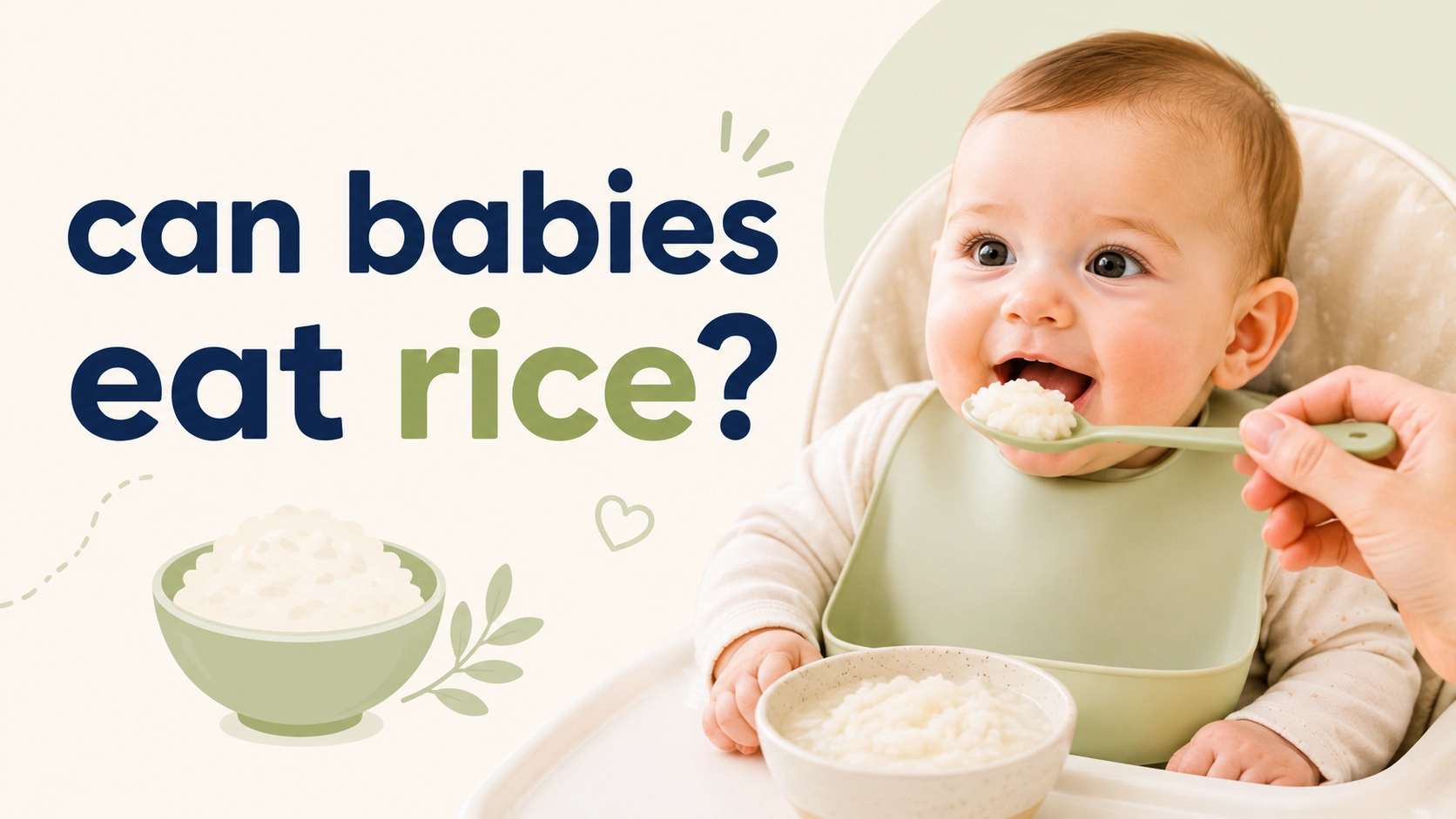

Yes, babies can eat rice, and it is one of the most common first foods introduced during infancy. Rice is easy to digest, naturally gluten-free, and can provide energy as your baby begins eating solid foods. However, experts now recommend offering rice as part of a varied diet rather than the only grain, mainly because rice can contain small amounts of naturally occurring arsenic.
Most babies are ready to try rice around 6 months of age, when they show signs of developmental readiness for solid foods.
When Can Babies Eat Rice?
The American Academy of Pediatrics (AAP) and the World Health Organization (WHO) recommend introducing complementary foods at around 6 months of age while continuing breast milk or formula.
Your baby may be ready if they can:
- Sit upright with support.
- Hold their head and neck steady.
- Show interest in food.
- Move food to the back of their mouth instead of pushing it out.
Is Rice Safe for Babies?
Yes, rice is generally safe when prepared properly and offered in moderation.
One concern parents often hear about is arsenic, a naturally occurring element found in soil and water that rice absorbs more readily than many other grains. While occasional servings are not considered harmful, experts recommend offering a variety of grains to reduce long-term exposure.
Healthy alternatives include:
- Oatmeal
- Barley
- Quinoa
- Whole wheat
- Millet
Rotating different grains gives babies a wider range of nutrients and flavors.
Benefits of Rice for Babies
Rice offers several nutritional benefits, especially when paired with other healthy foods.
Some advantages include:
- Easy to digest.
- Provides carbohydrates for energy.
- Naturally gluten-free.
- Soft texture that is easy to swallow.
- Can be combined with fruits, vegetables, and proteins.
Brown rice contains more fiber than white rice but may also contain slightly higher arsenic levels. Both can be part of a balanced diet when served occasionally.
Should Babies Eat Rice Cereal?
Rice cereal has traditionally been recommended as a first food, but it is no longer considered the only or best option.
Today, pediatric experts encourage parents to introduce a variety of iron-rich foods, including:
- Iron-fortified oatmeal cereal
- Pureed meats
- Lentils
- Beans
- Eggs (when age-appropriate)
Rice cereal can still be included occasionally, but it should not be the only grain your baby eats.
How to Prepare Rice for Babies
The preparation depends on your baby’s age and feeding method.
For Spoon Feeding
- Cook rice until very soft.
- Blend or mash with breast milk, formula, or water.
- Aim for a smooth consistency when introducing solids.
For Baby-Led Weaning (BLW)
Once your baby has developed the skills for self-feeding, you can offer:
- Soft cooked rice mixed into easy-to-grab patties.
- Rice combined with vegetables or eggs.
- Soft rice balls that hold together.
Loose grains of rice can be difficult for beginners to pick up, so combining them into larger pieces works better.
How Much Rice Can Babies Eat?
Start slowly.
A typical first serving is:
- 1–2 teaspoons for the first few meals.
- Gradually increase as your baby becomes comfortable with eating solids.
Remember that breast milk or formula should remain your baby’s primary source of nutrition during the first year.
Can Rice Cause Constipation?
Rice itself does not always cause constipation, but some babies may experience firmer stools after eating white rice or rice cereal.
To help prevent constipation:
- Offer fruits such as pears, peaches, or prunes.
- Include vegetables regularly.
- Rotate different grains.
- Ensure your baby continues drinking breast milk or formula.
If constipation lasts several days or causes significant discomfort, consult your pediatrician.
Can Babies Be Allergic to Rice?
Rice allergy is uncommon but possible.
Signs of an allergic reaction may include:
- Hives
- Vomiting
- Swelling
- Difficulty breathing
Stop feeding the food and seek immediate medical attention if your baby develops severe symptoms.
Final Answer
Yes, babies can eat rice, usually starting around 6 months of age when they are ready for solid foods. Rice is easy to digest and can be a healthy part of your baby’s diet, but it should be offered in moderation alongside a variety of other grains and nutritious foods. Preparing rice until it is soft, serving age-appropriate portions, and maintaining a balanced diet are the best ways to safely introduce rice to your baby.
Frequently Asked
Common Questions