
Skip to content
DidYouSearch DidYouSearch
  • did you search?
  • Baby Plus+
    • Baby Activities
      • Arts & Crafts
      • Indoor Activities
      • Montessori
      • Music
      • Outdoor Activities
      • Reading
      • Sensory Play
      • Tummy Time
    • Baby Development
      • Brain Development
      • Cognitive Development
      • Emotional Development
      • Fine Motor Skills
      • Growth Milestones
      • Monthly Milestones
      • Motor Skills
      • Physical Development
      • Social Development
      • Speech Development
    • Baby Feeding
      • Allergies
      • Baby Led Weaning
      • Bottle Feeding
      • Breast feeding
        • Breastfeeding Diet
        • Breastfeeding Positions
        • Latch Problems
        • Low Milk Supply
        • Mastitis
        • Pumping Schedule
        • Weaning
      • Burping
      • Cluster Feeding
      • Feeding Schedule
      • Formula Feeding
        • Formula Amount
        • Formula Brands
        • Formula Comparison
        • Formula Preparation
        • Formula Storage
      • Hydration
      • Pumping
      • Solid Foods
    • Baby Gear Reviews
      • Best Baby Carrier
      • Best Baby Monitor
      • Best Baby Strollers
      • Best Bottles
      • Best Breast Pump
      • Best Car Seat
      • Best Cribs
      • Best Diapers
      • Best Formula
      • Best Toys
    • Baby Growth
      • Growth Spurts
      • Height Charts
      • Monthly Growth
      • Percentiles
      • Weight Charts
    • Baby Health
      • Allergies
      • Cold
      • Constipation
      • Cough
      • Diarrhea
      • Ear Infection
      • Fever
      • Flu
      • Pediatric Visits
      • Rashes
      • Teething
      • Vaccines
      • Vomiting
    • Baby Nutrition
      • Dairy
      • Drinks
      • Eggs
      • Fish
      • Fruits
      • Healthy Recipes
      • Meat
      • Snacks
      • Vegetables
      • Vitamins
    • Baby Products
      • Baby Carriers
      • Bassinets
      • Bottles
      • Breast Pumps
      • Car Seats
      • Cribs
      • Diaper Bags
      • High Chairs
      • Monitors
      • Strollers
      • Swings
      • Toys
      • Walkers
    • Baby Recipes
      • BLW Recipes
      • Breakfast
      • Dinner
      • Finger Foods
      • Lunch
      • Purees
      • Snacks
    • Baby Safety
      • Baby Proofing
      • Car Seats
      • Choking Hazards
      • CPR
      • Home Safety
      • Poison Prevention
      • Safe Sleep
      • Sun Protection
      • Water Safety
  • Baby Names
    • Boy Names
    • Girl Names
    • American baby boy names
    • American baby girl names
    • Biblical Names
    • Middle Names
    • Modern Names
    • Short Names
    • Unique Names
    • Unisex Names
  • Recommended
    • Baby Shopping
      • Baby Registry
      • Budget Baby Shopping
      • Hospital Bag
      • Must Have Products
      • Newborn Checklist
      • Nursery Ideas
    • Baby Sleep
      • Bedtime Routine
      • Co Sleeping
      • Crib Safety
      • Nap Schedules
      • Night Wakings
      • Sleep Environment
      • Sleep Products
      • Sleep Regression
      • Sleep Training
      • Wake Windows
      • White Noise
    • Childcare
      • Daycare
      • Babysitters
      • Kindergarten
      • Nannies
      • Preschool
    • Newborn Care
      • Nail Care
      • Baby Hygiene
      • Bathing
      • Crying
      • Diapering
      • Ear Care
      • Eye Care
      • Skin Care
      • Soothing Techniques
      • Temperature
      • Umbilical Cord
    • Special Needs
      • Premature Babies
      • Autism Signs
      • Developmental Delays
      • Down Syndrome
      • NICU
      • Twins
    • Seasonal Baby Care
      • Spring
      • Summer
      • Travel
      • Fall
      • Holidays
      • Winter
  • Parenting
    • Bonding
    • Discipline
    • Emotional Intelligence
    • First Time Parents
    • Gentle Parenting
    • Positive Parenting
    • Routines
    • Single Parents
    • Working Parents
  • Pregnancy
    • Pregnancy Complications
    • Labor & Delivery
    • Postpartum Recovery
    • Pregnancy Exercises
    • Pregnancy Medications
    • Pregnancy Nutrition
    • Pregnancy Sleep
    • Pregnancy Symptoms
    • Pregnancy Tests
    • Pregnancy Vitamins
    • Pregnancy Weeks
  • Toddler
    • Preschool
    • Speech
    • Tantrums
    • Toddler Food
    • Toddler Sleep
    • Behavior
    • Independence
    • Learning
    • Potty Training
  • Traveling with Baby
    • Road Trips
    • Beach
    • Camping
    • Flying
    • Hotels
    • Packing Lists
  • did you search?
  • Baby Plus+
    • Baby Activities
      • Arts & Crafts
      • Indoor Activities
      • Montessori
      • Music
      • Outdoor Activities
      • Reading
      • Sensory Play
      • Tummy Time
    • Baby Development
      • Brain Development
      • Cognitive Development
      • Emotional Development
      • Fine Motor Skills
      • Growth Milestones
      • Monthly Milestones
      • Motor Skills
      • Physical Development
      • Social Development
      • Speech Development
    • Baby Feeding
      • Allergies
      • Baby Led Weaning
      • Bottle Feeding
      • Breast feeding
        • Breastfeeding Diet
        • Breastfeeding Positions
        • Latch Problems
        • Low Milk Supply
        • Mastitis
        • Pumping Schedule
        • Weaning
      • Burping
      • Cluster Feeding
      • Feeding Schedule
      • Formula Feeding
        • Formula Amount
        • Formula Brands
        • Formula Comparison
        • Formula Preparation
        • Formula Storage
      • Hydration
      • Pumping
      • Solid Foods
    • Baby Gear Reviews
      • Best Baby Carrier
      • Best Baby Monitor
      • Best Baby Strollers
      • Best Bottles
      • Best Breast Pump
      • Best Car Seat
      • Best Cribs
      • Best Diapers
      • Best Formula
      • Best Toys
    • Baby Growth
      • Growth Spurts
      • Height Charts
      • Monthly Growth
      • Percentiles
      • Weight Charts
    • Baby Health
      • Allergies
      • Cold
      • Constipation
      • Cough
      • Diarrhea
      • Ear Infection
      • Fever
      • Flu
      • Pediatric Visits
      • Rashes
      • Teething
      • Vaccines
      • Vomiting
    • Baby Nutrition
      • Dairy
      • Drinks
      • Eggs
      • Fish
      • Fruits
      • Healthy Recipes
      • Meat
      • Snacks
      • Vegetables
      • Vitamins
    • Baby Products
      • Baby Carriers
      • Bassinets
      • Bottles
      • Breast Pumps
      • Car Seats
      • Cribs
      • Diaper Bags
      • High Chairs
      • Monitors
      • Strollers
      • Swings
      • Toys
      • Walkers
    • Baby Recipes
      • BLW Recipes
      • Breakfast
      • Dinner
      • Finger Foods
      • Lunch
      • Purees
      • Snacks
    • Baby Safety
      • Baby Proofing
      • Car Seats
      • Choking Hazards
      • CPR
      • Home Safety
      • Poison Prevention
      • Safe Sleep
      • Sun Protection
      • Water Safety
  • Baby Names
    • Boy Names
    • Girl Names
    • American baby boy names
    • American baby girl names
    • Biblical Names
    • Middle Names
    • Modern Names
    • Short Names
    • Unique Names
    • Unisex Names
  • Recommended
    • Baby Shopping
      • Baby Registry
      • Budget Baby Shopping
      • Hospital Bag
      • Must Have Products
      • Newborn Checklist
      • Nursery Ideas
    • Baby Sleep
      • Bedtime Routine
      • Co Sleeping
      • Crib Safety
      • Nap Schedules
      • Night Wakings
      • Sleep Environment
      • Sleep Products
      • Sleep Regression
      • Sleep Training
      • Wake Windows
      • White Noise
    • Childcare
      • Daycare
      • Babysitters
      • Kindergarten
      • Nannies
      • Preschool
    • Newborn Care
      • Nail Care
      • Baby Hygiene
      • Bathing
      • Crying
      • Diapering
      • Ear Care
      • Eye Care
      • Skin Care
      • Soothing Techniques
      • Temperature
      • Umbilical Cord
    • Special Needs
      • Premature Babies
      • Autism Signs
      • Developmental Delays
      • Down Syndrome
      • NICU
      • Twins
    • Seasonal Baby Care
      • Spring
      • Summer
      • Travel
      • Fall
      • Holidays
      • Winter
  • Parenting
    • Bonding
    • Discipline
    • Emotional Intelligence
    • First Time Parents
    • Gentle Parenting
    • Positive Parenting
    • Routines
    • Single Parents
    • Working Parents
  • Pregnancy
    • Pregnancy Complications
    • Labor & Delivery
    • Postpartum Recovery
    • Pregnancy Exercises
    • Pregnancy Medications
    • Pregnancy Nutrition
    • Pregnancy Sleep
    • Pregnancy Symptoms
    • Pregnancy Tests
    • Pregnancy Vitamins
    • Pregnancy Weeks
  • Toddler
    • Preschool
    • Speech
    • Tantrums
    • Toddler Food
    • Toddler Sleep
    • Behavior
    • Independence
    • Learning
    • Potty Training
  • Traveling with Baby
    • Road Trips
    • Beach
    • Camping
    • Flying
    • Hotels
    • Packing Lists
Close

Search

Home/Baby Feeding/can babies eat watermelon at 5 months
Baby FeedingBaby Nutrition

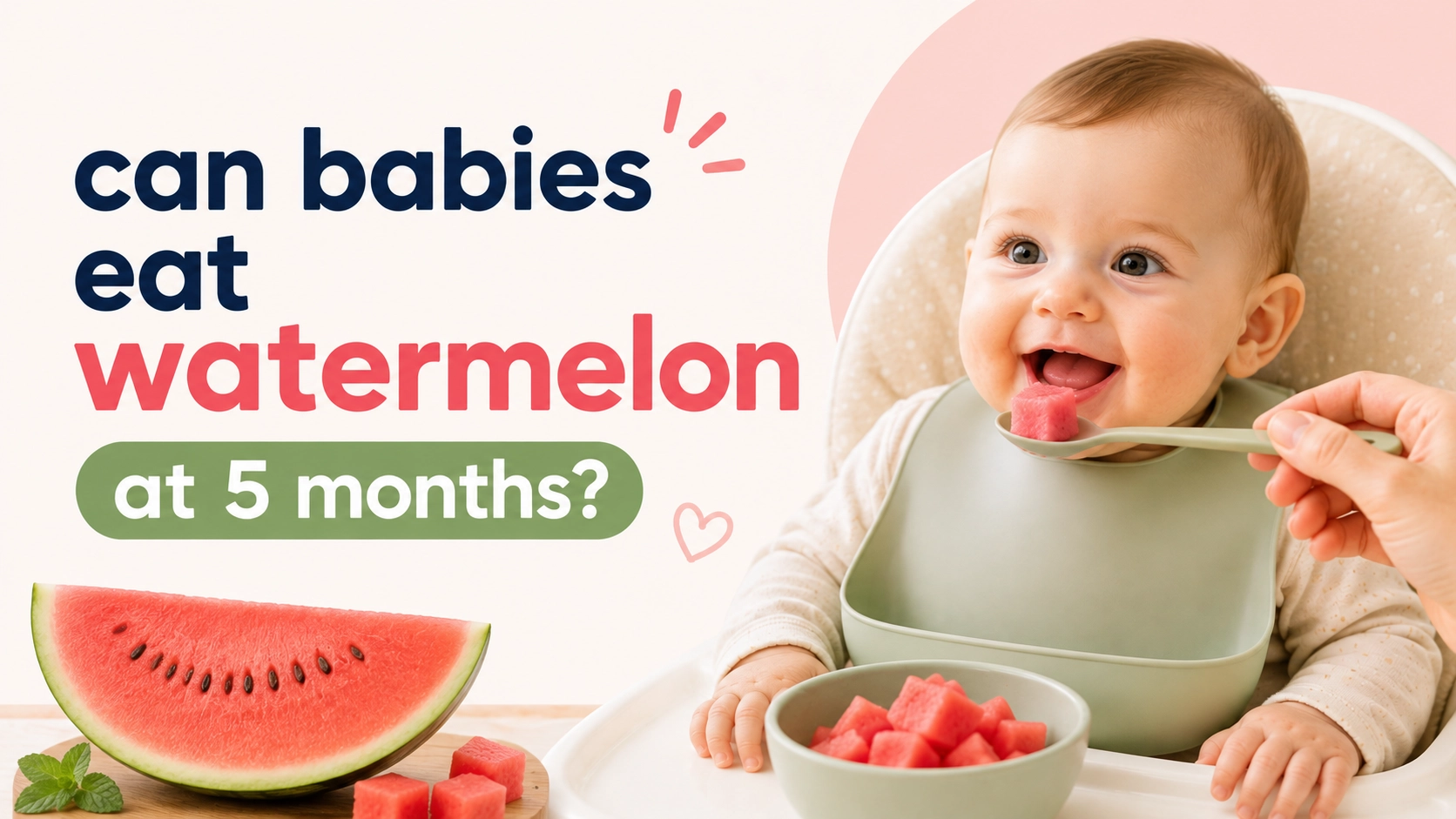
can babies eat watermelon at 5 months

By alisan
August 1, 2026 3 Min Read
0

No. Most babies should not eat watermelon at 5 months because pediatric experts recommend introducing solid foods around 6 months of age, when babies show developmental readiness. Although watermelon is a healthy and hydrating fruit, waiting until your baby is ready for solids is the safest choice.

Once your baby reaches around 6 months of age and shows signs of readiness, watermelon can be introduced in age-appropriate forms. Until then, breast milk or infant formula should remain your baby’s only source of nutrition unless your pediatrician advises otherwise.

Why Shouldn’t a 5-Month-Old Eat Watermelon?

Contents hide
1 Why Shouldn’t a 5-Month-Old Eat Watermelon?
2 Signs Your Baby Is Ready for Solid Foods
3 When Can Babies Safely Eat Watermelon?
4 Nutritional Benefits of Watermelon
5 How to Serve Watermelon Safely
6 Can Watermelon Cause Choking?
7 Can Babies Be Allergic to Watermelon?
8 How Much Watermelon Can a Baby Eat?
9 Final Answer
10 Frequently Asked
11 Common Questions

At 5 months, many babies are still developing the oral and motor skills needed to safely eat solid foods. Introducing solids too early may increase the risk of choking and digestive discomfort, while also replacing valuable nutrition from breast milk or formula.

Most health organizations recommend waiting until babies show developmental readiness before offering any solid foods.

Signs Your Baby Is Ready for Solid Foods

Rather than focusing only on age, look for these important developmental signs:

  • Sits upright with support.
  • Holds their head and neck steady.
  • Shows interest in food.
  • Opens their mouth when food is offered.
  • Can move food to the back of the mouth instead of pushing it out with the tongue.

Most babies develop these skills around 6 months of age.

When Can Babies Safely Eat Watermelon?

Most babies can safely try watermelon at around 6 months, once they are ready for solid foods.

Watermelon is:

  • Naturally sweet.
  • Rich in water.
  • Soft when ripe.
  • A good source of vitamin C and vitamin A.
  • Easy to prepare.

Because of its high water content, watermelon can be a refreshing fruit during warm weather, but it should always be served in a safe texture appropriate for your baby’s age.

Nutritional Benefits of Watermelon

Watermelon provides several nutrients that support healthy growth.

These include:

  • Vitamin C, which supports the immune system.
  • Vitamin A, important for healthy vision and skin.
  • Potassium, which helps muscles and nerves function properly.
  • Antioxidants, including lycopene, which help protect cells.
  • Plenty of water to support hydration alongside regular milk feeds.

Although nutritious, watermelon should be part of a varied diet rather than the main source of nutrition.

How to Serve Watermelon Safely

Once your baby is around 6 months and ready for solids, prepare watermelon carefully.

For spoon-feeding:

  • Mash or puree ripe seedless watermelon.
  • Remove all seeds completely.
  • Serve small amounts at first.

For baby-led weaning (BLW):

  • Offer large, soft seedless slices that your baby can hold.
  • Remove the rind.
  • Ensure the fruit is very ripe and soft enough to mash easily between your fingers.

Always supervise your baby while eating.

Can Watermelon Cause Choking?

Yes. While watermelon is naturally soft, improperly prepared pieces can still become a choking hazard.

To reduce the risk:

  • Remove all seeds.
  • Avoid firm cubes for beginners.
  • Serve soft, age-appropriate pieces.
  • Never leave your baby unattended during meals.

Remember that choking risk depends more on the size and shape of the food than on whether it is soft.

Can Babies Be Allergic to Watermelon?

Watermelon allergy is uncommon but possible.

Watch for symptoms such as:

  • Hives
  • Swelling of the lips or face
  • Vomiting
  • Wheezing
  • Difficulty breathing

Seek immediate medical attention if your baby experiences severe allergic symptoms.

How Much Watermelon Can a Baby Eat?

When introducing watermelon for the first time:

  • Start with 1–2 teaspoons of mashed watermelon or one small soft slice if following baby-led weaning.
  • Wait a day or two before introducing another new food if you want to monitor for any reactions.
  • Gradually increase the amount as your baby becomes more comfortable eating solids.

Breast milk or formula should still provide most of your baby’s nutrition during the first year.

Final Answer

No. Most babies should not eat watermelon at 5 months because pediatric experts recommend introducing solid foods around 6 months of age, when babies show developmental readiness. Once your baby reaches about 6 months and is ready for solids, ripe seedless watermelon can be introduced safely in age-appropriate portions. Start with small amounts, remove all seeds, supervise every meal, and continue making breast milk or formula your baby’s primary source of nutrition while gradually expanding their diet.

Frequently Asked

Common Questions

While a tiny taste is unlikely to be harmful, babies at 5 months generally should not begin eating solid foods unless advised by their pediatrician. It is best to wait until your baby is developmentally ready, usually around 6 months.
Yes. Once babies are ready for solids, ripe watermelon is generally easy to digest because it is soft and contains a high amount of water.
Watermelon can be one of many healthy first fruits, but it should not be the very first food for every baby. Iron-rich foods are often recommended early in the complementary feeding journey.
No. Babies under 12 months should not be given fruit juice regularly. Whole fruit is a healthier option because it contains fiber and is less concentrated in natural sugars.

Author

alisan

Researcher in education, spychology, and data analysis with programming experience.

Follow Me
Other Articles
Previous

can babies eat rice?

Next

How Many Meals Should a 6 Month Old Have?

No Comment! Be the first one.

Leave a Reply Cancel reply

Your email address will not be published. Required fields are marked *

What is Did You Search?

The “Did You Search” website was created for all mothers and families. Just search to find all your needs about your children.

Links

  • about
  • contact
  • privacy policy
  • medical disclaimer
  • sitemap
Copyright 2026 — DidYouSearch. All rights reserved.