
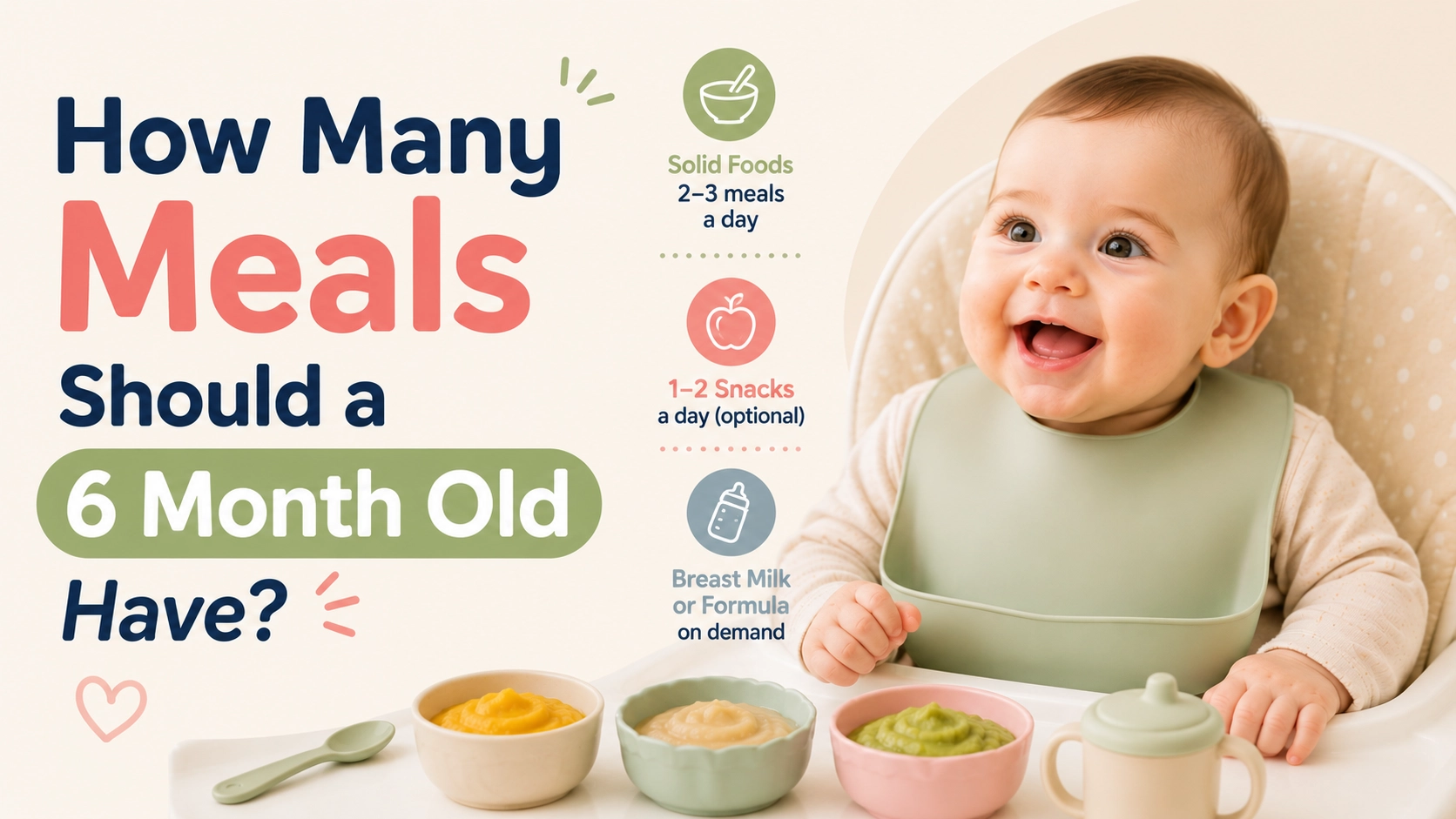
How Many Meals Should a 6 Month Old Have?

At 6 months of age, most babies should have 1–2 small meals of solid food per day, while breast milk or infant formula remains their primary source of nutrition. Solid foods at this stage are meant to introduce new tastes and textures, not replace milk feedings.
Every baby develops at a different pace, so some may be ready for two meals a day, while others are comfortable with just one. The key is to follow your baby’s hunger and fullness cues rather than focusing on a strict schedule.
How Much Should a 6-Month-Old Eat?
When first introducing solids, babies only need small amounts.
A typical serving size is:
- 1–2 tablespoons of food per meal when starting.
- Gradually increase the amount as your baby becomes more interested in eating.
- Let your baby decide when they have had enough.
Remember that breast milk or formula should continue to provide most of your baby’s calories during the first year.
Sample Feeding Schedule for a 6-Month-Old
A baby’s exact routine will vary, but a typical day might look like this:
| Time | Feeding |
|---|---|
| Morning | Breast milk or formula |
| Breakfast | Small solid meal |
| Midday | Breast milk or formula |
| Afternoon | Breast milk or formula |
| Dinner | Small solid meal (if baby is ready) |
| Evening | Breast milk or formula |
Many babies continue drinking milk 4–6 times per day at this age.
What Foods Should a 6-Month-Old Eat?
At 6 months, babies can begin trying a variety of nutrient-rich foods.
Good options include:
- Mashed bananas
- Avocado
- Sweet potatoes
- Carrots
- Oatmeal
- Iron-fortified infant cereal
- Yogurt (plain, full-fat)
- Eggs (well cooked)
- Lentils
- Pureed chicken or beef
Offering a wide variety of foods helps babies develop healthy eating habits and exposes them to different flavors and textures.
Why Iron Is Important at 6 Months
Around 6 months, babies begin using up the iron stores they were born with.
Because of this, many pediatricians recommend including iron-rich foods, such as:
- Iron-fortified cereals
- Beef
- Chicken
- Turkey
- Beans
- Lentils
- Eggs
Pairing iron-rich foods with fruits or vegetables that contain vitamin C can help improve iron absorption.
Should Babies Eat Three Meals a Day?
Usually not.
Most babies do not need three solid meals every day at exactly 6 months.
Many families gradually progress like this:
- Around 6 months: 1–2 meals daily
- Around 7–8 months: 2–3 meals daily
- Around 9–12 months: 3 meals plus healthy snacks as needed
Your baby’s appetite will naturally increase as they grow.
How Do You Know Your Baby Is Full?
Watch for signs that your baby has had enough, including:
- Turning their head away.
- Closing their mouth.
- Playing with the food instead of eating.
- Spitting food out.
- Becoming distracted or uninterested.
Avoid encouraging your baby to finish every bite. Responsive feeding helps babies learn to regulate their appetite.
Tips for Successful Mealtimes
To help your baby enjoy solids:
- Offer meals when your baby is alert and calm.
- Introduce one new food at a time.
- Allow your baby to explore different textures.
- Avoid adding sugar or salt.
- Always supervise your baby during meals.
- Be patient—some babies need multiple exposures before accepting a new food.
Final Answer
Most 6-month-old babies should have 1–2 small meals of solid food per day while continuing to receive breast milk or infant formula as their main source of nutrition. Start with small portions, introduce a variety of nutrient-rich foods—especially iron-rich options—and let your baby’s appetite guide how much they eat. As your baby grows, their solid food intake will naturally increase while milk remains an important part of their diet throughout the first year.
Frequently Asked
Common Questions