
Skip to content
DidYouSearch DidYouSearch
  • did you search?
  • Baby Plus+
    • Baby Activities
      • Arts & Crafts
      • Indoor Activities
      • Montessori
      • Music
      • Outdoor Activities
      • Reading
      • Sensory Play
      • Tummy Time
    • Baby Development
      • Brain Development
      • Cognitive Development
      • Emotional Development
      • Fine Motor Skills
      • Growth Milestones
      • Monthly Milestones
      • Motor Skills
      • Physical Development
      • Social Development
      • Speech Development
    • Baby Feeding
      • Allergies
      • Baby Led Weaning
      • Bottle Feeding
      • Breast feeding
        • Breastfeeding Diet
        • Breastfeeding Positions
        • Latch Problems
        • Low Milk Supply
        • Mastitis
        • Pumping Schedule
        • Weaning
      • Burping
      • Cluster Feeding
      • Feeding Schedule
      • Formula Feeding
        • Formula Amount
        • Formula Brands
        • Formula Comparison
        • Formula Preparation
        • Formula Storage
      • Hydration
      • Pumping
      • Solid Foods
    • Baby Gear Reviews
      • Best Baby Carrier
      • Best Baby Monitor
      • Best Baby Strollers
      • Best Bottles
      • Best Breast Pump
      • Best Car Seat
      • Best Cribs
      • Best Diapers
      • Best Formula
      • Best Toys
    • Baby Growth
      • Growth Spurts
      • Height Charts
      • Monthly Growth
      • Percentiles
      • Weight Charts
    • Baby Health
      • Allergies
      • Cold
      • Constipation
      • Cough
      • Diarrhea
      • Ear Infection
      • Fever
      • Flu
      • Pediatric Visits
      • Rashes
      • Teething
      • Vaccines
      • Vomiting
    • Baby Nutrition
      • Dairy
      • Drinks
      • Eggs
      • Fish
      • Fruits
      • Healthy Recipes
      • Meat
      • Snacks
      • Vegetables
      • Vitamins
    • Baby Products
      • Baby Carriers
      • Bassinets
      • Bottles
      • Breast Pumps
      • Car Seats
      • Cribs
      • Diaper Bags
      • High Chairs
      • Monitors
      • Strollers
      • Swings
      • Toys
      • Walkers
    • Baby Recipes
      • BLW Recipes
      • Breakfast
      • Dinner
      • Finger Foods
      • Lunch
      • Purees
      • Snacks
    • Baby Safety
      • Baby Proofing
      • Car Seats
      • Choking Hazards
      • CPR
      • Home Safety
      • Poison Prevention
      • Safe Sleep
      • Sun Protection
      • Water Safety
  • Baby Names
    • Boy Names
    • Girl Names
    • American baby boy names
    • American baby girl names
    • Biblical Names
    • Middle Names
    • Modern Names
    • Short Names
    • Unique Names
    • Unisex Names
  • Recommended
    • Baby Shopping
      • Baby Registry
      • Budget Baby Shopping
      • Hospital Bag
      • Must Have Products
      • Newborn Checklist
      • Nursery Ideas
    • Baby Sleep
      • Bedtime Routine
      • Co Sleeping
      • Crib Safety
      • Nap Schedules
      • Night Wakings
      • Sleep Environment
      • Sleep Products
      • Sleep Regression
      • Sleep Training
      • Wake Windows
      • White Noise
    • Childcare
      • Daycare
      • Babysitters
      • Kindergarten
      • Nannies
      • Preschool
    • Newborn Care
      • Nail Care
      • Baby Hygiene
      • Bathing
      • Crying
      • Diapering
      • Ear Care
      • Eye Care
      • Skin Care
      • Soothing Techniques
      • Temperature
      • Umbilical Cord
    • Special Needs
      • Premature Babies
      • Autism Signs
      • Developmental Delays
      • Down Syndrome
      • NICU
      • Twins
    • Seasonal Baby Care
      • Spring
      • Summer
      • Travel
      • Fall
      • Holidays
      • Winter
  • Parenting
    • Bonding
    • Discipline
    • Emotional Intelligence
    • First Time Parents
    • Gentle Parenting
    • Positive Parenting
    • Routines
    • Single Parents
    • Working Parents
  • Pregnancy
    • Pregnancy Complications
    • Labor & Delivery
    • Postpartum Recovery
    • Pregnancy Exercises
    • Pregnancy Medications
    • Pregnancy Nutrition
    • Pregnancy Sleep
    • Pregnancy Symptoms
    • Pregnancy Tests
    • Pregnancy Vitamins
    • Pregnancy Weeks
  • Toddler
    • Preschool
    • Speech
    • Tantrums
    • Toddler Food
    • Toddler Sleep
    • Behavior
    • Independence
    • Learning
    • Potty Training
  • Traveling with Baby
    • Road Trips
    • Beach
    • Camping
    • Flying
    • Hotels
    • Packing Lists
  • did you search?
  • Baby Plus+
    • Baby Activities
      • Arts & Crafts
      • Indoor Activities
      • Montessori
      • Music
      • Outdoor Activities
      • Reading
      • Sensory Play
      • Tummy Time
    • Baby Development
      • Brain Development
      • Cognitive Development
      • Emotional Development
      • Fine Motor Skills
      • Growth Milestones
      • Monthly Milestones
      • Motor Skills
      • Physical Development
      • Social Development
      • Speech Development
    • Baby Feeding
      • Allergies
      • Baby Led Weaning
      • Bottle Feeding
      • Breast feeding
        • Breastfeeding Diet
        • Breastfeeding Positions
        • Latch Problems
        • Low Milk Supply
        • Mastitis
        • Pumping Schedule
        • Weaning
      • Burping
      • Cluster Feeding
      • Feeding Schedule
      • Formula Feeding
        • Formula Amount
        • Formula Brands
        • Formula Comparison
        • Formula Preparation
        • Formula Storage
      • Hydration
      • Pumping
      • Solid Foods
    • Baby Gear Reviews
      • Best Baby Carrier
      • Best Baby Monitor
      • Best Baby Strollers
      • Best Bottles
      • Best Breast Pump
      • Best Car Seat
      • Best Cribs
      • Best Diapers
      • Best Formula
      • Best Toys
    • Baby Growth
      • Growth Spurts
      • Height Charts
      • Monthly Growth
      • Percentiles
      • Weight Charts
    • Baby Health
      • Allergies
      • Cold
      • Constipation
      • Cough
      • Diarrhea
      • Ear Infection
      • Fever
      • Flu
      • Pediatric Visits
      • Rashes
      • Teething
      • Vaccines
      • Vomiting
    • Baby Nutrition
      • Dairy
      • Drinks
      • Eggs
      • Fish
      • Fruits
      • Healthy Recipes
      • Meat
      • Snacks
      • Vegetables
      • Vitamins
    • Baby Products
      • Baby Carriers
      • Bassinets
      • Bottles
      • Breast Pumps
      • Car Seats
      • Cribs
      • Diaper Bags
      • High Chairs
      • Monitors
      • Strollers
      • Swings
      • Toys
      • Walkers
    • Baby Recipes
      • BLW Recipes
      • Breakfast
      • Dinner
      • Finger Foods
      • Lunch
      • Purees
      • Snacks
    • Baby Safety
      • Baby Proofing
      • Car Seats
      • Choking Hazards
      • CPR
      • Home Safety
      • Poison Prevention
      • Safe Sleep
      • Sun Protection
      • Water Safety
  • Baby Names
    • Boy Names
    • Girl Names
    • American baby boy names
    • American baby girl names
    • Biblical Names
    • Middle Names
    • Modern Names
    • Short Names
    • Unique Names
    • Unisex Names
  • Recommended
    • Baby Shopping
      • Baby Registry
      • Budget Baby Shopping
      • Hospital Bag
      • Must Have Products
      • Newborn Checklist
      • Nursery Ideas
    • Baby Sleep
      • Bedtime Routine
      • Co Sleeping
      • Crib Safety
      • Nap Schedules
      • Night Wakings
      • Sleep Environment
      • Sleep Products
      • Sleep Regression
      • Sleep Training
      • Wake Windows
      • White Noise
    • Childcare
      • Daycare
      • Babysitters
      • Kindergarten
      • Nannies
      • Preschool
    • Newborn Care
      • Nail Care
      • Baby Hygiene
      • Bathing
      • Crying
      • Diapering
      • Ear Care
      • Eye Care
      • Skin Care
      • Soothing Techniques
      • Temperature
      • Umbilical Cord
    • Special Needs
      • Premature Babies
      • Autism Signs
      • Developmental Delays
      • Down Syndrome
      • NICU
      • Twins
    • Seasonal Baby Care
      • Spring
      • Summer
      • Travel
      • Fall
      • Holidays
      • Winter
  • Parenting
    • Bonding
    • Discipline
    • Emotional Intelligence
    • First Time Parents
    • Gentle Parenting
    • Positive Parenting
    • Routines
    • Single Parents
    • Working Parents
  • Pregnancy
    • Pregnancy Complications
    • Labor & Delivery
    • Postpartum Recovery
    • Pregnancy Exercises
    • Pregnancy Medications
    • Pregnancy Nutrition
    • Pregnancy Sleep
    • Pregnancy Symptoms
    • Pregnancy Tests
    • Pregnancy Vitamins
    • Pregnancy Weeks
  • Toddler
    • Preschool
    • Speech
    • Tantrums
    • Toddler Food
    • Toddler Sleep
    • Behavior
    • Independence
    • Learning
    • Potty Training
  • Traveling with Baby
    • Road Trips
    • Beach
    • Camping
    • Flying
    • Hotels
    • Packing Lists
Close

Search

Home/Baby Development/When Do Babies Start Crawling on Their Hands and Knees?
Baby Development

When Do Babies Start Crawling on Their Hands and Knees?

By alisan
August 1, 2026 3 Min Read
0

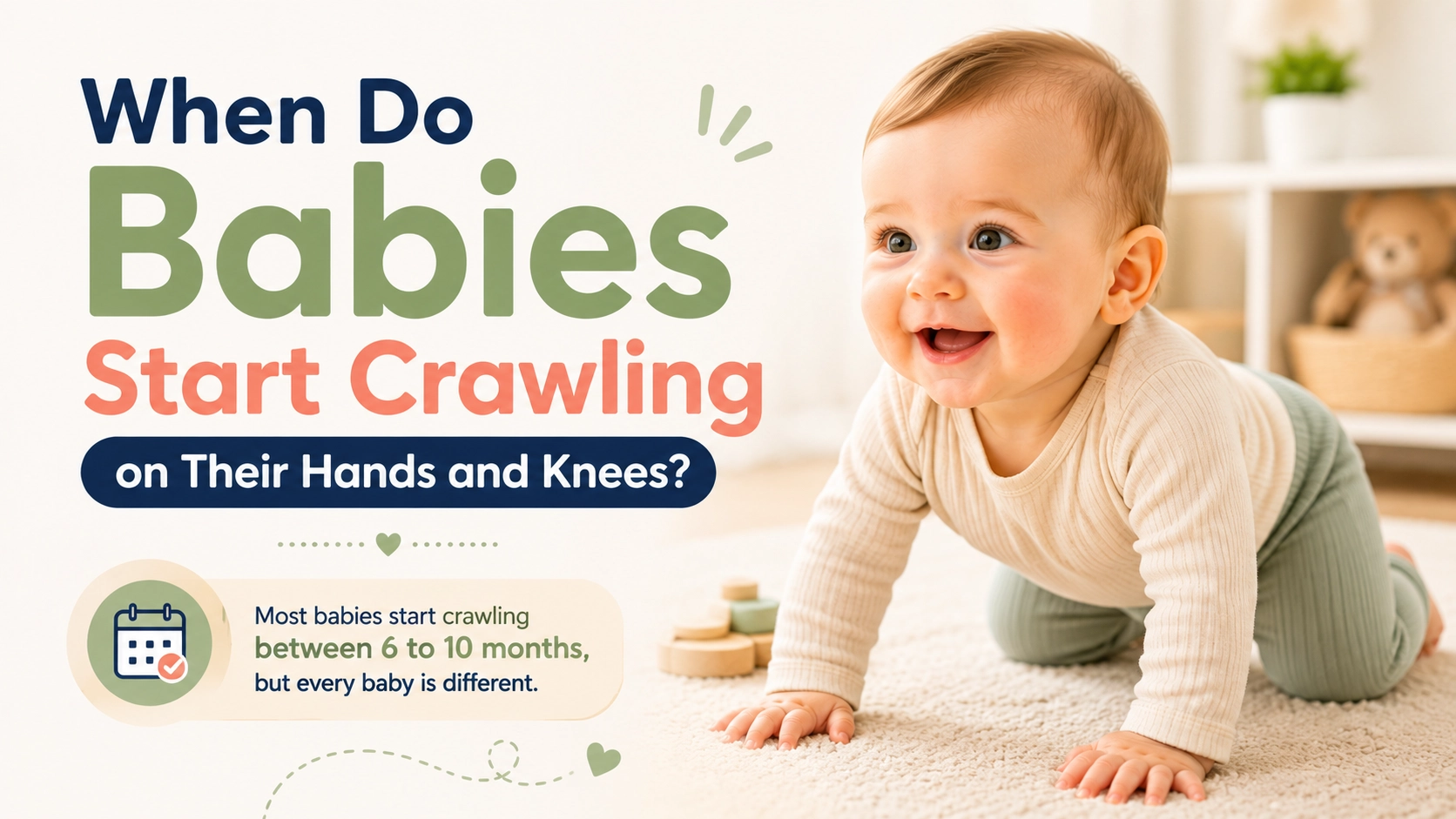
Most babies start crawling on their hands and knees between 7 and 10 months of age, although every child develops at their own pace. Some babies may begin crawling as early as 6 months, while others may not crawl until 11 or 12 months. It’s also perfectly normal for some babies to skip crawling altogether and move straight to pulling up, cruising, or walking.

Crawling is an exciting developmental milestone that helps babies build strength, coordination, balance, and confidence as they explore the world around them.

What Is Hands-and-Knees Crawling?

Contents hide
1 What Is Hands-and-Knees Crawling?
2 Signs Your Baby Is Ready to Crawl
3 Why Crawling Is Important
4 How to Encourage Crawling
5 What If My Baby Isn’t Crawling Yet?
6 When Should Parents Talk to a Pediatrician?
7 Tips to Support Healthy Motor Development
8 Final Answer
9 Frequently Asked
10 Common Questions

Hands-and-knees crawling, often called classic crawling, is when a baby moves forward by supporting their weight on both hands and knees while alternating opposite arms and legs.

Before reaching this stage, many babies practice other types of movement, including:

  • Rolling across the floor.
  • Scooting on their bottom.
  • Army crawling on their belly.
  • Rocking back and forth on hands and knees.
  • Pivoting in circles.

These movements help strengthen the muscles needed for traditional crawling.

Signs Your Baby Is Ready to Crawl

Before babies begin crawling, they usually develop several important skills.

Common signs include:

  • Rolling over in both directions.
  • Sitting without support.
  • Pushing up on their hands during tummy time.
  • Rocking back and forth on hands and knees.
  • Reaching for toys outside their immediate reach.
  • Bearing weight on their arms and legs.

These milestones often appear between 6 and 8 months.

Why Crawling Is Important

Crawling supports many areas of development beyond simply getting from one place to another.

Benefits include:

  • Strengthens muscles in the shoulders, arms, legs, and core.
  • Improves balance and coordination.
  • Develops bilateral coordination by using both sides of the body together.
  • Encourages problem-solving and spatial awareness.
  • Supports visual development by helping the eyes work together.
  • Promotes independence and confidence.

While crawling offers many developmental benefits, babies who skip crawling can still develop normally.

How to Encourage Crawling

Parents can help babies practice the skills needed for crawling through play.

Try these activities:

  • Give your baby plenty of supervised tummy time every day.
  • Place favorite toys just out of reach.
  • Let your baby play on a firm floor instead of spending long periods in swings or bouncers.
  • Encourage reaching, turning, and pivoting during play.
  • Get down on the floor and demonstrate crawling.

The more opportunities babies have to move freely, the stronger and more coordinated they become.

What If My Baby Isn’t Crawling Yet?

Not every baby follows the same timeline.

Some babies:

  • Crawl at 6 months.
  • Crawl closer to their first birthday.
  • Skip crawling completely.
  • Bottom shuffle instead of crawling.
  • Go directly from sitting to standing and walking.

A baby who skips crawling but continues meeting other developmental milestones may still be developing normally.

When Should Parents Talk to a Pediatrician?

Consider speaking with your pediatrician if your baby:

  • Is not attempting to move around by 12 months.
  • Cannot sit independently by around 9 months.
  • Uses only one side of the body consistently.
  • Appears unusually stiff or floppy.
  • Loses skills they previously had.

Early evaluation can help identify whether additional support is needed.

Tips to Support Healthy Motor Development

To encourage movement naturally:

  • Provide supervised tummy time every day.
  • Limit prolonged time in infant seats and swings.
  • Create a safe floor space for exploration.
  • Offer age-appropriate toys that motivate movement.
  • Celebrate your baby’s progress without comparing them to others.

Remember that every baby develops at their own pace.

Final Answer

Most babies begin crawling on their hands and knees between 7 and 10 months of age, although a normal range extends from about 6 to 12 months. Before traditional crawling, babies often roll, scoot, or belly crawl as they build the strength and coordination needed for independent movement. Plenty of tummy time, opportunities for floor play, and patient encouragement can help support this important developmental milestone.

Frequently Asked

Common Questions

Yes. Some babies begin crawling around 6 months, although this is earlier than average. Most start between 7 and 10 months.
Yes. Army crawling or belly crawling is a normal developmental stage that often comes before hands-and-knees crawling.
Yes. Some healthy babies never crawl on their hands and knees. Instead, they may scoot, bottom shuffle, or move directly toward standing and walking.
Yes. Regular tummy time strengthens the neck, shoulders, arms, back, and core muscles needed for crawling and other motor milestones.

Author

alisan

Researcher in education, spychology, and data analysis with programming experience.

Follow Me
Other Articles
Previous

How Many Meals Should a 6 Month Old Have?

Next

When Do Babies Start Sitting Up?

No Comment! Be the first one.

Leave a Reply Cancel reply

Your email address will not be published. Required fields are marked *

What is Did You Search?

The “Did You Search” website was created for all mothers and families. Just search to find all your needs about your children.

Links

  • about
  • contact
  • privacy policy
  • medical disclaimer
  • sitemap
Copyright 2026 — DidYouSearch. All rights reserved.