
If you’re wondering “am I pregnant?”, you’re probably scanning your body for clues before you can even take a test. The good news is that many early pregnancy symptoms can show up days before your missed period, thanks to the hormonal shifts that begin right after implantation. The tricky part? A lot of these signs look almost identical to PMS, so it’s not always easy to tell the difference. Here’s what to watch for, and when to actually test.
A Missed Period
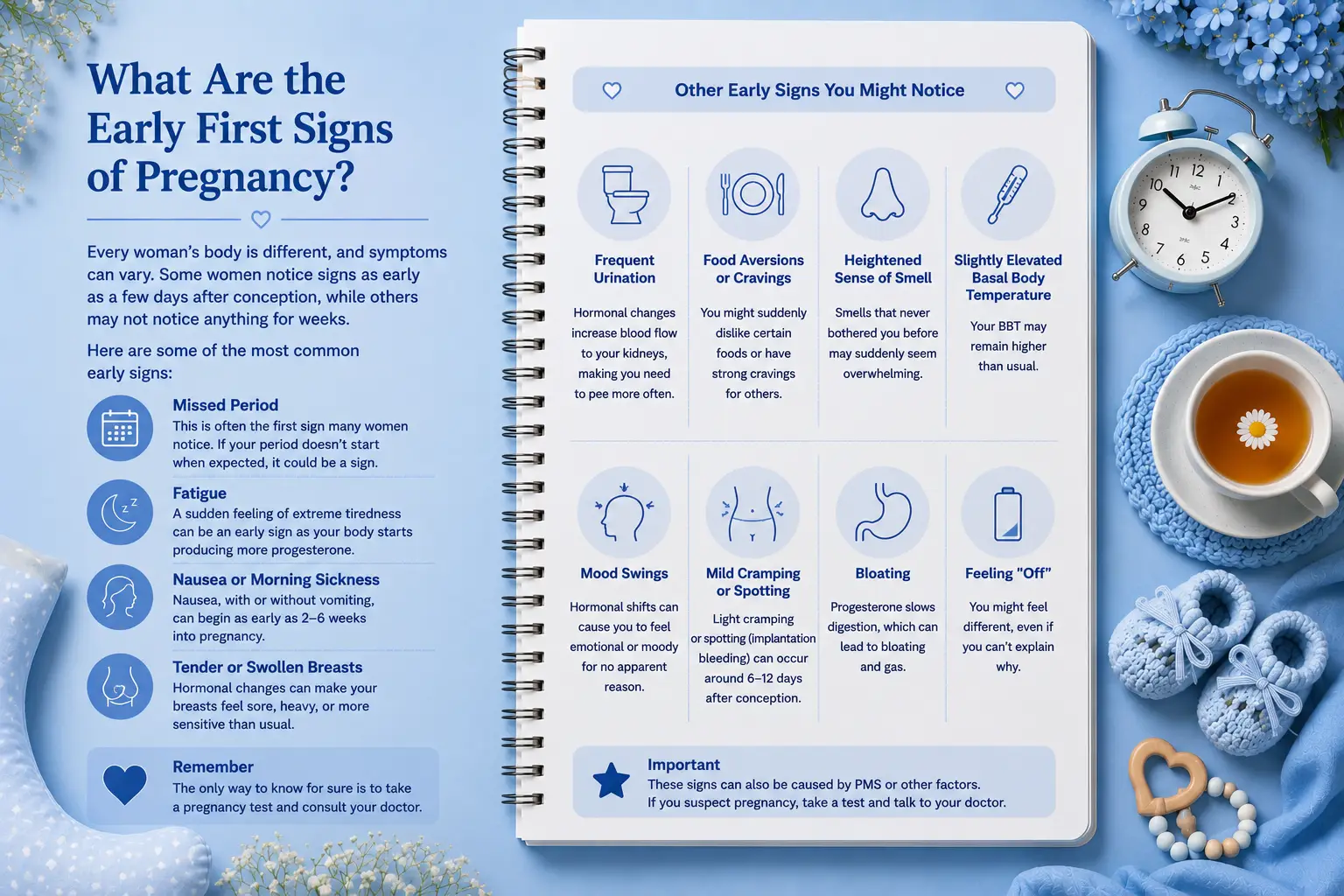
This is still the most well-known early pregnancy symptom, and for good reason. If your cycle is usually regular and your period doesn’t show up on time, pregnancy is one of the first things worth ruling out. That said, a late or missed period can also be caused by stress, illness, weight changes, or an irregular cycle, so it isn’t proof on its own.
Implantation Bleeding and Cramping
Around 6 to 12 days after ovulation, the fertilized egg implants itself in the uterine lining. This can cause light spotting, often pink or brown, along with mild cramping. Implantation bleeding is usually much lighter than a period, lasting only a day or two and producing far less blood than a normal flow. The cramps tend to be brief and milder than typical period cramps, though the timing can make it easy to mistake for the start of your period.
Sore, Swollen, or Tingly Breasts
Rising hormone levels, particularly progesterone and estrogen, can make your breasts feel tender, heavier, or more sensitive than usual — sometimes even before you’d expect PMS symptoms to hit. Some women also notice their areolas darkening slightly. Breast soreness related to pregnancy tends to feel more persistent than typical premenstrual tenderness, and it usually doesn’t ease up the way PMS-related soreness does once your period starts.
Fatigue
Feeling unusually exhausted, even after a full night’s sleep, is one of the earliest and most common pregnancy symptoms. It’s driven largely by a rapid rise in progesterone, along with the extra energy your body is putting toward supporting early development. This kind of fatigue can start within the first couple of weeks after conception.
Nausea (With or Without “Morning” Sickness)
Despite the name, pregnancy-related nausea can strike at any time of day. It typically shows up around four to six weeks into pregnancy, but some women notice queasiness as early as a week or so after conception. It’s often linked to rising hCG and estrogen levels, and it can be triggered or worsened by certain smells.
Heightened Sense of Smell
Speaking of smells — an unusually strong reaction to odors is a frequently reported early pregnancy sign. Scents that never bothered you before, like coffee, certain foods, or perfume, can suddenly feel overwhelming or nauseating. This heightened sensitivity is thought to be tied to the hormonal changes happening after implantation.
Frequent Urination
Needing to pee more often can start well before your period is due. Early pregnancy increases blood flow to the kidneys, which means your bladder fills up faster than usual. This symptom tends to become more noticeable as pregnancy progresses, but many women report it in the first few weeks too.
Mood Swings
Hormonal shifts don’t just affect your body, they affect your mood too. Feeling unusually weepy, irritable, or emotionally up and down is common in early pregnancy, and it can feel more intense than typical PMS mood changes.
Bloating and Constipation
Progesterone relaxes smooth muscle throughout the body, including in your digestive tract. That can slow digestion down, leading to bloating, gas, or constipation, symptoms that are often mistaken for an approaching period.
Food Cravings or Aversions
Sudden strong cravings, or a sudden distaste for foods you normally enjoy, are commonly reported in the first few weeks of pregnancy. Like many early symptoms, this is linked to shifting hormone levels and heightened sense of smell and taste.
Other Symptoms Some Women Notice
A few less common but still reported early signs include a faster resting heart rate, headaches, dizziness or lightheadedness, and even a strange metallic taste in the mouth. None of these are exclusive to pregnancy, but taken together with other symptoms, they can add to the picture.
When Should You Take a Pregnancy Test?
Timing matters. Home pregnancy tests work by detecting hCG (human chorionic gonadotropin), a hormone that rises rapidly after implantation. However, it typically takes three to four weeks from the first day of your last period for hCG levels to be high enough for a reliable result.
A few tips for accurate testing:
Wait until after your missed period whenever possible. Testing too early increases the risk of a false negative.
Use first-morning urine, since hCG is most concentrated at that time of day.
Follow the instructions exactly, since sensitivity varies by brand.
If it’s negative but your period still doesn’t arrive, wait a few days and test again.
If you get a positive result, it’s a good idea to contact a healthcare provider soon after. Early prenatal care plays an important role in supporting a healthy pregnancy.
The Bottom Line
Early pregnancy symptoms and PMS symptoms overlap so much that it’s genuinely hard to tell them apart just by how you feel. Sore breasts, fatigue, mood swings, and bloating can mean either one. If you’re trying to conceive and notice several of these signs together, especially implantation bleeding, ongoing nausea, or a missed period, a pregnancy test is the only reliable way to know for sure. And remember, plenty of women become pregnant without noticing any early symptoms at all, so the absence of signs doesn’t rule it out either.
FAQ
How soon can early pregnancy symptoms start?
Some symptoms, like fatigue, sore breasts, or implantation bleeding, can begin as early as 6 to 12 days after conception, which is often before your period is even due.
Can you feel pregnant a few days after conception?
It’s uncommon to feel definitive symptoms just days after conception, since it takes time for hCG and other hormones to rise. Some women do notice subtle changes like tiredness or breast tenderness within the first week or two, though.
What’s the difference between implantation bleeding and a period?
Implantation bleeding is typically much lighter than a period, lasting only a day or two and appearing pink or brown rather than the brighter red, heavier flow of menstrual bleeding.
How early can a pregnancy test detect pregnancy?
Most home tests are most reliable starting the day after a missed period. Some sensitive tests claim to detect pregnancy a few days earlier, but results before a missed period carry a higher risk of a false negative.
Can you have pregnancy symptoms and still not be pregnant?
Yes. Many early pregnancy symptoms, including sore breasts, fatigue, bloating, and mood swings, closely mirror PMS symptoms. A pregnancy test is the only way to confirm pregnancy with confidence.