
Early pregnancy, roughly the first trimester, or weeks 1 through 12, is a period of rapid change. Your body is adjusting to a flood of new hormones while your baby develops at an astonishing pace, from a fertilized egg to a fully formed fetus with working organs. Some of what happens during this stage is felt (nausea, fatigue, mood swings), some of it is invisible (hormonal shifts, fetal development), and some of it, while less common, is worth knowing about in case it happens to you. Here’s a full picture of what can occur during early pregnancy.
Hormonal Changes Driving Everything Else
Almost everything that happens in early pregnancy traces back to two hormones: hCG (human chorionic gonadotropin) and progesterone. hCG is the hormone that triggers a positive pregnancy test and helps form the amniotic sac, while progesterone thickens and strengthens the uterine lining to keep the pregnancy stable. Estrogen rises too, supporting the placenta and contributing to many of the physical symptoms people notice. These hormonal shifts begin almost immediately after implantation, which is why symptoms can start well before a missed period.
Physical Symptoms You Might Experience
Missed period. Often the first clear signal, though it can be misleading for anyone with an irregular cycle.
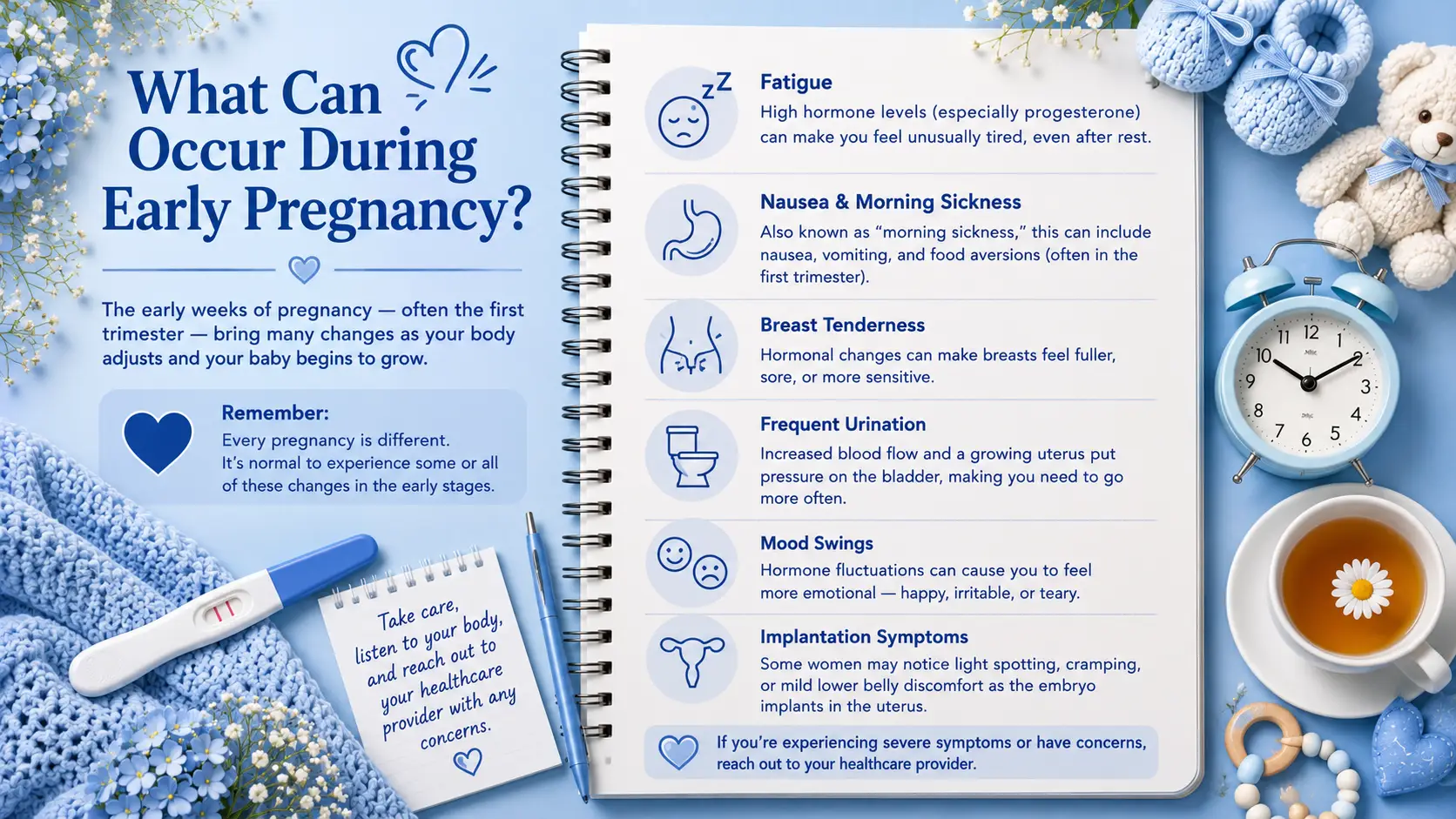
Nausea and vomiting. Commonly called morning sickness, though it can strike at any hour. It typically begins one to two months after conception and affects a large majority of pregnant people, though it doesn’t happen to everyone and its absence doesn’t mean anything is wrong.
Tender, swollen breasts. Hormonal changes make breast tissue more sensitive early on. This usually eases somewhat after the first few weeks as your body adjusts.
Fatigue. A rapid rise in progesterone, combined with the physical demands of early development, can leave you feeling drained even with adequate sleep.
Frequent urination. Increased blood flow to the kidneys means your bladder fills up faster.
Bloating and constipation. Progesterone relaxes smooth muscle in the digestive tract, which can slow digestion and cause a bloated, heavy feeling similar to premenstrual bloating.
Light spotting or implantation bleeding. This can happen about 10 to 14 days after conception, when the fertilized egg attaches to the uterine lining. It’s typically much lighter than a period.
Food cravings and aversions. Sudden strong preferences, or sudden distaste for familiar foods, are common and linked to hormonal and sensory changes.
Congestion. Rising hormone levels and blood volume can dry out and swell the nasal membranes, leading to a stuffy or occasionally bleeding nose.
Skin changes. Some people notice clearer, glowing skin; others develop more breakouts. Both are driven by the same hormonal surge.
Mood swings. The combination of new hormones and the emotional weight of early pregnancy can bring on mood changes ranging from weepiness to irritability.
What’s Happening With Fetal Development
While you’re navigating symptoms, significant development is happening on the other side too. After conception, the fertilized egg travels through the fallopian tube and implants in the uterine lining about a week later. From there, the amniotic sac and placenta begin forming, and the neural tube, which will become the brain and spinal cord, starts to develop. By around week 5, the heart begins beating. By week 12, the end of the first trimester, most vital organs are beginning to function, and the fetus has developed recognizable limbs and features. This is also why taking a prenatal vitamin with folic acid early on matters so much, since neural tube development happens so early, often before many people know they’re pregnant.
Symptom Timing Varies Widely
There’s no single timeline that applies to everyone. Research has found that most women notice some symptoms by weeks 5 or 6, a majority by week 6, and the large majority by week 8. Some people feel symptoms within a week or two of conception; others don’t notice anything until their period is clearly late, or even later than that. It’s also entirely possible to have a completely symptom-free early pregnancy and go on to have a healthy outcome, so a lack of symptoms isn’t a red flag on its own.
Less Common but Important Things That Can Occur
Most early pregnancy experiences are uneventful, but a few things are worth knowing about:
Hyperemesis gravidarum. A more severe form of morning sickness involving persistent vomiting that prevents keeping down food or fluids. It affects a small percentage of pregnant people and usually requires medical treatment.
Ectopic pregnancy. When the fertilized egg implants outside the uterus, most often in a fallopian tube. This requires prompt medical attention, so sharp one-sided pain, heavy bleeding, or dizziness alongside early pregnancy symptoms should be evaluated right away.
Miscarriage. Early pregnancy loss is more common than many people realize, and heavier bleeding with cramping should always be discussed with a healthcare provider.
Cryptic pregnancy. In rare cases, someone experiences little to no symptoms at all and may not realize they’re pregnant until much later.
None of these are meant to alarm you, most early pregnancies proceed without complications, but knowing the warning signs (severe pain, heavy bleeding, fainting, or an inability to keep any food or water down) means you’ll know when it’s time to call a doctor rather than wait it out.
When to See a Healthcare Provider
If you get a positive pregnancy test, it’s worth scheduling a first prenatal visit soon after. Early prenatal care allows your provider to confirm the pregnancy, estimate your due date, check for any early complications, and get you started on the right vitamins and screenings. You should also reach out promptly if you experience severe abdominal pain, heavy bleeding, high fever, or symptoms of hyperemesis gravidarum.
FAQ
What is considered “early pregnancy”?
Early pregnancy generally refers to the first trimester, spanning conception through about week 12.
What are the most common things that happen in early pregnancy?
The most frequently reported experiences are a missed period, breast tenderness, fatigue, nausea, frequent urination, and mood swings, all driven by rising hCG and progesterone.
Is it normal to have no symptoms in early pregnancy?
Yes. Some people have a completely symptom-free first trimester and go on to have a perfectly healthy pregnancy. Symptoms aren’t a reliable indicator of how the pregnancy is progressing.
When does the baby’s heart start beating?
The heart typically begins beating around week 5, and by week 12 most major organs have begun forming and functioning.
What early pregnancy symptoms should prompt a call to the doctor?
Severe abdominal pain, heavy bleeding, persistent vomiting that prevents keeping down food or liquids, fainting, or fever should all be evaluated promptly rather than assumed to be a normal part of early pregnancy.