
Pregnancy symptoms don’t show up all at once, they build gradually as hormone levels rise and your body adapts to supporting a developing baby. While every pregnancy is different, there are patterns most people experience at roughly the same points along the way. Here’s a week-by-week look at what tends to happen, especially through the symptom-heavy first trimester, plus what shifts in the months after.
Week 1–2: Not Technically Pregnant Yet
This might come as a surprise, but pregnancy is typically counted from the first day of your last menstrual period, not from conception. That means during weeks 1 and 2, you’re not actually pregnant yet, ovulation and conception haven’t happened. There are no pregnancy symptoms to speak of during this window; your body is simply preparing for ovulation.
Week 3: Conception Happens
Fertilization occurs around this time, but it’s still far too early for symptoms. hCG hasn’t built up in your system yet, so even sensitive pregnancy tests won’t detect anything. Some people report very subtle signs like mild cramping or bloating, but most feel nothing unusual.
Week 4: Implantation and the First Real Symptoms
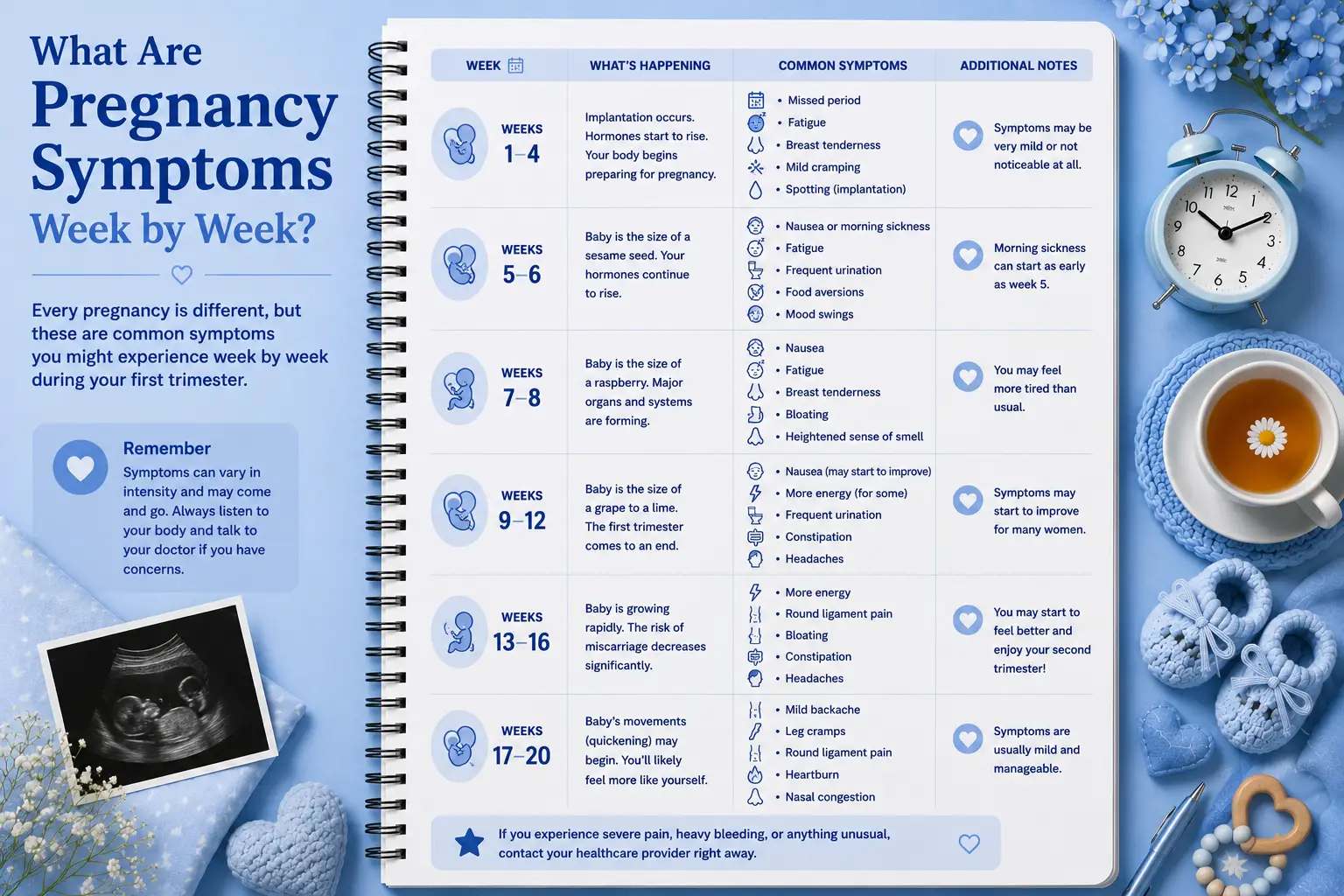
This is when the fertilized egg implants into the uterine lining, and it’s often the first point where symptoms can start. Some people notice light implantation spotting, mild cramping, breast tenderness, or fatigue. hCG begins rising, which means an early pregnancy test could show a faint positive around now, though many people don’t test this early.
Weeks 5–6: Symptoms Start Ramping Up
By week 5, your baby’s heart begins beating, and your body is producing hCG and progesterone at increasing rates. This is when classic early pregnancy symptoms tend to intensify: nausea (with or without vomiting), sore and swollen breasts, fatigue that feels different from normal tiredness, and more frequent urination. Research shows most people notice some symptoms by this point, and many take their first pregnancy test around now after a missed period.
Weeks 7–8: Morning Sickness Peaks for Many
Morning sickness (despite the name, it can strike any time of day) often intensifies here. You might also notice heightened sensitivity to smells, food aversions or cravings, mood swings, and bloating. Constipation can also creep in as digestion slows down. By this stage, the large majority of pregnant people have noticed at least some symptoms.
Weeks 9–10: Physical Changes Continue
Fatigue and nausea often remain prominent, though everyone’s timeline varies. Your baby is now developing distinct features, fingers, toes, and facial structure, and by week 10 is typically referred to as a fetus rather than an embryo. You may also start noticing subtler symptoms like a heightened sense of smell, occasional headaches, or skin changes as hormone levels stay elevated.
Weeks 11–12: Approaching the End of the First Trimester
Many people start to feel a slight easing of nausea as they approach the 12-week mark, though this varies widely and some people feel sick well beyond it. Dizziness can appear here too, largely due to progesterone’s effect on blood vessels. Bloating, breast tenderness, and fatigue often persist. By the end of week 12, most of your baby’s organs have begun forming and functioning, which is a major milestone.
Weeks 13–27: The Second Trimester Shift
For many people, the second trimester brings welcome relief. Nausea and extreme fatigue often ease up as hormone levels stabilize, and energy tends to improve. New symptoms can appear instead, like a visibly growing belly, round ligament pain, back discomfort, and the first noticeable fetal movements (often called quickening), usually somewhere between weeks 16 and 25.
Weeks 28–40: The Third Trimester
As your due date approaches, symptoms shift again. Common experiences include increased back pain, swelling in the hands and feet, shortness of breath as the uterus pushes against the diaphragm, frequent urination returning as the baby drops lower, and Braxton Hicks contractions, mild practice tightenings that aren’t true labor. Trouble sleeping and heartburn also become more common in the final stretch.
Why Symptom Timing Varies So Much
It’s worth remembering that no two pregnancies follow the exact same script. Some people feel strong symptoms within a week or two of conception; others don’t notice much until well after a missed period, or never experience certain symptoms at all. Neither extreme is a sign that anything is wrong. If you’re closely tracking pregnancy symptoms week by week, treat this timeline as a general guide rather than a strict checklist.
When to Contact a Healthcare Provider
Regardless of the week, certain symptoms warrant a call to your provider rather than waiting it out: heavy bleeding, severe abdominal pain, persistent vomiting that prevents you from keeping down food or fluids, high fever, or sudden severe swelling and headaches (especially later in pregnancy). Routine prenatal visits are also the best way to track your baby’s development and catch anything that needs attention early.
FAQ
When do pregnancy symptoms usually start?
Most people begin noticing symptoms between weeks 4 and 6, though some feel changes as early as implantation around week 4, and others don’t notice anything until later.
What week is morning sickness the worst?
Nausea often peaks between weeks 7 and 9, though it can start earlier or later and typically improves by the end of the first trimester for many people.
Can you have pregnancy symptoms one week after conception?
It’s uncommon but possible. Implantation typically happens about a week after conception, and some people notice mild cramping, spotting, or fatigue right around that time.
Do pregnancy symptoms change each trimester?
Yes. First-trimester symptoms tend to center on nausea, fatigue, and breast tenderness; the second trimester often brings relief along with a growing belly and first fetal movements; the third trimester adds back pain, swelling, and Braxton Hicks contractions.
Is it normal to have no pregnancy symptoms at certain weeks?
Yes, symptom intensity naturally fluctuates, and some weeks may feel symptom-free even in an otherwise typical pregnancy. A lack of symptoms during any given week isn’t usually a cause for concern on its own.