
Short answer: yes, it’s possible, though not guaranteed. Implantation, when the fertilized egg attaches to the uterine lining, typically happens 6 to 12 days after ovulation, which is often several days before your period would even be due. Once implantation occurs, hCG and progesterone start rising, and for some people, that’s enough to trigger noticeable symptoms before a missed period ever shows up. For others, nothing feels different until well after that point, or at all. Here’s what’s actually going on, and how to make sense of what you’re feeling.
Why Symptoms Can Start This Early
A missed period is usually thought of as the first sign of pregnancy, but it’s really just the first sign your body can’t hide. Hormonally, things start shifting earlier than that. After implantation, hCG (the hormone pregnancy tests detect) begins climbing, and progesterone rises to help maintain the uterine lining. These hormonal changes are what drive most early pregnancy symptoms, and they can begin before your period is even late.
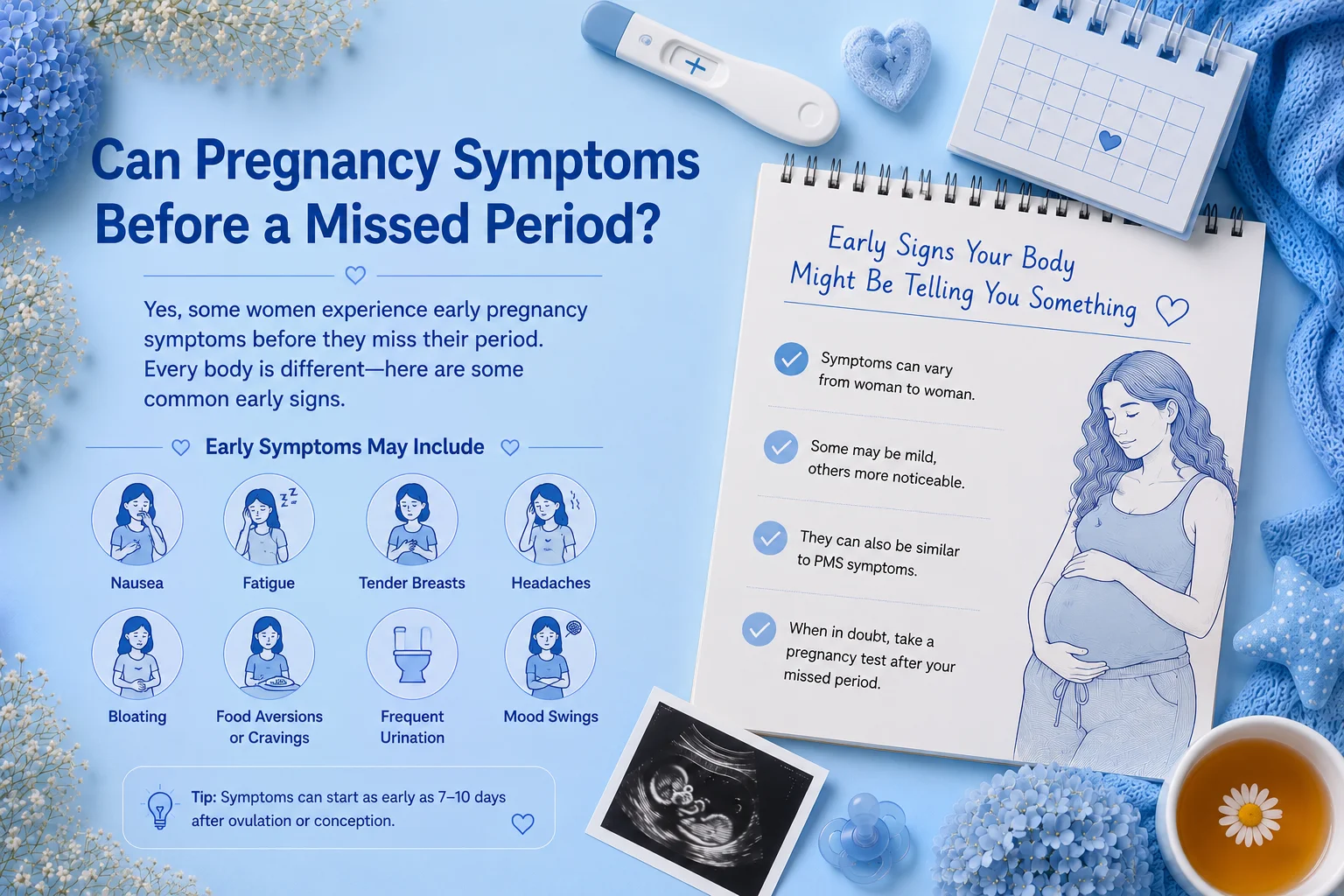
Symptoms People Report Before a Missed Period
Implantation bleeding or spotting. Light pink or brown spotting, much lighter than a period, can occur around the time of implantation, roughly a week to ten days after ovulation.
Mild cramping. Some people notice brief, light cramping around implantation. It tends to be milder and shorter-lived than period cramps.
Breast tenderness or swelling. Hormonal changes can make breasts feel sore, heavy, or unusually sensitive, sometimes with darkening areolas, before you’d expect PMS-related tenderness.
Fatigue. A rapid rise in progesterone can bring on noticeable tiredness within the first couple of weeks after conception.
Heightened sense of smell. Some people notice smells that never bothered them before suddenly feel overwhelming or nauseating.
Nausea. Less common this early, but a subset of people report queasiness within a week or two of conception, well before typical “morning sickness” timing.
Frequent urination. Increased blood flow to the kidneys can start ramping up bathroom trips earlier than expected.
Mood swings. Hormonal shifts can bring on emotional ups and downs that feel more intense or unfamiliar than typical premenstrual mood changes.
Bloating. Progesterone slows digestion, which can lead to a bloated or “off” feeling similar to premenstrual bloating.
The Real Challenge: These Symptoms Mimic PMS
Here’s the catch: almost every symptom on that list can also happen with regular PMS. Sore breasts, fatigue, mood swings, cramping, and bloating are all common in the days before a period, pregnant or not. That overlap is exactly why so many people search “am I pregnant or is my period coming” in the days before their period is due.
A few subtle differences can offer clues, though none are definitive:
Timing. PMS symptoms typically show up one to two weeks before your period and fade once bleeding starts. Pregnancy symptoms tend to persist and often intensify rather than resolve.
Nausea. Queasiness isn’t a typical PMS symptom, so persistent nausea, especially paired with other signs, leans more toward pregnancy.
Bleeding pattern. Implantation spotting is usually much lighter and shorter than a period, lacking the heavier flow and cramping most people associate with menstruation.
Intensity. Some people describe pregnancy-related breast tenderness or fatigue as noticeably more intense than what they usually experience with PMS.
Even so, none of these differences are reliable enough to self-diagnose. Symptoms alone can’t confirm or rule out pregnancy.
When Can You Actually Test?
This is where timing matters most. Home pregnancy tests detect hCG, and levels are usually still too low to register reliably until around the time of a missed period. Testing before that point increases your risk of a false negative, a negative result even though you are pregnant, simply because there isn’t enough hCG in your system yet.
If you want to test early:
Use first-morning urine, when hCG is most concentrated.
Consider a sensitive early-detection test, though even these aren’t fully reliable before a missed period.
If negative but your period doesn’t arrive, wait a few days and test again.
A blood test at a doctor’s office can sometimes detect pregnancy a few days earlier than a home urine test.
The Bottom Line
Yes, pregnancy symptoms can start before a missed period for some people, driven by hormonal changes that begin right after implantation. But because these early signs overlap so heavily with PMS, symptoms alone aren’t a reliable way to know either way. If you’re trying to conceive and notice several of these signs together, the most accurate next step is simply to wait for your missed period (or a few days past it) and take a test.
FAQ
How many days before a missed period can pregnancy symptoms start?
Some people notice symptoms as early as 6 to 12 days after ovulation, around the time of implantation, which can be several days to about a week before a period would be due.
What is the earliest pregnancy symptom?
Implantation bleeding, mild cramping, and breast tenderness are among the earliest reported symptoms, often appearing before fatigue or nausea set in.
Can you feel pregnant a few days after conception?
It’s uncommon to feel strong symptoms just days after conception, since implantation hasn’t yet occurred. Any early sensations tend to be very subtle, like mild bloating or fatigue.
How can I tell if it’s PMS or early pregnancy?
There’s no fully reliable way to tell from symptoms alone, since PMS and early pregnancy share many of the same signs. Nausea and symptoms that persist past when your period was due lean more toward pregnancy, but a test is the only way to know for sure.
Will a pregnancy test work before my missed period?
It can, but reliability is lower. hCG levels are typically too low to detect accurately until around your missed period, so testing earlier raises the chance of a false negative even if you are pregnant.