
If you’re newly pregnant, or wondering if you might be, “morning sickness” is probably one of the first things that comes to mind, and one of the hardest to picture until you’ve actually felt it. Despite the name, it isn’t a single, tidy feeling of nausea in the morning. People describe it in a lot of different ways: like seasickness, like a hangover that won’t quit, like something’s stuck in your throat, or like hunger pangs that never quite resolve. Here’s what it actually feels like, why it happens, and when it’s worth calling your doctor.
The Basic Feeling: Nausea That Comes and Goes (Or Doesn’t)
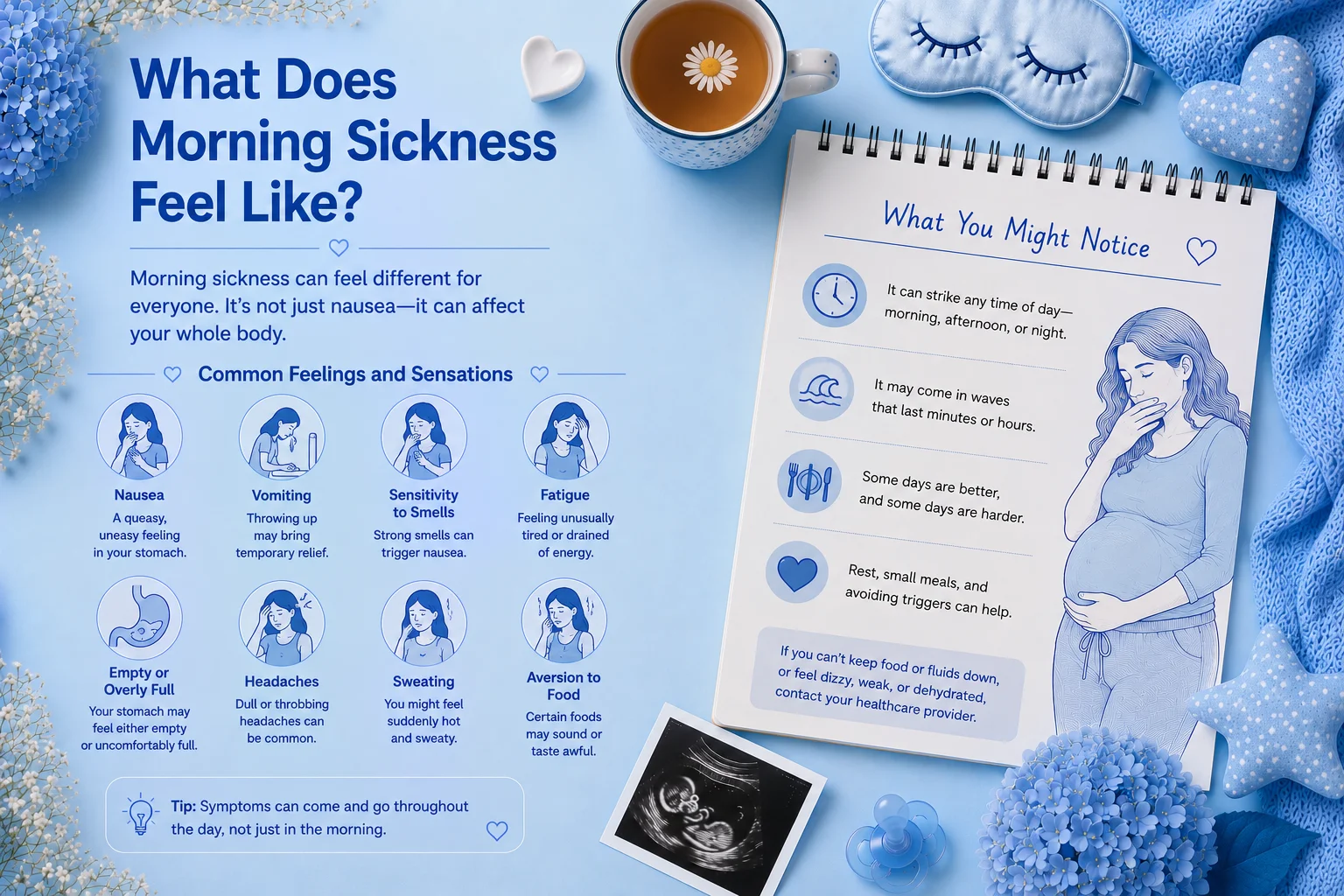
At its core, morning sickness is nausea and, for some people, vomiting during pregnancy, most noticeable in the first trimester. It affects an estimated 70 to 80% of pregnant people, which makes it one of the most common early pregnancy symptoms, though it’s genuinely miserable for many who experience it. Some people describe the sensation as:
Seasickness or motion sickness — a queasy, off-balance feeling in the stomach that won’t settle
Heartburn or reflux — a burning or unsettled sensation that sits high in the chest or throat
A lump in the throat — like something’s stuck there, regardless of whether vomiting happens
Hunger pangs — an empty, gnawing feeling that oddly worsens if you don’t eat, rather than improving
One woman described it as feeling like an unending hangover, that unsettled stomach sensation that never quite lifts, paired with frequent dry heaving even without full vomiting. Others say it feels like carsickness that follows them around all day.
It’s Not Actually Limited to Mornings
The name is misleading. While symptoms are often worse first thing in the morning, largely because blood sugar is lower after a night without food, they can strike at any hour, and for plenty of people, they last all day. Some describe it as constant low-grade queasiness punctuated by worse waves; others feel mostly fine until a specific smell or food triggers sudden nausea out of nowhere.
Common Triggers
Certain things tend to set off or worsen the feeling:
Strong smells, including foods you used to enjoy, perfume, or cooking odors
An empty stomach, since low blood sugar can intensify nausea
Certain foods, especially spicy, rich, or strongly flavored dishes
Heat or warm weather
Fatigue or being overtired
Motion, similar to car or sea sickness
Many people find it helpful to notice their own patterns, since triggers vary a lot from person to person.
Symptoms That Often Come Along With It
Nausea rarely shows up alone. Alongside it, people commonly report:
Vomiting. Not everyone with morning sickness throws up, some experience nausea alone, but it’s common, sometimes just once or twice a day, sometimes more.
Loss of appetite. Feeling turned off by food generally, even foods you’d normally crave.
Food aversions. Specific foods, sometimes ones you loved before pregnancy, can suddenly feel repulsive.
Fatigue. Nausea combined with difficulty eating and keeping food down can leave you feeling drained on top of everything else.
Excess saliva. Some people notice unusually increased salivation alongside the nausea, sometimes called ptyalism.
Sensitivity to smells. A heightened sense of smell often goes hand in hand with the nausea itself, and can trigger it.
Why It Happens
The exact cause of morning sickness isn’t fully understood, but most healthcare providers believe it’s linked to the rapid rise in pregnancy hormones, especially hCG (human chorionic gonadotropin) and estrogen. hCG tends to peak around the same time morning sickness is at its worst, which supports the hormonal theory. Other contributing factors may include low blood sugar, blood pressure fluctuations, and a slower digestive system caused by rising progesterone.
When Does It Start and How Long Does It Last?
Morning sickness typically begins around week 6 of pregnancy, though some people notice nausea as early as week 4, just around the time a period would be due. It tends to peak somewhere in the middle to end of the first trimester and, for most people, eases up by around week 14, though it’s not unusual for it to linger longer, and some people experience it throughout pregnancy.
Finding Some Relief
While there’s no guaranteed fix, a few strategies help many people manage symptoms:
Eating small, frequent meals instead of three large ones
Keeping bland snacks like crackers nearby, especially for first thing in the morning
Staying hydrated, sipping fluids throughout the day rather than large amounts at once
Identifying and avoiding personal triggers, whether that’s certain smells or foods
Getting adequate rest, since fatigue can worsen nausea
Talking to your provider about over-the-counter or prescription options if lifestyle changes aren’t enough
When to Call Your Doctor
Most morning sickness, while unpleasant, isn’t dangerous to you or your baby. But it’s worth reaching out to your healthcare provider if you experience:
Vomiting several times a day or an inability to keep down any food or fluids
Signs of dehydration, dizziness, or lethargy
Losing weight or being unable to get adequate nutrition
Flu-like symptoms, which could point to something other than pregnancy-related nausea
Severe, persistent vomiting can be a sign of hyperemesis gravidarum, a more intense form of pregnancy nausea that sometimes requires medical treatment, including IV fluids or medication, to prevent dehydration and malnutrition.
FAQ
What does morning sickness actually feel like?
Most people describe it as persistent nausea, sometimes compared to seasickness, a hangover, or a lump in the throat, that can come with vomiting, loss of appetite, and heightened sensitivity to smells.
Does morning sickness only happen in the morning?
No, despite the name, it can strike at any time of day and, for many people, lasts all day at a low level with occasional worse waves.
When does morning sickness usually start and end?
It typically starts around week 6 of pregnancy and eases by around week 14, though timing varies widely and some people experience it earlier, later, or throughout pregnancy.
Is it normal to have morning sickness without vomiting?
Yes. Many people experience nausea without ever vomiting, and that’s just as normal a version of morning sickness as one that includes vomiting.
When is morning sickness a sign of something more serious?
If vomiting is severe, happens multiple times a day, prevents you from keeping down fluids, or leads to weight loss or dehydration, it may be hyperemesis gravidarum, which warrants medical attention.